A good night rarely starts in bed. It starts an hour or two earlier, in the small choices of the evening: a glass of water drunk slowly, a dim lamp, a phone put away, and a cool, calm room. Sleep is not a switch you flip. It is a slow wind-down, and water is one of its quietest helpers.
Water and sleep are linked in simple ways. A body that has had enough water through the day feels steadier in the evening, while a thirsty body feels restless and dry. Too much water too late, though, can wake you in the night.
This guide explains that balance: how much water to drink, when to stop, what a calm wind-down looks like, and how a glass by the bed and a glass in the morning fit together. It is general habit guidance only, and it will not treat sleep problems; lasting trouble deserves a health professional.
Key Takeaways
- Drink enough plain water through the day, and keep evening sips small and slow.
- Stop large drinks an hour or two before bed, so the night is not broken.
- A short wind-down, repeated nightly, matters more than a long routine.
- Keep the bedroom cool, dark, and quiet, with a small glass of water by the bed.
- These are comfort habits, not treatment; lasting sleep trouble needs a health professional.
What Water and Sleep Have in Common
Water and sleep both work quietly in the background. Neither needs anything fancy.
Thirst in the evening is easy to miss. A small glass of water, drunk slowly, often settles that feeling better than food or a sweet drink.
Why Evenings Matter More Than Nights
The last hour before bed sets the tone for the night. A bright room, a loud screen, and a large meal all tell the body that the day is still going, while a dim room, a quiet book, and a small glass of water tell it that the day is ending.
The wind-down has to happen before bed, in small steps: dim the light, put the phone away, drink a little water, and let the evening close gently.
A Small Glass Before Bed
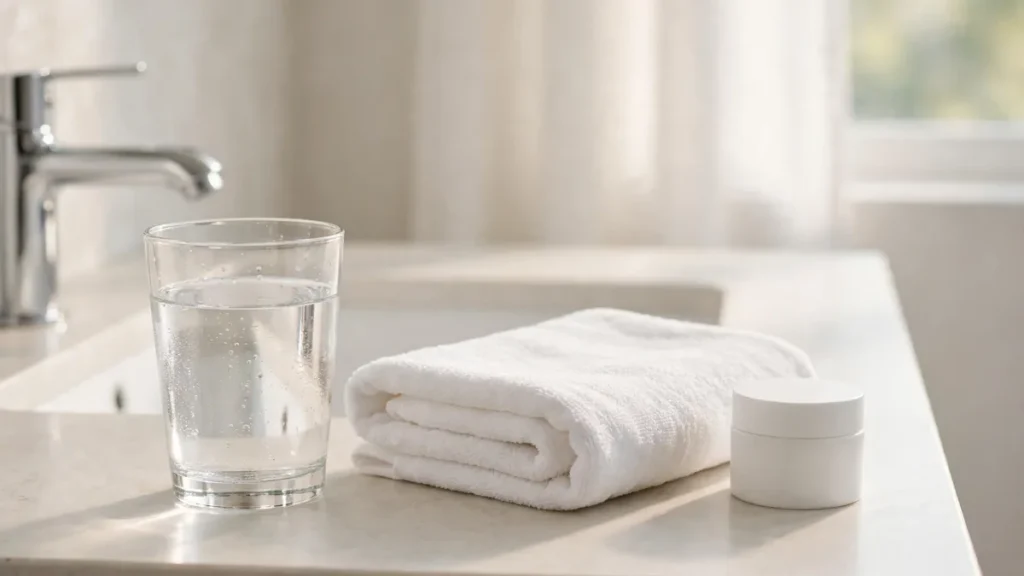
A small glass of water before bed is enough. Fill a clean glass about half full, sit down, and drink it slowly, in small sips, an hour or two before you plan to sleep.
It simply means you go to bed neither thirsty nor overfull, which is the most comfortable way to start the night. Keep the glass on the bedside table afterwards, so a sip is there if you wake thirsty.

How Much Water, and When to Stop
There is no single amount of water that suits everyone. A small person on a cool day needs less than a tall person on a hot day, and a day spent walking needs more than a day spent sitting. The best guide is your own body: drink when you are thirsty, keep a glass nearby, and notice that your urine should be pale yellow.
In the evening, the rule is simple: drink less as bedtime comes closer. Have your last large drink with dinner, then take only small sips in the hour or two before bed. Stop large drinks at least an hour before sleep, so the night is not broken by trips to the bathroom.
The Wind-Down Hour
The wind-down hour is the hour before bed, and it belongs to quiet things. Dim the lights, turn the screens off, and choose one slow activity: a book, a few stretches, or a quiet cup of herbal tea.
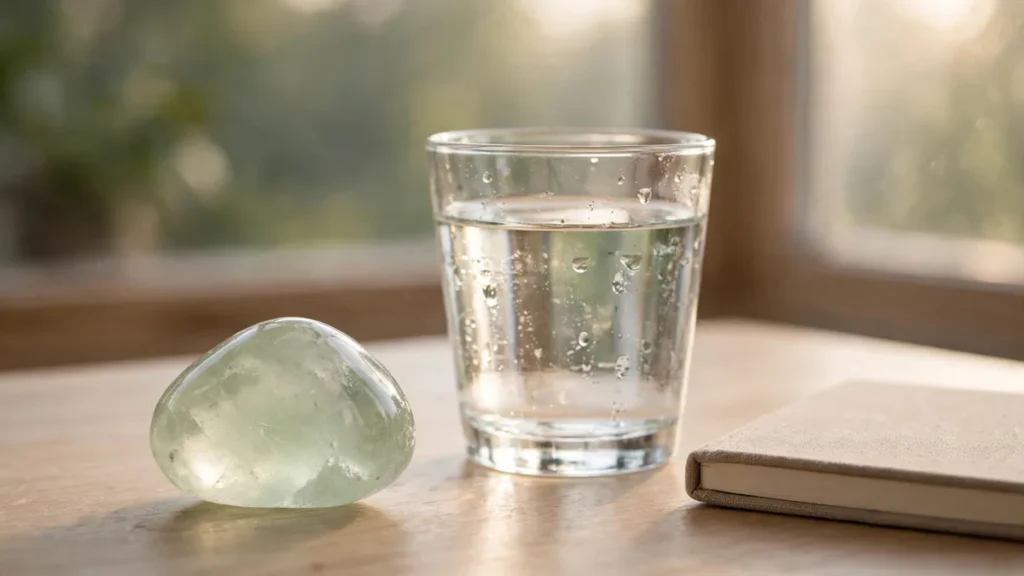
A stone can help mark the hour, if you like one. Onyx suits the evening, and onyx evening rituals for restful sleep describes a short bedtime sequence built around a dark onyx stone, soft light, and a glass of fresh water beside the stone. The stone stays beside the water, never in it, and the value is the repetition: the same hour, the same glass, the same quiet.
Cool Water, Cool Room
Cool water and a cool room go together. A glass of cool, still water feels refreshing in the evening, and a bedroom that is slightly cool feels easier to sleep in than a warm one. Open a window a little if the air is fresh, or turn the heating down an hour before bed.
Cool water from the tap, or water kept in a jug, is enough.
A Glass by the Bed
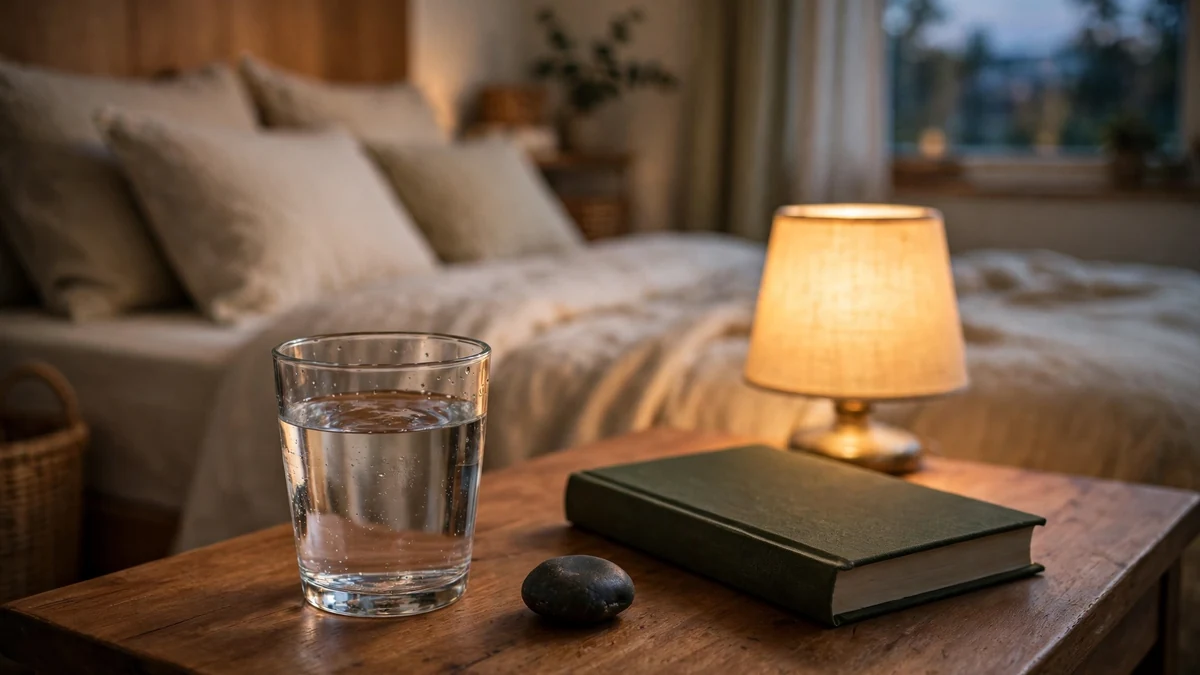
A glass by the bed is a small kindness to your future self. Fill a clean glass half full before you get into bed, set it on the bedside table where you can reach it without getting up, and cover it lightly. If you wake in the night with a dry mouth, a small sip is there at once,
Keep the bedside simple. The glass, a small lamp, and perhaps a book are enough. Wash the glass every morning, and fill it fresh every evening. Stale water left for days is not pleasant, and a fresh glass is part of the ritual.

What to Avoid Late in the Evening
Some evening habits make sleep harder, and they are worth avoiding. Large meals late at night leave the stomach busy when it should be resting, so eat dinner at a reasonable hour and keep late snacks small and plain. Caffeine late in the day is another common problem: coffee, strong tea, and many soft drinks can keep the body alert for hours, so keep them to the morning.
Alcohol is not a sleep aid, even though it can make you feel drowsy at first. It breaks the night into lighter, restless sleep, and it often leaves you thirsty in the morning. A small glass of water, a dim lamp, and a book are a kinder ending.
Morning Water After Sleep
Morning water is the other half of the habit. After a night without drinking, the body wakes a little dry, and a glass of fresh water, drunk slowly, is a gentle way to start the day. Fill a clean glass, sit by the window, and drink it in small sips before tea or coffee.
Drinking more water gently through the day is the habit that supports the night, and drinking more water gently explains how to build it without forcing large amounts at once.
A Simple Nightly Routine
A nightly routine works best when it is short enough to keep. Start an hour before bed: dim the lights, put the phone away, and drink a small glass of water slowly. Then wash your face with lukewarm water, put on comfortable clothes, and tidy one small thing, such as the bedside table.
Then get into bed at roughly the same time each night, even at weekends. A steady bedtime trains the body to expect sleep, and it matters more than any single habit.
When Nights Feel Restless
Some nights feel restless even with a good routine. If you wake in the night, lie still, take a small sip of water, and breathe slowly.
If sleep does not return, get up, sit in a dim room with a book, and wait until you feel drowsy again. A lavender mist can suit that quiet wait, and lavender water pillow mists for better sleep describes a fine spray of lightly scented water misted over the pillow, used as a comfort habit. It will not cure sleeplessness, and lasting trouble deserves a health professional.

A Week of Small Habits
A week is the right length to learn these habits. On the first evening, set up the bedside: a clean glass, a small lamp, and a book, with the room cool and the phone elsewhere. Keep the setup the same every night, so the routine becomes a habit. Drink a small glass of water an hour before bed, keep large drinks to dinner, and get into bed at the same time.
A few small habits, repeated nightly, ask for little and give the night a better start.
Common Mistakes to Avoid
The first mistake is drinking too much water too late. A large glass just before bed feels healthy, but it often breaks the night with trips to the bathroom. Keep evening drinks small, and have the last large drink with dinner. The second mistake is reaching for caffeine or a sweet drink in the evening, when plain water and a quiet hour would serve you better. The third mistake is giving up after one restless night: a habit needs a week to settle, and one bad night is not a verdict.
| Evening habit | Water amount | Bedtime |
|---|---|---|
| Dinner drink | Large glass | Two hours before |
| Wind-down sip | Small glass | One hour before |
| Bedside sip | Half glass | If thirsty |
| Morning glass | Full glass | After waking |

Your Water and Sleep Checklist
- Drink plain water through the day, and keep evening sips small.
- Have the last large drink with dinner, and stop large drinks before bed.
- Dim the lights, put the phone away, and wind down for an hour.
- Keep the bedroom cool, dark, and quiet, with a glass by the bed.
- Drink a glass of fresh water slowly in the morning, before tea.
- Keep the routine short, repeat it nightly, and give it a week.
Frequently Asked Questions
How much water should I drink before bed?
A small glass, about half full, drunk slowly an hour or two before bed, is enough. Have your last large drink with dinner.
Will drinking water before bed wake me up?
A large glass just before bed can wake you in the night. A small glass, drunk an hour or two before bed, is far less likely to.
Is cold water better than warm water at night?
Cool water is usually the most refreshing in the evening. Very cold water can feel sharp on the stomach. Choose what feels comfortable.
Can water help me sleep better?
Water will not cure sleep problems, but going to bed neither thirsty nor overfull is more comfortable. These are comfort habits, not treatment.
Should I keep water by the bed?
Yes. A clean glass, half full, on the bedside table is a small comfort if you wake thirsty. Wash it each morning, and fill it fresh each evening.
What if I still sleep badly after a week?
Keep the routine, and speak to a health professional. Lasting trouble with sleep or waking very tired deserves proper advice.
The Bottom Line
Water and sleep are linked by small habits: plain water through the day, small sips in the evening, a cool room, and a short wind-down. Keep the last large drink at dinner, a small glass by the bed, and the routine nightly.
Start tonight, with one small glass, drunk slowly, an hour before bed.
A Note for Better Nights
Keep it small, keep it nightly, and let the evening close gently.