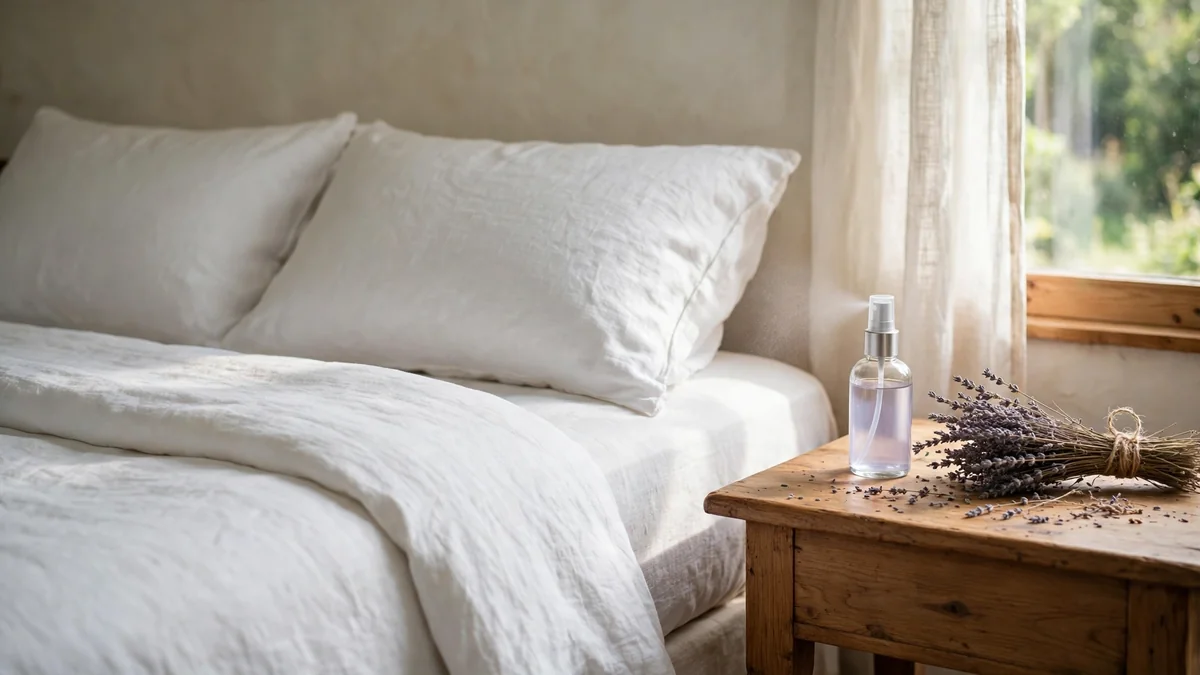
There is a particular moment in the evening when the day is finished but the mind has not caught up. The lights are low, the house is quiet, and yet thoughts keep circling: what was left undone, what tomorrow will ask for.
A lavender water pillow mist is one of the smallest evening habits there is. It is a fine spray of water scented lightly with lavender, misted over a pillow from a short distance shortly before bed. It takes less than a minute, costs very little, and asks nothing except a pause.
This article explains what a lavender water pillow mist is, how to make one safely at home, how to use it well, and what it can and cannot do. It is a comfort habit, not a treatment, and it will not cure sleeplessness.
Key Takeaways
- A lavender water pillow mist is lightly scented water sprayed on the pillow from a distance, never on the face or in the eyes.
- Mist the pillow lightly, twenty to thirty minutes before bed, so it feels dry and faintly scented when you lie down.
- Patch-test a new mist on skin first, and stop using it if it irritates your skin or your breathing.
- Keep lavender mist away from children and pets, since lavender oil is not safe for all pets.
- A mist is a comfort habit; it does not treat sleep problems, and lasting trouble deserves a health professional.
What a Lavender Water Pillow Mist Is
A pillow mist is simply water, lightly scented, held in a small spray bottle. The most common scent is lavender, because its soft, herbal fragrance is widely linked with evenings and rest. Some use a few drops of lavender essential oil in water; others steep dried lavender buds in warm water, then strain it.
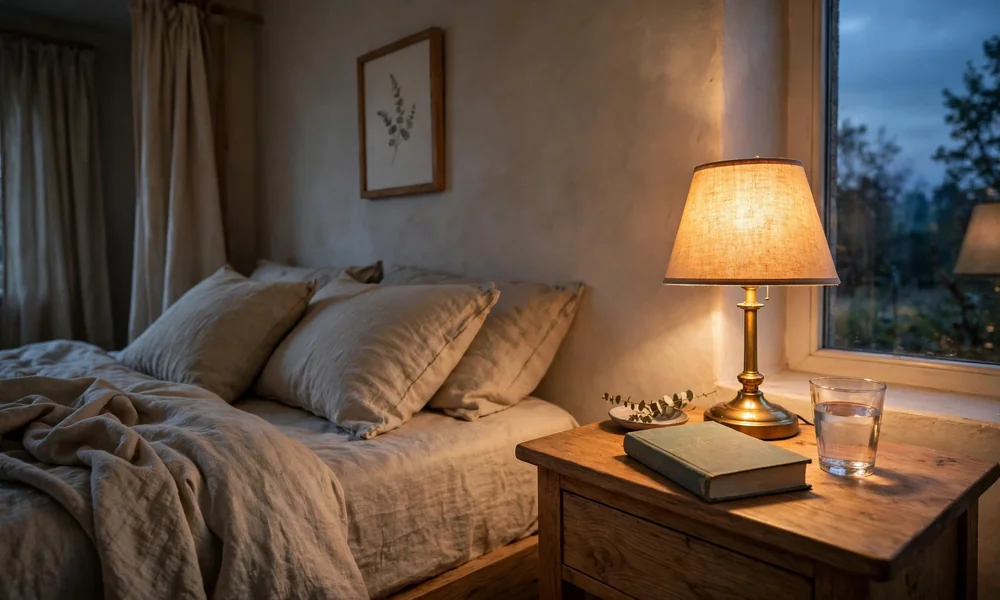
A mist joins other small evening habits: water by the bed, dimmed lights, a book instead of a screen. None is dramatic alone, but together, each night, they tell the body the day is ending.
Why Lavender Suits the Evening
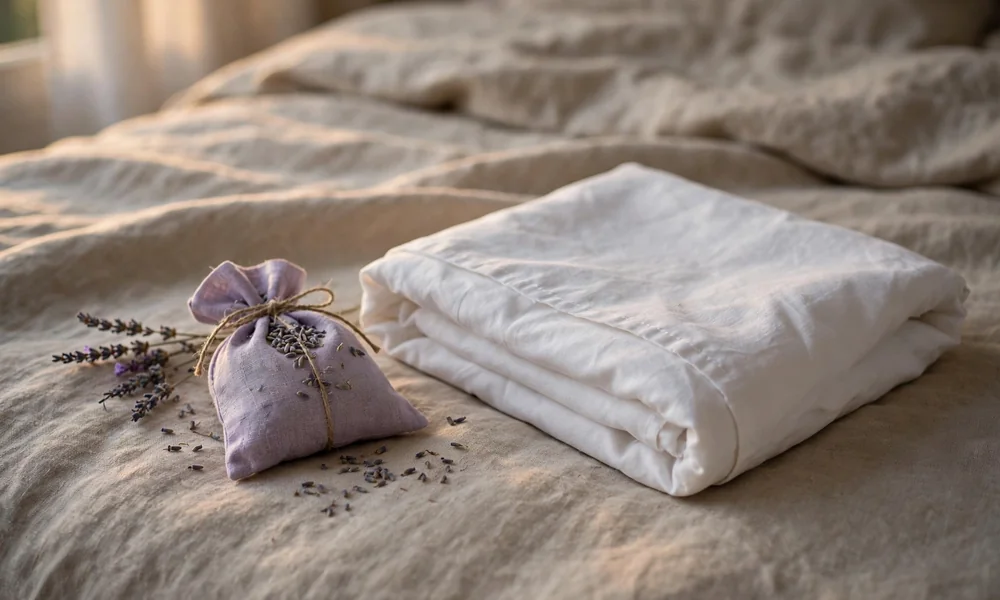
Lavender has scented bedrooms for centuries, tucked into linen cupboards and sewn into small sachets. Its scent is soft, herbal and slightly sweet, without the sharpness of citrus. That gentleness suits a pillow: noticeable, yet quiet enough to fade as you drift off.
Research on lavender and sleep is modest and mixed. Some small studies report people feeling calmer, or sleeping a little better, with lavender scent in the room. The honest summary: lavender is pleasant, not a medicine, and any benefit likely comes from relaxation and routine.
Making Your Own Lavender Water Mist
Making a pillow mist at home is simple, and a small bottle lasts for weeks. You will need a clean glass spray bottle, fresh water, and either dried lavender buds or a small bottle of lavender essential oil. Wash the bottle and spray top well with warm soapy water before the first use, and let them dry fully.
The simplest recipe uses dried lavender. Steep a tablespoon of dried lavender buds in a cup of just-boiled water, covered, for twenty minutes. Strain the liquid through a fine cloth into the spray bottle and let it cool completely. Because it contains no preservative, make a fresh batch every week and keep it in a cool place.
The stronger recipe uses essential oil. Fill the spray bottle with fresh water, add just three or four drops of lavender essential oil, and shake well before every use, since oil and water do not mix. Label the bottle with its date, and make a fresh batch every two to three weeks.

How to Mist Your Pillow Well
Timing matters more than technique. Mist the pillow twenty to thirty minutes before bed, not as you climb in. Hold the bottle about an arm's length away, aim across the top of the pillowcase, and give two or three light spritzes. Leave it alone; by bedtime it should feel dry, with only a faint scent left.
Never spray the mist on your face, near your eyes, or directly onto your skin, and never spray it into the air around a sleeping child or pet. One light misting a night is enough. More spray will not make sleep come faster; it will only leave the pillow damp, and a damp pillow is uncomfortable and unhygienic.
If you share a bed, mist only your own pillow, and check the scent suits the other person. Store the bottle upright, out of sunlight and heat. If the mist ever smells sour or looks cloudy, throw it away and make a fresh batch.
A Calmer Evening Around the Mist
A pillow mist works best as the last step of a short evening routine, not as a lone trick. Treat the last half hour before bed as a gentle slope downwards. Dim the lights, charge the phone in another room, and change into night clothes. Make the bed properly, and then mist the pillow.
Other small rituals pair naturally with a mist. A short, dark-stone evening routine can give the same sense of a finished day: an onyx evening ritual for restful sleep builds a twenty-minute wind-down around a smooth stone, soft light, and a glass of water beside the bed. A water ritual with amethyst does something similar, keeping fresh water beside the stone while the evening slows down; amethyst water for a calmer evening walks through that pause step by step.
Keep the routine short enough to repeat: an hour-long routine fails on tired nights, while a ten-minute one survives. Mist the pillow, read a few pages, drink some water, and go to bed at roughly the same time each night.
Safety First: Skin, Breathing, Children and Pets
A lavender water mist is gentle, but gentle does not mean careless. Before you use a new mist on your pillow, patch-test it. Spray a little on the inside of your wrist, wait a day, and watch for redness, itching, or a rash. If anything appears, stop using that mist. If you have sensitive skin, eczema, asthma, or any allergy to plants in the lavender family, be especially careful, or skip scented mists altogether.
Breathing matters too. If a mist makes you cough or feel tight in the chest, stop using it at once and air the room. Never spray a mist near the face or eyes. If breathing trouble continues, speak to a health professional promptly.
Keep lavender mist away from children and pets. Small children should not handle spray bottles or oils, and a misted pillow is for adults only, unless a health professional advises otherwise. Lavender oil is not safe for all pets: cats and dogs can be sensitive to essential oils, and birds more so. Never spray a mist near a pet, on pet bedding, or in a small room where a pet cannot move away from the scent.
Sleep problems that persist deserve proper attention. If you often struggle to fall asleep, wake often, feel exhausted by day, or poor sleep affects your mood or work for weeks, see a health professional. A pillow mist is a comfort habit, not a treatment.
Choosing Water, Lavender and a Bottle
Good ingredients make a better mist, and none of them needs to be expensive. Use fresh or cooled boiled water for every batch. Filtered water leaves less residue in the nozzle if your tap water is very hard.
Choose dried lavender buds that smell fresh and herbal, not dusty or flat. For essential oil, look for a bottle that names the plant plainly as lavender, with no added fragrance. Store oils upright, away from heat and light, and out of the reach of children.
A small glass bottle of about one hundred millilitres fits the bedside table well; choose a top that gives a fine, even mist rather than a jet. A slow Sunday bath can be the gentler start to the same kind of evening, and a slow Sunday bath ritual shows how an unhurried soak sets up a calmer night.

| Mist style | Best for | Keep in mind |
|---|---|---|
| Dried lavender water | First-time users, sensitive skin | Very gentle; remake weekly |
| Essential oil mist | A clearer lavender scent | Shake before use; 3-4 drops only |
| Plain water mist | Scent-free evenings | No scent, just the ritual |
| Bought pillow mist | No time to make one | Check the ingredients list first |
Your Lavender Mist Checklist
- Patch-test the mist on your inner wrist and wait a day before using it on your pillow.
- Mist lightly from an arm's length, two or three spritzes, twenty to thirty minutes before bed.
- Never spray on your face, near your eyes, or into the air around children or pets.
- Make a fresh batch weekly for flower water, or every two to three weeks for an oil mist.
- Keep the bottle upright, cool, and out of sunlight; throw it away if it smells sour or looks cloudy.
- If sleep problems last more than a few weeks, speak to a health professional.
Frequently Asked Questions
How far in advance should I mist my pillow? About twenty to thirty minutes before bed. The pillowcase dries, leaving only a faint scent.
Can I spray lavender mist on my face or skin? No. A pillow mist is for fabric, sprayed from a distance. Never spray it on your face, near your eyes, or directly onto skin.
Is lavender mist safe around children and pets? Use it only in an adult bedroom, and keep it away from children and pets. Lavender oil is not safe for all pets. Never mist a baby's cot or a child's pillow without professional advice.
How long does a homemade mist keep? A dried lavender water mist keeps for about a week in a cool place. An essential oil mist keeps for two to three weeks. Throw it away if it smells sour or looks cloudy.
Will a lavender mist cure my insomnia? No. A pillow mist is a comfort habit, but it does not treat or cure insomnia or any sleep condition. If sleep problems persist for more than a few weeks, please see a health professional.
Can I use a different scent instead of lavender? Yes, if you prefer it, but the same safety rules apply: patch-test first, keep it off the face and away from children and pets, and use only a few drops of oil.
The Bottom Line
A lavender water pillow mist is a small, gentle way to close the day: a few light spritzes from a distance, half an hour before bed. It will not cure sleeplessness, and it should never be sprayed on the face, near children, or near pets. Used lightly and freshly made, as part of a short evening routine, it gives the night a calm beginning.
A Note for Quieter Nights
Keep it light, keep it fresh, keep it gentle. A faint scent, a dry pillow, and a regular bedtime will carry your evenings further than any strong spray or hurried fix.



