Sensitive skin makes its opinions known. A new cleanser, a hot shower, or a hurried morning can bring tightness, a flush, or a lingering prickle. The instinct is to add more: another serum, another step, another promise. Yet the gentlest answer is usually the opposite: a smaller, slower, cooler routine.
That is where the aquamarine cool water ritual begins. Aquamarine, the pale blue stone of the sea, brings stillness to the shelf, while cool water does the practical work: it refreshes without stripping and settles the feeling of heat. Together they make a ritual less about transformation and more about a quiet moment of care.
This article walks through the ritual step by step: why cool water suits reactive skin, how to choose a stone, and what to leave out. It is for anyone whose skin prefers a softer approach, focused on comfort and consistency rather than quick fixes.
Key Takeaways
- Cool water is kinder than hot water, which strips natural oils.
- Aquamarine works best as a calming anchor, not as a treatment for any skin condition.
- A short, repeatable ritual beats a long routine: cleanse, cool, moisturise, protect.
- Keep the water cool, not icy, and contact brief.
- Patch test new products and change one thing at a time.
What Makes Aquamarine Feel So Calming?
Aquamarine takes its name from the sea, and its colour does much of the work. The pale blue-green of a polished stone reads as cool, clear, and unhurried, exactly the mood this ritual needs. When the shelf holds something beautiful and still, the routine slows down and you rush less.
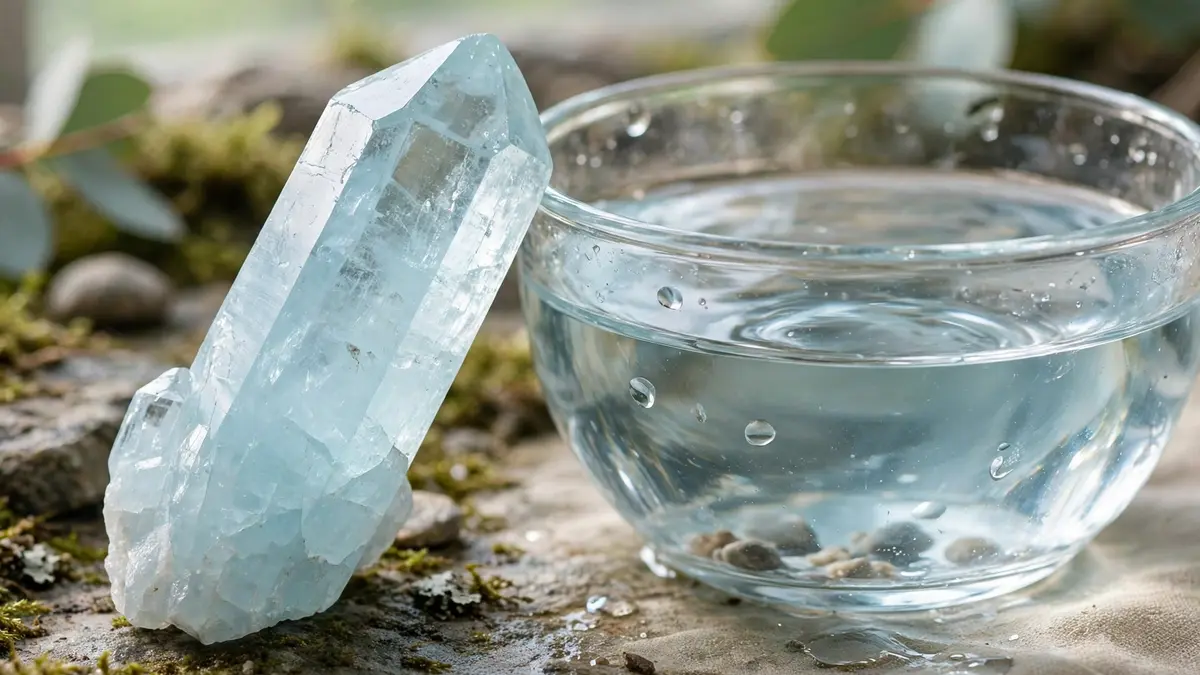
The stone also feels naturally cool to the touch. Resting it beside the basin, holding it for a moment, or letting it sit in a bowl of cool water gives the hands something calm to do. The stone need not touch the face to belong here; like a favourite cup, it signals that this time is set aside for care.
Be honest about what aquamarine cannot do. No crystal treats eczema, rosacea, acne, or any other skin condition, and no stone replaces sunscreen, moisturiser, or medical advice. The value is sensory: a calmer mind means gentler hands and fewer impulsive changes, which genuinely help reactive skin. Choose a small tumbled piece you enjoy looking at.
Why Cool Water Suits Sensitive Skin
Hot water feels comforting, but sensitive skin often pays for it afterwards. Heat strips the skin’s natural oils, weakens the barrier that keeps moisture in, and leaves the face tight, dry, or flushed. Dermatologists advise lukewarm water for cleansing, and for reactive skin, leaning a little cooler still can feel more comfortable. Cool water refreshes without that stripped feeling and leaves less redness behind.
Temperature also shapes the rest of the routine. A face rinsed with cool water is usually calmer when moisturiser is applied, which means less stinging. The effect is subtle, not dramatic: no sudden transformation, just a quieter baseline. Over weeks, that quieter baseline is often what people notice most.
Cool water is also free and always available, and staying hydrated supports the same goal, since well-hydrated skin tends to feel more comfortable. Our piece on the quiet art of staying hydrated explores a slower, steadier approach to drinking water through the day. The ritual pairs the two ideas: cool water on the skin, and enough water in the glass. Remember that cool does not mean icy: aim for water that feels refreshing on the wrist, like a cool drink.
Building Your Aquamarine Cool Water Ritual

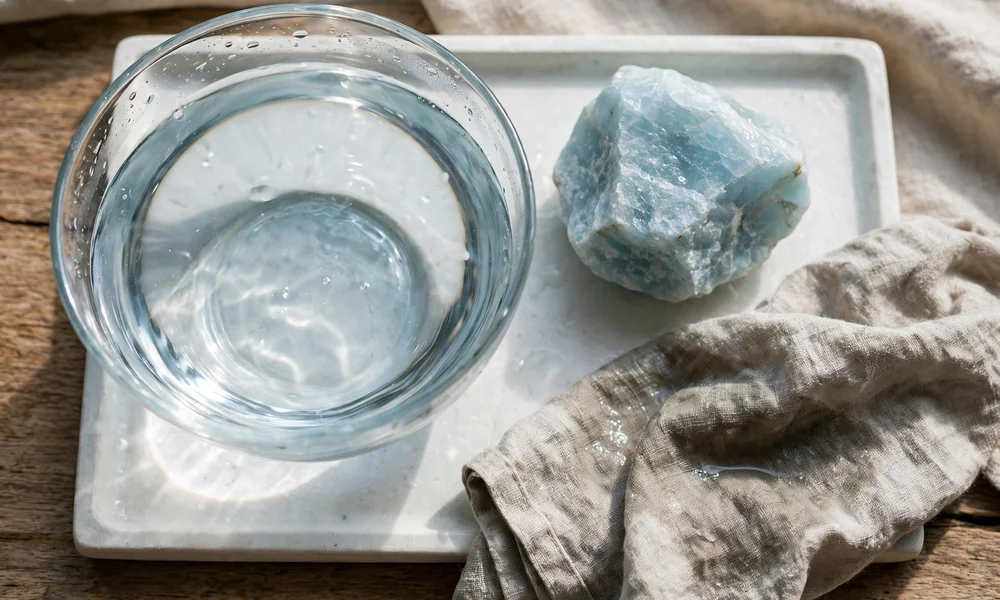
A good ritual is one you can repeat on a tired evening as easily as on a slow morning, so keep it simple. Wash your hands, place your aquamarine beside the basin, and fill a clean bowl with cool water. This small preparation is part of the ritual: a pause between the day and the care that follows.
Cleanse next with a gentle, fragrance-free cleanser and your fingertips only, working it over damp skin in light circles for under a minute. Avoid washcloths, brushes, and scrubs, since friction quickly irritates sensitive skin. Rinse with the cool water from your bowl, splashing lightly or lifting it to your face with cupped hands. Pat dry with a soft towel, pressing rather than rubbing.
Then comes the cooling moment that gives the ritual its name. Dip your fingertips into the cool water and press them lightly over the face, or rest a cool, damp cloth over it for a minute while you breathe. Some like to rest a smooth aquamarine stone in the bowl first, so the water carries the stone’s coolness; the stone stays off the face. Keep this step to one or two minutes. Finish while the skin is still slightly damp, applying a plain moisturiser to lock the water in, and add sunscreen as the final morning step. The whole ritual takes about five minutes.
Choosing and Caring for Your Aquamarine
A tumbled aquamarine stone is the simplest choice. Look for a piece that feels smooth, with no sharp edges or rough patches. Colour varies from pale, almost clear blue to a deeper sea tone, and neither is better; choose the shade you enjoy, since you will see it every day. A piece the size of a large coin is easy to handle and store.
Caring for the stone is straightforward. Rinse it under cool running water after use, pat it dry, and store it somewhere clean and dry, such as a small dish. Avoid harsh cleaners, ultrasonic baths, and long soaks in soapy water, which can dull the polish. If the stone is set in jewellery, check the setting regularly. Treated simply, it keeps its colour and cool touch for years.
Think of aquamarine as one member of a small, considered collection rather than the start of an ever-growing shelf. Our study of clear quartz takes the same approach, looking closely at a single stone and what it brings to a room. One or two stones, used often, serve a ritual far better than a drawer full of pieces never touched. A small tray keeps your stone, cloth, and cleanser together and marks this corner as yours.

What to Avoid When Skin Is Reactive
Sensitive skin is often less troubled by what you do than by what you stop doing. First, avoid hot water, long showers, and steam, which strip the barrier. Second, set aside scrubs, peels, and exfoliating acids while the skin is reactive; these can wait, and many people never need them. Third, be cautious with fragrance, essential oils, and heavily perfumed products.
Resist the urge to change several products at once. When a routine changes constantly, it becomes impossible to know what helped and what hurt, and the skin never settles. Introduce one new product at a time, use it for at least two weeks, and keep a brief note of how the skin responded. Pay attention to the hands as well: rubbing, picking, and pressing add friction and heat that undo the calm cool water has created. Our guide to a skin routine with room to breathe covers the same foundation from a different angle.
Finally, know when to seek professional guidance. Persistent redness, itching, flaking, swelling, or pain, and any concern that changes quickly or does not settle, deserves a dermatologist’s attention rather than another product. This article offers general information, not medical advice, and no ritual replaces an individual assessment.
A Gentle Weekly Rhythm
A ritual works best when it fits the week you actually live, so think in rhythm, not rigid schedule. The cool-water cleanse can happen every morning and evening, while the longer version, with bowl and cloth, belongs to days when time allows. On busy days, a shortened version still counts.
| Day | Morning | Evening | Notes |
|---|---|---|---|
| Monday | Cool cleanse, moisturise, sunscreen | Gentle cleanse, cool rinse, moisturise | Start simply |
| Tuesday | Cool cleanse, moisturise, sunscreen | Gentle cleanse, cool rinse, moisturise | Same products |
| Wednesday | Cool cleanse, moisturise, sunscreen | Full ritual with bowl and cloth | Midweek slow evening |
| Thursday | Cool cleanse, moisturise, sunscreen | Gentle cleanse, cool rinse, moisturise | Notice skin |
| Friday | Cool cleanse, moisturise, sunscreen | Gentle cleanse, cool rinse, moisturise | Fresh pillowcase |
| Saturday | Cool cleanse, moisturise, sunscreen | Full ritual with bowl and cloth | Slow weekend |
| Sunday | Cool cleanse, moisturise, sunscreen | Gentle cleanse, cool rinse, moisturise | Note the week |
Adjust the table to your skin, climate, and calendar, and keep a one-sentence weekly note about what felt good or tight.

Checklist
- Fill a clean bowl with cool water and place your aquamarine beside the basin.
- Cleanse with fingertips and a gentle, fragrance-free cleanser for under a minute.
- Rinse with cool water, then pat dry softly instead of rubbing.
- Press cool water or a damp cloth over the face for one to two minutes.
- Moisturise while skin is damp, and add sunscreen in the morning.
- Change one thing at a time and ask a dermatologist about lasting irritation.
Frequently Asked Questions
Can I use aquamarine directly on my face?
It is best not to. Keep the stone beside the basin or in the bowl, and let the cool water touch your skin instead. A smooth stone can still carry dust, and pressing any object against reactive skin adds friction.
How cool should the water be?
Pleasantly cool, like a cold drink, not icy. Test it on the inside of your wrist: if it makes you flinch, warm it slightly; if it feels refreshing, it is right.
How often can I do this ritual?
The short version, a cool-water cleanse followed by moisturiser, suits morning and evening daily. The longer version with the bowl and cloth fits well two or three times a week.
Will aquamarine cure my sensitive skin?
No. Aquamarine is a calming presence, not a treatment for any skin condition. The soothing effect comes from the cool water, the gentle technique, and a consistent routine. Persistent concerns deserve a dermatologist’s advice.
What if cool water makes my skin feel tight?
Try slightly warmer water, closer to lukewarm, and moisturise while the skin is still damp. Tightness can also mean the cleanser is too strong, so try a gentler formula.
Can I combine this ritual with other skincare products?
Yes, but introduce one product at a time and wait two weeks before judging it. Keep the core of the ritual unchanged, add sunscreen in the morning, and set aside scrubs, peels, and strong actives.
The Bottom Line
The aquamarine cool water ritual is a small, deliberate pause: cool water, gentle hands, a favourite stone nearby, and moisturiser on slightly damp skin. It asks little, costs almost nothing, and respects the skin’s preference for calm over commotion. Done consistently, it gives sensitive skin steady care.
Keep the ritual honest about what it is. The aquamarine brings beauty and stillness, the cool water brings comfort, and the routine brings repetition’s benefit. No single step transforms the skin overnight. What matters is that the skin feels looked after and the five quiet minutes are yours.
A Closing Note
Place the stone where you will see it in the morning, fill the bowl, and begin. Sensitive skin asks for patience, not perfection. Stay curious, stay clear, and let the water do the talking.