
Chapped lips arrive quietly and then refuse to be ignored. One morning the lips feel tight, by lunch a thin flake catches on a tooth, and by evening the skin splits at the corner and stings with every sip of water.
Chapped lips are lips that have lost their softness and their smooth surface: dry, rough, flaking, sometimes cracked and sore. This guide is a simple care routine for those lips — gentle water, a plain balm and soft cloths — to help them feel comfortable again.
It is gentle general information only, and it makes no medical claims. If your lips stay cracked, sore or bleeding, ask a doctor.
Key Takeaways
- Chapped lips are dry, rough, flaking lips, sometimes cracked and sore.
- Chapped lips need gentle repair, not scrubbing, picking or harsh products.
- Drink fresh water slowly through the day, in small sips, not all at once.
- Rinse lips gently with lukewarm water, then seal softness in with plain balm.
- If lips stay cracked, sore or bleeding, ask a doctor; this guide is not a treatment.
What Chapped Lips Are
Chapped lips are lips whose thin skin has dried out and lost its smooth top layer. Lip skin is very thin, with no oil glands to make its own moisture, and it has no hair or sweat glands to protect it either, so sun, wind, cold air and dry indoor heating all pull moisture away faster than lips can replace it.
When the skin dries, it tightens, then roughens, then flakes. If the dryness goes on, small cracks open, most often at the corners, and those cracks can sting and take days to close.
Why Lips Crack and Peel
Lips crack and peel because their thin skin has no way to protect itself. Cold wind strips moisture from the surface, dry heated rooms do the same work indoors, and hot drinks and salty food add to the dryness. Licking the lips feels soothing for a moment, but the saliva dries and leaves lips drier than before, and the habit soon becomes a loop that keeps the lips chapped.
Some lip products make things worse, too: strong flavours, menthol, camphor and heavy fragrance can sting cracked skin. Picking at flakes tears the skin underneath, so a small flake becomes a raw patch.
Drinking Water Through the Day
Drinking water helps chapped lips from the inside, though it works slowly and gently, not all at once. A glass of fresh water in the morning, small sips through the day, and another glass in the evening give the body steady moisture to share with the skin, including the thin skin of the lips.
Do not try to fix chapped lips by drinking a whole litre in one sitting; the body uses water best in small, regular sips. Keep a glass beside you while you work, and take a sip when the lips feel tight.

A Gentle Repair Routine
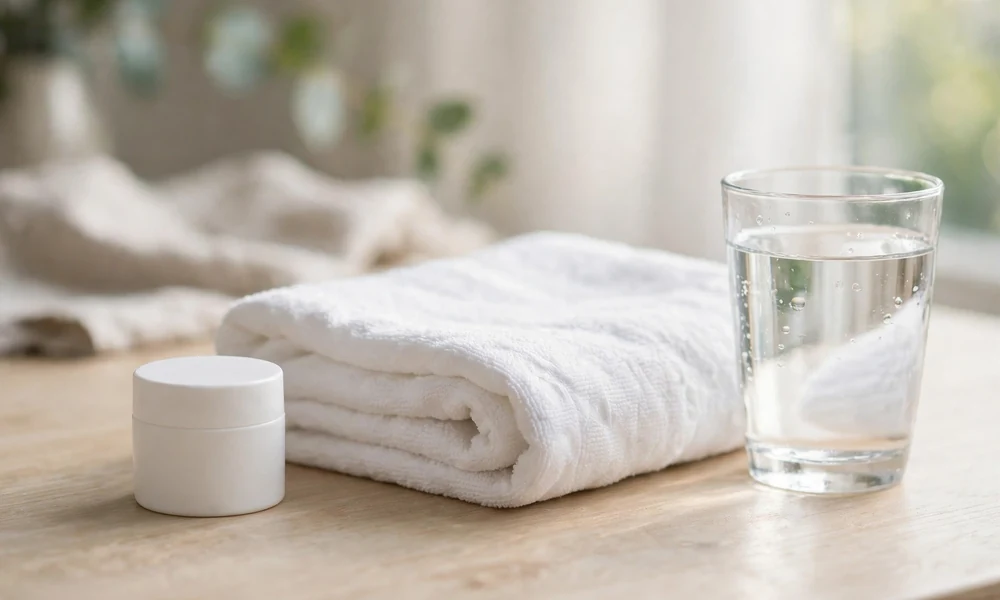
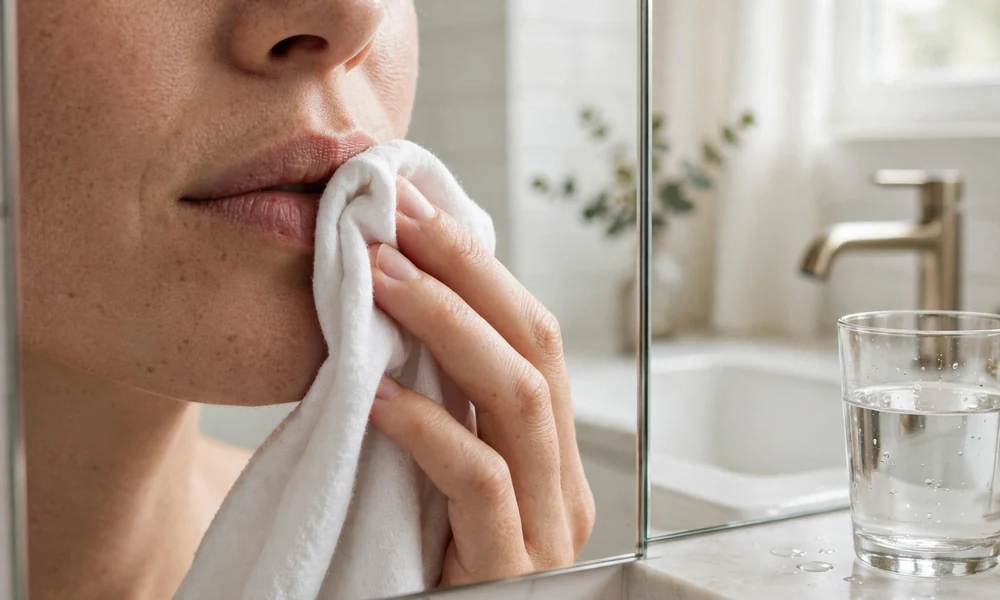
A gentle repair routine for chapped lips takes only a few minutes, morning and night. Start with clean hands and lukewarm water: splash the lips gently, or press a soft cloth dampened with lukewarm water against them for a few seconds, and let the water soften the rough surface.
Pat the lips dry with a soft cloth, never rub them, and then press on a thin layer of plain balm with a clean fingertip. Do this twice a day, morning and night, and the cracks begin to close and the sting fades.
Water First, Then Balm
Water first, then balm: that is the whole order, and it matters. Water softens the lips, and balm seals that softness in; balm on dry lips without water first does far less good. A plain balm is best — no strong flavour, no menthol, no camphor, no heavy fragrance — just a simple, gentle balm that feels kind on sore skin.
Apply it thinly, with a clean fingertip, and reapply after eating, drinking or brushing your teeth. A thin layer, often, beats a thick layer once a day.
Chapped Lips at a Glance
| Dry, rough lips | Gentle repair | Water, balm |
|---|---|---|
| Flaking, cracked skin | Lukewarm rinse, pat dry | Small sips daily |
| Sore, tight corners | Thin plain balm | Soft cloths only |
| No picking, no scrub | Twice daily routine | Doctor if persistent |
Chapped Lips and the Daily Lip Habit
Chapped lips and the daily lip habit are close cousins, but they are different guides for different lips. The daily lip habit is built for healthy lips: a glass of fresh water in the morning, small sips through the day, a gentle rinse, and a thin layer of plain balm after the water.
This guide is built for lips that are already chapped: cracked, sore, peeling lips that need gentle repair, not just maintenance. Where water and lips, a simple daily habit keeps healthy lips soft through the day, this guide repairs lips that have already cracked — same water, same balm, different starting point, different care.
Chapped Lips and Lip Care Water
Chapped lips and lip care water share the same simple idea — water first, then balm — but they are different guides with different centres. Lip care water is a balm-centred guide: why lips dry out, how to choose a plain balm, and how a short morning and evening routine keeps lips comfortable.
This guide is repair-centred: what chapped lips are, why they crack and peel, how to soften them gently, and how to let the cracks close without picking or scrubbing. Lip care water teaches the daily habit of balm and water; this guide teaches the gentle repair of lips that are already sore — same partners, different job.
Chapped Lips and Lipstick
Chapped lips and lipstick meet at the same thin skin, but they ask for opposite things. A smooth lipstick finish needs soft, even lips: colour that glides on evenly and stays soft all day. Lipstick catches because lips dry out, and dry skin holds colour unevenly.
Chapped lips need repair before colour, not colour over cracks. Never paint lipstick over cracked, sore lips and hope it hides them; the colour catches on flakes, stings the cracks, and looks tired by lunch. Heal the lips first with water and plain balm, and let the colour wait. Water and lipstick for a smooth finish is the guide for colour once lips are soft again; this guide is the repair that comes before it.
Chapped Lips in Dry Weather
Dry weather is the hardest season for chapped lips. Cold wind outside strips moisture from the surface, and dry heated rooms do the same work indoors, so winter and dry summers both leave lips tight and flaking. On dry days, drink your water steadily, keep the balm close, and cover your lips with a soft scarf when you step out into cold wind.
At home, a bowl of water near a heater can soften the air a little, and a damp cloth on the lips in the evening can loosen flakes gently. A cooler room with a glass of water beside you is kinder to sore lips.
Chapped Lips at Night
Night is the best time for chapped lips to rest and repair. While you sleep, the lips are still, no food or drink disturbs them, and a thin layer of plain balm can work for hours without being wiped away. Before bed, rinse the lips gently with lukewarm water, pat them dry with a soft cloth, and press on a thin layer of plain balm.
Keep a glass of water on the bedside table, and take a small sip if you wake in the night. In the morning, the lips should feel softer, and the flakes should loosen on their own.
What to Avoid and When to Ask a Doctor
Some habits keep chapped lips chapped, and the kindest thing is to stop them. Never pick, bite or scrub the lips, never lick them when they feel dry, and never use strong-flavoured, menthol or camphor products on cracked skin. Avoid very hot drinks, very salty food and harsh scrubs while the lips are sore, and keep the routine plain and gentle.
Ask a doctor if the lips stay cracked, sore or bleeding for more than two weeks, if the corners stay split, or if the lips swell, blister or show sores that do not heal. Patch-test any new balm on a small patch of skin first. This guide is gentle general information only, and it is not a treatment.
Your Chapped Lips Checklist
- Drink fresh water slowly through the day, in small sips.
- Rinse lips gently with lukewarm water, morning and night.
- Pat lips dry with a soft cloth, never rub or scrub them.
- Press on a thin layer of plain balm after the water.
- Never pick, bite or lick chapped lips, even when they flake.
- Ask a doctor if lips stay cracked, sore or bleeding.

Frequently Asked Questions
What causes chapped lips?
Chapped lips are caused by dryness: cold wind, dry heated rooms, hot drinks and salty food all pull moisture from the thin lip skin, and licking the lips makes it worse.
How do I repair chapped lips gently?
Rinse the lips gently with lukewarm water, pat them dry with a soft cloth, and press on a thin layer of plain balm, morning and night. Let flakes loosen on their own; never pick or scrub them.
Does drinking water help chapped lips?
Yes, drinking water helps, slowly and gently. Small sips through the day give the body steady moisture to share with the skin, but water alone cannot fix lips that are already cracked.
Should I use lipstick on chapped lips?
No, not while the lips are cracked and sore. Lipstick catches on flakes and stings the cracks. Repair the lips first with water and plain balm, and wear colour again once they are soft.
How long do chapped lips take to heal?
Most chapped lips feel better within a few days of gentle care, and small cracks close within a week or two. If they stay cracked or sore for more than two weeks, ask a doctor.
When should I ask a doctor about chapped lips?
Ask a doctor if the lips stay cracked, sore or bleeding, if the corners stay split, if the lips swell, blister or show sores that do not heal, or if the chapping keeps coming back.
The Bottom Line
Chapped lips need gentle repair, not harsh fixes: lukewarm water, a soft cloth, a thin layer of plain balm, and small sips of fresh water. Be patient, and let the lips heal kindly.
A Note for Soft Lips
Keep it gentle, keep it plain, keep it patient. A glass of water, a plain balm, and a few soft minutes can carry sore lips back to soft.


