There is a particular kind of tiredness that only a warm bath seems to reach. The day has been long and your skin feels tight from dry air. A rose quartz bath ritual begins here, with a small decision to slow down for twenty minutes.
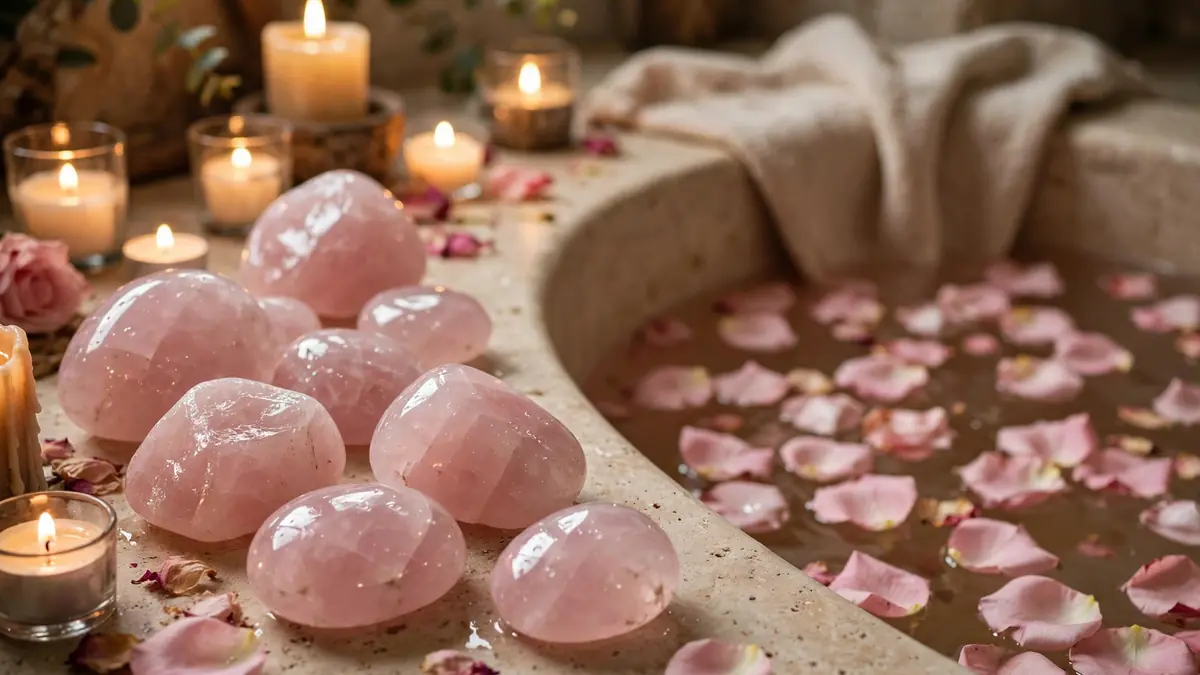
Rose quartz is the soft pink stone most people picture when they think of gentle, calming crystals. Its soft pink colour changes the mood of a bathroom at once. In a rose quartz bath, the stone is a companion to the ritual rather than the point of it; the warmth, the water, and the care afterwards are what leave skin feeling soft.
This guide keeps things simple and honest. At Crystal by Ayesha, we treat crystals as beautiful objects and sources of comfort, not as medical treatments. Here is a calm, practical ritual for preparing a bath, using rose quartz safely, and caring for skin afterwards.
Key Takeaways
- A rose quartz bath ritual is a slow, gentle soak where the stone sets the mood and warm water does the real work.
- Warm, not hot, water protects your skin's natural moisture and leaves it feeling softer.
- Clean your rose quartz before and after each bath.
- Pat skin dry after bathing and moisturise while it is still slightly damp.
- A short ritual done regularly is worth more than an elaborate one done once.
What a Rose Quartz Bath Ritual Actually Is
A rose quartz bath ritual is simply a bath taken slowly and with intention, with a piece of rose quartz nearby. There is no special chant, no complicated sequence, and no need for expensive equipment. You run a warm bath, place the stone where you can see it, and give yourself permission to do nothing else while you soak.
People are often drawn to rose quartz because of what it represents to them. For some, the pale pink colour feels calming after a busy day.
It helps to be clear about what the stone does and does not do. Rose quartz will not soften your skin on its own, and no crystal can replace good skin care, rest, or medical advice. A bath ritual creates the conditions where skin feels its best.
Why Warm Water Helps Skin Feel Softer
Skin feels soft when it holds enough moisture and when its surface is calm rather than stripped or irritated. A comfortably warm soak relaxes the muscles and helps a gentle cleanser lift away the day's dust and sweat without scrubbing.
Temperature matters more than most people realise. Water that is too hot can strip the natural oils that keep moisture in, leaving skin feeling tight and dry once you step out. A good test is the inside of your wrist: the water should feel warm and welcoming, never stinging. If it feels hot on your wrist, add cold water and wait a minute before stepping in.
Aim for a soak of fifteen to twenty minutes, and keep the water warm rather than hot. Longer soaks in very hot water may feel luxurious in the moment, but they often leave skin drier than when you started.
Choosing and Caring for Your Rose Quartz
Choosing a piece of rose quartz for the bath is a sensory pleasure, and it is worth taking a moment over it. Look for a stone that feels good in your hand: smooth, cool, and free of sharp edges. Hold a few pieces before you choose, and pick the one that feels most comfortable in your palm.
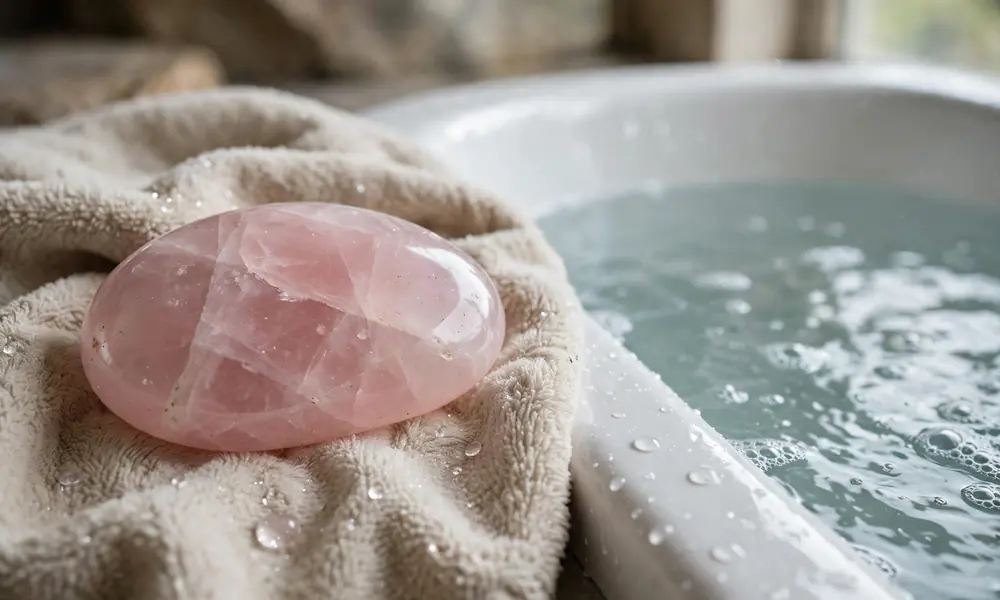
Before the stone goes near your bath, give it a quick clean. Wash it with warm water and a drop of mild soap, rinse it well, and dry it with a soft cloth. Afterwards, rinse it, dry it, and store it somewhere clean and dry.
It is worth remembering that not every crystal belongs in water. Some stones are porous, fragile, or contain minerals that do not mix well with soaking. Rose quartz is generally considered a sturdy stone for this kind of use, but the guidance for one stone never applies to all of them. Our companion piece on clear quartz takes a similar approach, looking closely at the stone itself before deciding how to use it.
Setting the Mood: Light, Scent, and Sound
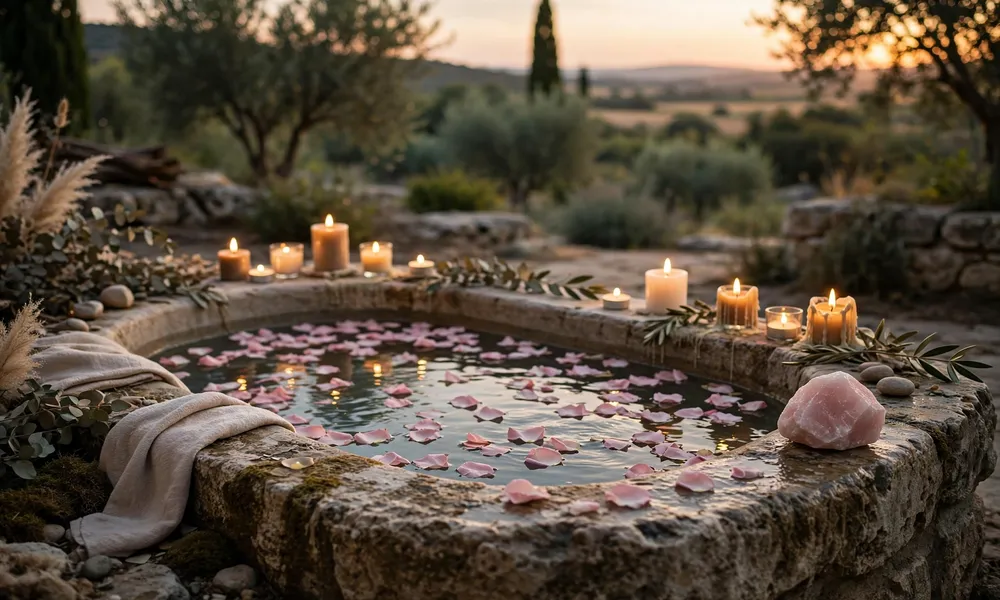
A bath ritual is shaped as much by the room as by the water. Low, warm light changes a bathroom completely: a single candle on a safe surface, or the main light switched off in favour of a small lamp, makes the space feel calm and private.
Scent is the next layer, and a light touch works best. Rose petals scattered on the water give a faint, natural fragrance without anything added to the bath itself.
Sound matters too, though silence is a fine choice. Some people like soft music playing quietly from another room, while others prefer the sound of the water itself. Keep it low, so nothing in the room demands your attention.
A Gentle Rose Quartz Bath Ritual, Step by Step
Start by setting the scene before the water runs. Tidy the bathroom quickly, lay out a clean towel and your moisturiser, and put your rose quartz where you will see it.
Run the water warm, not hot, and test it with your wrist before you step in. Place your rose quartz on the edge of the tub or on a small dish beside it, where you can reach it easily.
Slip in slowly, let your shoulders drop below the surface, and take a few slow breaths. Hold the stone if you like, or let it sit where you can see it. There is no correct way to hold it.
Use the soak itself for gentle cleansing rather than scrubbing. Wash with a mild cleanser or a soft cloth, using slow, light strokes, and rinse well.
Stand up slowly when you get out, as warm water can leave you light-headed. Step onto a dry mat, wrap yourself in your towel, and take a moment before you reach for anything else. The next few minutes, while skin is still warm and slightly damp, matter most for softness.
After the Bath: Locking in Softness
Soft skin after a bath is mostly a matter of timing. When you step out of the water, your skin is hydrated on the surface, but that moisture evaporates quickly into dry bathroom air. Pat dry gently and moisturise within a few minutes.
Choose a moisturiser that suits your skin rather than the most rich or most expensive one on the shelf. A simple, fragrance-free cream works well for most people. Smooth it over your skin in slow strokes, including the driest places such as shins, elbows, and hands.
The rest of your evening can stay gentle too. Loose clothing feels kinder against freshly moisturised skin, and a glass of water helps you rehydrate. Our piece on staying hydrated looks at that small daily habit. If your skin routine already has a shape you like, a bath ritual should fit inside it rather than replace it. We wrote about a skin routine with room to breathe, and the same idea applies here: fewer steps, done well, beat a long list.
Ways to Shape the Ritual Around Your Week
A ritual only survives if it fits your real life. On a quiet Sunday evening, you might take the full twenty minutes with petals, a candle, and the stone in your hand.
You can also vary the small details with the seasons. In winter, a little bath oil and a richer moisturiser afterwards make the biggest difference.
The stone itself needs no seasonal change. It is the same smooth companion in January and in July.
| Ritual version | Time | What to include | Best for |
|---|---|---|---|
| The full ritual | 20 minutes | Petals, bath oil, rose quartz in hand | Slow evenings and weekends |
| The weekday soak | 10 minutes | Rose quartz on the tub edge | Busy nights when time is short |
| The gentle reset | 15 minutes | Mild cleanser, rich moisturiser after | Dry skin |
| The summer cool-down | 10 minutes | Light lotion, no extras | Hot days and sticky skin |

Your Rose Quartz Bath Checklist
- Run the bath warm, not hot, and test the water with your wrist.
- Wash your rose quartz before the bath.
- Lay out a clean towel and your moisturiser before you get in.
- Keep the soak to fifteen or twenty minutes and cleanse gently.
- Pat skin dry, then moisturise while it is still slightly damp.
- Rinse and dry the stone after the bath.
Frequently Asked Questions
Can I put rose quartz directly in the bath water?
Yes, a smooth, sturdy piece of rose quartz can sit in the bath or rest on the edge of the tub. Wash it before and after use, and keep it out of the water if it is ever chipped.
How often can I take a rose quartz bath?
Two or three times a week suits most people, but the honest answer depends on your skin. Warm baths are gentle when they are not too hot and not too long, so a regular rhythm of a few soaks a week works well.
Does rose quartz actually make skin softer?
No stone softens skin on its own. What makes skin feel softer is warm water, gentle cleansing, and moisturising while the skin is still damp. Rose quartz makes the ritual pleasant, which helps you repeat it, and repetition supports softer skin.
What should I do if my skin feels irritated after a bath?
Simplify everything. Skip the petals, oils, and scented products, use cooler water, and keep the soak short. If irritation keeps coming back, speak to a pharmacist or a doctor.
Can I use rose quartz with bath oils or petals?
Yes, and they go together nicely. Petals add scent and beauty to the water, while a small amount of bath oil can leave skin feeling more comfortable after the soak. Use small amounts, choose products your skin tolerates, and rinse the stone afterwards.
Do I need an expensive piece of rose quartz for the ritual?
No. A small tumbled stone or palm stone is all you need, and the size or price of the piece changes nothing about the bath. Choose one that feels smooth and pleasant in your hand and that you enjoy looking at.
The Bottom Line
A rose quartz bath ritual is a small, repeatable pleasure, and that is exactly why it works. Warm water relaxes you, gentle cleansing leaves skin clean without stripping it, and moisturising at the right moment helps skin stay soft.
The best version of this ritual is the one you will actually do. Keep the water warm rather than hot, keep the steps few, and keep the stone clean and close at hand. Softness comes from care repeated often, not from a single perfect bath.
A Quiet Note to End With
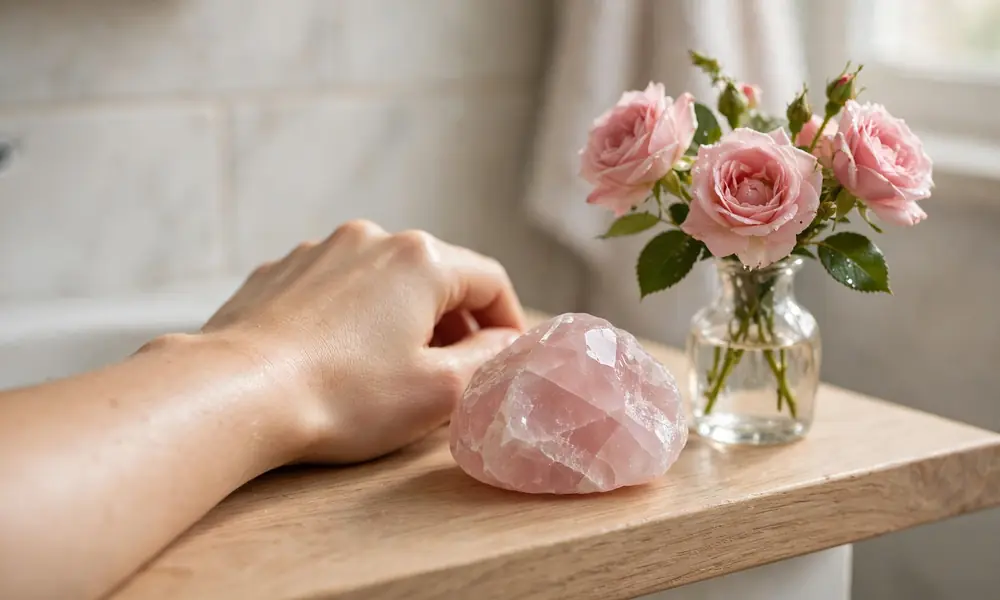
When the bath is over and the stone is dry on its shelf, the ritual is done, but its mood can linger. A tidy bathroom, a soft towel, and skin that feels comfortable are small things, and they are enough. At Crystal by Ayesha, we hope this ritual brings you a little softness and a little peace.



