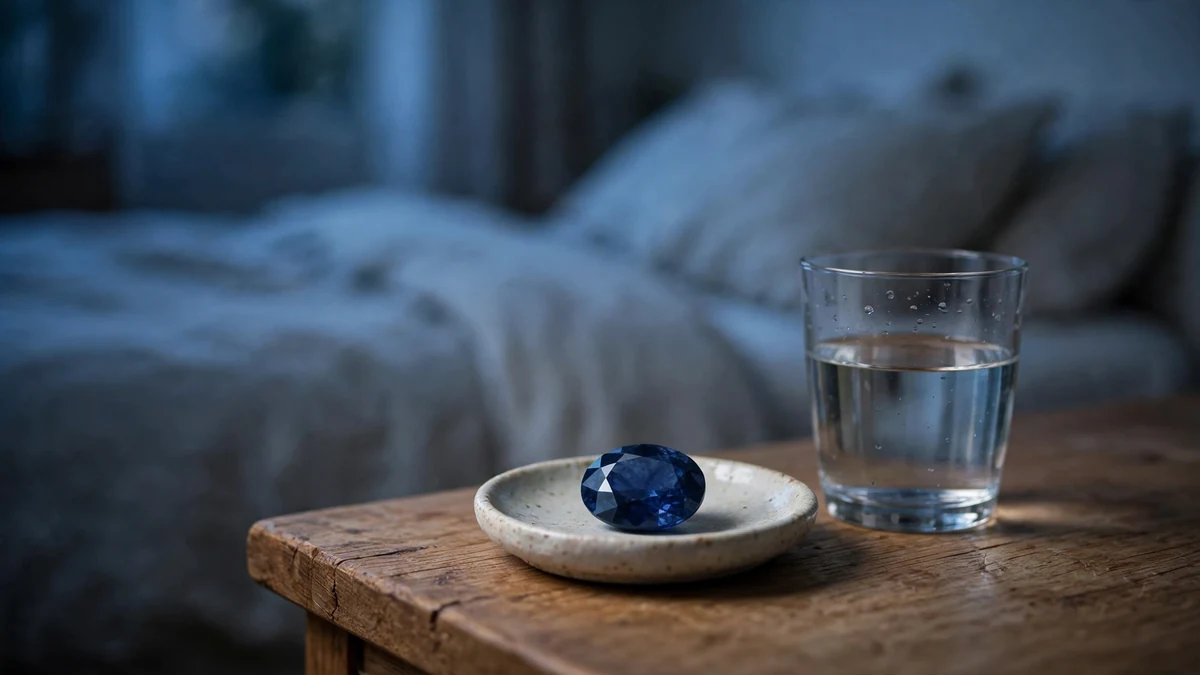
There is a colour that belongs to the last hour of the day. It is not the gold of sunset or the black of full night, but the deep, quiet blue in between: the blue of still water at dusk, of a clear evening sky just before the stars come out. It asks nothing of you.
Sapphire calm water is built on that colour. A piece of deep blue sapphire rests on your bedside table, beside a glass of cool, still water. Nothing is drunk from the stone. The stone is a visual anchor: a small, beautiful object that tells your mind the busy part of the day is over and rest is next.
This article explains what sapphire calm water is, why deep blue feels so restful, and how to build a short evening wind-down around it. It is general rest and routine guidance only, not a treatment. It is a quiet hour, a blue stone, and a glass of water.
Key Takeaways
- Sapphire calm water means a deep blue sapphire beside a glass of cool water at your bedside, never in the water.
- Deep blue feels calm because it echoes still water and evening skies.
- A short wind-down, repeated at the same time each night, beats a long routine you abandon.
- Keep the bedside corner simple: the stone, the water, low light, and a clear surface are enough.
- Sapphire is a hard stone, but the rule stands: it stays beside the water, never in drinking water or elixirs.
What Sapphire Is
Sapphire is the blue variety of corundum, an aluminium oxide mineral and one of the hardest gemstones in the world, scoring 9 on the Mohs scale, second only to diamond. That hardness means it keeps its polish and feels cool, smooth, and solid in the hand.
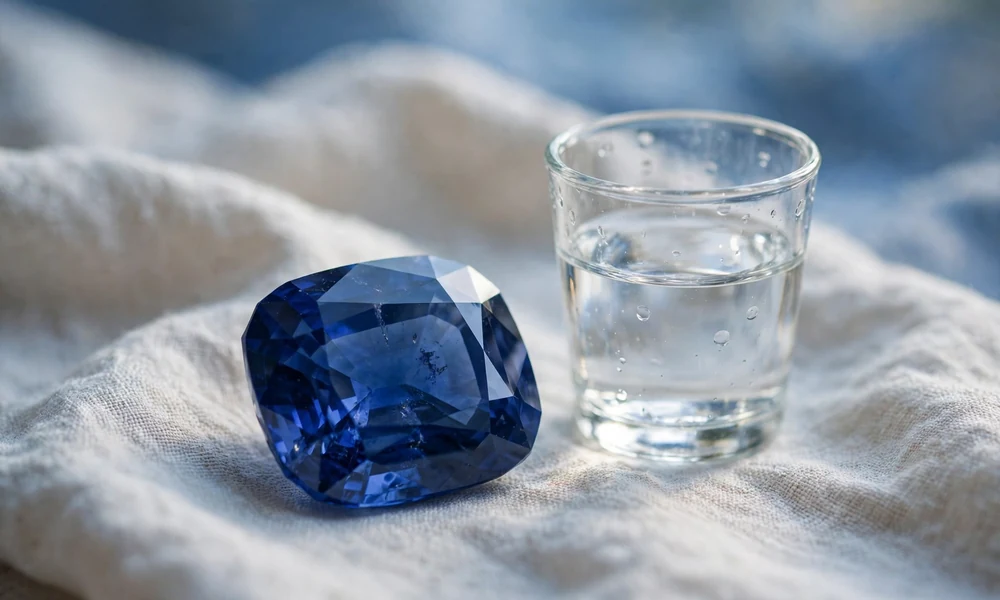
Its blue comes from tiny traces of iron and titanium inside the crystal. The finest sapphires are a rich cornflower blue, deep and even, like still water seen through glass. That depth makes it a good evening stone: it stays beautiful in low light, when paler stones fade.
Sapphires have been valued for centuries, from the mines of Sri Lanka and Myanmar to the blue stones of Kashmir. At Crystal by Ayesha, we approach sapphire as a material, a decorative object, and a source of visual inspiration, not as a medical treatment. It will not fix your sleep, but it can give your attention a calm, beautiful place to rest.
Why Deep Blue Feels So Calm
Blue is the colour of things that do not hurry. A still lake, a clear evening sky, deep water seen from a boat: all of them are blue, and all of them are still. Deep blue is cool and quiet, and it suits the end of the day in a way that bright reds and yellows never will.
In soft evening light, a deep blue stone holds its colour while everything else fades into shadow. It becomes a single point of calm to look at, the way a window gives you somewhere to rest your eyes while you think. You do not need to stare at it: it is enough that it is there, steady and blue, while you drink your water.
A glass of still water beside a blue stone looks like one small scene, so keep the colours around it simple — pale linen, plain wood, white or cream bedding — and the blue will do the rest.
Setting Up a Quiet Bedside Corner
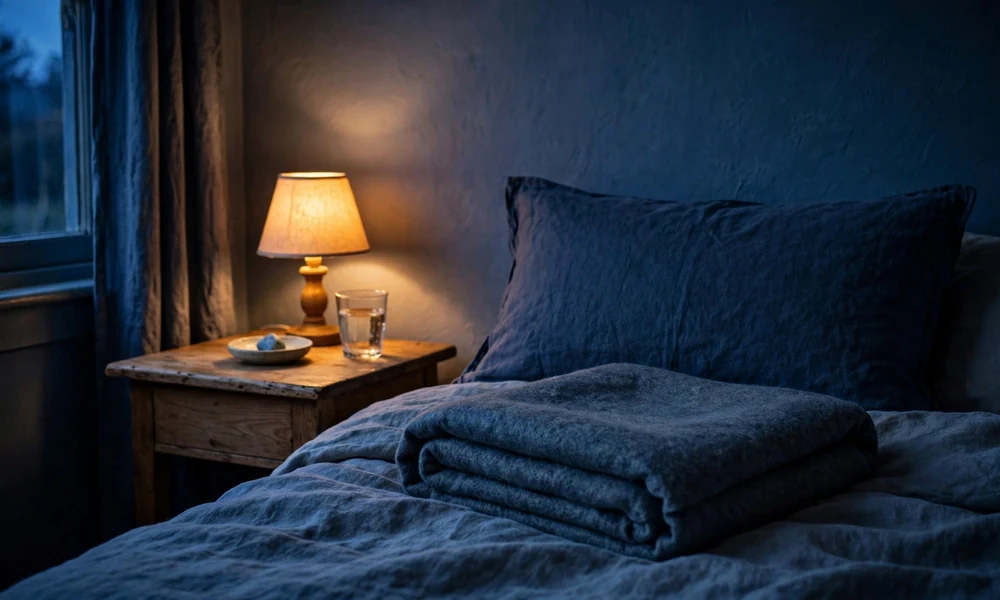
A wind-down needs a place, and the place can be very small: one corner of your bedside table, a tray on a low shelf, or a stool beside the bed. What matters is that it is yours for the evening, reasonably uncluttered, and ready without clearing first.
Keep it to a handful of things: the sapphire, a glass or small carafe of water, a small cloth or ceramic dish, and perhaps a low lamp. Keep the sapphire on its dish or folded cloth, where the light can reach it. Put the glass beside it, not behind it, so you can reach the water without knocking the stone.
Light matters most after the water itself. Bright overhead light tells your brain the day is still going on; a low lamp, a candle in a safe glass holder, or the last of the daylight does the opposite. Avoid adding too many objects: a crowded display competes for your attention, and attention is what you are trying to rest.
The Evening Wind-Down, Step by Step
Begin about twenty minutes before you plan to sleep, at the same time each night: repetition is what turns a pleasant evening into a habit your mind recognises. Pour a fresh glass of cool water and set it beside the sapphire. Turn off the bright overhead light, switch on a low lamp, and put your phone on silent across the room, face down.
Sit for a few minutes with the sapphire in your hand. Hold it, feel its cool weight, and breathe slowly. Then drink the water slowly, in small, unhurried sips. If your mind keeps returning to tomorrow, write one line in a small notebook — the one thing you need to remember — and close it. Then go to bed, lights low.
If twenty minutes feels too long on a busy night, shorten the ritual rather than skipping it. Five minutes — water, low light, a held stone, a slow sip — still counts, and a short ritual kept daily is worth far more than a long one done once a week.
Cool Water Beside the Bed
Water is the quiet half of sapphire calm water. Pour it fresh each evening, filling the glass about three quarters full, and drink it slowly while you sit. A glass drunk in small sips over a few minutes is part of the wind-down; one gulped down in a hurry is just another task.
Keep the water plain and still: cool tap water or ordinary bottled water is exactly right, and it needs nothing added. Do not put the sapphire in the water, and do not make elixirs or infusions with it. Sapphire is hard corundum, but the rule stands for every stone: it stays beside the glass, never inside it. Natural stones can have sharp edges, small cracks, dust, and inclusions you cannot see.
A small carafe is useful for a second glass during the night: fill it in the evening and wash it in the morning.

What Sapphire Calm Will Not Do
Say plainly what sapphire calm will not do: it will not cure insomnia, treat any sleep disorder, or replace sleep itself. It will not make you fall asleep in minutes, or fix a sleep problem that has lasted for weeks. A blue stone and a glass of water are a pleasant evening habit, not a diagnosis.
If your sleep is persistently troubled, if you lie awake most nights, or if poor sleep is affecting your days, please speak to a qualified health professional. A ritual can support a calm evening, but it cannot replace care.
It will also not do the work of a good bedroom on its own. A cool, dark, quiet room, a regular bedtime, and a phone left across the room matter far more than any object on the table.
Choosing Your Sapphire Calm Routine
Different evenings ask for different wind-downs: a long, tired day wants the full twenty minutes, a short evening wants the five-minute version, and a restless mind wants the notebook line written down before bed.
| Evening type | Wind-down | Stone and water |
|---|---|---|
| Long, tired day | Full twenty minutes | Sapphire held, water sipped slowly |
| Short evening | Five quiet minutes | Stone on dish, one glass |
| Restless mind | Notebook line first | Water beside the bed |
Try one version for a week before changing it. A routine kept for seven nights tells you whether it fits your evenings. If a version feels like a chore, make it shorter, not stricter.
Your Sapphire Calm Checklist
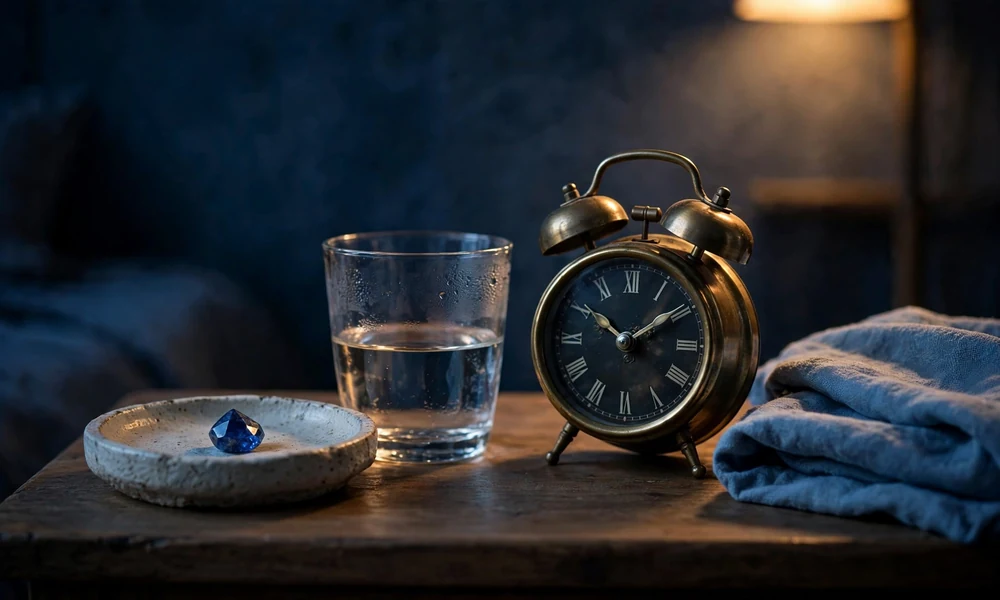
- Pour a fresh glass of cool water beside the sapphire, never with the stone inside it.
- Turn off the bright overhead light and switch on a low lamp.
- Put your phone on silent and leave it across the room.
- Hold the sapphire and breathe slowly.
- Drink the water in small, unhurried sips.
- Go to bed at a steady time, lights low, water waiting for the morning.
Frequently Asked Questions
What is sapphire calm water? It is a short evening wind-down built around a deep blue sapphire stone and a glass of cool water. The stone rests beside the glass, never in the water. You sit quietly, hold the stone, drink the water slowly, and go to bed.
Can I put sapphire in my drinking water? No. Keep the stone beside the glass, never inside it. Sapphire is hard corundum, but the rule stands for every stone: natural stones can have sharp edges, small cracks, dust, and inclusions you cannot see.
Will sapphire help me sleep? Sapphire will not treat insomnia or any sleep disorder, and this article makes no medical claims. A sapphire wind-down can give your evening a calm, repeatable shape: low light, slow water, and a few quiet minutes.
How is this different from an onyx evening ritual? An onyx evening ritual for restful sleep is built around a dark, smooth black onyx stone and a twenty-minute bedtime sequence. Sapphire calm water is built around deep blue colour and quiet water beside the bed.
How is it different from amethyst water in the evening? An amethyst water ritual for a calmer evening uses a violet amethyst stone beside a glass of water as an evening pause. Sapphire calm water uses a deep blue sapphire instead, with a wind-down aimed at deep rest.
Can I use sapphire calm water in the morning instead? You can, but it is designed for the evening, when deep blue suits low light. If you want a morning ritual built around a blue stone, a kyanite clarity ritual for a clearer mind follows the same calm shape, with a notebook and one written question for the day ahead.
The Bottom Line
Sapphire calm water is a deep blue stone, a glass of cool water, and twenty quiet minutes at the end of the day. It costs almost nothing and asks only for a light touch each night.
Start tonight with a fresh glass, a low lamp, and the blue stone beside the bed. Let the evening grow quiet.
A Note for Quiet Nights
Keep it blue, keep it cool, keep it quiet.


