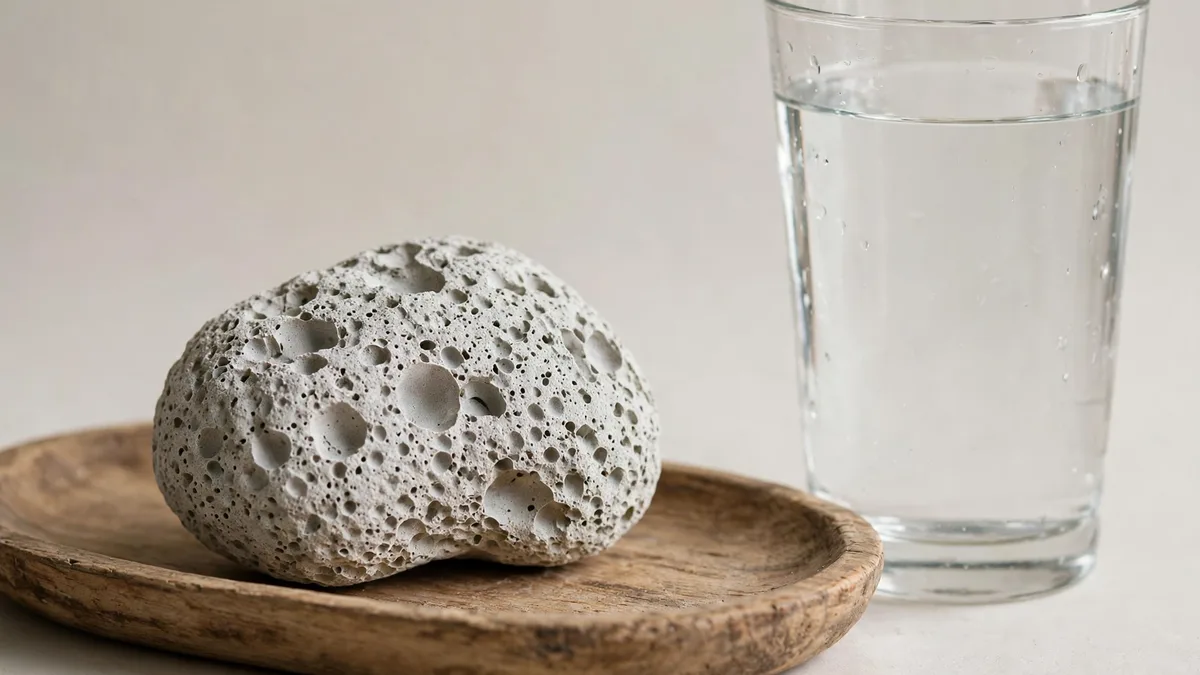
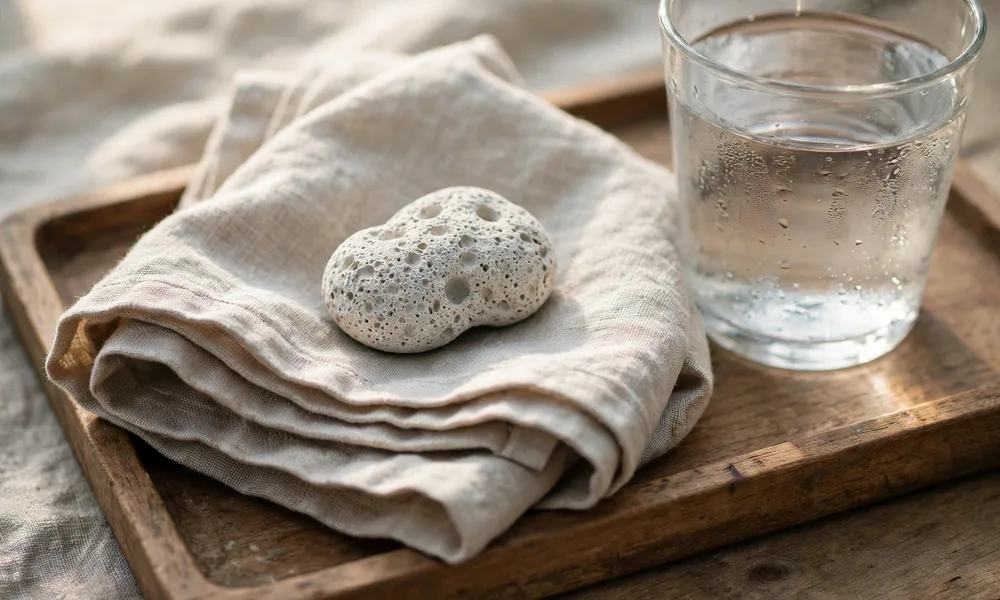
Pick up a pumice stone and the first surprise is its weight: a piece the size of a fist feels almost empty in the hand, as if the rock forgot to be heavy. Its surface is pale grey, rough to the touch, and covered in tiny holes, like a sponge that turned to stone.
Pumice comes from volcanoes, yet it looks nothing like the dark, dense lava rock most people picture: it is full of air, frozen in place as frothy lava cooled, and a dry piece can even float for a while before it sinks.
What follows looks at the stone from every side: its birth in froth, the marks of a genuine piece, and the simple habits that keep one safe on a shelf. Nothing here treats or heals; any question about health is one for a doctor.
Key Takeaways
- Pumice is a pale, feather-light volcanic rock full of holes.
- The holes are air bubbles frozen as frothy lava cooled.
- A dry piece can float, because it holds so much air.
- A real piece feels rough, dry and light, never smooth or heavy.
- Keep it on a dry tray beside water, never in a drink.
What Pumice Is
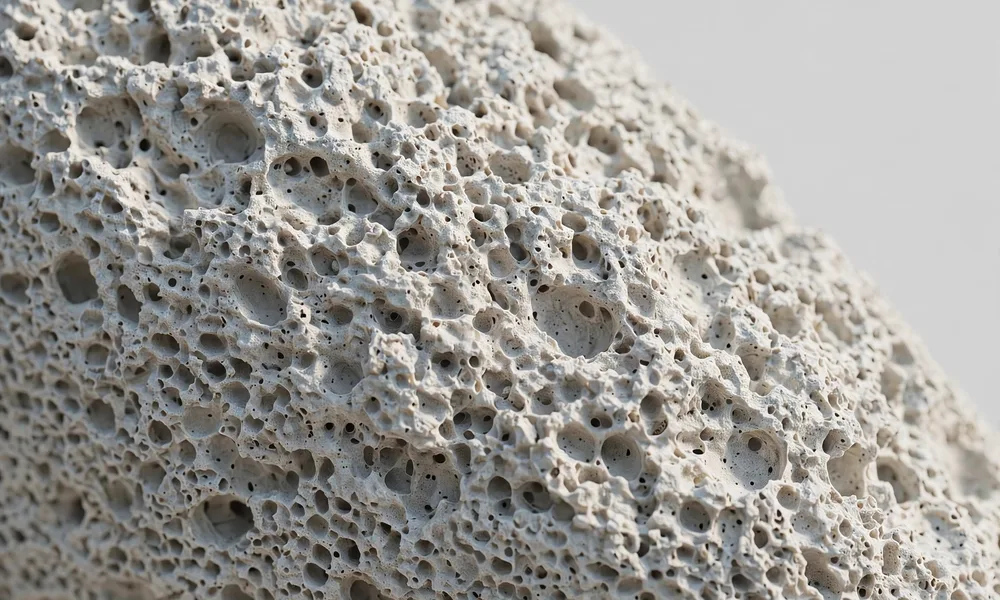
Pumice is volcanic rock, but of a kind that cooled with air trapped inside it. Its colour runs from pale grey to soft cream, sometimes with a faint warm tint, and its surface is rough and pitted, the holes ranging from pinpricks to small hollows you can see clearly.
Touch tells the rest: a pumice piece feels dry and scratchy, lighter than any other stone its size, its edges soft rather than sharp. Hold it beside a smooth pebble and the difference is plain — one polished by water, the other frozen foam.
How Pumice Forms
Pumice starts underground, where molten rock holds gases dissolved in it, much like fizz held in a closed bottle. When a volcano erupts, the pressure drops all at once, the gases rush out, and the lava froths up as it flies into the air.
That froth cools so fast the bubbles never escape: the lava sets around them, leaving a rock mostly holes held by thin glass walls. The lighter the froth, the lighter the stone, and the palest pieces hold the most air.
Spotting Real Pumice
Three checks will tell you if a piece is genuine, and none of them needs equipment. Begin with the heft: lift it, and it ought to feel far lighter than a pebble of matching size cut from any other rock. Next comes the skin of the stone: pitted and rough all over, with no smooth or glossy patch anywhere.
Third, the float test: set a dry piece gently on a bowl of plain water. Real pumice often bobs a while before it slowly soaks and sinks, while a heavy fake drops straight down. Rinse after the test and dry it fully before putting it back.
Why Pumice Feels So Light
Pumice feels light because much of it is not rock at all, but empty space: the bubbles inside can fill most of the stone, so a piece the size of an apple may weigh less than a purse of coins.
That lightness has a practical side: pumice is easy to carry and to display, but also easy to knock over, so it suits a rimmed tray rather than a bare edge. It asks for a steady spot, not because it is fragile, but because it rolls.
Pumice and Basalt: Light Rock Against Dark Rock
Basalt, a deep black stone for quiet days describes a dense volcanic rock of tiny crystals, dark grey to black, heavy in the hand, matte and cool, born when lava cooled slowly enough for crystals to grow. Its guide is about a rock that feels solid and plain.
Pumice is the same lava's opposite answer. Where basalt cooled slowly and grew crystals, pumice cooled in a rush full of gas, so no crystals grew and air took their place instead. Basalt is dark, heavy and smooth-grained; pumice is pale, light and full of holes. One sinks at once, the other may float. Both are volcanic, and the likeness ends there.
Pumice and Black Obsidian
Black obsidian for protection in busy weeks is about a dark glassy stone from volcanoes, born when melted rock cools in a rush, with no time for crystals, glossy all through and smooth to hold. That guide treats a glass that acts like a stone.
Pumice chilled quickly as well, yet gas filled its melt, so froth took the place of a smooth sheet. Obsidian catches the light with a sharp shine; pumice takes the light in and gives nothing back, its surface too rough to shine at all. A black glass and a grey foam, both born of lava, could hardly differ more.
Pumice and the Exfoliation Stone
An exfoliation stone water guide names a smooth, fine-grained pumice stone as a common choice for skin care, used with a light touch and plain water, then rinsed and patted dry. Its guide is about the stone's use on skin, not about the stone itself.
This guide steps back from that use and looks at the rock: where it comes from, why it floats, and how to choose and keep a piece for display. The exfoliation guide wets its stone and works with it; this guide keeps its stone dry on a tray beside a glass, and says nothing about skin.
Pumice at a Glance
| Pale volcanic rock | Full of air holes | Feather light feel |
|---|---|---|
| Frothy lava cooled | Often floats dry | Rough, never shiny |
| Grey to soft cream | Rinse, then dry | Tray keeps it safe |
| No crystals inside | Beside water only | Quiet days suit |
A Quiet Morning with Pumice, Step by Step
Set the scene the evening before: leave the stone where it will sit in the morning, on its rimmed tray in a bright spot. At breakfast, pour a tall glass of cool water and place it near the stone, close enough to share the tray but never touching it. The glass is there to drink from; the stone is there to look at.
Before you drink, pick the stone up and weigh it in your palm, noticing how little there is to it; turn it slowly, study the pitted face, then put it back where it belongs. Afterwards, take the glass and sip the water unhurried, a mouthful at a time, while the house is hushed and daylight is only just arriving.
Nine Neighbours in This Batch
Ten guides share this batch, and pumice keeps company with nine of them. The rolling pin guide shows a beginner how to flatten dough, conch brings a soft pink shell for tender days, and the baking tray guide knows when a tray needs washing. Muscovite is a silvery flake for quiet days, the terrarium guide grows small plants behind glass, and the cookie jar guide keeps biscuits fresh under a tight lid.
Rainbow fluorite bands purple and green in a single stone, linarite asks whether a deep blue stone is safe to display at home, and the bonsai guide tends a living tree in a shallow pot — a tree that drinks, grows and is pruned, while pumice is a dead volcanic rock that never changes, never drinks, and never grows.
Stones That Must Never Touch Water
The rule for this shelf is short: the glass holds water, and the stones stay dry beside it. Apatite comes out of a soak with its polish gone, and no amount of drying brings the gloss back. Lepidolite is a lithium mica, which alone is enough to keep it out of any cup or jug. When pyrite sits in damp air it rusts and its golden flash fades to brown, angelite takes water in, swells, and splits along its soft layers, and amber, fossil tree resin and no stone at all, turns opaque and cloudy after soaking. None of the five belongs in drinking water, and pumice itself rests on the tray, never in the glass.
Cleaning and Keeping Pumice
Pumice cleans easily, because its holes welcome a rinse. Wash it in lukewarm water with mild soap and a soft brush, working gently so the thin walls between holes do not crumble, then rinse and leave it to dry fully in the air.
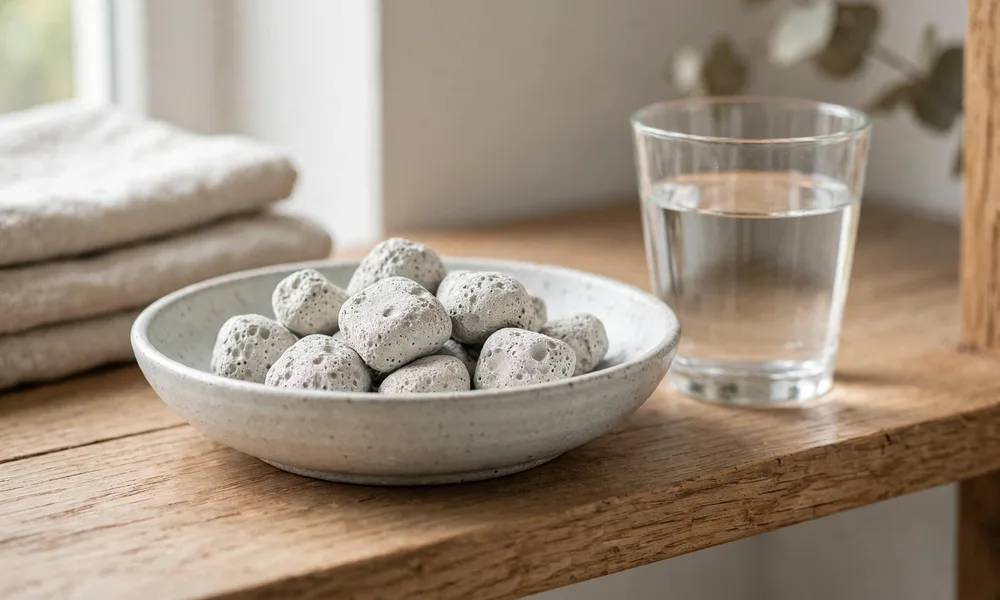
For keeping, a wooden tray with a rim suits it best, somewhere the light piece will not roll off a bare edge. Give it its own spot on the tray, away from harder stones that could chip it, and keep it dry between rinses so no dampness sits in its holes.
Your Pumice Checklist
- Lift the piece and feel for surprising lightness in the hand.
- Look for a rough surface full of holes, never smooth shine.
- Try the float test in a bowl, then rinse and dry it fully.
- Rest the stone on a rimmed tray beside a glass, never in it.
- Wash it with lukewarm water and mild soap, then air-dry it well.
- If a stone crumbles oddly or your skin reacts, ask a jeweller or a doctor — a stone is a quiet object, not a remedy.

Frequently Asked Questions
Can I hold a piece of pumice every day?
Yes, holding a dry piece is fine: it is light, rough and cool in the hand, and it needs no special care. Wash your hands after handling it if the dust bothers you, and put the stone back on its tray.
Does pumice really float on water?
A dry piece often floats for a while, because its holes hold so much air. As water seeps in, the piece grows heavier and sinks slowly, which is normal and does no harm.
How do I know my pumice is real?
Real pumice feels far lighter than any other stone its size, looks rough and full of holes, and often floats on water. A heavy, smooth or shiny piece is not pumice.
Can pumice go in drinking water?
No, keep pumice beside the glass, never inside it. A drinking glass holds water and nothing else, and the stone belongs on its tray.
Where should pumice live at home?
Keep it on a rimmed wooden tray or a lined shelf, somewhere bright and dry, with a glass of water standing beside it. A tray with a rim stops the light piece from rolling away.
How do I clean a pumice stone?
Wash it in lukewarm water with a drop of mild soap and a soft brush, rinse it well, and let it air-dry fully before putting it back. Never use harsh chemicals or a stiff wire brush.
The Bottom Line
Pumice is a pale volcanic rock full of frozen air, feather-light and rough, best kept dry on a rimmed tray beside a glass of water.
A Note for Quiet Days
A light stone, a glass of water beside it, and a slow morning with nothing to hurry for.