There is a particular kind of tired that shows up on the face first: dullness after a long day indoors, a tight feeling from dry, heated air, and makeup settling into fine lines by late afternoon. The skin is not unhappy. It is asking for a little water, a little air, and a pause.
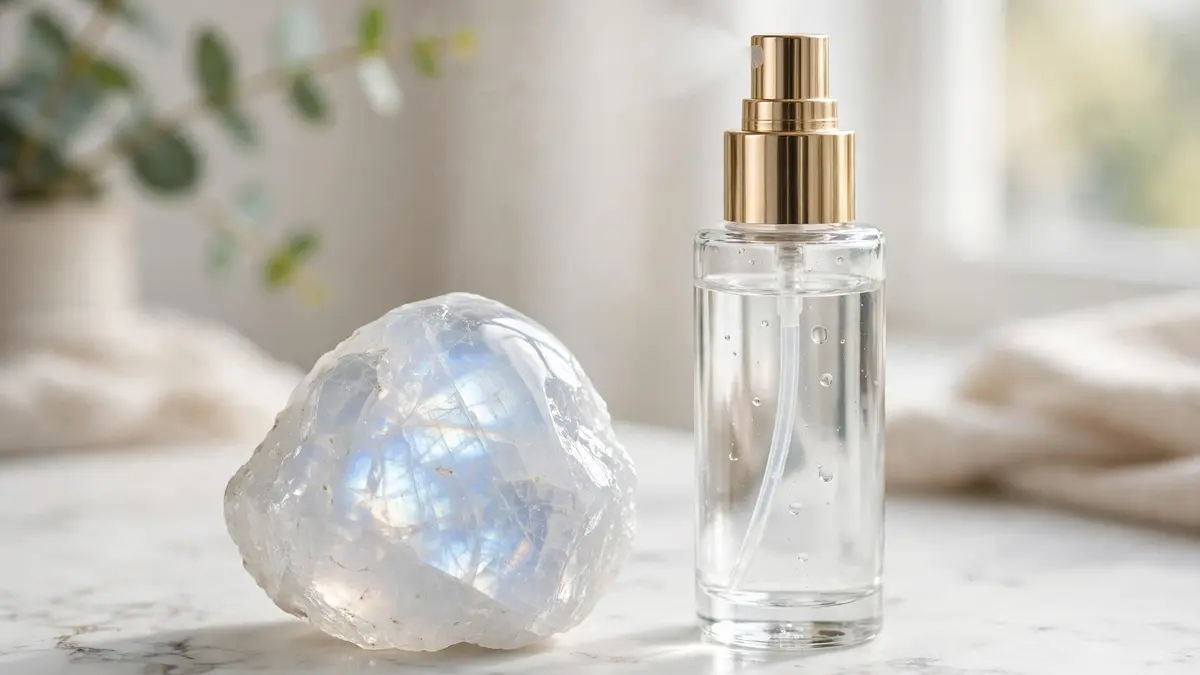
A moonstone hydration mist answers that request gently. It is a fine, water-based facial mist inspired by moonstone, the pale stone long associated with calm evenings and quiet light. Some mists are infused with moonstone water or mineral extracts; others borrow the stone’s glow, pairing a dewy finish with an unhurried ritual.
This article explains what a moonstone hydration mist is, why tired skin responds to it, and how to use one well.
Key Takeaways
- A moonstone hydration mist is a fine, water-based facial mist that gives tired skin a quick, dewy refresh without disturbing makeup.
- Mist clean or lightly made-up skin from twenty centimetres away, with two or three gentle passes.
- A mist adds water but cannot lock it in alone, so follow it with a moisturiser or a light facial oil.
- The moonstone connection is about ritual as much as ingredients: a calm moment that turns a basic step into one you look forward to.
- Used once or twice a day, it suits most skin types, but patch testing and a short ingredient list are worth your attention.
What a Moonstone Hydration Mist Actually Is
At its simplest, a moonstone hydration mist is a spray that delivers a fine layer of water and humectants to the face, usually built around purified water, glycerin or hyaluronic acid, and a few soothing extracts. Some versions include moonstone extract or water that has touched moonstone. Others keep the connection visual, with a milky liquid or a bottle that catches the light.
What sets a mist apart from a splash of water is the delivery: droplets so fine they settle evenly instead of running down the face, dampening rather than soaking the skin. The best bottles create a soft, wide cloud, not a sharp jet. It is not a cleanser, a moisturiser, or a treatment serum. Think of it as a supporting player.
Why Tired Skin Responds to a Fine Mist
Tired skin is usually thirsty skin. Long hours in air conditioning or central heating pull moisture from the surface, and the skin’s barrier can struggle to keep up. The result: a flat, grey complexion, tight cheeks, and makeup that sits on the skin instead of blending in. A fine mist addresses this, not with heavy product but by returning a little water to the surface.
There is also a sensory reason mists feel so reviving: the cool droplets lower the skin’s temperature slightly, and that small change can feel like a reset in a long afternoon. Ten seconds to close your eyes, breathe, and mist your face is a small act of care. Staying hydrated runs through every part of looking after yourself, and the quiet art of staying hydrated explores how those small, steady habits add up.
The Moonstone Connection: More Than a Pretty Stone
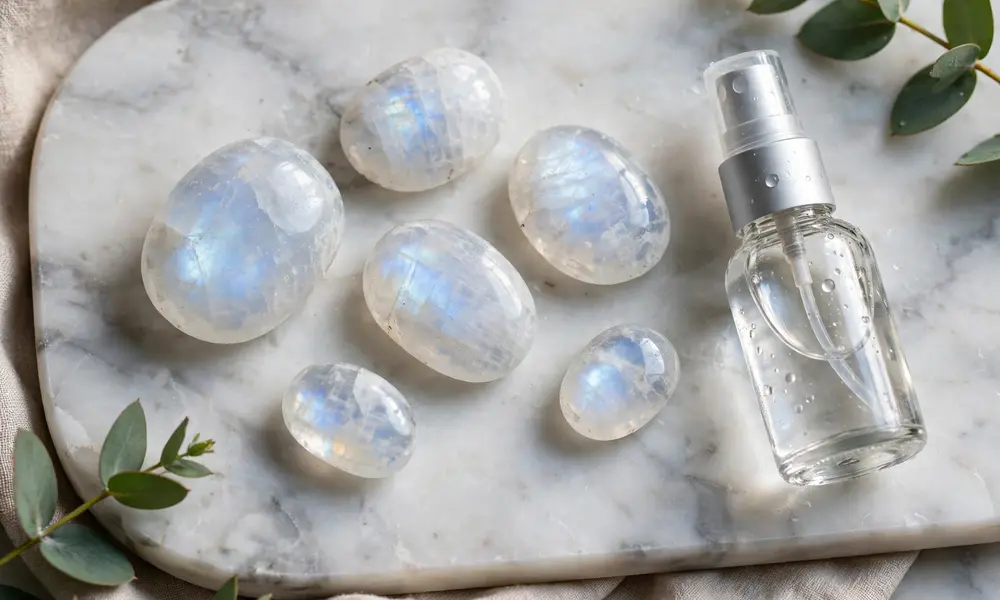
Moonstone has been admired for centuries for its soft, shifting glow, a quality gemmologists call adularescence. The stone seems to hold light inside it, releasing it in a pale blue or silvery shimmer. In crystal traditions, moonstone is linked with calm, intuition, and the quieter hours of the day, and it suggests slowing down.
In a hydration mist, the moonstone connection usually appears in one of two ways. Some brands infuse their water with moonstone or add a mineral extract. Others use moonstone as inspiration, with a pearlescent finish or packaging that recalls the stone’s gentle light. Both are legitimate; what matters is whether the product is well made. A short ingredient list, a fine spray, and a comfortable formula matter far more than any claim on the label. Water also shapes the objects around it, and water as a design language looks at that quiet influence in everyday life.
How to Use a Moonstone Hydration Mist, Step by Step
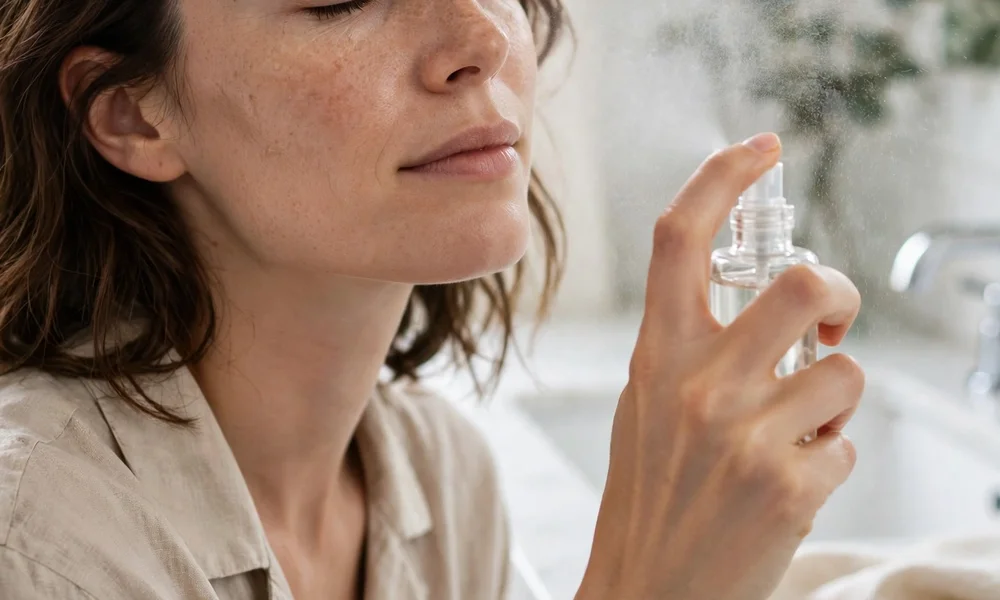
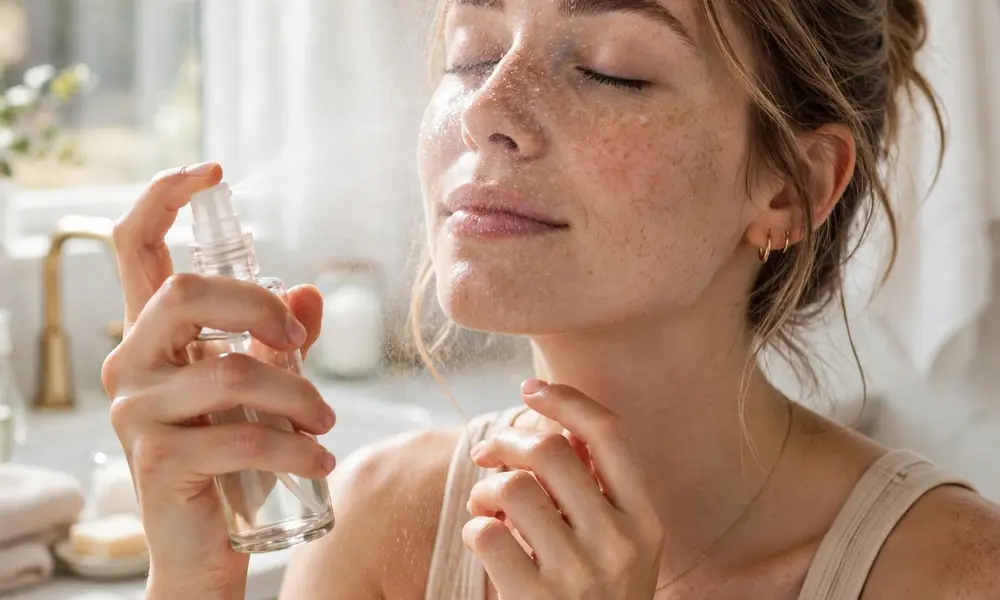
Start with a clean face in the morning, or skin with only light makeup in the afternoon. Hold the bottle about twenty centimetres away, close your eyes, and press the pump two or three times, moving the bottle slightly so the mist falls evenly. Aim for a light, even dew, not a wet face. If droplets run, you held the bottle too close.
The most important step comes immediately afterwards. While the skin is still damp, apply your moisturiser, or press a few drops of facial oil over the mist. This seals in the water the mist delivered: the difference between a refresh that lasts an hour and one that fades in minutes. Left to evaporate on its own, the water can carry moisture away as it dries. Over makeup, use one or two light passes from further away.
Choosing the Right Mist for Your Skin
Not every mist suits every face. A simple formula with glycerin and a few calming extracts suits most people, while fragrance, essential oils, or alcohol can irritate sensitive skin. Oily skin suits a light, watery mist with no added oil; dry skin suits one with hyaluronic acid. A shorter label is usually better. Look for a fine-mist pump: a coarse spray defeats the purpose.
The table below compares the main types of hydration mist.
| Mist type | Best for | Feel on skin | Watch out for |
|---|---|---|---|
| Water and glycerin mist | Most skin types | Light and fresh | May feel plain |
| Hyaluronic acid mist | Dry skin | Soft and plumping | Needs moisturiser over it |
| Botanical or rosewater mist | Normal skin | Fragrant and gentle | Fragrance may irritate |
| Moonstone-infused mist | A calm ritual | Cool and dewy | Check the ingredients first |
Before committing to a full bottle, patch test: mist the inside of your wrist and wait a day. If a mist stings or makes your skin feel tighter, stop using it. A good mist should feel like nothing at all, except cool and comfortable.
When to Mist, and When to Leave It Alone
Timing is part of the pleasure of a mist. The first good moment is the morning, just after cleansing, when the skin is clean and ready for moisture. The second is the mid-afternoon, when the skin looks flat and makeup has lost its freshness. The third is after time outdoors, when wind or dry air has left the face feeling tight.
Misting is not always the answer. If your skin is broken, sunburned, or reacting to a product, leave it alone. A mist over a strong active, such as a peeling acid or retinoid, can increase irritation, so keep the two steps apart. If you are about to go out into very cold weather, misting first is unwise, since damp skin loses heat faster.
Frequency is forgiving: once or twice a day suits most people, and a third mist on a long day is reasonable. If you mist every hour, your moisturiser needs attention, not your mist.
Building the Mist Into a Routine You Will Keep
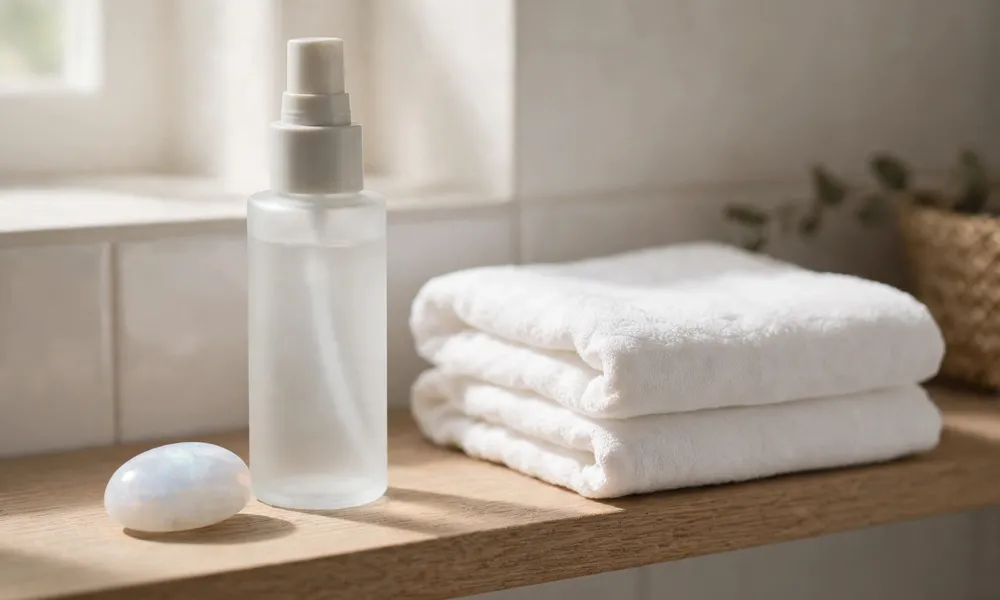
The best place for a moonstone hydration mist is inside a routine that is already working. A routine with too many steps gets abandoned, and a mist should make your mornings easier, not longer. The simplest version: cleanse, mist, serum if you use one, then moisturiser and sunscreen. It takes ten seconds, and it is the step you are least likely to skip.
Keeping the bottle where you can see it helps more than willpower. On the vanity, in the desk drawer, or beside the bed, visibility turns a product into a habit. A smaller bottle for travel means the ritual survives a change of place. This is the same thinking behind a small, honest skincare shelf, and a skin routine with room to breathe makes the case for a routine that leaves space to notice what your skin needs.
Over a few weeks, look for subtle change: comfortable afternoon skin and fresher-looking makeup.
A Quick Checklist Before You Mist
- Start with clean skin, or lightly made-up skin in the afternoon.
- Hold the bottle twenty centimetres from your face; close your eyes.
- Use two or three gentle passes for a light, even dew.
- Follow at once with moisturiser or facial oil to seal in moisture.
- Patch test first; check the label for fragrance or alcohol.
- Keep the bottle visible, on the vanity or in your bag.
Frequently Asked Questions
Can I use a moonstone hydration mist every day?
Yes, most people can use a hydration mist once or twice a day. If your skin is sensitive, start with once a day, watch it for a week before adding a second mist. Stop if you notice stinging or redness.
Should I use a mist before or after moisturiser?
Use the mist first, on clean or lightly made-up skin, then apply moisturiser on damp skin. The moisturiser seals in the water the mist delivered. Misting after moisturiser can feel refreshing, but much of the benefit is lost.
Can a moonstone hydration mist replace my moisturiser?
No. A mist adds water to the skin’s surface, while a moisturiser provides the oils and barrier ingredients that keep it from evaporating. Used alone, a mist can leave skin drier.
Is a moonstone hydration mist safe for sensitive skin?
Many mists are gentle enough for sensitive skin, but the formula matters most. Look for a short ingredient list with no fragrance, essential oils, or drying alcohol. Patch test behind your ear first, and ask a dermatologist if you have a diagnosed skin condition.
Can I spray a hydration mist over makeup?
Yes, a light mist over makeup is a popular way to use it. Hold the bottle a little further away, about twenty-five centimetres, and use one or two gentle passes. It softens powder and revives flat foundation. Let it settle on its own.
Does moonstone in a mist actually do anything for the skin?
Moonstone is not an established skincare active in the way glycerin or hyaluronic acid are. Its role is usually about the ritual: a calm, luminous product that makes a daily step feel more considered. Judge a mist by its ingredients and spray quality, and how your skin feels.
The Bottom Line
A moonstone hydration mist is a small, honest pleasure: a fine veil of water that wakes up tired skin, softens the afternoon, and turns ten seconds of your day into a calm ritual. On damp skin, sealed in with moisturiser, it gives your face the water it was missing.
Choose a short ingredient list and a fine, even spray, and use it once or twice a day, when your skin feels flat or tight. Keep the bottle where you can see it, and let the ritual be the reward. Tired skin rarely needs more products: just a little water, a little patience, and a moment to breathe.
A Final Note
Remember this: the most useful products are the ones you genuinely enjoy using. A moonstone hydration mist earns its place not through promises, but by making an ordinary day feel fresher. Keep it simple, keep it gentle, and let your skin tell you the rest. This article is general information, not medical advice; ask a dermatologist about any persistent skin concern.



