Your feet carry you through every day, and they rarely get thanked for it. They stand in queues, walk across hard floors, and squeeze into shoes that feel worse by afternoon. By evening they feel heavy, warm, and tired.
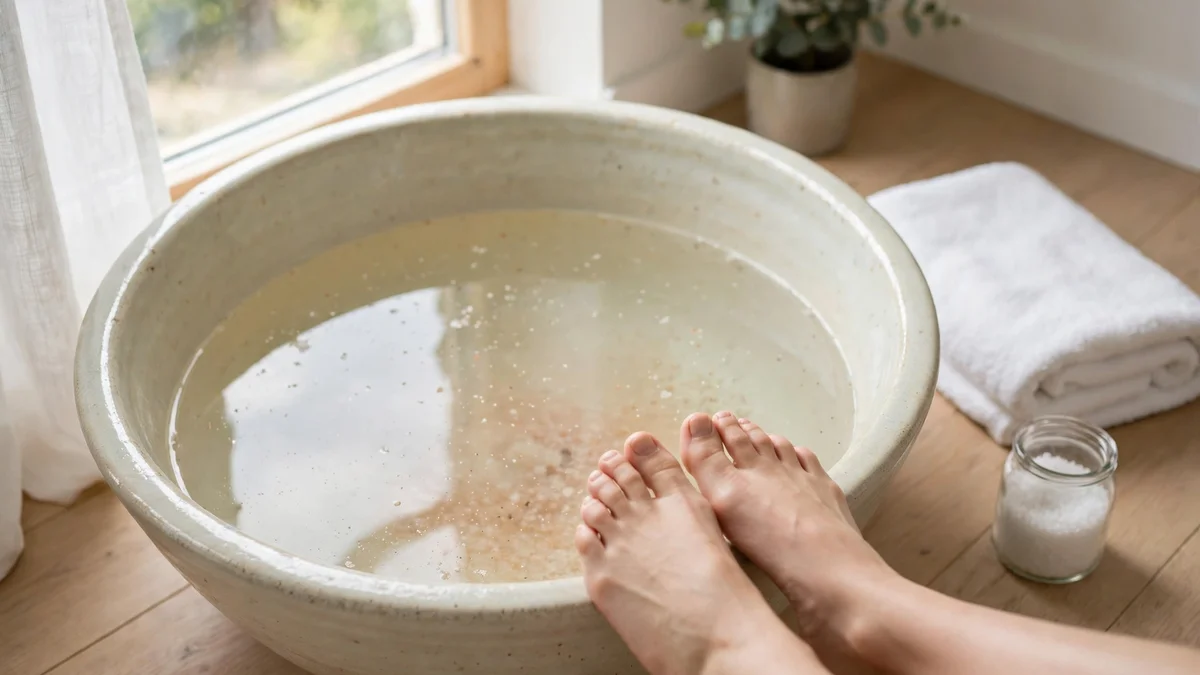
Foot soaks salt water is one of the simplest comforts there is. You fill a basin with warm water, stir in a little salt, and rest your feet in it for ten or fifteen minutes. A basin, warm water, a spoonful of salt, and a towel are the whole list.
This guide explains how to take a foot soak well: how warm the water should be, how much salt to use, how long to soak, and what to do afterwards. It is a comfort habit, not a treatment.
Key Takeaways
- Foot soaks salt water means warm water with a little dissolved salt, just for the feet, for ten to fifteen minutes.
- Warm water soothes tired feet; the salt makes the water feel a little softer.
- Always use warm water, never hot, and test the temperature with your hand first.
- Dry your feet gently afterwards, moisturise lightly, and put on clean cotton socks.
- Skip the soak if the skin on your feet is broken or irritated, and ask a clinician first if unsure.
What a Foot Soak with Salt Water Is
A foot soak with salt water is your feet, resting in a basin of warm water in which a small amount of salt has been dissolved. It is not a bath or a skin treatment: just a short soak, taken sitting down with the basin in front of you.
The salt is ordinary sea salt, fine or coarse, the kind you might already have in the kitchen. A couple of spoonfuls in a basin of warm water is enough. There is no need for pink salt, scented salt, or anything expensive: plain salt does the job.
Why Tired Feet Love Warm Water
Feet get tired in a particular way. They bear your whole weight, all day, inside shoes that press and rub. By evening they feel hot and heavy, and the skin on the heels feels dry and tight. Warm water meets that tiredness directly: it is warm, it is still, and it asks your feet to do nothing at all.
Part of the pleasure is simple warmth. Warm water relaxes the muscles of the feet and ankles after hours of standing and walking, and the feeling of weightlessness, even in a shallow basin, is a relief. The salt adds a small touch of its own: dissolved salt makes the water feel slightly softer, and turns an ordinary basin of water into something that feels deliberate, like a ritual rather than a wash.
Setting Up Your Foot Soak
A good foot soak starts before the water does. Gather everything first, so that once your feet are in the basin you do not have to get up again: a basin large enough for both feet, warm water, a couple of spoonfuls of sea salt, a clean towel, and a little plain moisturiser. A towel under the basin protects the floor.
Fill the basin with warm water, never hot, and test it with your hand first: comfortably warm, not sharp or stinging. If it feels hot to your hand, it is too hot for your feet, so add cold water until it feels gentle. Stir in two or three spoonfuls of sea salt and let it dissolve before your feet go in, because undissolved crystals feel gritty underfoot. The water should reach just above the ankles.

The Soak Itself, Step by Step
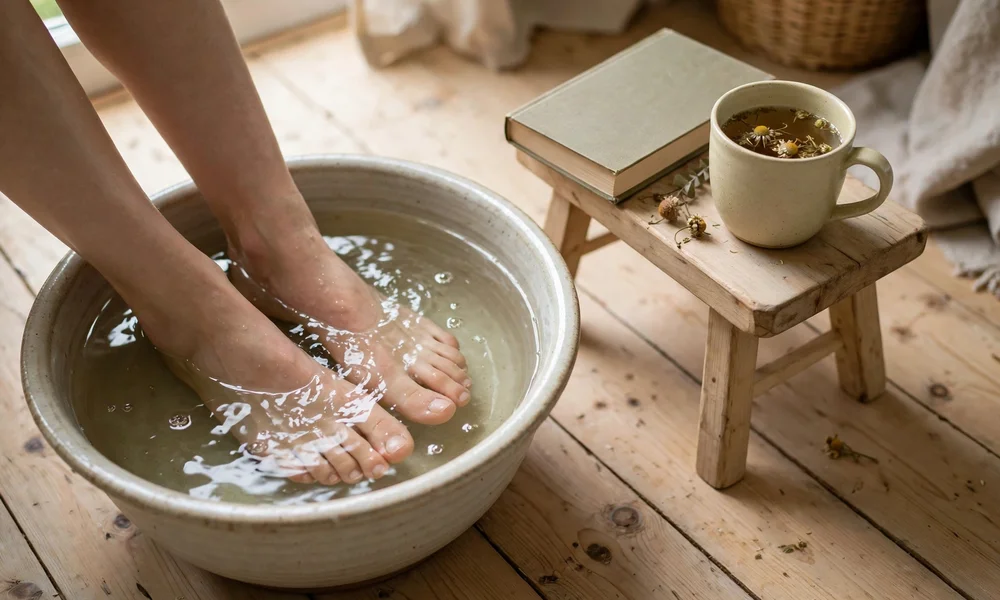
Sit down and lower your feet in slowly. Let them adjust to the warmth for a few seconds before settling them flat on the bottom. The first minute is the best part: the warmth spreads, the weight comes off, and the day loosens its grip.
Stay in for ten to fifteen minutes: long enough for your feet to feel properly rested, and short enough that the skin does not go soft and wrinkly. If the water cools, lift your feet out, add a little more warm water, and settle back in. If your feet feel uncomfortably warm, lift them out for a minute: a soak should feel soothing, never scorching. A book or a cup of tea fits a foot soak beautifully.
Drying and Care After the Soak
What you do after a foot soak matters as much as the soak itself. Wet skin left damp, especially between the toes, stays soft and uncomfortable, so pat your feet dry gently with a clean towel, pressing rather than rubbing, and dry carefully between each toe.
Once your feet are dry, smooth on a little plain, unscented moisturiser. The skin on the feet, especially the heels and soles, tends to be dry, and warm water can leave it drier still, so a light layer while the skin is still slightly damp helps it stay soft. Then put on clean cotton socks to keep your feet warm.
How Often, and When to Keep It Short
Two or three times a week suits most people: often enough to feel like a real ritual, and not so often that it becomes a chore. After a long day on your feet, an extra soak is a reasonable kindness.
Keep the soak short, though. Ten to fifteen minutes is the sweet spot, and there is no benefit in staying in for half an hour: long soaks leave the skin soft, pale, and wrinkled, and more easily irritated afterwards. The same goes for the salt: two or three spoonfuls is enough, and more salt does not make a better soak. Very salty water can leave the skin feeling tight and dry.
What a Foot Soak Will Not Do
Say plainly what a foot soak will not do. It will not treat any foot condition, heal cracked heels, clear a fungal infection, or fix sore joints. It will not improve circulation, draw out toxins, or cure tiredness. It will not replace proper footwear, rest, or medical care.
What it will do is simpler: warmer, softer, more rested feet for an evening, and fifteen quiet minutes. Be careful if the skin on your feet is broken, cut, blistered, or irritated: skip the soak until the skin has healed, because salt water on broken skin stings. If you have any condition that affects feeling in your feet, or any health concern that makes you unsure, ask a clinician first.
Choosing Your Salt and Your Basin
You do not need special equipment, but a few small choices make it better. The basin should be wide enough for both feet to rest flat, with room to wiggle the toes, and deep enough for the water to cover the ankles. A plain plastic basin works well; a ceramic one holds the warmth a little longer.
For salt, plain fine sea salt is the easiest choice: it dissolves quickly and evenly. Coarse sea salt works too, as long as you stir it well and give it a minute to dissolve. Epsom salt is another common choice. What matters is that the salt is plain and unscented: scented bath salts and coloured crystals often contain fragrance and dyes that can irritate the skin.
| Choice | Best for | Keep in mind |
|---|---|---|
| Fine sea salt | Everyday soaks | Dissolves fast; two spoonfuls |
| Coarse sea salt | A slower ritual | Stir well; let it dissolve |
| Epsom salt | A classic soak | Plain only; no fragrance |
Keep the basin clean between soaks: rinse it out, dry it, and store it somewhere it can air.

Foot Soaks and the Wider Ritual
A foot soak borrows the calm of warm-water rituals without asking for their time. A full bath takes half an hour and a whole bathroom; a foot soak takes fifteen minutes and a basin. The gentle art of a slow Sunday bath is the full ritual, and a foot soak is its weekday companion.
Himalayan salt water soaks for soft, glowing skin describe a full-body bath with pink salt, and a foot soak takes the same idea — warm water, dissolved salt, unhurried time — and aims it at the feet alone. A skin reset follows the same logic: sea salt and rose water for a fresh skin reset use warm water and a little salt for tired facial skin, and a foot soak is the same kindness, pointed downward.

Your Foot Soak Checklist
- Choose a basin wide enough for both feet.
- Fill the basin with warm water, never hot, and test it with your hand first.
- Stir in two or three spoonfuls of plain sea salt and let it dissolve.
- Soak for ten to fifteen minutes.
- Pat your feet dry, drying carefully between each toe.
- Moisturise lightly and put on clean cotton socks to finish.
Frequently Asked Questions
How much salt should I put in a foot soak? Two or three spoonfuls of plain sea salt is enough. Stir well and let it dissolve before your feet go in.
How warm should the water be? Warm, never hot. Test it with your hand first: comfortably warm, not sharp or stinging. Feet feel heat less sharply than hands, so the hand test is the safe way to judge.
How long should I soak my feet? Ten to fifteen minutes is the sweet spot: long enough to feel rested, and short enough to keep the skin from going soft and wrinkly.
Can I soak my feet every day? Two or three times a week suits most people. Always moisturise afterwards, since warm water can dry the skin.
Should I soak my feet if the skin is broken or sore? No. Skip the soak until the skin has healed, because salt water on broken skin stings. If you are unsure, ask a clinician first.
What is the best salt for a foot soak? Plain fine sea salt is the easiest choice because it dissolves quickly. Coarse sea salt and plain Epsom salt also work well. Choose plain, unscented salt.
The Bottom Line
A foot soak with salt water is warm water, a little salt, and fifteen quiet minutes — a small, honest comfort for the part of you that works the hardest and gets thanked the least. Keep the water warm, never hot, keep the soak short, and finish with dry feet, a little moisturiser, and clean socks. Start tonight: fill the basin and let your feet rest.
A Note for Tired Feet
Warm water, a little salt, and a chair of your own. That is all a foot soak asks: feet that feel rested, an evening that feels slower, and a habit small enough to keep.