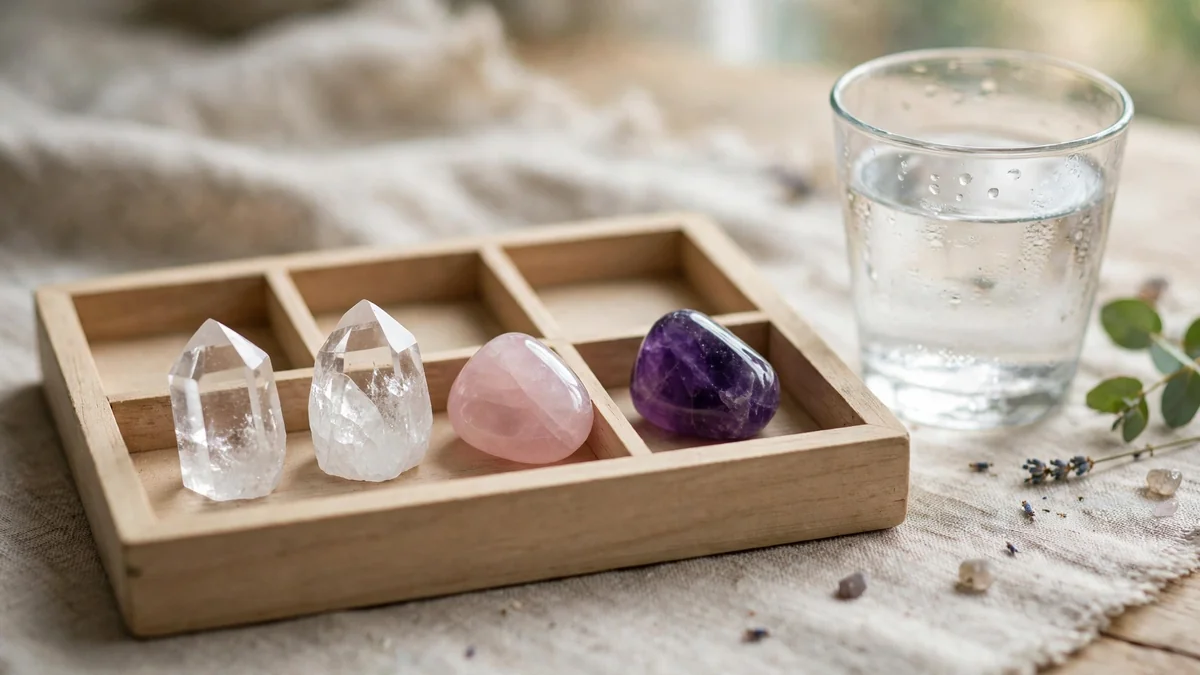
A crystal in a pocket is a small, quiet pleasure. It catches the light when you reach for your keys, and it reminds you to slow down. Wearing crystals every day is not complicated, and it does not need a large collection. It needs one or two stones you like, a way to wear them comfortably, and a little care.
Many beginners worry about doing it wrong: choosing the wrong stone, or damaging it by cleaning it badly. The truth is simpler. Crystals are beautiful objects, and wearing them is a matter of taste, comfort, and habit — lovely stones to look at, to hold, and to wear, with no promises beyond beauty and a quiet moment in a busy day.
Below: how to choose your first everyday stones, how to wear them, which stones must never touch water, and a simple daily routine that keeps them looking their best.
Key Takeaways
- Start with one or two smooth, sturdy stones you like — clear quartz, rose quartz, or amethyst are good first choices.
- Wear crystals as a bracelet, a pendant, or a pocket stone; comfort matters more than rules.
- Some stones must never touch water: malachite, selenite, pyrite, lepidolite, and amber must never be soaked.
- Never put any stone in drinking water, and never drink water a stone has touched.
- A soft cloth, a small box, and a minute of care each evening keep them looking their best.
Why Wear Crystals Every Day
People wear crystals for simple reasons. A bracelet is pretty on the wrist. A pendant sits nicely against a plain top. A smooth stone in a pocket gives your hand something calm to hold on a crowded train.
Wearing a crystal every day turns it into a habit rather than a decoration in a drawer. A stone you see and touch daily becomes familiar: you notice its colour in different light, and you reach for it without thinking.
Say plainly what wearing crystals will not do. Crystals are beautiful objects, not medicine. Wearing one will not treat, cure, or prevent any health condition, change your mood, or protect you from harm. Enjoy them for what they are: lovely stones that make an ordinary day brighter. If a health concern is worrying you, please speak to a qualified health professional.
Choosing Your First Everyday Stones
Start small, and start with your eyes. A first stone should be one you like looking at. Hold it in your hand: it should feel smooth and comfortable, not sharp or awkward.
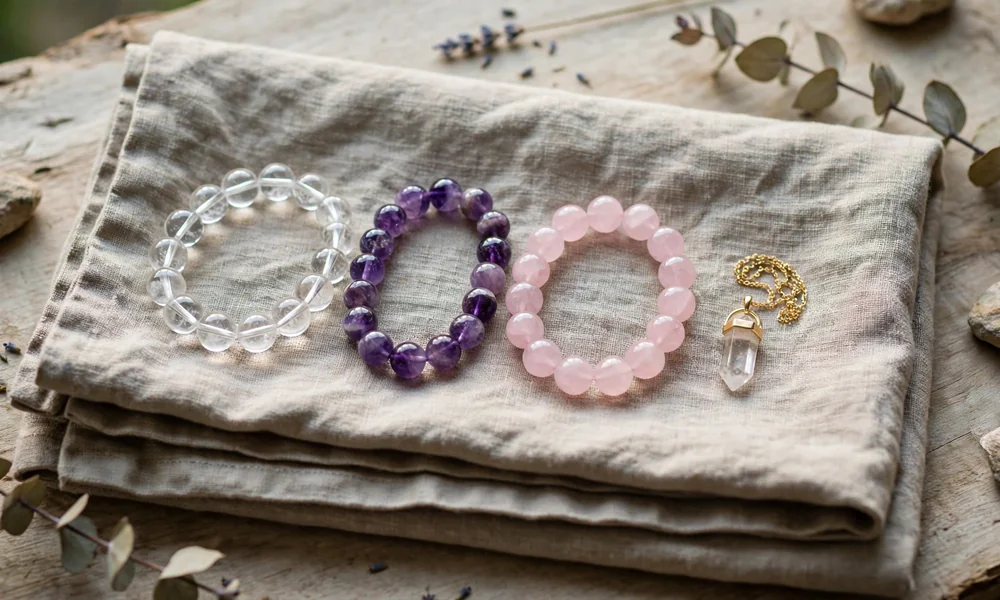
Three stones suit almost every beginner. Clear quartz is colourless and bright, and goes with everything. Rose quartz is soft pink and gentle to look at. Amethyst is a calm purple, from pale lilac to deep violet. All three are hard and sturdy, and look good as a bracelet bead, a pendant, or a pocket stone. How to choose your first healing stone goes deeper into choosing by look, feel, and size.
Buy one stone first, not five. Wear it for a week: does it suit your clothes, does it stay comfortable, do you reach for it? If yes, you have found your everyday stone. If no, you have learned something useful. A collection built slowly is always better than a box bought in a hurry.
How to Wear Them
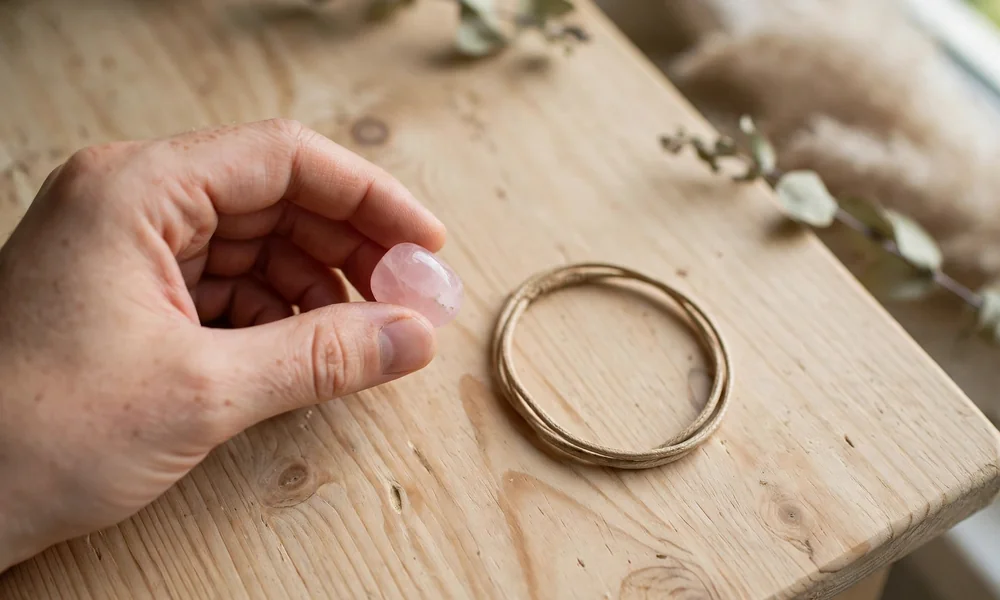
There is no single right way to wear a crystal, only ways that suit your day. A bracelet is the easiest start: it sits on the wrist and suits most outfits. Choose smooth, evenly sized beads with a cord or elastic that feels secure. If the bracelet twists or catches on sleeves, it is too loose; if it leaves a mark, it is too tight.
A pendant suits something close and quiet: a small polished stone on a plain chain sits neatly against the skin and under a collar. Check the setting now and then: a loose claw or a worn loop is the most common reason a pendant is lost.
A pocket stone is the simplest option: a smooth tumbled stone the size of a large coin slips into a pocket or a handbag, and it is there whenever you want to hold it.
Rings and earrings look lovely, but they take more knocks than a bracelet or pendant, so save them for hard, sturdy stones. Whatever you choose, comfort comes first: if a piece pinches or slips, it is not your everyday piece, however pretty it is.
Stones That Must Never Touch Water
This is the most important section in this guide. Some stones must never touch water: it can dissolve a soft stone, dull a polished surface, rust a metal inclusion, or loosen a setting.
Never soak or rinse malachite: it is soft, and water can damage its polished surface. Never soak or rinse selenite: it is very soft, and water can dissolve it and leave it cloudy and pitted. Never soak or rinse pyrite: it contains iron, and water can make it rust and crumble. Never soak or rinse lepidolite: it is soft and flaky, and water can weaken it. Never put hematite in drinking water: it contains iron, and it should never touch anything you drink. And never soak amber: it is fossilised tree resin, not a stone, and soaking can cloud it and crack its surface.
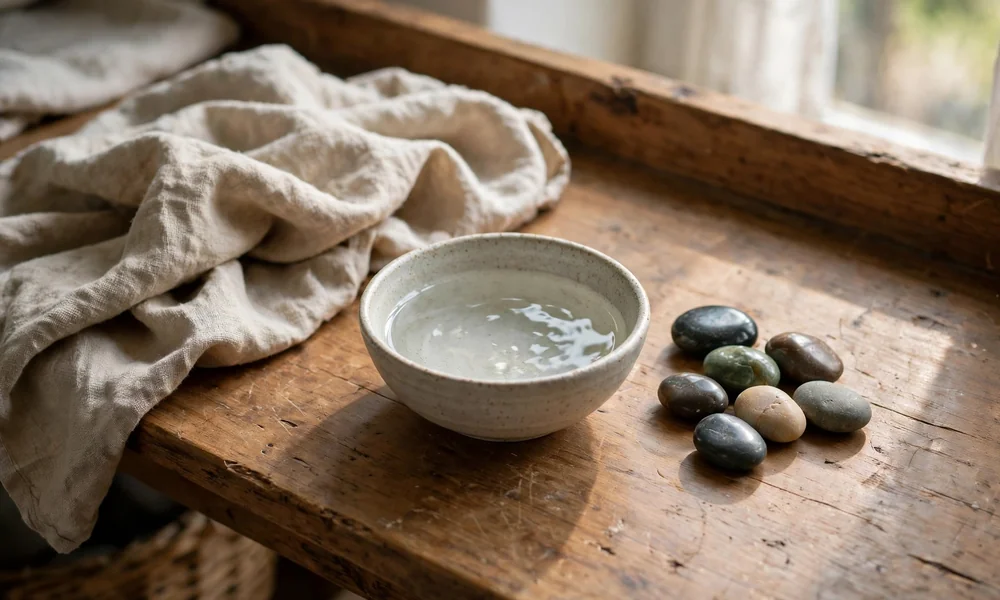
Keep these stones dry, and clean them with a soft, dry cloth only. Wipe yours gently after wearing, and keep it away from rain, splashes, and steam. For a water ritual without wetting the stone, use the indirect method: place the stone beside a bowl of plain water, or seal it in a closed jar and set the jar in the water. How to cleanse crystals with water safely explains which stones tolerate a brief rinse and which must stay dry.
One rule covers every stone: never put any stone in drinking water, and never drink water a stone has touched. Stones belong beside water, never in it.
A Simple Daily Routine
A daily routine takes about two minutes. In the morning, choose your stone: slip a bracelet on and check it sits comfortably, check a pendant's clasp and setting, or put a pocket stone in the pocket you reach for most.
Through the day, simply wear it. If the stone gets dusty, wipe it with a soft, dry cloth. If you wash your hands, slip a bracelet off first: soap and water are not kind to cords, elastic, or soft stones. In the evening, take your crystals off, wipe each one with a soft, dry cloth, check the cord, clasp, and setting, and put each piece in its place.
Storing and Caring for Everyday Stones
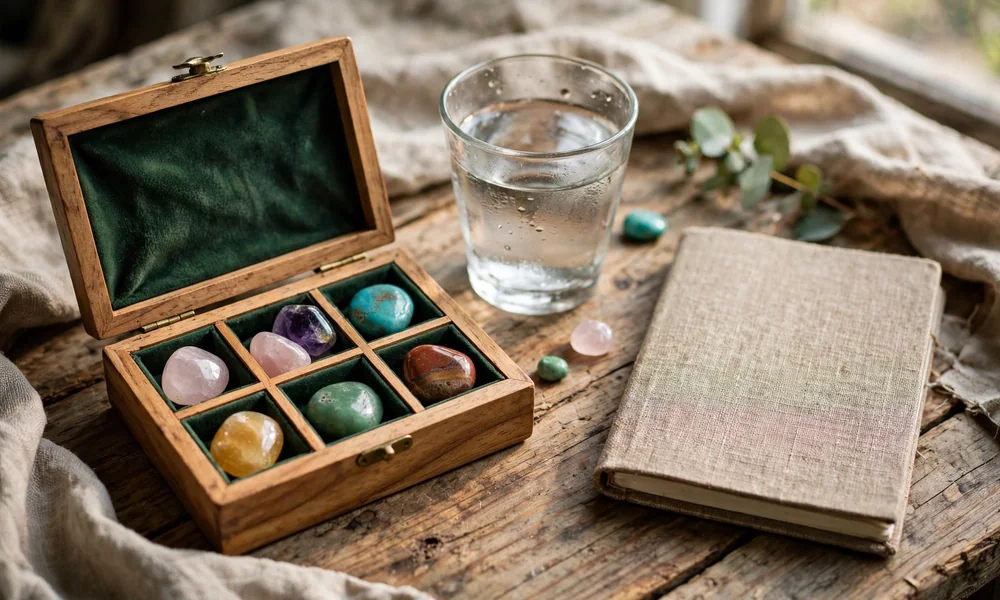
Good storage is simple: a small box, a soft pouch, or a lined tray, kept somewhere dry and out of direct sun, with its own space for each piece so stones do not scratch each other and cords do not tangle. How to store crystals beautifully has more ideas for keeping a collection tidy and easy to enjoy.
Keep stones away from perfume, hairspray, and lotions: spray first, let it dry, then put your bracelet or pendant on. Keep them away from the bathroom shelf, where steam and splashes reach everything. Take a bracelet off before heavy work, gardening, or exercise.
Hard stones such as clear quartz, rose quartz, and amethyst can be wiped with a slightly damp cloth if dusty, then dried fully. Soft or water-sensitive stones must only ever be wiped dry. When in doubt, wipe dry: a dry cloth never damages a stone.
Stones at a Glance
Different stones suit different ways of wearing. The table below is a quick guide.
| Stone | Wear it as | Care |
|---|---|---|
| Clear quartz | Bracelet, pendant, pocket stone | Wipe dry, or damp cloth then dry fully |
| Rose quartz | Bracelet, pendant, pocket stone | Wipe dry, or damp cloth then dry fully |
| Amethyst | Pendant, bracelet, pocket stone | Wipe dry, or damp cloth then dry fully |
| Malachite | Pendant, kept dry | Dry cloth only; never touch water |
| Selenite | Display, kept dry | Dry cloth only; never touch water |
| Pyrite | Pendant, kept dry | Dry cloth only; never touch water |
If a stone is not on this list, check before you wet it: hard stones usually tolerate a brief rinse, while soft or metal-bearing stones do not.
Your Everyday Crystal Checklist
- Choose one smooth, sturdy stone you like: clear quartz, rose quartz, or amethyst.
- Wear it as a bracelet, a pendant, or a pocket stone — whichever feels comfortable.
- Check cords, clasps, and settings each morning.
- Keep malachite, selenite, pyrite, lepidolite, and amber dry; never soak them.
- Never put any stone in drinking water, and never drink water a stone has touched.
- Each evening, wipe stones with a soft, dry cloth and put each piece in its own place.
Frequently Asked Questions
Can I wear the same crystal every day? Yes. Hard, sturdy stones such as clear quartz, rose quartz, or amethyst handle daily wear well. Check the cord, clasp, or setting now and then, and wipe the stone clean each evening.
Bracelet or pendant — which is better? Neither is better; it depends on your day. A bracelet is easy to see. A pendant sits quietly under a collar. A pocket stone suits days when you want nothing on your wrist or neck. Try each and keep the one you reach for.
Can I wear my crystal in the shower or swimming? Best not to. Soap, shampoo, and pool or sea water are not kind to cords, elastic, settings, or soft stones. Take your crystals off before washing or swimming, and put them back on afterwards.
What should I do if my stone gets wet by accident? Dry it straight away with a soft cloth, and let it air-dry fully. For hard stones such as clear quartz or amethyst, that is usually enough. For malachite, selenite, pyrite, lepidolite, or amber, dry it gently: if it looks cloudy or changed, keep it dry from then on.
Can I wear more than one crystal at a time? Yes. Many people wear a bracelet and carry a pocket stone, or wear a pendant with a bracelet. Keep it simple, so nothing tangles. Two pieces you enjoy are better than five you have to manage.
How do I know if a stone is too soft to wear daily? If a stone chips easily, scratches with a fingernail, flakes, or goes cloudy, it is too soft for daily wear. Keep it as a display piece at home, and choose a harder stone — clear quartz, rose quartz, or amethyst — for everyday use.
The Bottom Line
Wearing crystals every day is simple: choose one or two stones you love, wear them comfortably, keep the water-sensitive ones dry, and give them a minute of care each evening.
Start tomorrow with a single stone, worn your way. Let the habit grow slowly, one stone at a time.
A Note for Everyday Sparkle
Keep it small, keep it dry, keep it yours.



