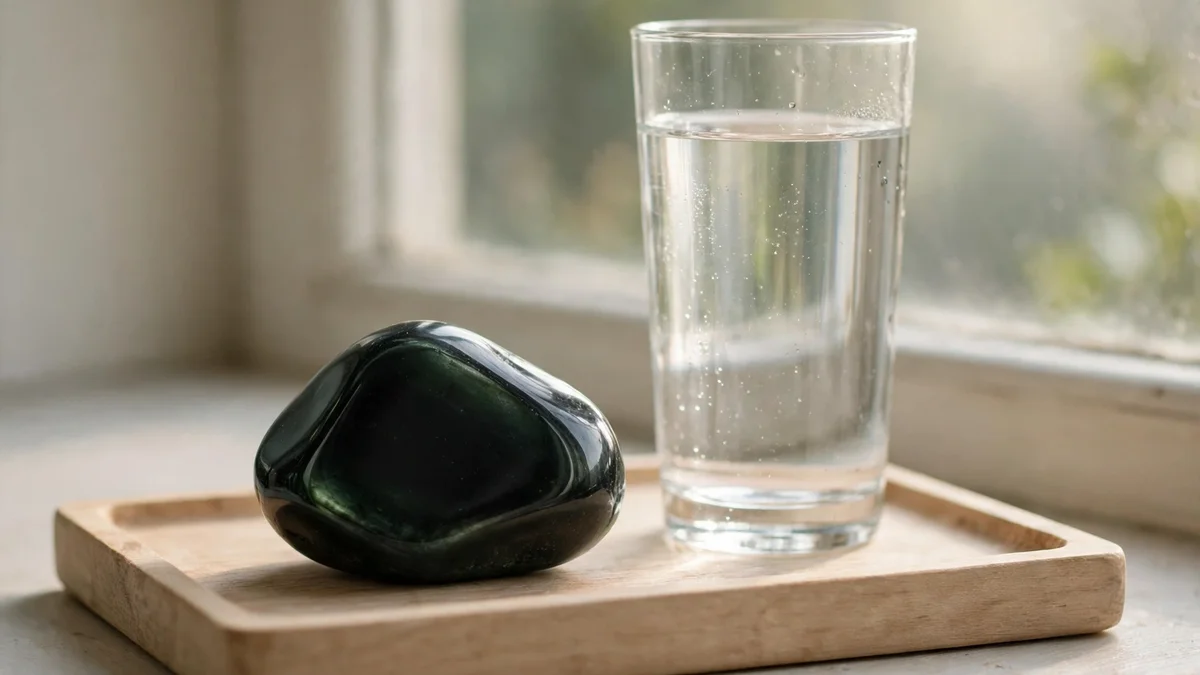
Some days ask for very little. The house is still, the phone stays face down, and the hours stretch out without any plan to fill them. On those days, bright colours feel too loud, and even a cheerful stone can seem like it is trying too hard.
Black diopside suits those slow hours. It is dark as a winter evening, glossy and calm, with only the faintest hint of green when the light catches it just right. A single polished pebble on a wooden tray can make a whole corner of the room feel quieter, as if the day has finally agreed to slow down.
This guide is about that quiet: what black diopside is, how to choose a piece, and how to keep it safely beside a glass of water. It is a stone for looking at and holding, never a remedy, and it will not mend anything. If something in your body or your mood keeps troubling you, a doctor is the right person to ask.
Key Takeaways
- Black diopside is a deep black variety of diopside, nearly opaque and calm.
- Its dark, glossy surface suits slow days, still rooms and soft light.
- Black diopside is new here; chrome diopside is its bright green relative.
- The stone stays beside drinking water, never in it, and needs gentle care.
- A quiet-day habit needs very little: soft light, plain water and one stone.
What Black Diopside Is
Black diopside is the dark member of the diopside family, a mineral that grows in shades from pale green to a black so deep it swallows the light. The black colour comes from iron held inside the crystal, and a good piece looks like polished coal with a secret green shadow hiding just beneath the surface.
Most pieces sold today are smooth, rounded pebbles, tumbled until they shine like wet slate, though rough clusters appear too, with short dark crystals set into pale rock. It feels cool and solid in the hand.
Why Deep Black Suits Quiet Days
Black is not an empty colour. On a quiet day it behaves like a closed door: it keeps the noise out and lets the room breathe. A pale stone reflects the light back at you, while a black stone gathers it in and gives your eyes somewhere restful to land.
Black diopside does this better than most dark stones because its gloss is soft rather than glittering. It does not sparkle or flash; it simply sits, dark and steady, and the faint green sheen appears only when you look closely. That small surprise rewards a slow look, which is exactly what a quiet day is for.
Choosing a Black Diopside Piece
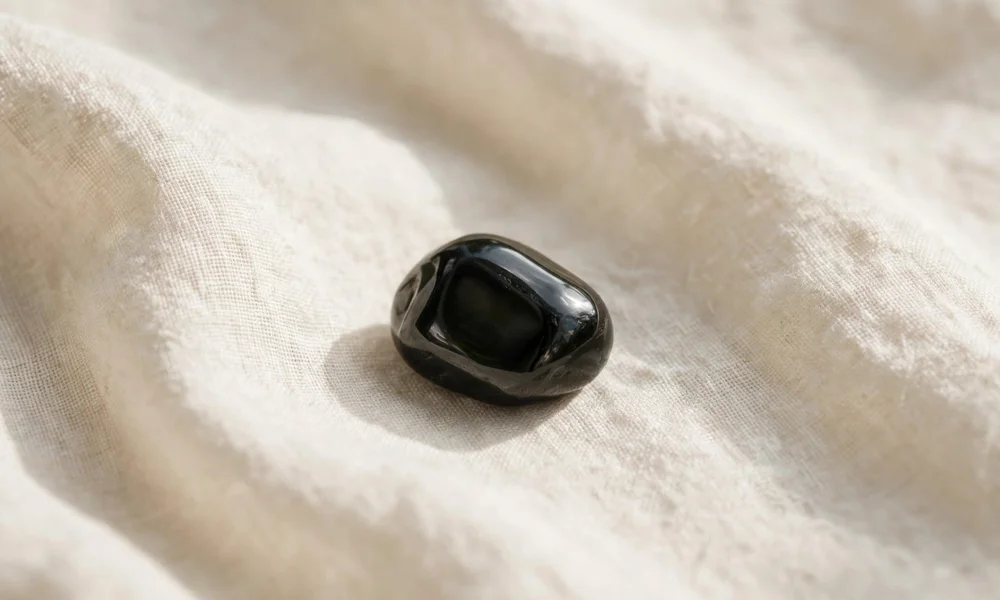
Choose a black diopside piece with your eyes first and your hands second. Look for a deep, even black with a smooth polish, and hold it up to a window to check for that faint green shadow under the surface. Avoid pieces with pale chalky patches, rough pits, or a dull grey film that will not wipe away.
Keep the piece small. A pebble the size of a walnut is plenty for a tray, and it is easier to lift gently and set down without a knock. Ask the seller where it came from, and buy from someone who can tell you plainly that it is genuine diopside and not dyed glass.
A Quiet Day with Black Diopside
Begin a quiet day by setting the black diopside on its tray in a patch of soft light, with a glass of plain water alongside it, close enough to share the calm but never touching the stone. Drink the water slowly, let your eyes rest on the dark surface, and take one unhurried breath before anything else begins.
Leave the tray where you can see it through the afternoon, somewhere the light reaches gently as it moves. As the afternoon light shifts, the pebble shifts with it, black in the shade and faintly green where a sunbeam lands. Nothing about the stone has changed; only your attention has slowed enough to notice. That noticing is the point, and the dark pebble is simply the thing your eyes rest on while you do it.
Black Diopside Beside Water
Set the glass and the stone a hand's width apart on the tray, and let that gap stay. The stone is meant to sit next to water, in sight of it, not to be dunked, rinsed, or left standing in a puddle. A stray drop wiped off straight away with a dry cloth is the only cleaning it ever needs from water.
Keep the same distance for every stone you own. A full glass and a dry pebble make a good pair; a pebble inside a glass does not. Wash your hands once you have finished moving a rough piece, and never tip a stone into anything you plan to drink.
Black Diopside at a Glance
| Deep black pebble | Quiet days | Beside water |
|---|---|---|
| Iron-dark, glossy shine | Tray, desk, shelf | Never in water |
| Faint green shadow | Soft light, still rooms | Dry cloth wipe |
| Cool, smooth, heavy | Morning, afternoon, evening | Wash hands after |
Black Diopside and Chrome Diopside
Chrome diopside is the closest relative on the shelf, and the two stones could hardly look more different. Chrome diopside for fresh mornings covers a bright, vivid green mineral, coloured by tiny traces of chromium, that glows like a forest leaf held up to strong sunlight.
Black diopside is its opposite in mood. Where chrome diopside is green, glassy and wide awake, black diopside is dark, nearly opaque and still, with only a whisper of green when the light is right. One suits a fresh morning with the window open; the other suits a quiet afternoon with the curtains half drawn.
Black Diopside and Black Tourmaline
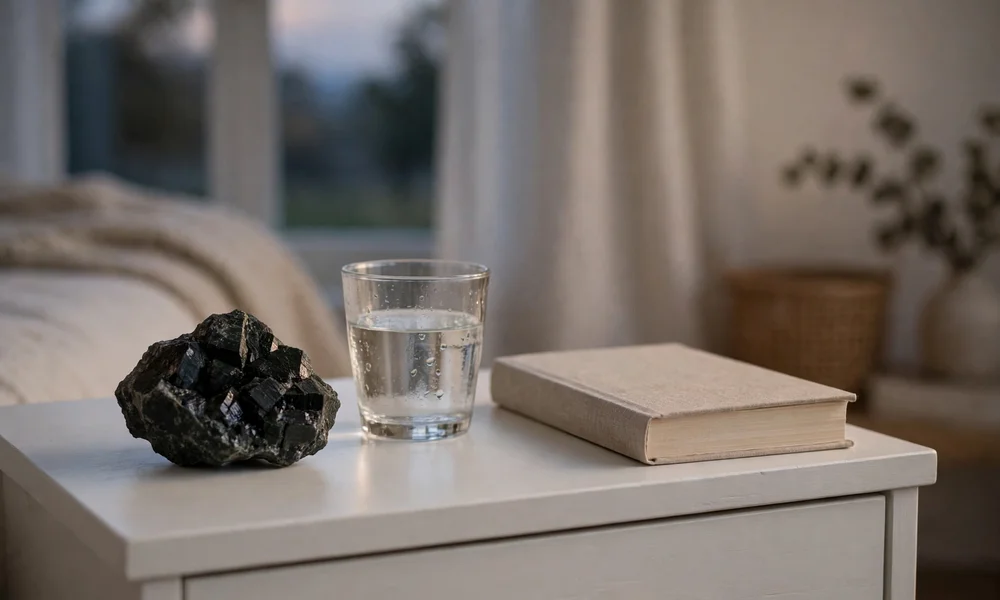
Black tourmaline is another dark neighbour, and it is easy to confuse the two at a glance. Black tourmaline for grounded days covers a deep black stone with long ridged crystals, often sold as a rough column or a chunky piece with a stripy, almost wooden texture.
Black diopside is smoother and rounder by nature. Tourmaline feels ridged and angular under the fingers, while diopside, once tumbled, feels like a river stone, cool and even all over. Both are black, but tourmaline looks carved and diopside looks poured, and the tray can hold both only if each keeps its own dry end.
Black Diopside and Black Jade
Black jade is the third dark neighbour, and it shares the quiet mood of this guide. Black jade for quiet days covers a deep black jade that is dense, waxy and warm to the touch, often carved into smooth shapes that feel soft in the hand.
Black diopside is cooler and harder in feel, with a sharper gloss and that faint green shadow jade does not show. Jade invites you to hold it for a long while; diopside invites you to set it down and look at it. Both suit quiet days, but the difference is plain the moment they sit side by side.
Caring for Black Diopside
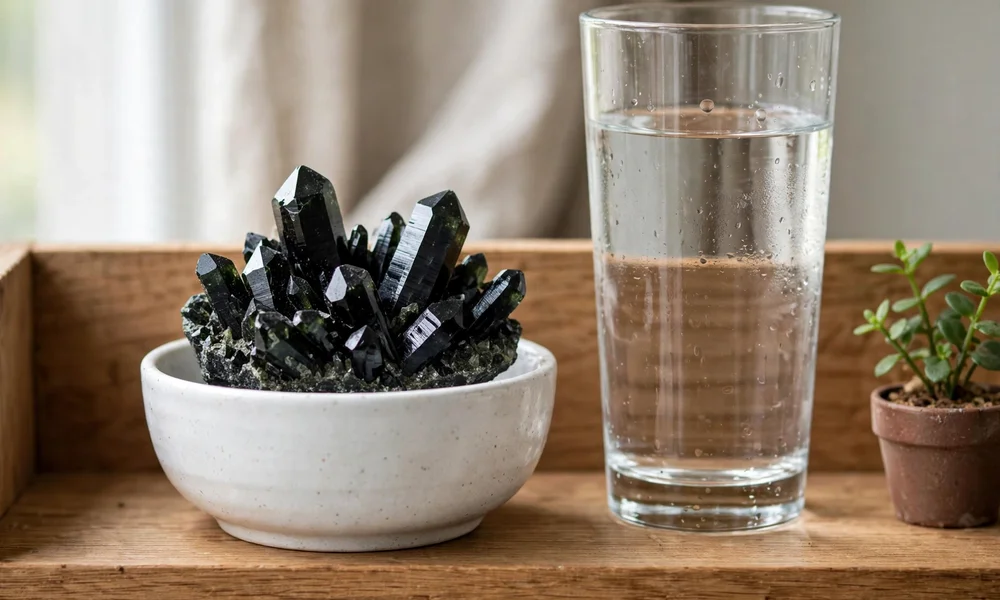
Look after black diopside the way you would look after a good pen: keep it somewhere dry, out of hard knocks, and do not let it rattle around loose. A small lined box or a covered shelf suits it, and a pocket full of keys will mark even this hard stone over time.
Brush dust off with a soft dry cloth, and if it ever needs more, rinse it briefly under plain running water and dry it at once, every drop. Soaps, creams and sprays have no place near it, and a damp shelf is no place to leave it. Dry hands, dry cloth, done.
Stones That Must Never Touch Water
A handful of stones should never be dropped into a drink, and it helps to know them by name. Malachite tops that list, since it can release substances no one should swallow. Hematite is next: a pretty iron stone, but one that has no business in drinking water.
Apatite follows, then lepidolite, which holds lithium inside it, and after them pyrite, angelite and amber, none of which belong in a glass, a jug, or a bowl you soak in. Black diopside is not on that danger list, yet it still sits beside the glass, never in it, and that one habit keeps the whole shelf safe.
Your Quiet Days Checklist
- Put the black diopside on a dry tray, with a full glass of water a hand away.
- Drink the water in slow sips while the afternoon stays quiet.
- Look for the faint green shadow in soft light.
- Buy from a seller who names the stone plainly.
- Store the stone dry, out of reach of children and away from food.
- No stone heals; a doctor is the one for health worries.

Frequently Asked Questions
What is black diopside?
Black diopside is a deep black variety of diopside, a mineral coloured dark by iron inside its crystal shape. It is usually sold as a smooth polished pebble, nearly opaque, with a faint green shadow that shows when light catches it.
Is black diopside safe to touch?
Yes, you may pick it up and hold it, and wash your hands afterwards if you handled a rough cluster. Keep it away from small children, and never put it in a drink or a soak.
Why must black diopside stay beside water?
Because the stones in this guide are for display beside water, not for soaking in it. Keep the glass at one end of the tray and the stone at the other, and wipe away any splash with a dry cloth at once.
How is black diopside different from chrome diopside?
Chrome diopside is a bright vivid green stone coloured by chromium, with sharp glassy crystals that glow like a forest leaf. Black diopside is dark and nearly opaque, coloured by iron, with only a whisper of green in strong light.
Will black diopside heal anything?
No. Its job is to look beautiful on a tray and give your eyes a calm place to rest. Any ease you feel after sitting quietly with it comes from the unhurried minute, not from the mineral.
Where should I keep black diopside at home?
Pick a calm, dry spot for it, such as a tray by the window, a desk shelf, or the bedside table, with a glass of water nearby but not touching, and keep it where small children cannot reach.
The Bottom Line
Black diopside is deep black calm for slow days: one glossy dark pebble, a dry tray, a glass of water beside it, and nothing more asked of it.
A Note for Quiet Days
Keep the stone dark, the water plain, and the day unhurried. One small pebble, one glass of water, and a few quiet minutes are enough.