Foundation has a reputation for being the fussy step, the one that takes a steady hand and a good mirror and still ends up looking heavy by midday. A thick layer cracks, and a wrong shade shows at the jaw. It does not have to feel that way.
Take it slowly, with water helping at each stage, and foundation becomes a calm, ordinary routine. Lukewarm water cleans the skin, a light moisturiser leaves a smooth surface for the base to hold, and thin layers settle into the skin rather than sitting on top.
This guide goes through foundation step by step: the water that comes first, the base itself, and the gentle wash-off that follows at night. Everything here is general information, not medical advice. When skin keeps reacting badly, a doctor is the person to ask, not a stronger product on the shelf.
Key Takeaways
- Water and foundation belong together: water prepares the skin and the base.
- Lukewarm water is the gentlest choice; very hot water can leave skin sore.
- Thin layers look fresher than one heavy layer, so build colour slowly.
- Patch-test foundation on a small area first, and match the shade at the jaw.
- Wash it off at night, pat dry gently, and moisturise while skin is damp.
What Water and Foundation Means
Water and foundation means using water well at every stage, not just at the start. The skin holds a fine layer of its own oils, and hot water takes those oils away quickly, so the skin feels tight before the foundation even touches it. A brief wash in lukewarm water cleans the skin without taking that layer away.
Think of painting a dry, dusty wall: the paint grips unevenly, while a clean wall takes it smoothly. Skin works the same way. A short lukewarm wash, a careful base, and a gentle removal at night form one routine, and no step works as well without the others.
Why a Good Base Matters
A good base matters because it is the surface everything else rests on. When the base is clean and lightly moisturised, foundation spreads evenly and looks like skin, but when the base is dry or rushed, the same foundation gathers in lines and looks tired within an hour.
The base also decides how the day feels. A heavy, dry base itches and pulls by afternoon, while a light base stays comfortable. A few quiet minutes with water at the start are worth more than any extra layer later.
Getting Ready Before Foundation
A good base starts the night before, not the minute the bottle is open. Wash your face before bed and smooth on a plain moisturiser, because foundation sits best on skin that has already been looked after. Skip heavy creams on the morning itself, because foundation cannot grip slippery skin.
On the morning, set everything out before you start: the foundation, a sponge, a mirror, a bowl of lukewarm water, a clean towel, and a glass of water for sipping. When everything is within reach, there is no need to rush halfway through, and a base applied without rushing looks far fresher.

Choosing Foundation and Tools
Foundation comes in many forms, and the choice is simpler than the shelves suggest. Liquid foundation spreads easily and suits most skin, tinted moisturiser gives a sheer, light cover, and powder suits skin that turns shiny by midday. Pick the lightest cover that still evens out your tone.
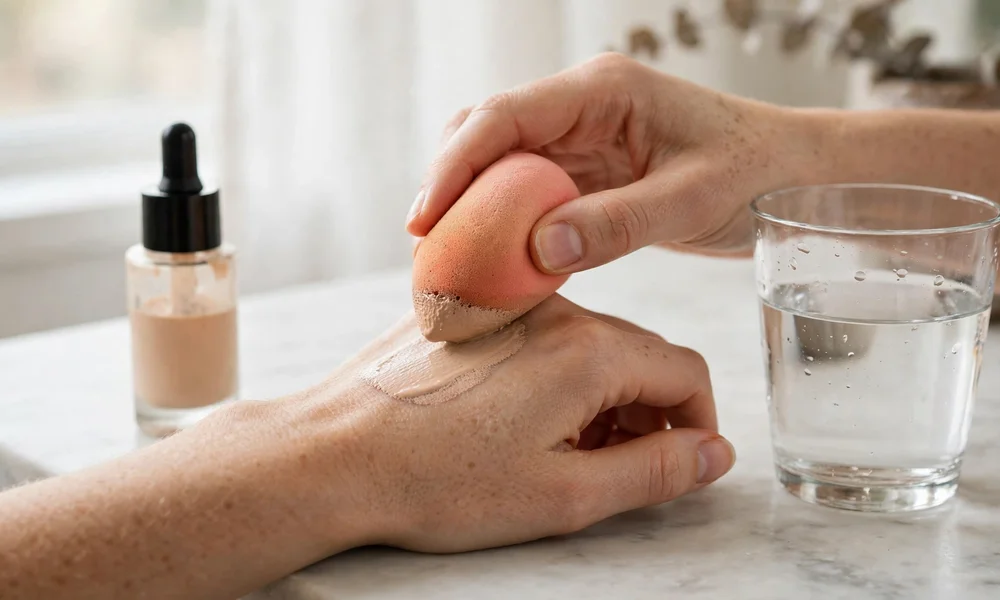
Match the shade at your jawline in daylight, not on the back of your hand, and choose the one that disappears into the skin. A damp sponge blends better than fingers for most people. Patch-test a new bottle on a small area first and wait a day before wearing it all over.
Applying Foundation, Slowly
Work in small amounts, one part of the face at a time, and never rush a patch to save time. Dot a little foundation on the forehead, cheeks, nose and chin, then blend outward with the damp sponge in soft, tapping strokes. Build the cover slowly: a second thin layer where you need it beats one thick layer every time.
Step back and check the jawline in daylight before you add anything else. If the edge shows, blend it down the neck a little, and stop while the skin still looks like skin.
Setting and Keeping It Fresh
Once the base is on, a light dusting of plain powder over the centre of the face helps it stay put, especially around the nose and chin. Use a soft brush and a small amount, because too much powder dries the finish out.
Through the day, a fine mist of plain water can wake the base up again, and it is kinder than adding more foundation. Blot shine with a tissue first, then mist lightly from a short distance, and let it dry on its own. Take small sips of water through the day, since skin that is cared for from within shows it on the surface.

Removing It at Night
Foundation should never sleep on the skin. At night, wash your face with lukewarm water and a mild cleanser, working gently over the whole face until no trace of base remains. A soft cloth helps around the edges, but never scrub, because scrubbing leaves skin sore.
Pat the skin dry with a soft towel, pressing lightly instead of rubbing, then smooth on a plain moisturiser while the skin is still slightly damp. Clean skin overnight is what makes the next morning's base look fresh, so this last step is as much a part of the routine as the first.
Foundation at a Glance
| Thin layers first | Lukewarm water | Remove at night |
|---|---|---|
| Match at jawline | Patch-test first | Plain moisturiser |
| Damp sponge blends | Light cover, slow | No scrub, no rush |
| Looks like skin | Drink water, sip | Doctor if sore |
Foundation and Makeup That Lasts
Foundation is only one part of a look that has to last the day, and it helps to know where it sits. Water and makeup for making it last covers the whole face through a long day: clean skin, a light moisturiser, thin layers and a fine mist, with touch-ups that start with blotting and never a whole new face.
That guide explains why makeup fades, and this guide is the deep look at the base underneath it all. Concealer hides one small spot and blush adds a soft pink glow, while foundation alone evens the whole face first.
Foundation and Opal Shimmer
A fresh base and a soft shimmer make natural partners, because both ask for light layers and daylight. Opal shimmer for daytime makeup covers a sheer, light-catching finish where the glow moves as you move, with a small kit and shades that stay gentle in the sun.
The order matters: foundation first, shimmer last, and lightly, on the places where light naturally lands — the cheekbones, the brow bone, and the top of the lip. A sheer base lets the shimmer sit like light on water, while a heavy base turns it into a stripe. Keep every layer thin, so the look still looks like you in the afternoon.
Foundation and Refreshing Makeup
Even the best base fades by late afternoon, and that is when a gentle refresh helps. How to refresh makeup with a water mist covers a fine mist of plain water that helps powder look like skin again, with blotting first and never a whole new face.
The rule is simple: blot the shine away, mist lightly, and let it dry, then add a little powder only where it is truly needed. A fresh mist revives the base you already have, and it is far kinder than piling more foundation on top of a tired one.
When to Ask a Doctor
Most reactions to foundation fade within hours, but some need a doctor instead of a home remedy. Go promptly if the skin stays red, swollen or painful for over a day, if blisters or pus show up, or if a rash comes back each time you use the same product.
Broken, sunburned or already sore skin should have no foundation on it at all; ask a doctor how to look after it instead. Keep makeup off moles, warts, and any area a doctor has treated recently, and do not try to fix a bad reaction at home with stronger products. A brief visit is worth far more than weeks of worry.
Your Simple Foundation Checklist
- Start by washing with lukewarm water and a mild cleanser.
- Try the foundation first on one small patch of skin.
- Match the shade at your jawline in daylight, not on your hand.
- Apply thin layers with a damp sponge, blending outward slowly.
- Wash it off at night, then moisturise while skin is slightly damp.
- If redness or pain lingers, ask a doctor before wearing it again.

Frequently Asked Questions
How do I choose the right foundation shade?
Match it at your jawline in daylight, and pick the shade that disappears into the skin. A shade that looks right on the back of your hand can look wrong on the face, so test it where it will be worn.
Should I apply foundation with fingers or a sponge?
A damp sponge blends most evenly for most people, because it presses the product into the skin in thin layers. Fingers work too, but their warmth can make the base look patchy if you rush.
Why does my foundation look cakey by midday?
It is usually one heavy layer, or a dry base underneath. Build the cover in two thin layers instead, on clean, lightly moisturised skin, and blot shine before you add anything more.
Can I wear foundation on sensitive skin?
Yes, if you go gently. Try a new bottle on one small hidden patch and wait a full day, wash with lukewarm water, keep the products plain, and stop at once if that patch turns red, itchy or sore.
How do I make foundation last longer?
Start with clean, lightly moisturised skin, apply thin layers, and set the centre of the face with a little plain powder. Blot shine through the day and refresh with a fine mist.
When should I see a doctor about foundation problems?
Go to a doctor promptly when redness, swelling or pain lasts over a day, when blisters or pus appear, when a rash returns after each use of the same product, or when you wore it on broken or sunburned skin.
The Bottom Line
Water and foundation belong together: lukewarm water before, thin layers blended slowly, a light refresh through the day, and a gentle wash-off at night.
A Note for Fresh Bases
Keep the water lukewarm, the layers thin, and the evening wash gentle. A calm base, a fine mist, and clean skin at night are enough to care for foundation well.