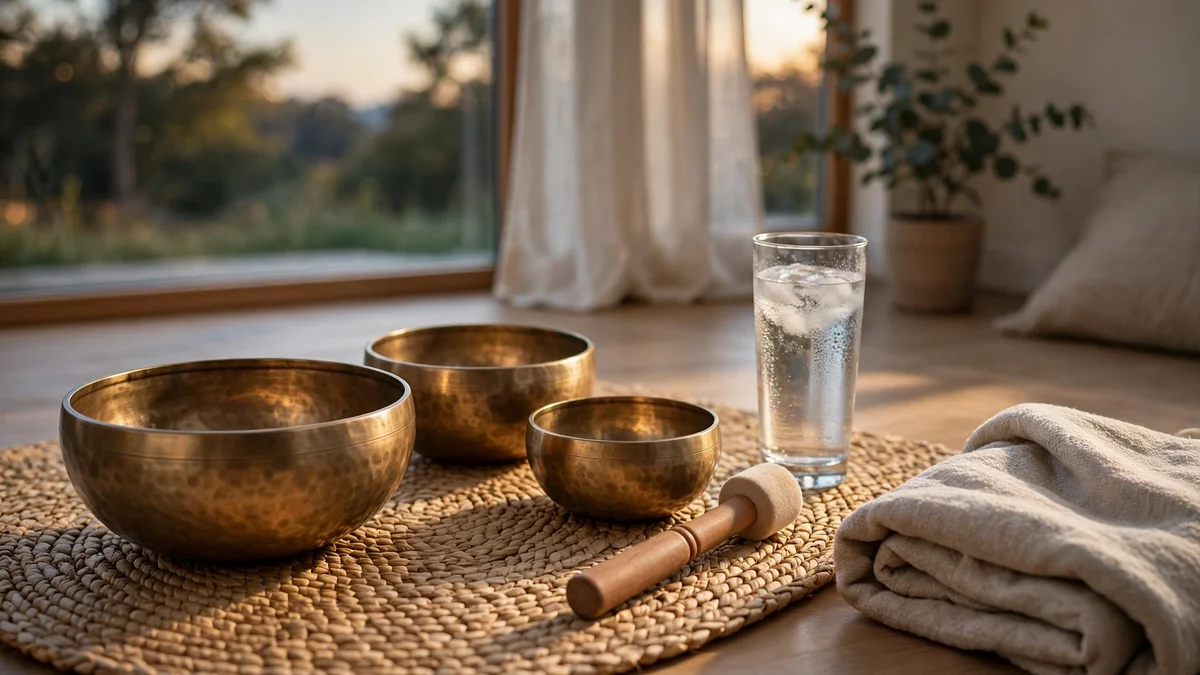
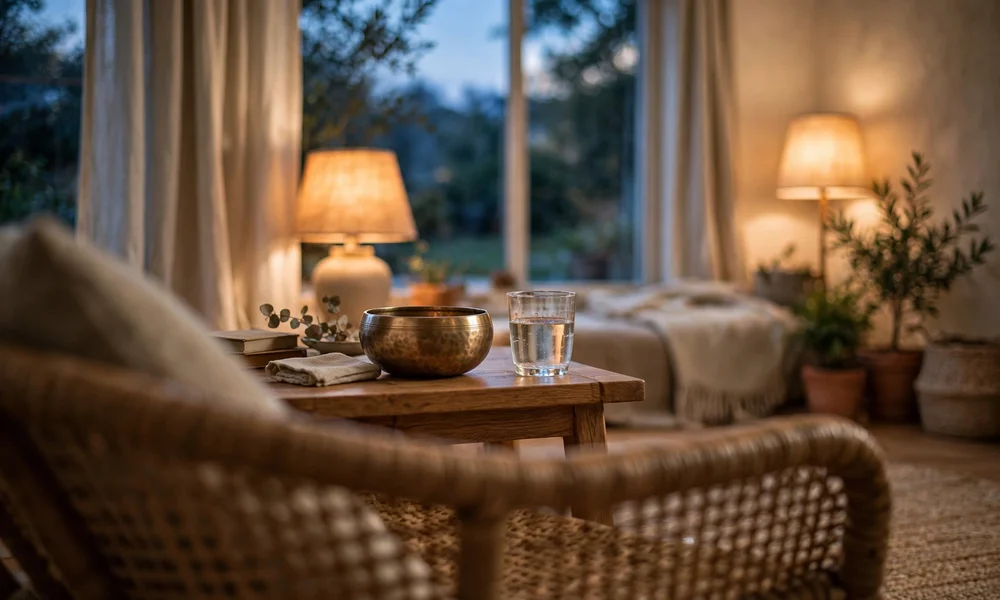
Some evenings do not want noise, company, or plans. They want the lights low, the phone face down, and a little while to lie still and listen to something gentle. On such an evening, a sound bath can be the simplest ritual of all: a few soft tones, a glass of water nearby, and nowhere to be for half an hour.
A sound bath is not a bath in the usual sense. There is no tub, no steam, and no heat. You lie or sit comfortably while singing bowls, chimes or a gong ring slowly around you, and the tones fade into the quiet of the room. Water sits beside you, not around you, ready for a slow sip when the listening ends.
This guide explains water and sound baths in plain terms: what the ritual is, how to set up a quiet corner, how to listen well, and how to rest afterwards. It is gentle general information only, never medical advice, and it claims nothing about healing. If a health worry keeps returning, a doctor is the right person to ask.
Key Takeaways
- A sound bath means lying still and listening to gentle tones, with water nearby.
- It is not a sauna, a steam room, or a bath; there is no heat or water to sit in.
- Set up a quiet corner, a mat, a blanket, and a glass of water first.
- Listen with eyes closed, breathe slowly, and let each tone fade fully.
- Sound heals nothing; a lasting health worry needs a doctor, not a ritual.
What Water and Sound Baths Means
Water and sound baths means one simple thing: listening to slow, gentle tones while a glass of water waits beside you. The bowls or chimes ring, the sound hangs in the air for a while, and then it fades, leaving a pocket of quiet before the next tone. You do nothing but lie still and follow the sound as it comes and goes.
The water is part of the ritual in a quiet way. A glass of cool water on the floor beside the mat gives your hands something to reach for when the session ends, and a slow sip afterwards marks the return to the ordinary evening. The water is for drinking, and the bowls stay dry.
Why Gentle Tones Feel Calming
Gentle tones feel calming because they give the mind one soft thing to follow. A single bowl tone is simple: it starts, it rings, and it fades away, and following that rise and fall takes the place of the day's chatter for a little while. There is nothing to solve and nothing to answer.
The calm is ordinary, not magical. A quiet room, a comfortable mat, and half an hour without demands would soothe most people on their own. Sound cannot mend an illness or repair a hard week, and no truthful guide would promise that it can.
Before Your First Sound Bath
Set up before you begin, so nothing interrupts the listening. Choose a quiet room, close the door, and put the phone in another room. Lay down a mat or a folded blanket, add a cushion under your head, and set a glass of water within reach of your hand.
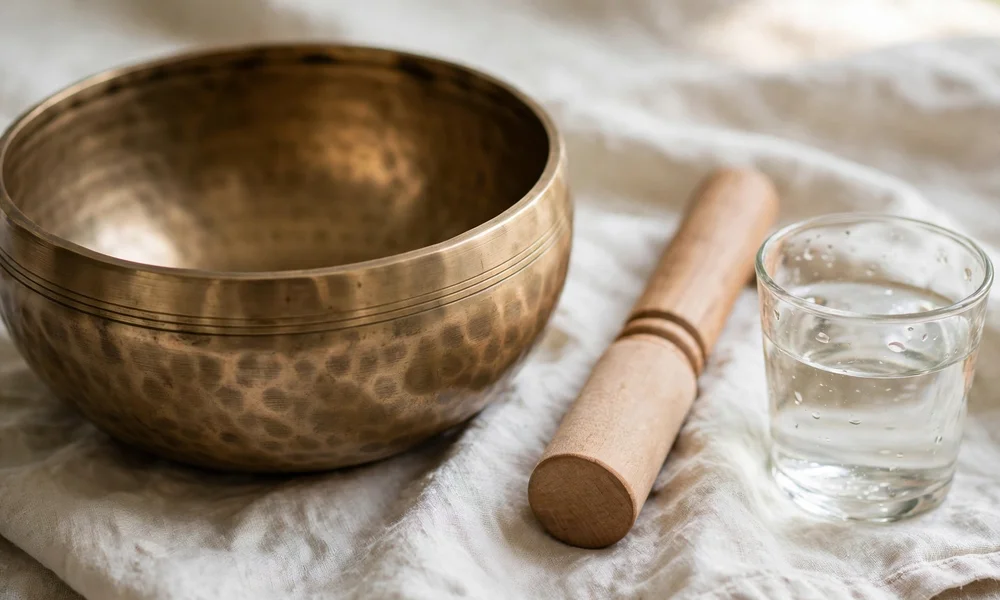
If you have a singing bowl, place it on the floor beside the mat with its mallet nearby. If you have none, a recorded session played softly through a speaker works just as well for a first try. Keep the volume low, the lights dim, and the room cool.
Listening Well During the Session
Lie down, close your eyes, and take three slow breaths before the first tone. When the bowl rings, follow the sound as it rises and fades, and when it is gone, wait in the quiet until the next one comes.
If thoughts drift to the day's jobs, let them pass and return to the next tone. Keep the session short at first, perhaps twenty minutes, and end it gently rather than stopping all at once. A soft final tone, a minute of silence, and then slowly opening your eyes is a kind finish.
Water Before, During and After
Drink a glass of water before you lie down, so you begin comfortable and unhurried. The glass stays beside the mat through the session, untouched while you listen, and when the tones end, sit up slowly and drink it in small sips.
Keep drinking through the evening, and eat lightly if you are hungry. Do not rush back to messages or noise; the slow return is part of the ritual. If you feel dizzy or unwell at any point, sit up, drink water, and rest, and ask a doctor if the feeling keeps coming back.
Water and Sound Baths at a Glance
| Quiet room | Gentle tones | Cool water |
|---|---|---|
| Mat, blanket, cushion | Bowls, chimes, gong | Glass beside mat |
| Phone away, lights low | Slow tones, long fades | Sip after session |
| Twenty minutes, eyes shut | Wait in quiet | Rest, no rush |
Sound Baths and Saunas
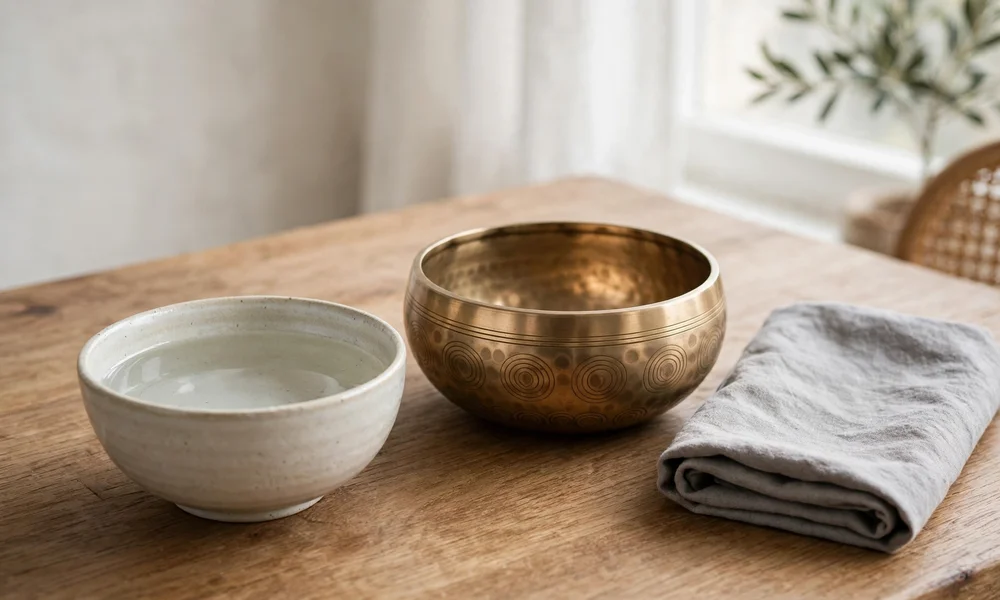
Saunas and sound baths both promise a calm evening, yet they could hardly be more different. Water and sauna is a warm wooden room, heated until the air is hot, with water poured over hot stones to make steam, and cool water waiting for afterwards.
A sound bath has no heat at all. The room stays cool, the air stays still, and the only thing that fills it is sound. A sauna warms the body in a hot room; a sound bath rests the mind in a cool one. One is heat and steam, the other is tones and quiet, and the water in a sound bath is simply a glass to sip, not steam to breathe.
Sound Baths and Steam Rooms
Steam rooms and sound baths share a love of quiet, but they ask for opposite things from the body. Water and steam rooms is a warm, damp room full of mist, where the steam softens each breath and the cool water afterwards brings you back to yourself.
A sound bath is dry and still. There is no mist, no damp air, and no warm room to step out of. The listener lies on a mat in an ordinary cool room, following tones as they fade. Steam rooms warm and soften the breath; sound baths quiet the mind with sound. Both end with water and rest, but only the steam room ever gets warm.
Sound Baths and Rain Sounds
Rain sounds and sound baths both fill a quiet evening with sound, yet the two listenings are different. Rain sounds for quiet evenings is rain falling on rooftops and windows at home, soft and even, a sound you can let wash over you while the night settles in.
A sound bath asks a little more: you lie down on purpose, close your eyes, and follow each tone as it rises and fades, one at a time. Rain is a background sound you can ignore; a sound bath is a listening you take part in. One is ambience for an evening at home, the other is a short ritual with a beginning, a middle, and a quiet end.
After the Session: Rest and Water
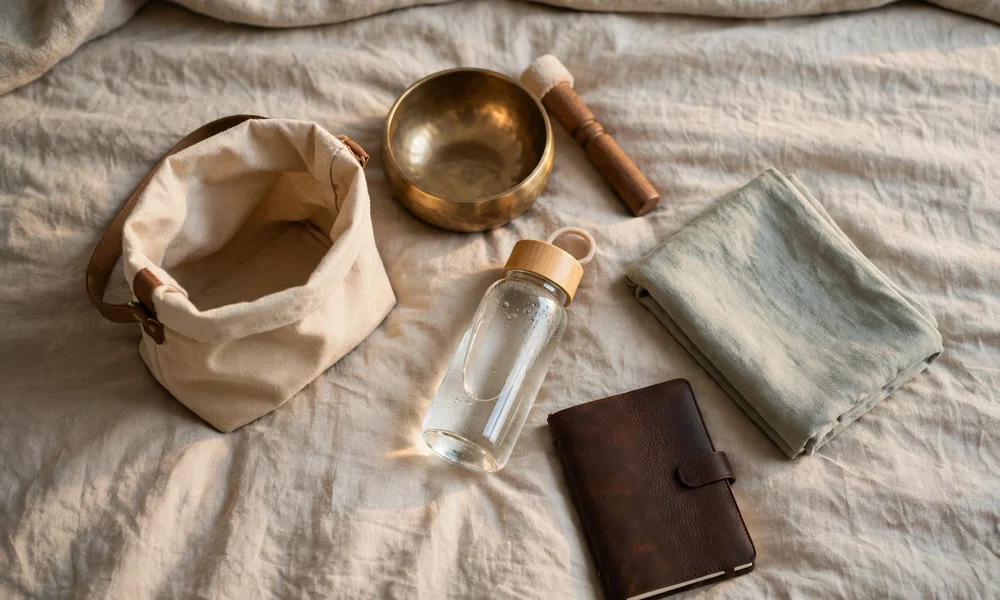
Once the tones end, give yourself a slow half hour before bed. Sit up, drink your water unhurried, and let the quiet linger a little longer before you switch the lights back on.
Some people like to rest with a notebook nearby, jotting a word about how the evening felt, and then closing the book. Eat lightly if you are hungry, keep the phone away a while longer, and let the night arrive slowly. The rest is the point, not the rush after it.
What to Bring and Wear
Wear loose, comfortable clothes that let you lie still without fidgeting, and socks if your feet get cold on the floor. A light blanket over you keeps the cool room pleasant through twenty quiet minutes, and a cushion under your head makes lying down easy.
Bring as little as you can: a mat or blanket, a cushion, a glass of water, and a bowl or speaker if you have one. The rest can wait outside.
Your Calm Ritual Checklist
- Choose a quiet room, close the door, phone away.
- Lay a mat, a blanket, a cushion and water nearby.
- Drink a glass of water before you lie down.
- Listen with eyes closed, one tone at a time.
- Sit up slowly, sip water, and rest afterwards.
- Sound heals nothing; see a doctor for lasting worries.
Frequently Asked Questions
What is a sound bath?
A sound bath is a quiet listening ritual: you lie still with eyes closed while singing bowls, chimes or a gong ring slowly around you, each tone fading into quiet before the next. A glass of water waits beside the mat for afterwards.
Is a sound bath the same as a sauna?
No, very different. A sauna is a hot wooden room with steam from water poured on hot stones, while a sound bath is a cool, dry room where you lie still and listen to gentle tones. One is heat and steam; the other is sound and quiet.
Do I need a singing bowl for a sound bath?
No. A bowl is lovely if you have one, but a recorded session played softly through a speaker works well for a first try. Keep the volume low, the lights dim, and the room quiet.
How long should a sound bath last?
Twenty minutes is a good first session, lying still with eyes closed and following each tone as it fades. You can sit with longer sessions later, once the short ones feel comfortable and easy.
Will a sound bath heal anything?
No. A sound bath is a quiet rest, and any ease you feel comes from lying still in a calm room for a while, not from any power in the sound. Lasting health troubles need a doctor, not a ritual.
When is it time to ask a doctor?
Ask a doctor if a health concern lingers, keeps coming back, or starts to worry you. These pages offer everyday ideas only, and they cannot stand in for care from a doctor.
The Bottom Line
Water and sound baths go together simply: a quiet room, gentle tones, a glass of water beside the mat, and a slow rest afterwards. Listen, sip, and let the evening slow down.
A Note for Calm Rituals
Keep it quiet, keep it gentle, keep it short. A few soft tones, one glass of water, and a little stillness are enough.