A crystal is easy to buy and easy to neglect. It arrives in a small box or a paper bag, it finds a place on a shelf or in a drawer, and then life carries on around it. Months later you pick it up and notice the polish has dulled or an edge has chipped.
Good storage is not complicated, and it does not need expensive equipment. It is a handful of small habits: keeping pieces apart so they cannot scratch each other, keeping them dry, keeping them out of harsh light, and giving each piece a place of its own.
This article explains how to store crystals so they stay beautiful, from a single tumbled stone to a whole shelf of pieces. It covers pouches, boxes, drawers, display, travel, and cleaning, in plain language.
Key Takeaways
- Store crystals so they stay beautiful by keeping each piece separate, dry, and out of harsh light and heat.
- Soft pouches, lined boxes, and divided drawers are the simplest storage that works for most stones.
- Hard stones can scratch softer ones, so never pile pieces loosely together in one bag or drawer.
- Keep stones away from damp rooms, strong sunlight, and places where they can be knocked or dropped.
- A small, tidy display you enjoy looking at beats a crowded shelf where pieces hide each other.
Why Storage Matters More Than You Think
A crystal looks solid, and in some ways it is. But the polish that makes a stone beautiful is a thin, smooth surface, and it is easier to damage than the stone beneath it. A single knock against a harder stone can leave a chip, and weeks of pieces rubbing together in a drawer can dull a finish that took hours of polishing to create.
Dust matters too. A stone left open on a shelf gathers dust, and dust worked into small hollows is hard to remove without scrubbing. Damp air is worse: it can leave marks on some stones and on the metal of settings and chains.
First, Know What You Own
Before you buy a single pouch or box, look at what you actually have. Lay your stones out on a clean cloth in good light and take stock: how many pieces, how big, and which ones are soft or fragile? A small tumbled stone needs very little, while a large point needs room of its own.
Hardness is the detail that matters most. Quartz, at about seven on the hardness scale, is tougher than many stones people keep at home, and it can scratch softer pieces if they share a bag. Fluorite, selenite, and calcite are much softer and mark easily.
Soft Pouches and Separate Homes
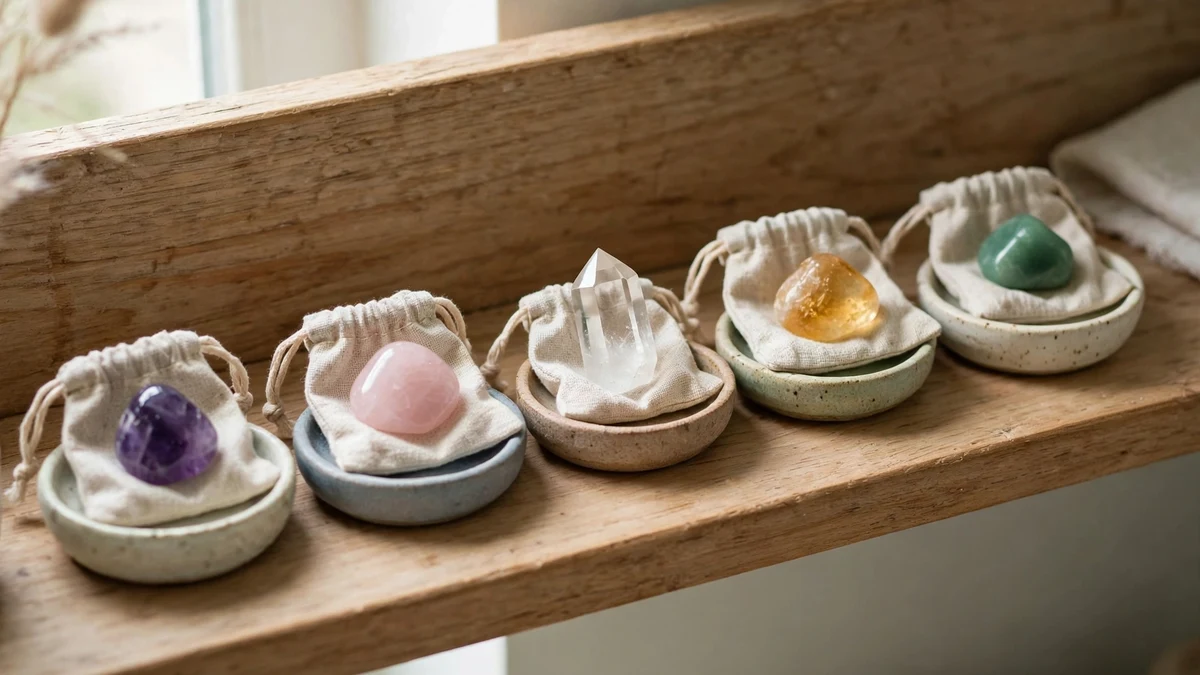
The simplest storage that works is also the cheapest: one soft pouch per stone. A small pouch of cotton, linen, or velvet keeps dust off, stops pieces from knocking together, and makes it easy to carry a stone without worry.
Choose pouches that close properly, with a drawstring or a fold, so the stone cannot slip out. Wash the pouches now and then, because a dirty pouch is no better than a dirty drawer. Label them if you have many similar stones.
| Storage | Best for | Watch out for |
|---|---|---|
| Soft pouch | Tumbled stones, jewellery, travel | Pouch must close, or the stone slips out |
| Lined box | Points, clusters, carved pieces | Needs compartments, or pieces knock together |
| Divided drawer | A growing collection, daily use | Dust builds up; line it and clean it often |
| Open shelf | Display pieces you love to see | Sunlight, dust, and knocks from passing hands |
If a pouch feels too plain, remember that it is doing quiet work. The beauty of a stone is in the stone itself, and a pouch protects it so that beauty lasts.
Boxes, Drawers, and Shelves That Work
A box is the next step up from a pouch, and it suits pieces you use often. Choose a box with a soft lining and compartments, or add your own dividers with small trays or folded cloth. The rule is the same as with pouches: no two pieces should touch each other.
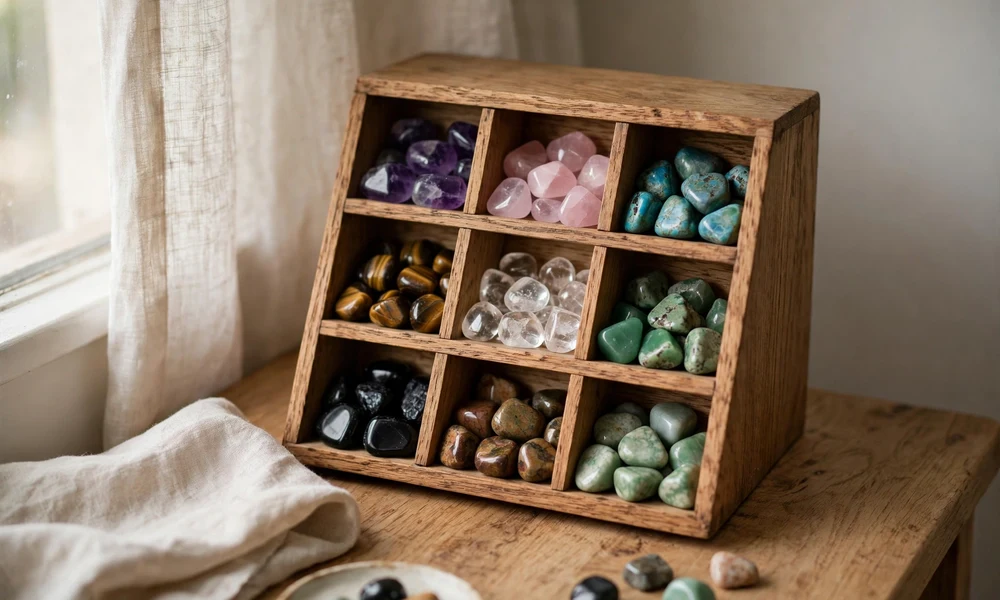
A divided drawer works well for a growing collection. Line it with felt or soft cloth, keep one piece per compartment, and clean it out every few months. A drawer keeps dust away and hides clutter.
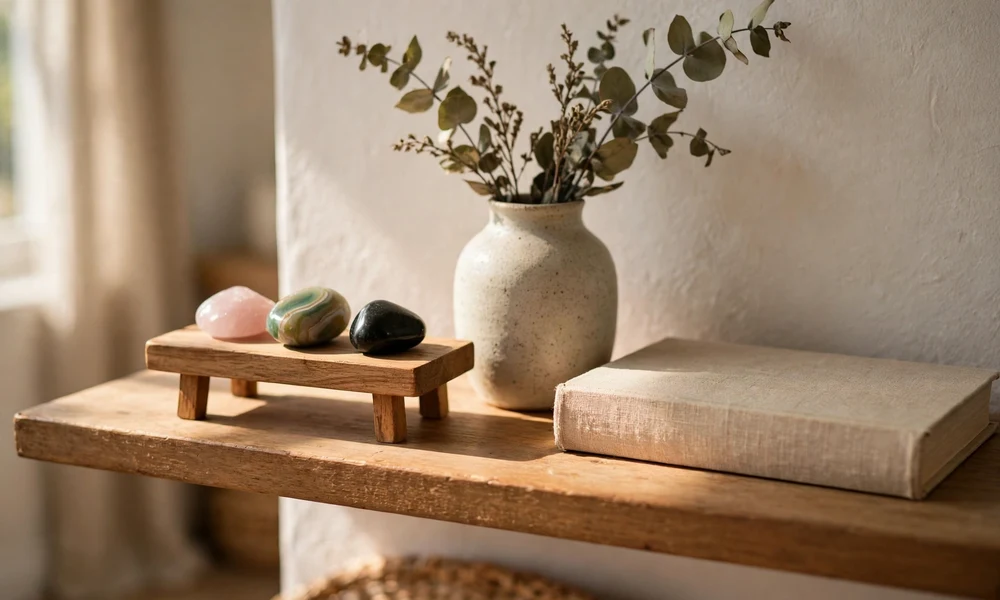
Shelves are for display, and they need a little more thought. Keep the shelf away from direct sunlight and from places where people brush past. Leave space between pieces so each one can be seen and lifted without knocking its neighbour. A shelf with room to breathe is easier to dust and kinder to the stones on it, and the beauty of a smaller shelf is that every piece on it gets to be seen.
Light, Heat, and Damp: The Three Things to Watch
Three things do the most damage to stored crystals, and all three are easy to avoid once you know to look for them. The first is light. Strong, direct sunlight can fade the colour of some stones over time, and it can heat a piece until it is uncomfortable to hold. Keep stones out of sunny windowsills and choose a shaded shelf instead.
The second is heat. Radiators, hot cars, and sunny dashboards are all bad places for crystals. Heat can dry out some stones and loosen settings. A cool, steady room is the safest home for a collection.
The third is damp. Bathrooms, kitchens, and basements are damp places, and damp air can leave marks on stones and on metal settings. If a stone does get wet, dry it with a soft cloth and leave it in open air until it is fully dry before putting it away.
Displaying Stones You Love to See
Storage does not have to mean hiding your crystals away. Some pieces deserve to be seen, and a small display can be the prettiest corner of a room. The trick is to display a few pieces well, rather than crowding every stone you own onto one shelf.
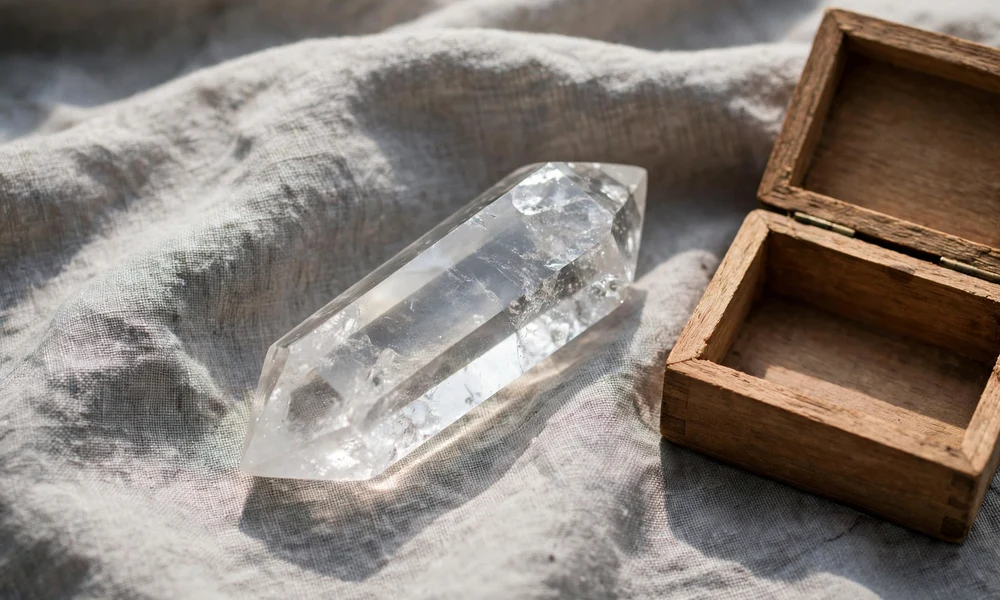
Light makes the display. A shelf that catches soft, indirect daylight will show off a stone far better than a dark corner with a bright lamp. The way light moves through a stone is part of its beauty, and clear quartz, a study in light, shows how much a single stone can change as the light changes. A room that catches the light well is worth planning around, and a home that catches the light is a good place to start. Keep the display small, keep it clean, and let each piece have its moment.
Travelling With Crystals
Taking a stone with you needs a little planning, but not much. Wrap the stone in a soft cloth or slip it into its pouch, then put the pouch in a pocket of your bag where it cannot be crushed. A stone loose in a bag with keys and coins will come home scratched.
For a longer trip, use a small lined box or a padded case. Keep the pieces separate, keep the case upright, and keep it out of the sun in a hot car. If you are flying, carry the stones in your hand luggage rather than a checked bag, where they can be knocked around.
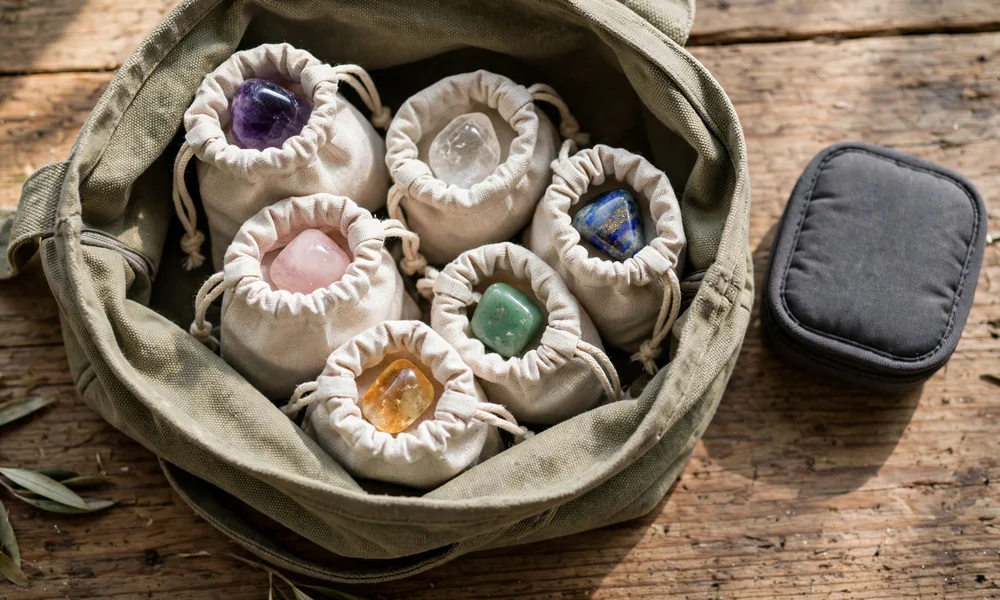
When you arrive, unpack the stones soon. A stone left in a bag for a week gathers dust and can be forgotten. Give it a place on the bedside table or a shelf, and it becomes part of the trip rather than something you carried and never saw.
Cleaning Before You Put Them Away
A stone should be clean before it goes into storage, because dirt stored with a stone becomes dirt ground into it. The cleaning is simple: lukewarm water, a drop of mild soap if needed, and a soft cloth. Rinse gently and dry thoroughly with a soft towel.
Skip harsh chemicals, ultrasonic cleaners, and anything abrasive. A soft toothbrush can reach into small hollows, but use it lightly and only on stones hard enough to take it. Soft stones like selenite and fluorite should be wiped with a dry cloth only.
Your Crystal Storage Checklist
- Give every stone its own pouch, compartment, or place, so no two pieces touch.
- Keep stones dry: dry them fully after cleaning and store them away from damp rooms.
- Keep stones out of strong, direct sunlight and away from radiators and hot cars.
- Line boxes and drawers with soft cloth or felt, and clean them out every few months.
- Display only a few pieces at a time, with space between them, and dust them weekly.
- Wrap stones in a soft cloth or pouch before travelling, and unpack them when you arrive.
Frequently Asked Questions
What is the best way to store crystals at home? One soft pouch per stone, kept in a lined box or divided drawer in a cool, dry room. That simple setup protects most stones from scratches, dust, and damp.
Can I store different crystals together in one bag? It is better not to. Harder stones can scratch softer ones, and pieces knocking together can chip polish. Give each piece its own pouch or compartment.
Is it safe to keep crystals on a sunny windowsill? No, not for long. Strong sunlight can fade the colour of some stones and heat them up. Choose a shaded shelf with soft, indirect light instead.
Should I store crystals in the bathroom? No. Bathrooms are damp, and damp air can leave marks on stones and on metal settings. A dry room, such as a bedroom or living room, is a better home.
How do I store crystals when travelling? Wrap each stone in a soft cloth or slip it into its own pouch, and keep the pouches in a padded case or a safe pocket of your bag. Carry them in hand luggage when flying.
Do crystals need to be cleaned before storage? Yes. Wipe each stone with a soft cloth, wash it gently with lukewarm water and mild soap if it needs it, and dry it fully before putting it away. Soft stones should be wiped dry only.
The Bottom Line
Storing crystals so they stay beautiful comes down to three small habits: keep each piece separate, keep it dry, and keep it out of harsh light and heat. A pouch, a lined box, and a shaded shelf are all you need, and they cost very little. The reward is a collection that looks as good in five years as it does today.
Begin with what you already have: a clean cloth, a few pouches, and an hour to sort your stones. Lay them out, give each one a home, and put the shelf back together with room to breathe.
A Note for a Smaller, Calmer Shelf
Keep it simple, keep it gentle, and keep it yours. A smaller shelf, well kept, is more beautiful than a crowded one, and a stone you can see is a stone you can enjoy. The best collections are rarely the biggest. They are the ones where every piece has a place, and every place has a reason. Stay curious. Stay clear. Store well.



