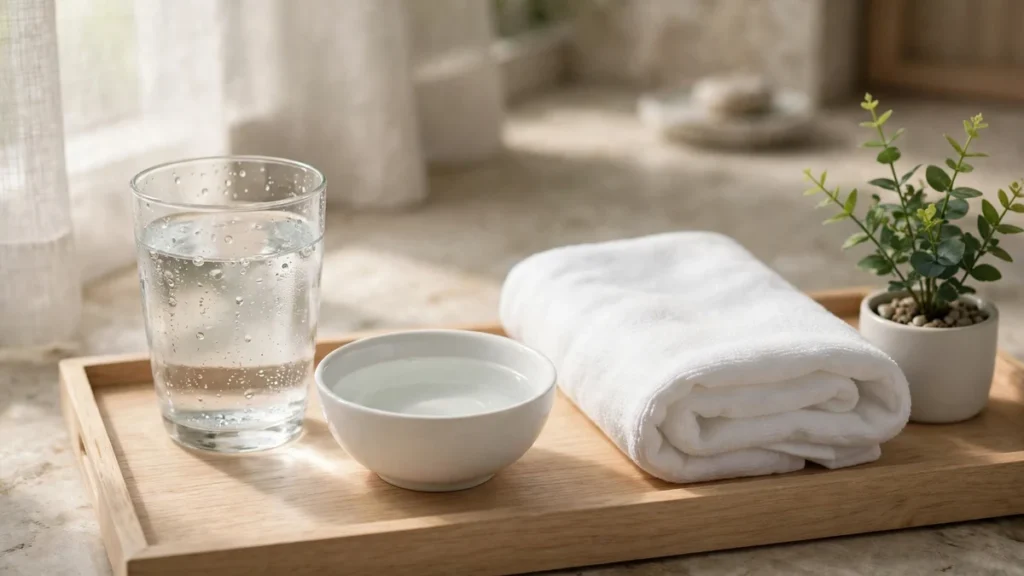
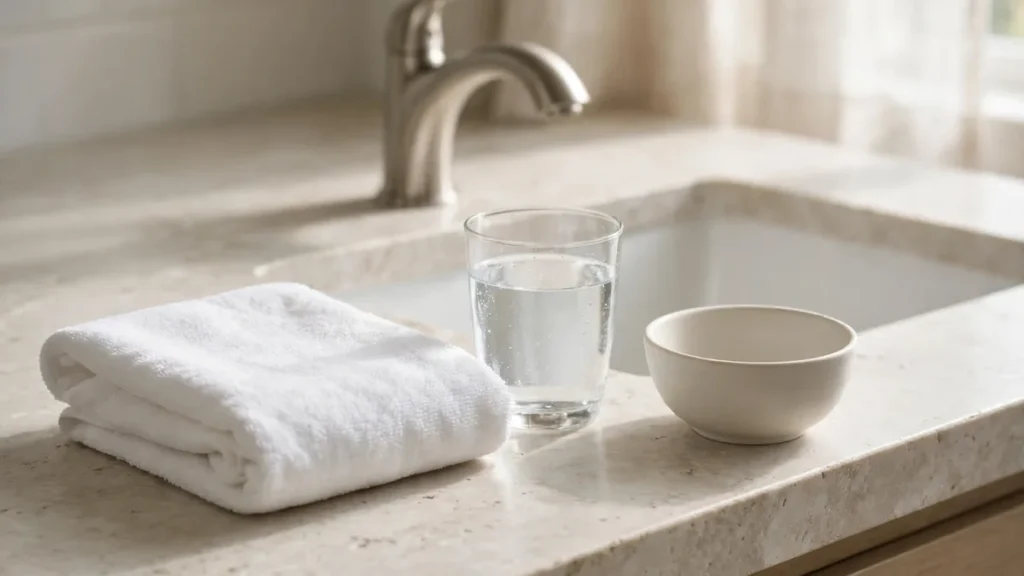
Hands tell the story of a long life: a thousand meals cooked, children held, doors opened, letters written, gardens tended. With the years, the skin on them grows thinner and drier, the knuckles show a little more, and the hands ask for a gentler touch than they once did. They are not a problem to be fixed. They are hands that have worked hard, and they deserve a little care.
Water is the kindest place to start. Plain water, used at the right temperature and in the right way, can clean without stripping, soften without soaking, and calm without fuss. A glass of water, a soft cloth, a plain cream and a slow minute will carry most of the work. Nothing here needs to be fancy, and nothing needs to be bought in a hurry.
This guide explains how older hands change, why lukewarm water suits them best, and how to build a slow, gentle care ritual around them. It is gentle general information only, never medical advice. Nothing here will cure a hand or skin condition, and anyone with a real problem should see a doctor.
Key Takeaways
- Older hands grow thinner and drier with time, so they need gentler water and a slower routine.
- Lukewarm water is the kindest wash, close to body temperature, never hot and never icy.
- Wash briefly, pat dry softly, and care for hands while they are still slightly damp.
- A plain fragrance-free cream, applied gently, helps hold moisture in older hands.
- Gentle general care only, never a cure; see a doctor for real hand problems.
How Older Hands Change
Older hands change in small, steady ways. The skin grows thinner, so it bruises and tears more easily, and it makes less of its own natural oil, so it feels drier by the afternoon. Fine lines settle where the hands move most, around the knuckles and the wrists, and the skin takes longer to bounce back after a wash.
These changes are normal, and they are not a sign of failure. Where water and mature skin, a gentle guide explains how the skin of the face changes with age, this guide looks at the hands alone. The face and the hands age together, but the hands work harder every day, washing dishes, opening jars and braving cold air, so they need their own gentle routine.
Why Lukewarm Water Suits Older Hands
Lukewarm water suits older hands because it cleans without shocking them. Hot water strips away the little natural oil the skin still makes, and it can leave older hands red, tight and itchy. Icy water is no kinder: it makes stiff joints feel stiffer and the wash feel like a chore. Water close to body temperature is the middle way, warm enough to feel pleasant and cool enough to be kind.
Test the water on the inside of your wrist before you begin. If it feels hot on your wrist, it is too hot for your hands.
The Gentle Wash, Step by Step
A gentle wash takes less than a minute, and it starts before the tap is turned on. Wet the hands briefly under lukewarm water, then use a small amount of a plain, mild soap, or plain water alone if the hands are not dirty. Rub the palms together softly, then the backs of the hands, then between the fingers, without scrubbing or pressing hard.
Rinse briefly and turn the tap off. The whole wash should be short: long soaks and repeated scrubbing dry older hands out, and they do not clean any better. One soft wash, done well, is enough for most of the day.
Drying Softly
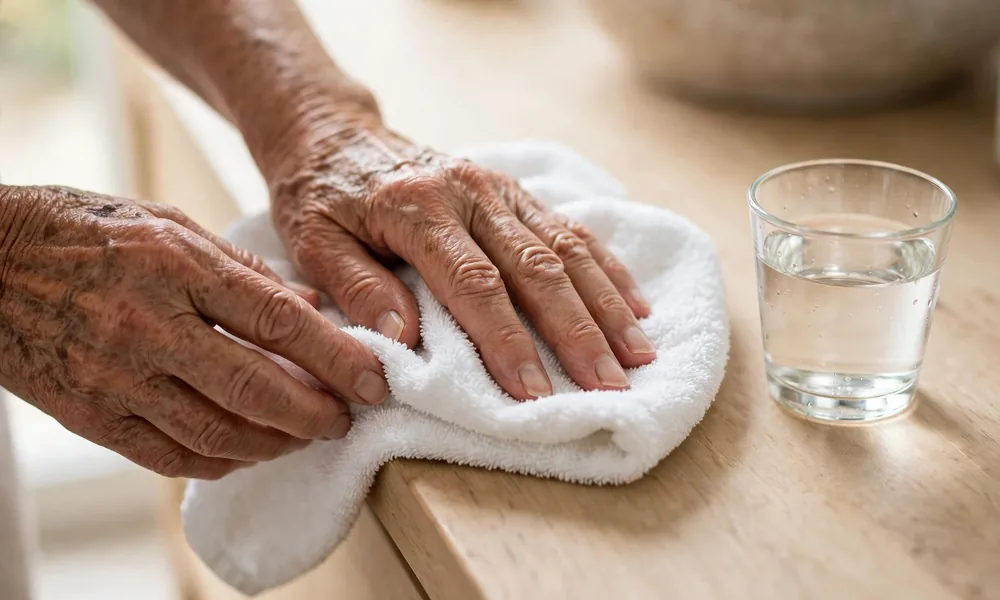
Drying matters as much as washing, and it is where most hands are hurt without anyone noticing. Never rub older hands dry with a rough towel. Instead, pat them softly with a clean, soft towel, pressing gently and lifting, until the skin is dry but still slightly damp to the touch. The backs of the hands and the spaces between the fingers deserve the same soft touch.
Keep a soft towel by the sink and a second one in the kitchen, so a gentle dry is always within reach.
Moisturising While Hands Are Damp
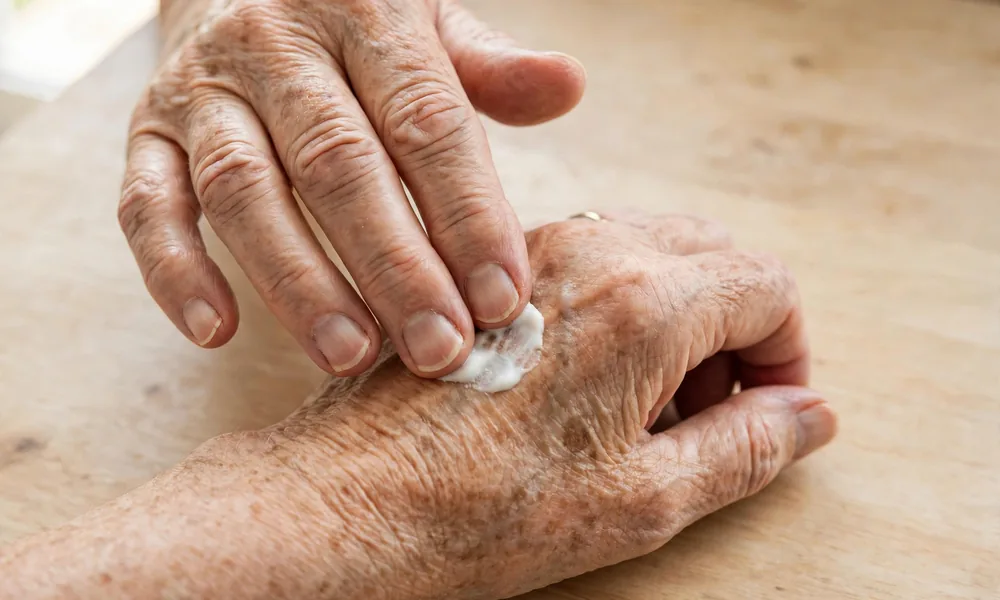
Cream works best on hands that are still slightly damp, because it holds the water in place. Take a small amount of a plain, fragrance-free hand cream, warm it between the palms for a moment, then smooth it over the backs of the hands, the fingers and the wrists. Use slow, gentle strokes, and do not press on sore joints or rub hard over thin skin.
Where water and dry skin, a gentle routine explains how a plain moisturiser holds softness in dry facial skin, the same idea serves older hands. The hands simply need it more often, after every wash and before bed, because they are washed and dried so many times a day.
Nails and Cuticles, Gently
Nails change with age too. They may grow more slowly, feel more brittle, or show small ridges along their length. Keep them short and smooth, trimming straight across with clean clippers and softening any sharp corner with a fine file. Never cut the cuticles, which protect the nail from germs, and never push them back hard.
After a wash, while the hands are still slightly damp, smooth a little cream over the nails and cuticles as well. If a nail is painful, swollen, very dark or lifting away from the finger, do not try to treat it at home. See a doctor, and let a professional look at it.
Warm Water Soaks for Comfort
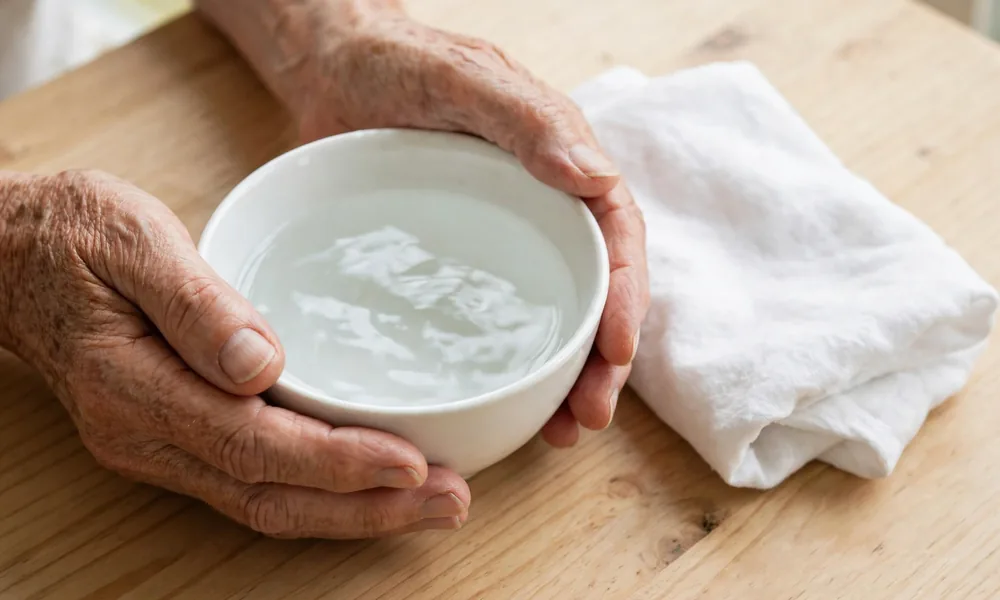
A short warm soak can comfort stiff, tired hands on a cold day. Fill a small bowl with lukewarm water, never hot, and rest the hands in it for five minutes, no longer. The water should feel warm and pleasant on the wrist, and the bowl should sit on a steady table where it cannot tip. When the time is up, lift the hands out, pat them dry softly, and smooth on a plain cream at once.
Soaks are for comfort, not for cleaning, and they should stay short. A long soak will dry older hands out rather than soften them, and very hot water can scald thin skin. If the hands are cut, cracked or sore, skip the soak entirely and keep the hands clean and dry instead.
Older Hands at a Glance
| Lukewarm water | Soft dry | Plain cream |
|---|---|---|
| Wrist test first | Pat, never rub | Damp hands best |
| Brief wash only | Soft towel near | Small amount enough |
| Never hot water | Between fingers too | After every wash |
| Short soak comfort | Keep hands warm | Before bed too |
Daily Habits That Help
Small habits protect older hands through the day. Wear plain gloves for washing dishes and for garden work, and warm gloves outdoors in cold wind, because cold air dries thin skin fast. Keep a small tube of plain cream by the sink, by the bed and in a coat pocket, so it is always close. Drink water through the day too: hands feel better when the whole body is not thirsty.
Rest the hands when they ache, and do not force stiff fingers to grip hard jars or heavy bags. Ask for help when a jar will not open, and choose tools with thick, soft handles that are easy to hold. Gentle days add up.
What This Ritual Will Not Do
Be honest about what gentle care can and cannot do. Lukewarm water and plain cream will not cure a hand condition: they will not heal eczema, ease arthritis, or remove age spots. They are simple comforts, and comfort is all they are. The ritual helps because it is slow and kind, and because it gives the hands a little attention every day.
No home ritual will replace medical advice. If the hands are cracked and bleeding, very painful, swollen, or not improving after a few weeks of gentle care, the answer is a doctor, not a new cream.
Your Older Hands Care Checklist
- Wash briefly with lukewarm water, never hot and never icy.
- Pat hands dry softly with a clean towel, never rub.
- Smooth plain fragrance-free cream on while hands are still slightly damp.
- Keep nails short and smooth, and never cut the cuticles.
- Wear gloves for dishes, garden work and cold wind.
- Rest sore hands, ask for help with stiff jars, and see a doctor for real problems.

Frequently Asked Questions
How often should older hands be washed?
Wash when the hands are dirty and after using the toilet, and keep each wash brief with lukewarm water. Washing again and again through the day dries older hands out, so one soft wash done well is enough.
Is hot water bad for older hands?
Yes. Hot water strips away the little natural oil older skin still makes, and it can leave hands red, tight and itchy. Lukewarm water, close to body temperature, is the kindest wash.
What cream suits older hands best?
A plain, fragrance-free hand cream suits most older hands, because strong scents and harsh ingredients can sting thin skin. Patch-test any new cream on one small spot first, and stop at once if the skin stings or turns red.
Can older hands be soaked in warm water?
Yes, for comfort, for about five minutes in lukewarm water, never hot. Pat the hands dry softly afterwards and smooth on cream at once. Skip the soak if the hands are cut, cracked or sore.
How should older nails be cared for?
Keep nails short and smooth, trimming straight across with clean clippers and softening sharp corners with a fine file. Never cut the cuticles, and smooth a little cream over the nails while the hands are damp.
When should I see a doctor about my hands?
See a doctor if the hands are cracked and bleeding, very painful, swollen, or not improving after a few weeks of gentle care. Where water and normal skin, a simple guide covers everyday care for balanced skin, older hands with real problems need a doctor, not a new routine.
The Bottom Line
Water and older hands ask for very little: lukewarm water, a soft towel, a plain cream, and a slow minute. Wash gently, dry softly, and let your hands rest.
A Note for Older Hands
Keep it warm, keep it soft, keep it gentle. Your hands have carried you this far.