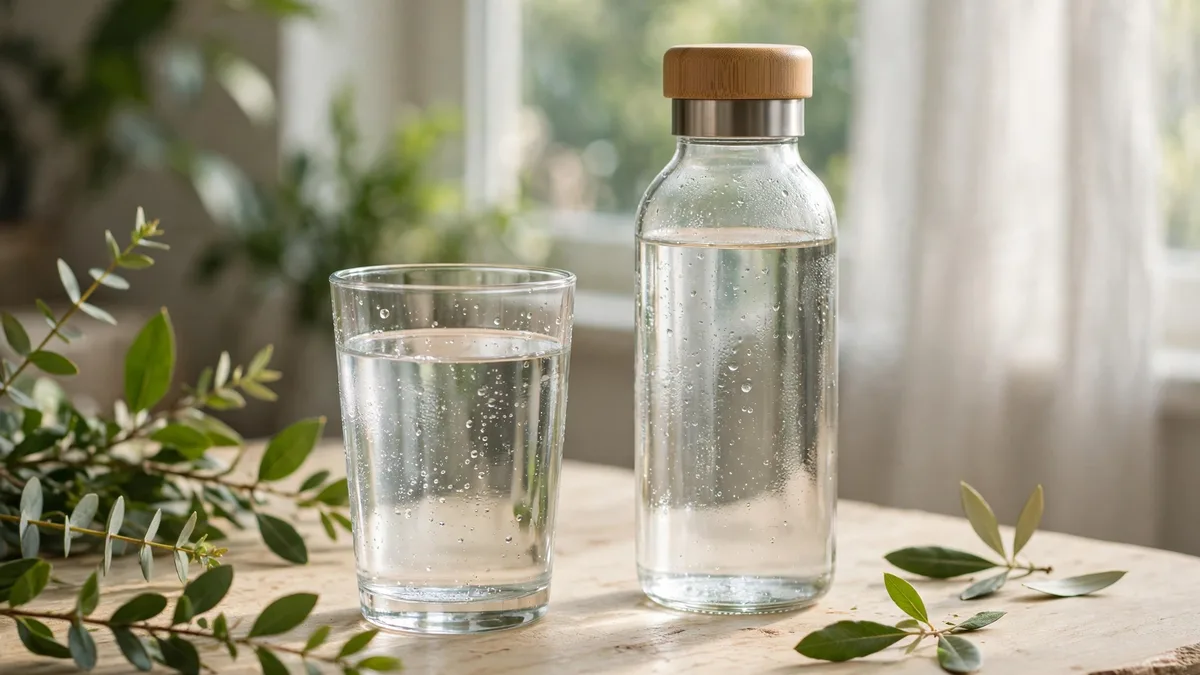
Most of us know we should drink more water. We have read the advice, bought the bottle, and set the reminders. And yet, by the middle of the afternoon, the bottle is still half full and we feel quietly guilty about it. The advice was not wrong, exactly. It was just too forceful for real life.
Drinking more water does not have to feel like a chore or a test. It can be a gentle habit, built from small moments that already exist in your day: a glass beside your breakfast, a bottle on your desk, a sip while the kettle boils. No counting, no competition, no punishment for forgetting.
This guide takes that softer approach. It looks at why drinking water feels hard, how to make it easier without forcing it, and what to do on the days when it still does not happen. Everything here is simple, practical, and kind. Take what fits your life, and leave the rest.
Key Takeaways
- Drinking more water works best as a gentle habit, not a target to chase or a rule to obey.
- Making water easy to reach matters more than any number of glasses or any app.
- Small moments that already exist in your day are the best places to attach a sip.
- Temperature, flavour, and a glass you enjoy can make plain water feel inviting.
- Forgetting is normal, and a missed glass is not a failure. Simply begin again at the next moment.
Why Drinking More Water Feels Hard
Drinking more water feels hard for a simple reason: it is easy to forget. Water is quiet. It does not remind you the way hunger does, and it does not reward you the way a cup of tea or coffee does. On a busy day, hours can pass without a single sip, and you only notice when your mouth feels dry or your head feels heavy.
The usual advice makes this worse. Big targets, strict schedules, and apps that scold you turn a simple pleasure into a performance. When you fall behind, the guilt makes you less likely to try again, not more. A habit built on guilt rarely lasts, because nobody wants to spend the day being judged by a water bottle.
There is also the matter of taste and habit. If you grew up drinking very little plain water, or if you simply prefer other drinks, a sudden demand to drink litres of it will feel unnatural. Gentleness works better than force, because it works with your real preferences instead of against them.
Start with Access, Not Targets
The single most useful change is also the simplest: put water where you can reach it. A glass on your desk is easier to remember than a bottle hidden in a cupboard. A carafe on the kitchen counter is easier than a tap you have to walk to. Before buying anything new, try moving the glass you already own into view.
Refill the bottle before you leave the house, not after you arrive thirsty. Keep a glass beside your bed for the morning and another by your usual chair in the evening. The point is to remove friction, so that drinking water becomes the easiest choice rather than a task on a list.
This is the same idea behind staying hydrated without making it complicated: a small habit that fits into your real day is more useful than a beautifully planned routine that never leaves your notes app. Access comes first. Targets, if they come at all, can come later, gently.

Small Habits That Actually Stick
Habits stick when they attach to moments that already happen. Choose three or four ordinary moments in your day and pair each one with a glass of water. A glass with breakfast. A glass while the kettle boils. A glass when you sit down to work. A glass beside your evening meal. That is all.
Keep each moment small. A full glass can feel like a demand; a few sips feel like nothing at all. Drink what feels comfortable, put the glass down, and carry on. Over a day, those small sips add up without any single moment feeling forced.
The table below shows one gentle pattern. It is an example, not a prescription. Move the moments around until they fit your day.
| Moment | What to do | Why it works |
|---|---|---|
| Waking up | A glass of water beside your bed | You are already there, and the glass is waiting |
| Breakfast | A glass with your meal | Food and water naturally go together |
| Mid-morning | A few sips while the kettle boils | A pause you already take |
| Lunch | A glass with your meal | Easy to remember, easy to repeat |
| Afternoon | A bottle on your desk | Within reach while you work |
| Evening meal | A glass beside your plate | The day's last easy moment |
If you miss a moment, let it go. The next one will come soon enough. A habit that forgives you is a habit you will keep.
Making Water More Inviting
Plain water is not the problem, but it can feel a little plain. Small touches can make it more inviting without turning it into a project. Try water at the temperature you enjoy: some people prefer it cool from the fridge, others prefer it at room temperature, and a few like it warm. There is no correct answer, only the one that makes you reach for the glass.
A slice of lemon, a few cucumber ribbons, or a sprig of mint can make a plain glass feel more appealing. Keep it simple: one addition, prepared in a moment, not an elaborate recipe. A clean reusable bottle that is comfortable to carry also helps, as does a glass you genuinely like holding. Water itself has a visual language worth noticing: the way a glass catches the light, the curve of a carafe, the clarity of a freshly poured glass.
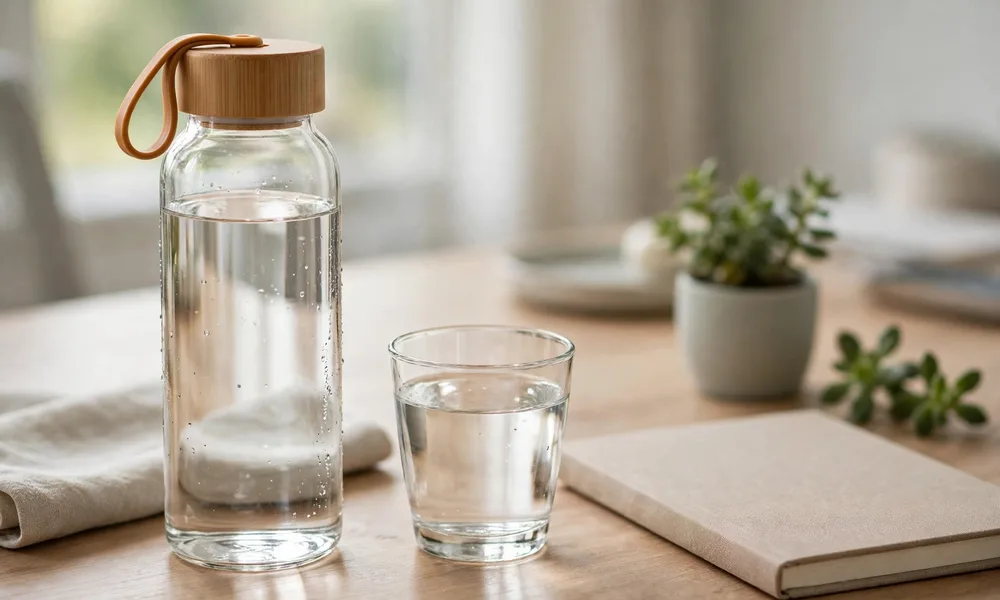
Wash the bottle and the glass daily, and keep the refill point easy to use. A bottle that smells stale or a glass that is hard to reach will quietly discourage you. The ordinary details deserve as much attention as the purchase.
Water Through the Day
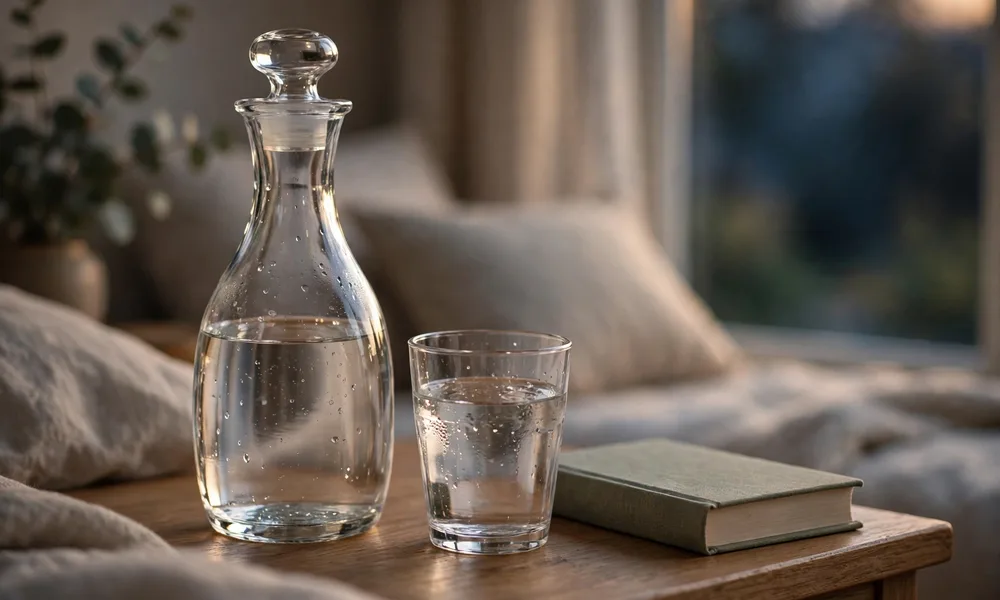
Mornings are the easiest time to begin. A glass of water beside your bed, drunk slowly when you wake, is a gentle way to start. It asks nothing of you except that you reach for it. If you prefer, keep the glass on the bedside table and drink it while you sit up and gather yourself.
Afternoons are the hardest, because work takes over and the bottle drifts out of reach. Keep it on your desk, in your line of sight, and refill it when you stand up for another reason. A bottle that travels with you, to meetings and to the kitchen, is a bottle that gets used.
Evenings are for ease. A glass beside your meal is enough. Avoid turning the evening into a race to catch up on missed glasses; that is exactly the kind of forcing this guide is trying to avoid. Drink what feels comfortable, and let the day end calmly.
When Drinking Feels Difficult
Some days, drinking more water simply feels difficult. You forget, you are out all day, or you just do not feel like it. That is normal, and it is not a failure. A missed day is not a broken habit. It is a day, and tomorrow is another one.
If you often feel unwell, very thirsty, or unable to drink comfortably, please speak to a qualified health professional. This guide is general information, not medical advice, and it cannot replace care. If a clinician has given you a fluid limit or a personal hydration plan, follow that guidance.
For most of us, the answer to a difficult day is simply to begin again, gently. One glass, one moment, one sip. Wellbeing without the overwhelm begins with exactly this kind of small, forgiving step.
Your Gentle Checklist
- Put a glass or bottle of water where you can see it and reach it.
- Keep a glass beside your bed for the morning.
- Pair a few sips with moments that already happen, like meals and the kettle boiling.
- Try water at a temperature you enjoy, with lemon, cucumber, or mint if you like.
- Wash your bottle and glass daily, and keep the refill point easy to use.
- If you miss a moment, let it go and begin again at the next one.
Frequently Asked Questions
How much water should I drink each day? There is no single number that suits everyone. Needs vary with age, activity, weather, and health. This guide avoids targets on purpose: focus on making water easy to reach, and drink what feels comfortable.
What if I do not like the taste of plain water? Try it cool, at room temperature, or warm, and see which you prefer. A slice of lemon, a few cucumber ribbons, or a sprig of mint can help. A clean glass you enjoy also makes a difference.
Do I need a special bottle or app? No. A glass you already own, moved into view, works well. A simple reusable bottle is useful if you are often out. Apps can help some people, but they are not necessary.
What if I keep forgetting? Attach sips to moments that already happen, like meals and the kettle boiling. Keep the glass in sight. Forgetting is normal, and a missed glass is not a failure.
Does water from food and other drinks count? Food and other drinks do contribute to your fluid intake. This guide is about making plain water easier and more pleasant, not about counting every drop.
When should I speak to a health professional? If you often feel unwell, very thirsty, or unable to drink comfortably, or if a clinician has given you a fluid limit or a personal plan, please follow their guidance and ask them any questions.
The Bottom Line
Drinking more water, gently, is a small thing done well: water within reach, a few sips attached to moments that already exist, and a kind attitude when you forget. It asks nothing except that you make the easy choice a little easier. A habit that asks little is one you will actually keep.

Begin tomorrow with whatever you already have: a glass, some water, and a spot where you can see it. Put the glass where you will reach for it, and let the habit grow quietly.
A Gentle Word Before You Go
Keep it simple, keep it kind, and keep it yours. The best habits are rarely the most dramatic. They are the ones that fit into an ordinary day so easily that you barely notice them, until one afternoon you realise the bottle is empty and you never forced a single sip. Stay curious. Stay clear. Drink gently.



