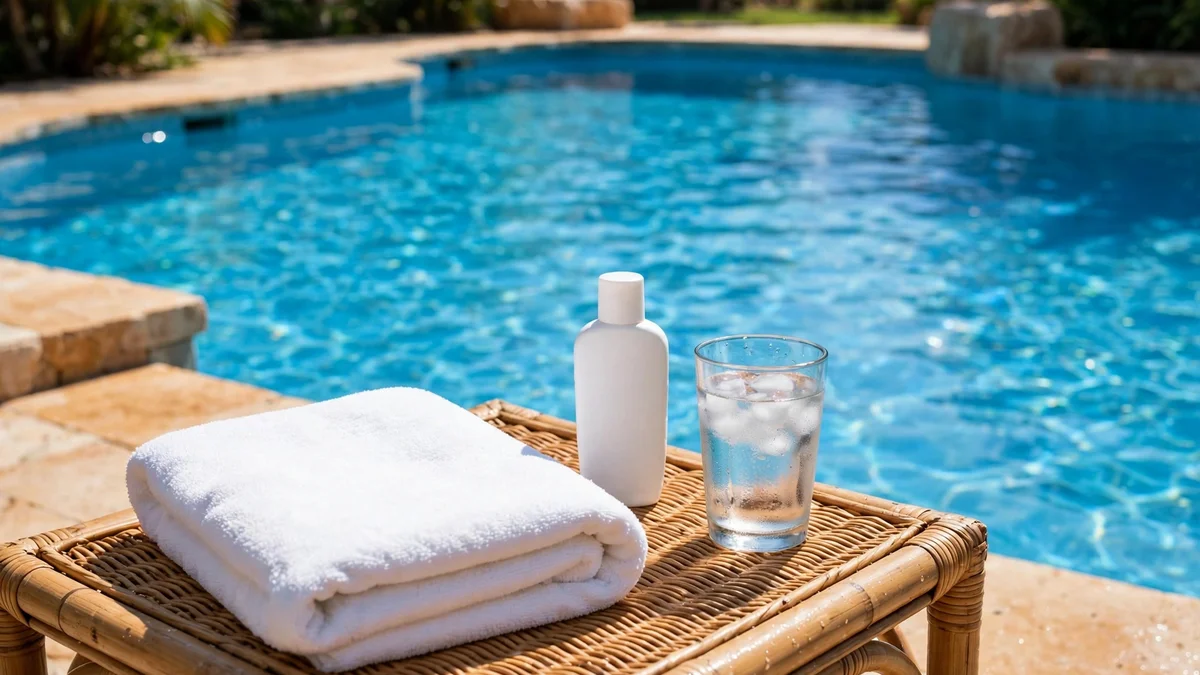
A pool day is one of the simplest pleasures of warm weather. The water is cool, the sun is bright, and an hour in the pool can wash away a whole week of tiredness. Yet skin that spends the day in a pool has its own needs, because pool water is not plain water: it carries chlorine to keep it clean, and chlorine can leave skin feeling dry, tight, or a little itchy by the evening.
The answer is not a long routine or a bag full of products. It is a short, simple habit in three parts: before the pool, during the pool, and after the pool. A quick rinse, a gentle wash, shade, sunscreen, and plain water to drink are all it takes, and the whole routine fits in one small bag.
This guide sets out that simple pool-day routine: what to pack, how to protect skin at the poolside, why a rinse matters, and how to wash gently in the evening. It is gentle general information only, never medical advice, and plain water does not replace sunscreen.
Key Takeaways
- Pool days need a short routine in three parts: before, during and after the pool.
- Rinse with plain water before and after swimming, to wash chlorine away.
- Shade and sunscreen protect the skin from the sun; water does not replace sunscreen.
- Wash gently in the evening with lukewarm water and a mild cleanser.
- Real skin problems, rashes or pain belong with a doctor or dermatologist.
What a Pool Day Asks of Skin
A pool day asks more of skin than an ordinary day, because the skin spends hours in treated water and bright sun. Pool water is kept clean with chlorine, which is good for the pool and hard on the skin. Chlorine can strip the skin's natural oils, and by evening the face can feel dry, the arms can feel tight, and the hands can feel rough.
Before the Pool: A Short Morning Wash
The routine starts at home, before you leave for the pool. Wash your face gently with lukewarm water, pat it dry, and smooth on a little plain moisturiser while the skin is still slightly damp. That is the whole morning wash, and it takes less than two minutes.
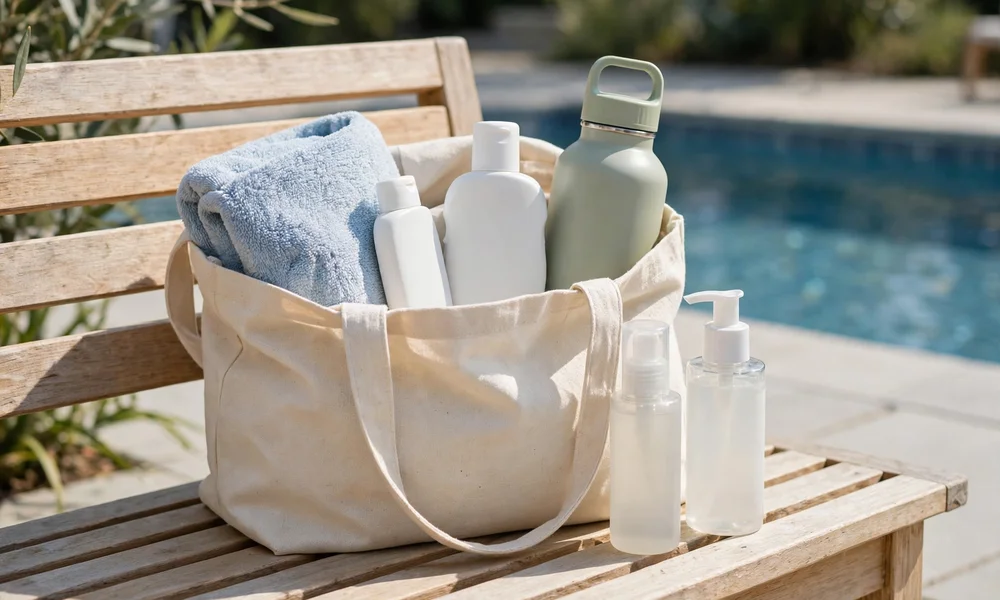
Drink a glass of plain water before you go, and fill a reusable bottle to take with you. Pack the bag the night before if you can: a towel, sunscreen, a water bottle, a small gentle cleanser, and a lip balm. A bag packed at night means a morning without rushing, and a morning without rushing is a better start to any pool day.
The same steady packing idea runs through water and travel skin as a carry-on routine, where a small bag and a short routine carry the whole journey.
At the Pool: Shade, Sunscreen and Water
At the pool, shade is the skin's best friend, and it costs nothing. Choose a chair under an umbrella or a tree, and plan long stretches in the sun for the morning or late afternoon. The midday sun is the strongest, and the skin feels it first. A wide hat shades the face, ears and neck, and sunglasses protect the eyes from the bright glare off the water.
Sunscreen is the part people skip most often, so say it plainly: plain water does not replace sunscreen. Drinking water, splashing with cool water and sitting in the shade all help the skin, but none of them blocks the sun's rays. Only shade, clothes and sunscreen do that, and sunscreen must be reapplied after swimming, sweating, or a few hours outdoors.
During the Pool: Short Swims and Rinses
Swim in short stretches, not in one long session, and rinse with plain water between swims. A quick rinse under the poolside shower washes chlorine off the skin before it dries there, and it takes less than a minute. Wet skin before the first swim too, because skin that is already wet with plain water takes in less pool water than skin that is dry.
After the Pool: The Chlorine Rinse
The most important step of the whole pool day comes after the last swim: the chlorine rinse. Step under the poolside shower as soon as you leave the water, and rinse with plain lukewarm water from head to toe. Rinse the face, the arms, the shoulders and the hair, and let the water run for a full minute, so the chlorine is washed away before it dries on the skin.
Do not wait until you get home to rinse, because chlorine left to dry on the skin is what leaves it feeling tight and itchy by evening. The poolside shower is there for this, and one minute under it saves a whole evening of dryness. Rinse the swimsuit too, in plain water, so the chlorine does not sit in the fabric overnight.

Washing Gently in the Evening
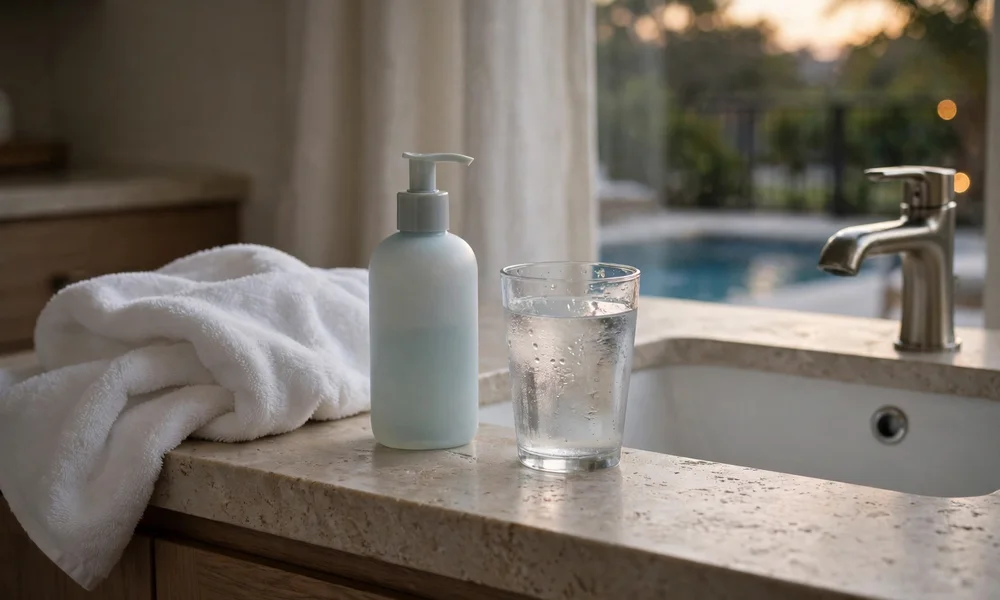
Evening is when the day's chlorine, sweat and sunscreen need washing away, gently. Lukewarm water is the right temperature again: warm enough to lift the day off the skin, cool enough not to strip it. Wash briefly, with your hands, and a mild cleanser only if you need one. Take off sunscreen properly, because it is made to stay on the skin, and a gentle wash with lukewarm water and a mild cleanser removes it without scrubbing.
Pat the skin dry and apply a plain moisturiser while it is still slightly damp. The evening wash is the kindest part of the day: the heat is gone, the pool is behind you, and a calm wash tells the skin the day is over. The same gentle approach is explained in water and skin barrier as a gentle repair guide, where lukewarm water supports the barrier instead of fighting it.
Lips, Hands and Small Comforts
Lips and hands suffer most on a pool day, because they are always out in the sun and the water. Smooth a little plain cream onto your hands after washing them, and keep a lip balm in the pool bag. A small amount, used often, works better than a large amount used once, and the bag is the place for it, not the bathroom shelf at home.
What Plain Water Will Not Do
Be honest about what plain water will not do. Plain water will not replace sunscreen, will not cure a rash, and will not fix skin that is sore, red, or painful. Drinking water, splashing with cool water and rinsing with plain water all help the skin, but none of them blocks the sun's rays or treats a real skin problem.
If the skin is red, blistered, very itchy, or painful after a pool day, or if a rash does not fade in a day or two, see a doctor or dermatologist. Real skin problems belong with a doctor, not with a journal, and a pool-day routine is no substitute for medical care. The same plain warning runs through water and summer skin as a light routine, where water is comfort and care, never a treatment.
Packing Your Pool Day Kit
A good pool-day kit is small enough to fit in one bag: a towel, a bottle of sunscreen, a reusable water bottle, a small gentle cleanser, a lip balm, and a wide hat. Add a small soft cloth, because a damp cloth is the kindest way to freshen the face at the poolside. Choose plain, fragrance-free products you already know your skin likes, because a pool day is the worst time to try something new.
Pool Days at a Glance
| Before pool | During pool | After pool |
|---|---|---|
| Gentle morning wash | Shade and sunscreen | Chlorine rinse first |
| Sunscreen before leaving | Short swims only | Lukewarm gentle wash |
| Pack bag nightly | Sip water often | Plain cream nightly |
| Drink water early | Rinse between swims | Dry clothes home |
Your Pool Day Skin Checklist
- Pack the bag the night before, with sunscreen, water and a towel.
- Rinse with plain water before the first swim and between swims.
- Sit in the shade, wear a hat, and reapply sunscreen after swimming.
- Rinse chlorine off under the poolside shower before going home.
- Wash gently in the evening with lukewarm water and a mild cleanser.
- See a doctor for a rash, pain or redness that does not fade.

Frequently Asked Questions
Should I rinse before swimming?
Yes. Rinse with plain water before the first swim, because skin that is already wet with plain water takes in less pool water than skin that is dry. Rinse again between swims, and always rinse under the poolside shower as soon as you leave the water for the last time.
Does plain water replace sunscreen?
No. Plain water does not replace sunscreen. Drinking water, splashing with cool water and sitting in the shade all help the skin, but none of them blocks the sun's rays. Only shade, clothes and sunscreen do that, and sunscreen must be reapplied after swimming or sweating.
How do I wash chlorine off my skin?
Step under the poolside shower as soon as you leave the water, and rinse with plain lukewarm water from head to toe for a full minute. Then wash gently at home in the evening with lukewarm water and a mild cleanser, pat the skin dry, and smooth on a little plain moisturiser.
What should I pack for a pool day?
Pack a towel, a bottle of sunscreen, a reusable water bottle, a small gentle cleanser, a lip balm and a wide hat. Choose plain, fragrance-free products you already know your skin likes, and check the sunscreen date before you pack it, because old sunscreen loses its strength.
Why does my skin feel dry after the pool?
Pool water carries chlorine to keep it clean, and chlorine can strip the skin's natural oils, leaving the face dry, the arms tight and the hands rough by evening. A quick rinse after swimming and a gentle evening wash with plain moisturiser help the skin recover, and the dryness usually fades by the next day.
When should I see a doctor about pool-day skin?
See a doctor or dermatologist if the skin is red, blistered, very itchy or painful after a pool day, or if a rash does not fade in a day or two. Real skin problems belong with a doctor, not with a journal, and a pool-day routine is no substitute for medical care.
The Bottom Line
Pool days are simple: rinse before and after, shade and sunscreen during, and a gentle wash at night.
Pack the bag, enjoy the water, and let the evening wash do the rest.
A Note for Pool Days
Keep it cool, keep it gentle, keep it short. The water will do the rest.


