Exfoliation has a reputation problem. For years it was sold as something vigorous: rough scrubs, tingling formulas, and the idea that the harder you worked, the better your skin would look. Many of us tried that version and gave up on the whole idea.
A fresh look at exfoliation with stone and water starts from a different place: the skin is something to listen to, not to conquer. A smooth stone, plenty of fresh water, and a light touch can lift away the dull surface that builds up over the week, without the sting of harsh scrubbing.
This guide covers choosing a stone, preparing your skin, the method itself, and when to skip it. Take it slowly, and let comfort be your guide.
Key Takeaways
- Exfoliation stone water means a smooth stone used lightly on damp skin, with plenty of fresh water. Gentle pressure only, never harsh scrubbing.
- Exfoliation is an occasional step, not a daily one. Once a week is plenty for most people, and less is fine too.
- Patch-test first on a small area, and stop at once if you notice irritation or redness.
- Never exfoliate broken, cut, or sunburned skin, and never exfoliate skin that is already sore.
- The aftercare matters as much as the method: rinse well, pat dry, moisturise, and protect your skin from the sun.
What Exfoliation Really Means
Skin renews itself all the time: old surface cells loosen and leave, and fresher cells take their place. Exfoliation simply gives that process a little help, removing loose, dull surface cells so skin looks fresher and moisturiser sits more comfortably.
It is not meant to strip the skin or make it tingle: a tight, tingling feeling means the skin has been pushed too far. Healthy exfoliation should feel uneventful, leaving skin calm and soft.
Think of exfoliation as housekeeping rather than renovation. A light, regular tidy-up keeps things pleasant; a gentle pass, done occasionally, is worth far more than a forceful session.
There is no single right way to exfoliate: a soft cloth, a mild wash, or a smooth stone with water can all work. What matters is the pressure and how your skin responds.
Stone and Water: A Gentler Pairing
Stone and water have been paired in bathing for a very long time, for a practical reason. Water softens the skin and keeps everything moving smoothly, while a smooth stone gives a steady, even contact that is easy to control. Together they make a method that is slow and simple, as long as the touch stays light.
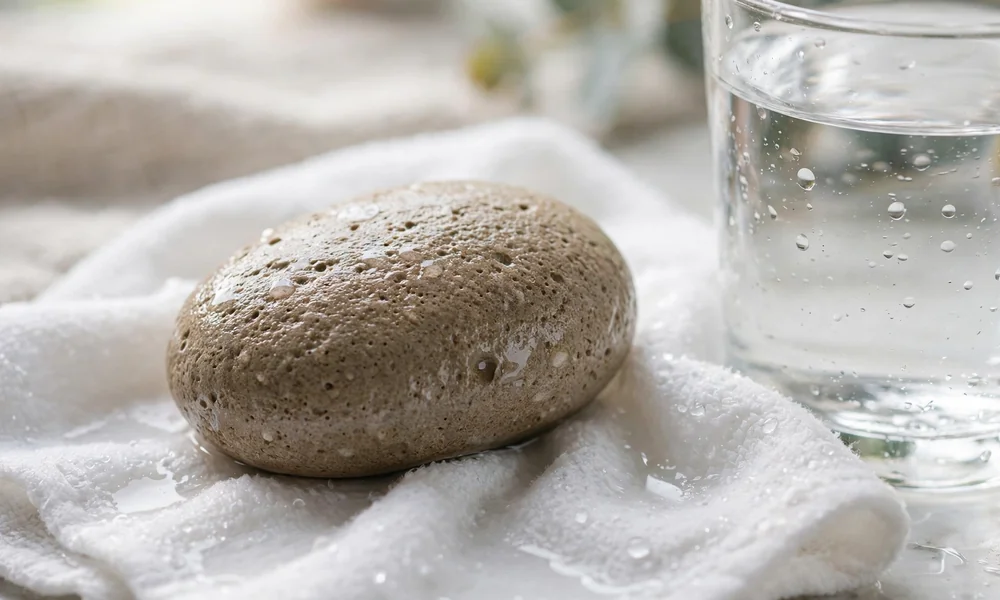
The stone does not need to be special or expensive. A smooth, fine-grained pumice stone, or any smooth natural stone made for skin use, will do. The surface should feel even, with no sharp points or crumbling edges. If it feels scratchy on the back of your hand, choose another one.
Water is the other half of the pairing. Use clean, fresh, lukewarm water, and keep it close so you can wet the stone and the skin often. Dry rubbing is where most of the trouble starts: a stone gliding over damp skin is a different experience from a dry stone dragged across dry skin.
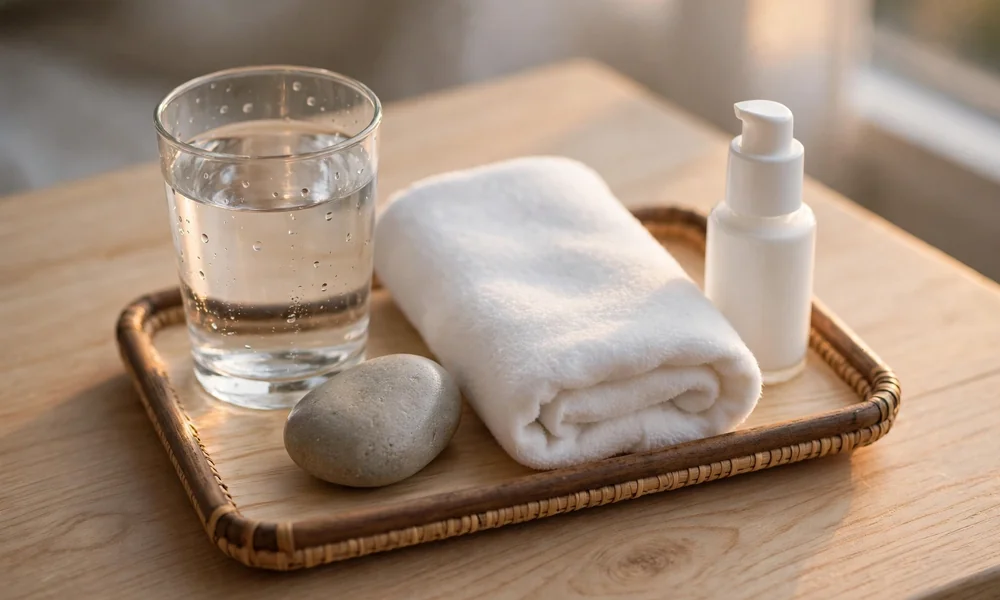
Water itself has a visual language worth noticing: the way a glass catches the light, the clean shine of a wet stone. A small ritual built around those details is easier to keep than a chore.
Choosing a Stone You Can Trust
Choosing well is mostly a matter of touch. The stone should sit comfortably in your palm and feel easy to guide. Run your fingertips slowly over every surface, including the edges: a good exfoliating stone feels smooth and even all over, like a river pebble.
Look at the stone in daylight before you buy it, and check for cracks, chips, and flaking areas. A stone that crumbles or sheds grains is not suitable for skin. If you are unsure, ask the seller whether it is made for use on skin.
A stone about the size of a small egg is easiest to hold and control, especially around the curves of the face. If you already own a smooth stone you love, and it passes the touch test, use that one.
Keep the stone clean and dry between uses: rinse it after each session and let it dry fully in the open air. Replace it when its surface becomes uneven.
Preparing Skin and Water
Preparation is short, but it keeps the whole method gentle. Wash with your usual mild cleanser and lukewarm water, then leave the skin damp. Lukewarm water is kinder than hot water, which can dry the skin and make it more reactive.
Next, patch-test: try the stone on a discreet area, such as the jawline, with the same light pressure you plan to use, then wait a day. If the skin feels comfortable and looks calm, go ahead. If it feels sore or looks red, do not continue.
Set up your space before you begin: the stone, a bowl of fresh lukewarm water, a clean soft cloth, and your usual moisturiser within reach. Work in good light and keep the first sessions short.
A calm approach to wellbeing without the overwhelm applies here too: one small change at a time beats a shelf of new habits started at once.
The Gentle Method, Step by Step
Begin by wetting the stone and the skin thoroughly. Hold the stone lightly between your fingers, as you would hold a pencil, rather than gripping it in your fist. Light pressure is the whole method.
Work in small areas, one at a time, with short, slow strokes in one direction, letting the weight of the stone do the work. Do not press down, scrub quickly, or go over the same patch again and again. One or two gentle passes are enough. Rinse the stone often, and keep the skin damp throughout.
Leave the skin around the eyes alone entirely, and give the lips, the sides of the nose, and any dry area an especially light touch, or none at all. If a spot feels tender, skip it.
| Stage | Time | What to do |
|---|---|---|
| Prepare | 3 minutes | Cleanse, leave skin damp, patch-test already done |
| Wet | 1 minute | Wet the stone and the skin thoroughly |
| Glide | 5 minutes | Short, slow strokes, light pressure, rinse often |
| Rinse | 2 minutes | Rinse skin with fresh lukewarm water |
| Finish | 2 minutes | Pat dry gently, moisturise, protect from sun |
When you have finished, rinse with fresh lukewarm water, pat dry with a soft towel, and moisturise while the skin is still slightly damp.
How Often, and When to Skip a Session
Frequency is where most exfoliation goes wrong, so keep it simple. Once a week is plenty for most people, and once every two weeks suits many skin types too. Exfoliation is not a daily step: doing it every day will almost certainly leave skin red, dry, and unhappy.
Listen to your skin between sessions. If it feels tight, looks flushed, or stings when you apply your usual products, skip the next session and wait until it feels calm again.
There are times to skip exfoliation altogether. Never exfoliate broken, cut, or sunburned skin, or skin with an open spot, a rash, a cold sore, or any area that is already sore. If you have just had a facial treatment or a reaction to a product, wait until the skin has fully recovered. If you use a prescribed skin treatment, ask your dermatologist first.

Aftercare: Rinse, Moisture, and Sun Protection
Aftercare begins the moment the stone is put down. Rinse well with fresh lukewarm water, then pat dry with a clean, soft towel. Rubbing with a rough towel can undo the gentleness of the session, so press the towel lightly against the skin.
Moisturise while the skin is still slightly damp. A plain, fragrance-free moisturiser your skin already knows is the best choice after exfoliation. This is not the moment to try a new active product.
Sun protection is the part people most often forget, and it matters most after exfoliation. Freshly exfoliated skin can be more sensitive to sunlight, so use a broad-spectrum sunscreen with SPF 30 or higher when you go outside, and reapply as directed. A hat and shade help too.
A skin routine with room to breathe is built on this kind of restraint: a few steps done well and no pressure to add more. Exfoliation fits there as an occasional guest, not a daily demand.
Your Gentle Exfoliation Checklist
- Patch-test the stone on a small area first, and wait a day before a full session.
- Use a smooth stone, lukewarm water, and light pressure only — never scrub hard.
- Keep the skin and the stone damp throughout, and rinse the stone often.
- Stop at once if you notice irritation or redness, and skip broken or sunburned skin.
- Rinse well, pat dry gently, and moisturise while the skin is still slightly damp.
- Protect your skin from the sun afterwards, and clean and dry the stone before storing it.
Frequently Asked Questions
How often should I exfoliate with a stone? Once a week is plenty for most people, and once every two weeks suits many skin types too. Exfoliation is not a daily step.
Is a stone too harsh for the face? A smooth stone used lightly on damp skin can be gentle, but it depends on the stone and the pressure. Choose a fine, even surface, use a light touch, and avoid the eye area entirely.
What should I do if my skin turns red? Stop at once and keep your routine simple. Rinse with lukewarm water, pat dry, and apply a plain moisturiser. If the redness persists, speak to a qualified dermatologist.
Can I exfoliate sunburned or broken skin? No, never. Do not exfoliate broken, cut, or sunburned skin, or any area that is sore or healing. Wait until the skin has fully recovered.
Do I need a special stone for exfoliation? You need a smooth, clean stone made for skin use, with an even surface and no sharp edges. A fine-grained pumice stone is a common choice.
Should I moisturise after exfoliating? Yes. Rinse well, pat dry gently, and apply your usual moisturiser while the skin is still slightly damp. Follow with sun protection outside.
The Bottom Line
A fresh look at exfoliation with stone and water is a return to something simple: a smooth stone, fresh lukewarm water, a light touch, and a calm pace. Done once a week or less, with a patch test first, it can leave skin smoother and fresher without the sting of harsh scrubbing.

Begin with a small test, keep the pressure light, and let your skin decide the pace.
A Softer Way to Begin Again
Keep it light, keep it occasional, and keep it yours. The best skin habits feel kind while you do them and leave your skin calm afterwards. A smooth stone, a glass of water, and a few unhurried minutes are enough. Stay curious. Stay clear.