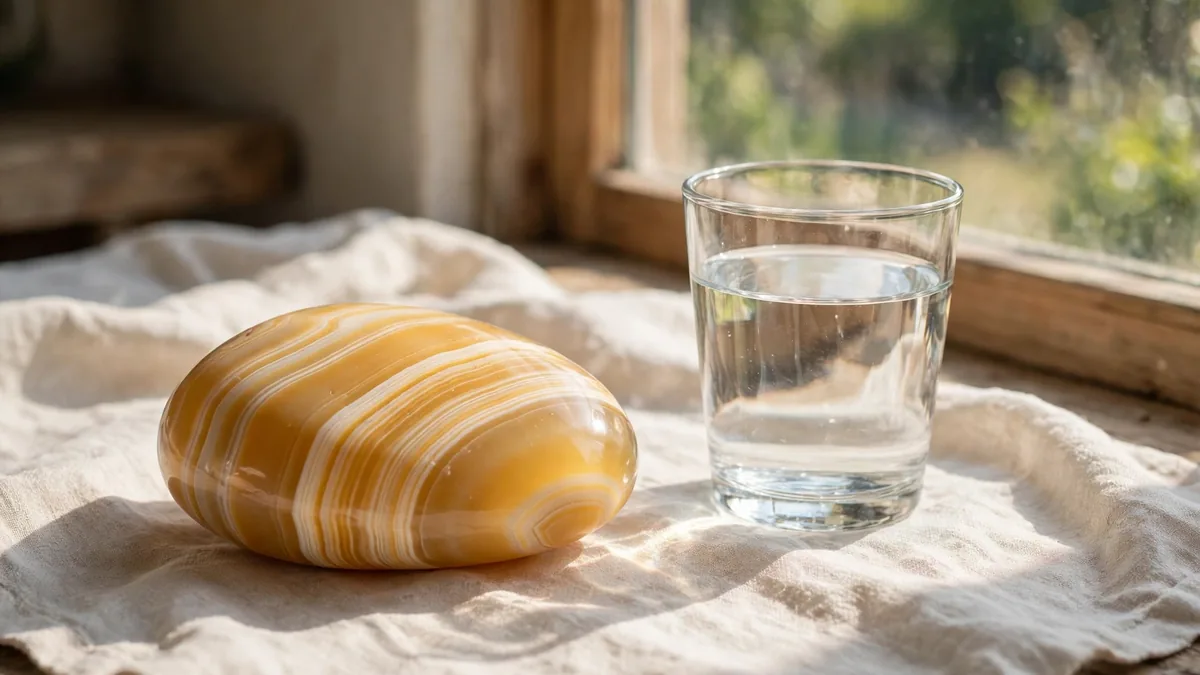
Bright days have a colour, and it is yellow. Think of late morning sun across a kitchen table and lemon light on a white wall. A stone in that colour can sit on a tray and hold the feeling all day.
Yellow agate is that stone: a banded chalcedony in warm sunny yellow, striped with honey and cream, smooth to the touch and bright without being loud. Its colour sets it apart at once.
This guide looks closely at yellow agate: what it is, how its bands form, how to pick a good piece, and how to enjoy it beside a glass of water. It is for display only, and it heals nothing.
Key Takeaways
- Yellow agate is a warm sunny-yellow banded agate with honey and cream stripes.
- Its sunny colour suits bright days, open windows, and cheerful rooms.
- Yellow agate is for display and handling only: dry on a tray, near water, never inside it.
- Its bands are layers of chalcedony laid down slowly over a very long time.
- One small sunny stone is enough to brighten a whole room.
What Yellow Agate Is
Yellow agate is a variety of chalcedony, the smooth quartz stone agates are made from. Its yellow comes from tiny traces of iron inside the stone, the mineral that colours autumn leaves and desert sand. The colour runs warm, closer to honey than to lemon.
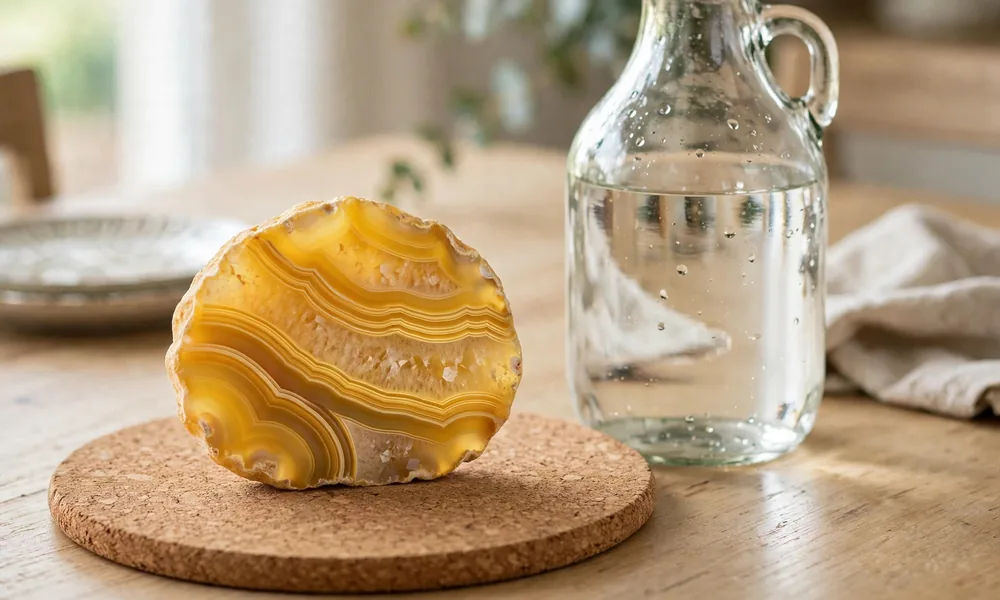
Look closely and you will see bands: pale cream lines curving beside deeper honey lines, like rings inside a tree trunk. Some pieces show wide soft bands, others fine lines packed close, and no two ever match.
The stone feels cool and silky at first, then warms quickly in your hand. A good polish gives it a gentle satin shine, and the bands stay clear in ordinary daylight.
Why Warm Yellow Suits Bright Days
A bright day is not only sunshine. It is a house that feels open, a table cleared for breakfast, a window left wide so air can move through. Colour plays a part, and yellow is the colour of morning itself.
Yellow agate carries that morning colour without demanding attention. It does not glitter or flash. In full daylight its honey bands glow softly, like sunlight caught in a jar, and the room seems a little warmer.
The stone does not create the bright day; the sun, the fresh air, and the unhurried morning do that. The stone simply sits there, sunny and still.
Choosing a Yellow Agate Piece
Choose a piece whose yellow looks warm and even in plain daylight. Hold it near a window and turn it slowly: the honey bands should stay clear, and the cream lines should run cleanly without muddy patches.
Look for a smooth surface with no sharp pits and no rough patches. A pebble shape suits a tray, while a flat slice shows the bands at their best.
Ask the seller where the stone came from and what gives it its colour. A seller who answers plainly is worth trusting. Walk away from a high-priced piece with no clear story.
A Bright Day with Yellow Agate
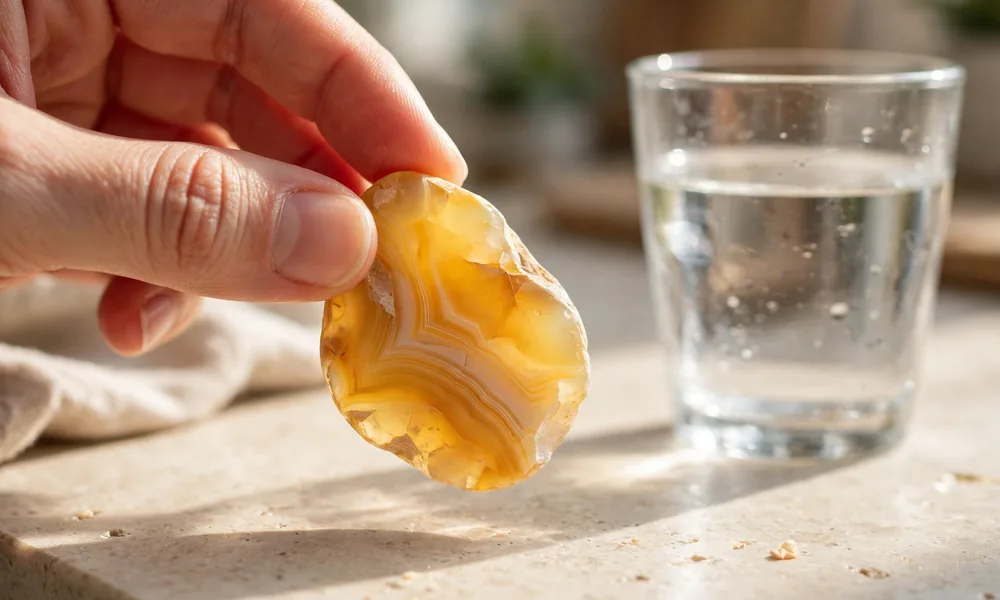
Lay a pale cloth on a table near the window and set the yellow agate in the middle. Put a tall glass of cool water a little way off, so stone and glass share the table without touching.
Drink the water slowly while the morning warms up, and notice how the light moves across the bands as the sun climbs. There is no ritual to follow, only a quiet few minutes with a sunny stone.
When the day gets busy, leave the stone where it is. It will still be there in the afternoon, catching the last light, asking for nothing more than a dry spot.
Yellow Agate Beside Water
Water and yellow agate make a cheerful pair on one table, but the table is the only thing they share. The glass stands at one end, the stone at the other, with open cloth between them. The water stays clean, the stone stays dry.
Agate is a stone for looking at, not for soaking. Never drop the pebble into a glass, a jug, or a bath, and never stir it through a drink. Wash your hands after handling it.
A bright day needs both things apart: cool water to drink, and a sunny stone to look at. Kept separate, they do their jobs well.
Yellow Agate at a Glance
| Warm sunny yellow | Honey bands | Display only |
|---|---|---|
| Cream stripes, satin shine | Tray, desk, windowsill | Wash hands after |
| Smooth pebble, cool touch | Daylight, open windows | Never in water |
| Iron traces, slow layers | Sun, fresh air, rest | Dry cloth wipe |
Yellow Agate and Banded Agate
Banded agate is the plain parent of the yellow stone here. Banded agate for slow days covers the classic layered agate in soft bands of grey, cream, and gentle brown, a calm stone for unhurried hours.
Yellow agate shares those bands, but its colour changes the mood. Where banded agate is soft, grey, and quiet, yellow agate is warm, sunny, and wide awake. One suits a slow grey morning, the other a bright yellow one.
Both are banded chalcedony, kept dry beside water. The difference is simply the colour, and the colour is the whole point here.
Yellow Agate and Fire Agate
Fire agate is the boldest cousin, and it is easy to see why people mix the two up. Fire agate for bold days covers a warm brown stone banded with bright orange, red, and gold flashes, like a piece of sunset held in glass.
Yellow agate is warmer in a quieter way, with no red flashes and no fiery sparks. Its bands are honey and cream, steady and even. Fire agate shouts for attention, while yellow agate simply glows.
Choose fire agate when the day needs boldness, yellow agate when the day is already bright and needs a sunny companion.
Yellow Agate, Grey, Green, Orange and Black Agate
Four more agates arrive in this same batch, each a different colour from the yellow stone here. Grey agate, the sibling numbered 758, is a soft dove-grey banded stone, calm and plain. Green agate, the sibling numbered 760, is a fresh leaf-green stone, cool and quiet.
Orange agate, the sibling numbered 764, is a deeper sunset orange, richer than the honey yellow here. Black agate, the sibling numbered 766, is a dark stone made for evenings rather than bright mornings.
Yellow agate sits among them as the sunny one: the honey-yellow banded stone for bright days, set apart by that warm colour.
Yellow Agate and the Other Agates
The rest of the family spreads in many directions. Moss agate for plant lovers covers a green stone marked with soft mossy shapes, like small ferns pressed into pale chalcedony, happiest among pots and leaves.
Pink agate is soft and tender, purple agate lilac and quiet, white agate clean and plain for tidy desks. Dendritic agate carries dark branching shapes, plume agate feathery white drifts, tree agate green branches on pale ground.
Moroccan agate brings desert peach and dusty rose, Botswana agate pink and dove grey, crazy lace agate red and orange ribbons, blue lace agate pale blue for calm evenings. None is the warm sunny-yellow banded stone of this guide.

Caring for Yellow Agate
Yellow agate is sturdy, but it still likes a gentle home. Keep it on a dry tray or shelf where nothing heavy can roll onto it, with clear space so books or keys cannot knock it about.
Dust it with a soft dry cloth, wiping lightly across the polished top. Leave soaps, sprays, and shining pastes in the cupboard, and never use an ultrasonic cleaner. A quick wipe is all it needs.
Strong sun will not fade the yellow, but a damp corner dulls the polish over time, so keep the tray dry. A little care keeps the bands bright for years.
Stones That Must Never Touch Water
Some stones should stay well clear of any drink, and a few names are worth remembering. Malachite is first: keep it far from cups, jugs, and glasses, and never let it sit in water meant for drinking. Hematite belongs on the same list, away from drinking water even for a short dip.
Pyrite, angelite, and amber also stay dry, never dropped into a glass or a soak. Apatite and lepidolite join them; lepidolite holds lithium inside its pale flakes, so it never goes near water you might drink. Yellow agate rests dry beside the glass too.
Your Bright Days Checklist
- Rest the yellow agate on a dry tray, a full glass set close beside it.
- Take slow sips of water in bright morning light.
- Wash your hands with soap after you have put the stone down.
- Pick a seller who can say where the stone came from.
- Keep it dry and out of reach of little hands.
- If a health worry keeps nagging, ask a doctor; a stone cannot answer for you.
Frequently Asked Questions
What is yellow agate?
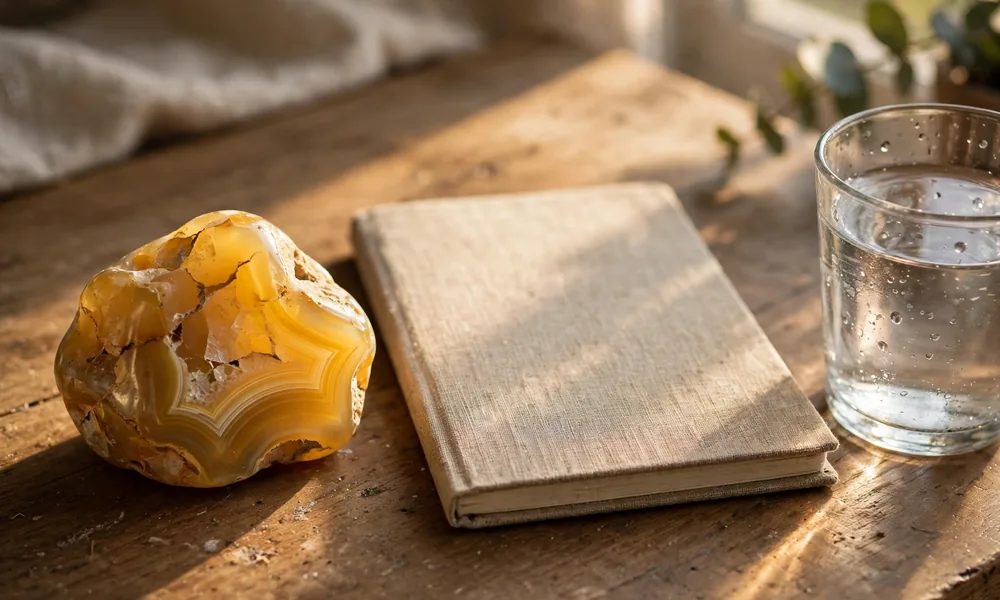
Yellow agate is a banded chalcedony in warm sunny yellow, striped with honey and cream. Tiny traces of iron give it its colour, and its bands form in slow layers over a very long time.
How is yellow agate different from banded agate?
Both are banded chalcedony, but banded agate is soft grey, cream, and gentle brown, while yellow agate is warm sunny yellow with honey bands. The colour gives each stone a different mood.
Is yellow agate the same as fire agate?
No. Fire agate is warm brown with flashes of orange, red, and gold, like sunset in glass. Yellow agate is honey and cream, steady and even, with no fiery flashes at all.
Is yellow agate safe to hold?
Holding it briefly is fine, if you rinse your hands with soap once you set it down, and keep it far from young children and from food. It is a display stone, not a toy.
Why must yellow agate never go in water?
The stone stays beside the glass, and the water stays inside the glass. Never drop it into a cup, a jug, or a bath, and never stir it through a drink.
Where should I keep yellow agate at home?
Pick a bright, dry spot, a tray, a desk, or a windowsill, with the glass close by but apart, and a little clear space around the stone.
The Bottom Line
Yellow agate lends bright days a warm sunny colour: one small honey-banded stone in daylight, on a tray beside a glass of water, looked at, never swallowed.
A Note for Bright Days
Pull the curtains wide and keep the stone dry. One small yellow agate, one glass of water, and a few bright hours are all you need.