Thick hair looks generous and feels heavy, and washing it takes longer than washing fine hair. The water has to reach the scalp through layers of hair, the shampoo has to spread through all of it, and the rinse has to run clear through every strand. Rush any of those steps and the hair feels coated and the scalp feels itchy.
Water is the simplest tool for thick hair, and it is the one you already own. How you wet it, how warm the water is, how long you rinse, and how gently you dry all change how heavy hair feels after a wash. Hot water, rough scrubbing and a rough towel can all leave thick hair tangled, dull and tired.
This guide explains what thick hair is, why it needs its own wash, and how to wash, rinse, detangle and dry it gently, step by step. Everything here is gentle general information only, never a treatment. If your hair or scalp troubles you and it does not settle, see a doctor or a dermatologist.
Key Takeaways
- Thick hair means many strands, or wide strands, and it takes longer to wet, wash and rinse.
- Lukewarm water is kindest; hot water strips oils and leaves thick hair rough and tangled.
- Wet thick hair fully first, use a small amount of mild shampoo, and wash with fingertips only.
- Rinse longer than you think, and finish cooler so the hair dries smoother.
- This is care, not a cure: it will not change your hair type or fix a scalp problem.
What Thick Hair Is
Thick hair means there is a lot of it. Some people have many fine strands packed closely together, and some have fewer strands that are each wide and strong. Either way, the hair feels heavy in the hand, a ponytail is thick to hold, and a wash takes more water and more time than it does for fine hair.
Thick hair is common, not a problem to fix, and it needs gentle handling, not stronger products. The scalp's natural oils travel slowly down a long, heavy strand, so the ends are often drier than the roots. Wet hair is weaker than dry hair, so everything in the wash should be softer, not harder.
Why Thick Hair Takes Longer to Wash
Thick hair takes longer to wash because water has to travel further. The outer layers get wet first, while the hair near the scalp and the underneath layers can stay dry for a long time. Shampoo poured on top sits on the surface, and the rinse has to run through every layer before the hair is truly clean.
That is why thick hair often feels coated after a hurried wash. The shampoo never reached the scalp, or the rinse never reached the lengths. Give each step more time, and the hair comes out lighter, cleaner and easier to comb.
Lukewarm First, Cooler Last
The most useful water habit for thick hair is also the simplest: wash lukewarm, rinse cooler. Lukewarm means water around body temperature, comfortable on the inside of your wrist. If it makes your skin pink, it is too hot. Hot water strips the scalp's natural oils, so thick hair dries rough, tangled and dull.
Start by wetting the hair fully with lukewarm water, for a full minute or two if it is very thick. Lift the hair in sections and let the water reach the scalp and the underneath layers. Wash as usual, and rinse until the water runs clear and the hair feels clean but not squeaky. For the final rinse, turn the temperature down a notch, to cool rather than cold, and run it over the lengths for thirty seconds, so the hair dries smoother.
Washing Thick Hair Gently
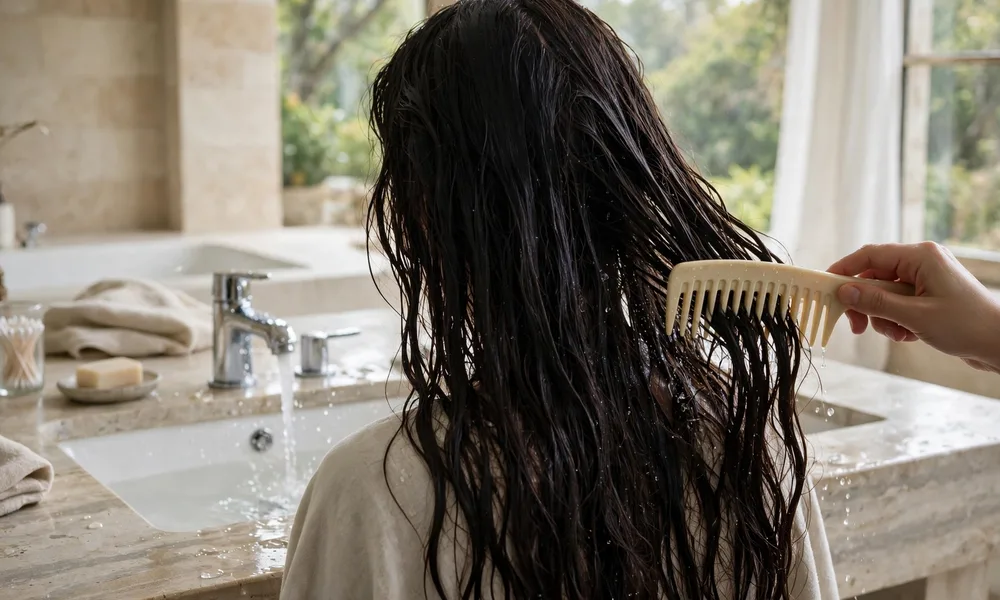
Gentle washing begins before the water is even on: comb the hair gently with a wide-tooth comb to loosen tangles, working from the ends upward. Use a small amount of mild shampoo, lather it in your palms first, and carry the foam to the scalp. Massage the scalp with your fingertips in slow circles, and let the suds run down the lengths as you rinse.
Do not pile the hair on top of your head and scrub it, because that tangles thick hair badly. Do not use your nails on the scalp, and do not add more shampoo because the lather looks thin; thick hair swallows lather, and a second small amount is enough. Where water textured hair care keeps waves and curls defined with gentle water, this guide keeps heavy hair clean with the same gentle hands.

Rinsing Thick Hair Fully
Rinsing is the step most people rush, and it costs nothing to do well. Shampoo and conditioner need time to wash away, especially in thick hair, where product hides between layers. Rinse for a full minute longer than you think, running your fingers through the hair and lifting it in sections so the water reaches everywhere.
If the water is hard, dissolved minerals leave a thin film on the hair that makes it feel coated and dull, and a longer rinse is the simplest fix. When the rinse water runs clear and the hair feels clean, smooth and light, the wash is done.
Detangling Wet Thick Hair
Wet thick hair tangles easily, and a brush through wet hair can snap strands and pull out more hair than you want. Detangle with a wide-tooth comb, never a fine comb or a brush, and work slowly from the ends upward, a little at a time. Hold each section above the tangle so the comb does not pull on the scalp.
A little conditioner on the lengths helps the comb slide through. Be patient with the underneath layers, which tangle most, and with the nape of the neck, where thick hair knots easily. If a knot will not move, work it apart with your fingers first, then comb through it gently.
Drying Thick Hair Softly
Thick hair stays wet for a long time, and rough drying makes it frizzy and tangled. Press the hair gently with a soft towel or an old cotton shirt, section by section, instead of rubbing it. Wrapping the hair loosely in a towel for ten minutes takes out a lot of water without any rubbing at all.
Air-dry when you can, and let the hair down so air can reach the underneath layers. If you use a hairdryer, keep it on low heat and hold it away from the hair, moving it all the time.
Thick Hair at a Glance
| Heavy thick hair | Lukewarm water | Gentle wash |
|---|---|---|
| Wet hair fully | Wash scalp only | Wide-tooth comb |
| Longer rinse time | Cooler final rinse | Pat towel dry |
| Fingertips, no nails | Mild shampoo small | Air-dry when possible |
| Ends upward comb | No piling hair | Low heat only |
The Weekly Wash Rhythm
Thick hair does not need washing every day, and most people with thick hair wash two or three times a week. Washing less often gives the scalp's oils time to travel down the lengths, and it gives the hair a rest from water and handling. Between washes, a soft brush through dry hair moves the oils along and keeps the hair looking fresh.
On wash day, set everything out first: the shampoo, the conditioner, the wide-tooth comb and a clean soft towel. If the scalp feels itchy or the hair feels coated between washes, that is a sign the last rinse was too short, not a sign to wash harder. Where water and split ends care protects the oldest, driest tips with longer rinses, this guide protects heavy hair the same way.
What Water Cannot Do
Be honest about what water can and cannot do. Water cannot change your hair type, make thick hair fine, or make fine hair thick. It cannot repair a split end, and only a trim removes one. It cannot cure a scalp problem, stop hair loss, or make hair grow faster. What water can do is wash gently, rinse fully, and leave thick hair clean, soft and easy to comb.
If the scalp stays sore, red, flaky or itchy week after week, or if hair falls out in a way that worries you, the answer is a doctor or a dermatologist, not a new wash routine. A gentle wash is care, not medicine.
Your Thick Hair Wash Checklist
- Wet thick hair fully with lukewarm water, lifting it in sections for a full minute or two.
- Comb dry hair gently first, then wash the scalp with fingertips and a small amount of mild shampoo.
- Rinse a full minute longer than you think, until the water runs clear through every layer.
- Finish with a cooler rinse over the lengths for thirty seconds, then detangle wet hair with a wide-tooth comb.
- Press the hair dry with a soft towel, wrap it loosely for ten minutes, and air-dry when you can.
- Wash two or three times a week, and see a doctor or dermatologist if scalp problems do not settle.

Frequently Asked Questions
How often should I wash thick hair?
Most people with thick hair wash two or three times a week, enough to keep the scalp clean without stripping its oils.
Why does my thick hair feel coated after washing?
It usually means the shampoo never reached the scalp, or the rinse never reached the lengths. Wet the hair in sections and rinse a full minute longer than you think.
Should I wash thick hair with hot water?
No. Hot water strips the scalp's natural oils and leaves thick hair rough, tangled and dull. Wash lukewarm, and finish with a cooler rinse over the lengths.
How do I detangle wet thick hair without breaking it?
Use a wide-tooth comb, never a brush, and work from the ends upward, a little at a time. Hold each section above the tangle, and work stubborn knots apart with your fingers first.
Can water fix split ends in thick hair?
No. Water cannot repair a split end, and only a trim removes one. Gentle washing and longer rinses can keep the ends feeling smoother, but they cannot mend a frayed tip. Where water scalp gentle wash keeps the scalp calm with soft water, this guide keeps heavy hair clean the same way.
How do I dry thick hair faster without damage?
Press the hair gently with a soft towel, section by section, then wrap it loosely for ten minutes. Air-dry when you can, and if you use a hairdryer, keep it on low heat and hold it away from the hair.
The Bottom Line
Water and thick hair is simple: wet it fully, wash it gently, rinse it longer, and dry it softly.
A Note for Thick Hair
Keep it lukewarm, keep it gentle, keep it patient. Heavy hair rewards slow hands.