
Some study sessions start well and then fall apart. The book is open, the notes are ready, and the plan is clear — and then the phone lights up, the mind wanders, and an hour passes with very little done. More often, the session simply had no shape.
Water can give a study session that shape. A glass of fresh water on the desk, drunk in slow sips, turns a long stretch of reading into a series of short, calm blocks. Each sip is a small pause, each block has a clear end, and the desk stays tidy and quiet.
This guide explains a simple focus ritual for study sessions: how to set up your desk, how to time your blocks, how to use water through a long session, and how to close a session well. It is gentle general information only, never medical advice, and it will not treat or cure anything. If you feel unwell, please see a doctor.
Key Takeaways
- A water and study ritual is plain water, a tidy desk, a timer and short timed blocks.
- Slow sips of water give a study session a gentle rhythm and small natural pauses.
- A study session works best in short blocks with a clear start and a clear end.
- This ritual needs no stone and no special equipment, only water and a timer.
- This guide is gentle general information only; it will not treat or cure anything.
What a Water and Study Ritual Is
A water and study ritual is a very small habit built around one glass of water. Before you begin, you fill a clear glass with fresh water and set it on your desk. You choose one task for the session, you set a timer, and you work until the timer rings. When it rings, you stop, take a slow sip of water, stretch, and decide what comes next.
The water is simply there: a reason to pause and a quiet signal that this time is for study. The ritual works because it repeats, not because it is elaborate. The same glass, the same desk, the same short blocks, day after day.
Why Water Helps a Study Session
Water helps a study session because it gives the body something steady to do while the mind works. A dry mouth and a tired head make it easy to reach for the phone or to get up for a snack, and each of those small trips breaks the thread of the work. A glass of water on the desk removes one reason to leave it.
Slow sips also break a long session into smaller pieces without breaking your focus. You sip, you breathe, you look back at the page. Many people find that regular small pauses make a session feel easier.
Setting Up a Calm Study Desk
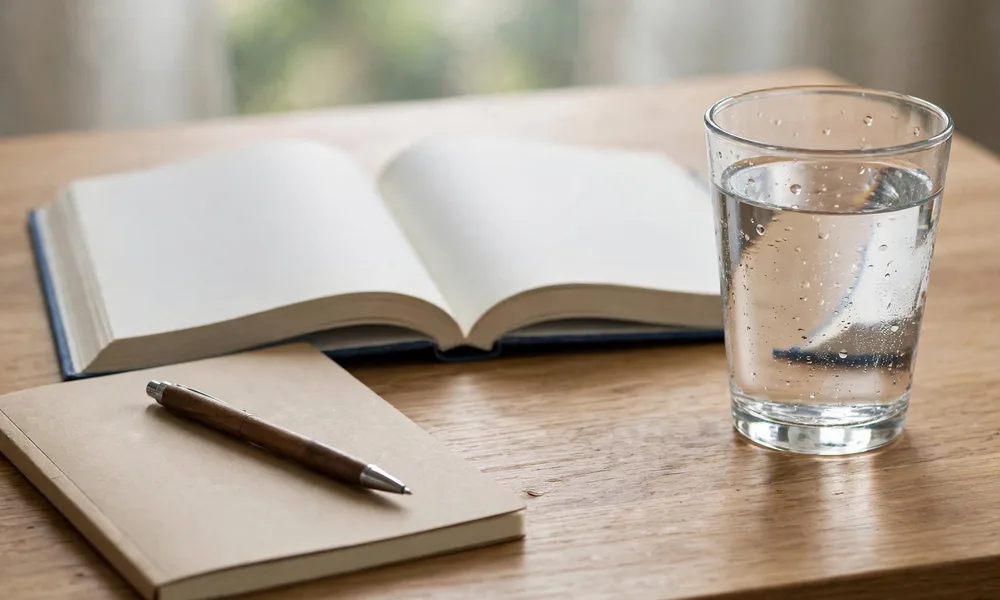
A calm study desk needs very little, and less is usually better. Clear the desk of everything except what this session needs: the book or notes for one task, a pen, a notebook, and a glass of fresh water. Put the phone away, silent, where it cannot catch your eye.
Sit near a window in the day, or under a warm lamp in the evening, so the page is easy to read without straining your eyes. Where sodalite deep blue quiet study keeps a deep blue stone beside water for silent evening reading, this ritual keeps only a glass of water beside the book, and the desk stays just as quiet.
The Simple Focus Ritual, Step by Step
The ritual has five steps, and it takes less than a minute to begin. First, fill a clear glass with fresh water and set it on your desk. Second, choose one task for this session and write it at the top of your notebook, in plain words. Third, set a timer for twenty-five minutes and put it where you can see it.
Fourth, work on that one task until the timer rings, and nothing else. If a thought about another task comes up, write it down quickly and return to the page. Fifth, when the timer rings, stop at once. Take a slow sip of water, stand up, stretch, and look out of the window for five minutes. Then begin again, or close the session.
Timing Your Study Blocks
Short blocks suit study better than long ones, because attention comes and goes in waves. Twenty-five minutes of work and five minutes of rest is a good place to start, and it is easy to remember. After four blocks, take a longer break of twenty or thirty minutes, with a full glass of water and a short walk.
If twenty-five minutes feels too long at first, start with fifteen. The length matters less than the shape: a clear start, a clear end, and a real pause between them. A timer you can see keeps the shape honest.
Water Through a Long Session
A long session needs water little and often, not all at once. Keep a glass on the desk and a bottle beside it, and sip slowly through each block. A small sip at the start of a block and another in the middle is enough, and a full glass at each break keeps you comfortable without a heavy stomach.
A steady glass is better than a sudden jug. In the evening, switch to plain water rather than anything sweet or fizzy, so the last block of the night ends as calmly as it began.
Water and Study at a Glance
| One glass | Short blocks | Calm desk |
|---|---|---|
| Slow small sips | Twenty-five minutes work | One task only |
| Refill at breaks | Five minutes rest | Phone away, silent |
| Plain water only | Four blocks, long break | Good light, tidy |
A Quiet Corner for Study
A quiet corner gives study a home, and a home makes the habit easier to keep. Choose one place for study and use it every time: a desk by a window, a corner of a table, or a quiet chair with a small side table. Keep the same glass there, the same notebook, the same timer.
Keep the corner the same from day to day. When the desk always looks the same, sitting down becomes the signal to begin, and no decision is needed.
When Focus Slips
Focus slips, and that is normal. The mind wanders, the page blurs, and suddenly you are thinking about dinner. When that happens, do not scold yourself. Take a slow sip of water, read the last paragraph again, and write one sentence in your notebook about what you just read. That small act brings the attention back.
If the slipping keeps happening, the session may be too long, or the task may be too big. Shorten the next block to fifteen minutes, or break the task into a smaller piece. Listen to it, and the next block will go better.

Study Sessions and Other Water Rituals
Water turns up in many small rituals, and each one suits a different kind of day. Where fluorite focus water mornings keeps fluorite beside the glass for clear mornings, this ritual keeps the desk free of stones and lets the timer do the guiding.
A mood ritual pairs water with a soft colour chosen for the day. Where water colour simple mood ritual chooses one gentle colour for a calm minute, this ritual chooses one clear task for a timed block. The two rituals share the same glass of water, but they serve different hours: one is for the mood of the morning, the other is for the work of a study session.
What This Ritual Will Not Do
This ritual will not make you pass an exam, and it will not cure tiredness, headaches, worry or low mood. Water and a timer are small helps, not treatments. They cannot do the studying for you.
If you often feel very tired, dizzy, faint, confused, or unwell while studying, please see a doctor. If worries about study are making daily life hard, talk to a doctor or a trusted adult. A glass of water is a good companion for a study session, and a doctor is the right person for a health problem.

Your Study Sessions Checklist
- Fill a clear glass with fresh water and set it on your desk.
- Choose one task and write it at the top of your notebook.
- Set a timer for twenty-five minutes of work and five of rest.
- Sip water slowly through each block and refill it at breaks.
- Put the phone away, silent, in another room or a drawer.
- Remember this ritual is gentle information only; see a doctor for health problems.

Frequently Asked Questions
How long should a study session last?
A single block of twenty-five minutes, followed by five minutes of rest, is a good start. After four blocks, take a longer break of twenty or thirty minutes.
How much water should I drink while studying?
Sip a glass of fresh water slowly through each block, and refill it at every break. Little and often is better than a lot at once.
Do I need a stone for this ritual?
No. This ritual needs no stone at all, only a glass of water, a timer and a tidy desk. If you do keep a stone on your desk, keep it beside the water, never in it, and never soak it in drinking water.
What if I keep getting distracted?
Take a slow sip of water, read the last paragraph again, and write one sentence about what you just read. If it keeps happening, shorten the next block to fifteen minutes, or break the task into a smaller piece.
Is this ritual a treatment for tiredness or poor focus?
No. This ritual is gentle general information only. It will not treat or cure tiredness, headaches, worry or low mood. If you often feel unwell while studying, please see a doctor.
What is the best time of day to study?
The best time is the time you can keep. Many people study well in the morning, when the house is quiet, and others prefer the evening.
The Bottom Line
Water and study sessions go well together: a clear glass of water, a tidy desk, a timer, and short blocks of one task at a time. Sip slowly, pause properly, and close the session with a full glass and a short rest.
A Note for Study Sessions
Keep it simple, keep it steady, keep it short. A glass of water, a timer, and one clear task can carry a study session further than a long, restless evening ever will.


