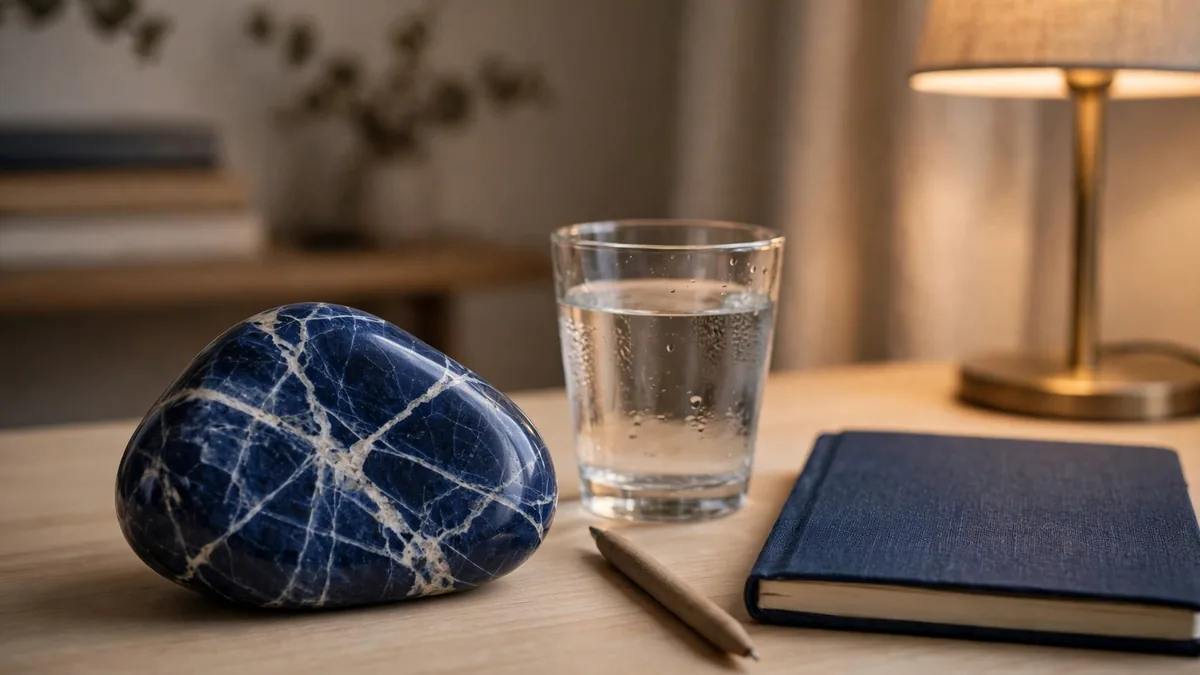
Some study is loud: group work, videos, and pages skimmed in a hurry. Quiet study is the opposite: one book, one notebook, and a silent room in the evening, when the house has settled and the only sound is the turning of a page.
Deep blue sodalite suits that kind of evening. Its colour is the blue of a night sky just after sunset, deep and steady, crossed by fine white veins, and it gives the eye somewhere restful to land between pages.
This guide is about the deep blue of sodalite and about quiet study itself: how to choose a deep blue piece, how to keep it safely beside water, and how to build a silent evening of reading, slow notes, and gentle revision around it. The stone is a companion for the habit, never a treatment.
Key Takeaways
- Deep blue sodalite is a rich royal blue stone, often crossed by fine white calcite veins.
- Its deep blue suits quiet study: silent evening reading, slow notes, and gentle revision.
- Keep the stone beside a glass of water, never in drinking water; the indirect method only.
- A quiet study evening needs very little: one book, one notebook, and a silent room.
- The stone is a companion for a habit, not a treatment; it will not pass an exam for you.
What Deep Blue Sodalite Is
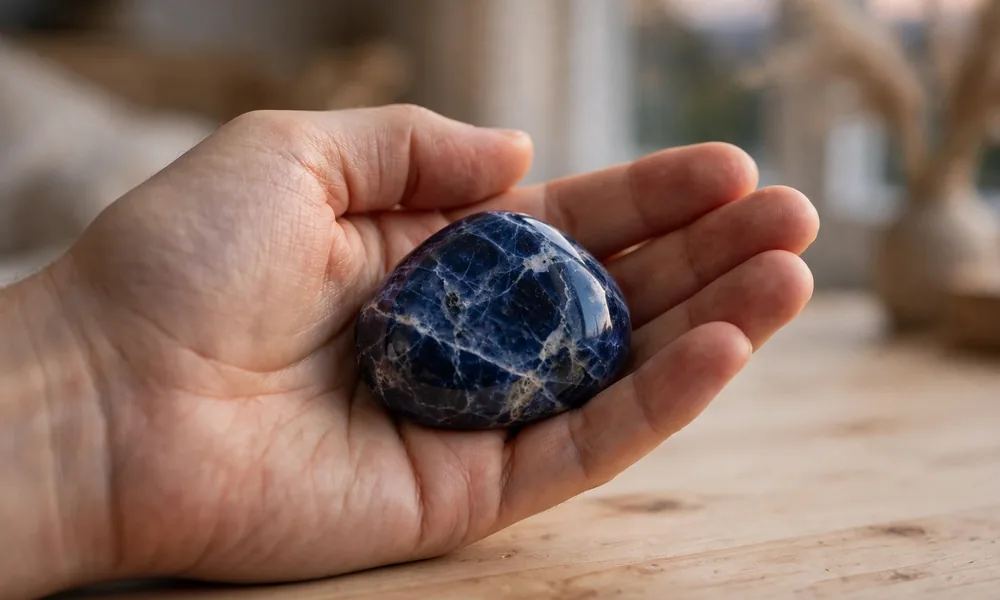
Sodalite is a deep blue stone, often crossed by fine white veins of calcite. Those pale lines are part of its character: no two pieces look quite alike. It is usually sold as a tumbled stone, a palm stone, or a small polished piece that sits comfortably on a desk.
It is a fairly hard stone, ranking around 6 on the Mohs scale, so it handles everyday use well, though it can still scratch if knocked against metal or dropped on a hard floor.
Crystal lovers have long linked sodalite with calm thinking, and its steady blue suits a quiet room. That link is a tradition, not a fact about what the stone does. What matters is simpler: it is a solid, beautiful object that can mark the start of a quiet evening.
Why Deep Blue Suits Quiet Study
Deep blue is a quiet colour, the colour of evening skies and deep water, and it asks nothing of the eye. Bright colours pull your attention in many directions, but deep blue lets the eyes rest, which is exactly what slow reading needs.
Quiet study is slow by nature: you read a page, pause, and let the idea settle before you move on. A deep blue stone fits that pace, because it never hurries you. The same calm logic runs through azurite deep blue for focused work, where a deep blue stone marks a calm working hour.
The Safety Rule First: Beside Water Only
This is the most important part of this article. Sodalite should never go in drinking water, and no stone belongs in water you drink. Some stones can shed dust or small particles, and some contain minerals you would not want in a glass.
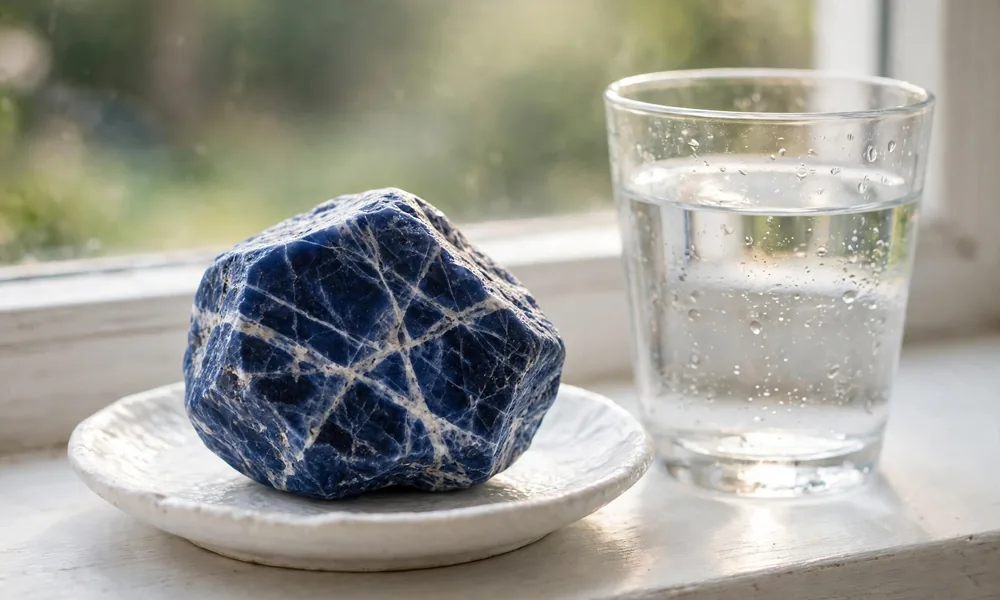
Fill a clean glass with fresh water, set it on the desk, and place the sodalite beside the glass, on the dry surface. That is the indirect method: the stone and the water sit side by side and never touch.
If a piece ever falls into a glass by accident, throw the water away and wash the glass and your hands. Stones that must never touch drinking water include apatite, lepidolite, which contains lithium, pyrite, angelite, and amber, and malachite must never go in water or elixirs at all.
Choosing a Deep Blue Piece
Choose a stone you can see clearly before you buy it, in daylight as well as in the shop light. Look for a piece where the blue stays deep and steady, royal blue rather than pale grey-blue. A sealed, polished piece feels cool and glassy.
Buy from a trusted seller who makes no medical claims, and ask for a photograph of the actual piece online. A good seller shows you the real piece before you pay, and never promises that it heals or changes your health.
Reading the Blue: Shades and Veins
Not all sodalite is the same blue. Some pieces are a pale, dusty blue, almost grey in dim light, while others are a rich royal blue that stays deep even in the evening. For quiet study, choose the deeper blue, because it holds its colour in lamplight.
The white veins matter too. Fine, thin veins look like delicate cracks of light, while broad white patches can wash the blue out. Look for a balance: strong blue, with veins that thread through it without taking over.
Setting Up a Quiet Study Corner
A quiet study corner takes only a few minutes to set up. Choose a small, still place: a desk by a window, a corner table, or a chair with a lamp. Clear the surface and put back only what the evening needs: the stone on its dish, a glass of water, one book, and a notebook.
Silence is part of the setup. Turn the phone off or leave it in another room, and close the door if you can. The stone on its dish marks the corner as a place for study alone.
A Quiet Evening of Reading and Revision
A quiet evening is not one long push; it is a slow rhythm of reading and resting. Sit down slowly, drink your water, and look at the stone for a moment. Then open the book where you left off, and read one chapter, or one short section, without rushing.
When you finish a passage, close the book for a minute and let the idea settle. Revision works the same way: read your old notes slowly, cover them, and try to recall the main point in your own words before you look again.
Taking Notes Slowly
Slow notes are the heart of quiet study. Write by hand when you can, because the hand moves slowly enough for the mind to follow. Keep each note short: one idea per line, in your own words, never copied word for word from the book.
Leave wide margins, and use them the next evening to add a question or a small summary. A notebook that grows slowly is worth more than a dozen pages filled in a hurry.
Sodalite at a Glance
| Deep blue | White veins | Quiet study |
|---|---|---|
| Royal blue shade | Fine pale lines | Silent reading room |
| Night sky colour | No two alike | One book only |
| Beside water only | Sealed polished piece | Slow handwritten notes |
| Wash hands after | Keep from keys | Lamp and water |
What It Will Not Do
Be honest about what sodalite will not do. It will not make you smarter, improve your grades, or help you pass an exam on its own. It will not treat attention conditions, anxiety, or any health concern, and it will not replace studying, sleeping, or eating well.
What it can do is simpler: it can mark the start of a quiet evening, give your eyes somewhere calm to rest, and remind you of the page you chose. The silence around it does most of the work.
Cleaning and Caring for the Stone
A study stone needs very little care. Dust it with a soft, dry cloth once a week, and wash it now and then with lukewarm water and a drop of mild soap, rinsing well and drying it fully. Washing a stone for cleaning is not the same as soaking it in drinking water.
Store it in its usual spot, or in a small dish or pouch if you carry it between home and a library. Keep it away from keys and metal objects that could scratch it, and try not to drop it on a hard floor.
Buying Honestly
Buy sodalite honestly, and expect honest sellers to do the same. A good seller will tell you the stone is a natural mineral, show you the actual piece before you pay, and never promise that it heals or changes your health. If a seller makes medical claims, walk away.
Prices vary with size and the depth of the blue, and a small polished piece costs less than a large display piece. The best piece is the one whose deep blue you like to look at, evening after evening.

Your Quiet Study Checklist
- Clear the corner each evening: one book, one notebook, water, and the stone.
- Keep the stone beside your glass of water, never inside it.
- Turn the phone off or leave it in another room before you begin.
- Read one chapter slowly, then pause and let the idea settle.
- Write short notes by hand, one idea per line, in your own words.
- Remember the stone will not pass an exam for you; the quiet habit is the part that helps.

Frequently Asked Questions
Can I put sodalite in my drinking water?
No, never. Sodalite should never go in drinking water. Keep the stone on the desk beside a glass of water, using the indirect method only, so the water stays plain and safe to drink.
How is this different from a sodalite focus ritual?
A focus ritual, as in sodalite focus stones for study and work, uses timed work blocks through the day. This guide is about the deep blue colour itself and slow, silent evening reading and revision.
Why choose a deep blue piece over a pale one?
A deep royal blue holds its colour in lamplight and stays easy to see across the desk, while a pale grey-blue can look washed out in the evening. Choose the blue you enjoy looking at, with fine white veins.
How long should a quiet study evening last?
There is no fixed length. One slow chapter with real notes is worth more than three chapters skimmed in a hurry. Stop while you still feel fresh.
How do I clean sodalite?
Dust it with a soft, dry cloth once a week, or wash it with lukewarm water and a drop of mild soap, then rinse and dry it fully. Never use harsh cleaners.
Can I use sodalite at work as well as for study?
Yes. The same quiet habit fits an office desk in a calm hour: place the stone, sip water, and read one document slowly. A similar calm approach runs through fluorite study stones for calmer workdays.
The Bottom Line
Deep blue sodalite is a quiet stone for quiet evenings: royal blue, veined with white, kept beside a glass of water while you read slowly.
Put the stone on its dish, pour the water, open the book.
A Note for Quiet Study
Keep it blue, keep it quiet, keep it slow.