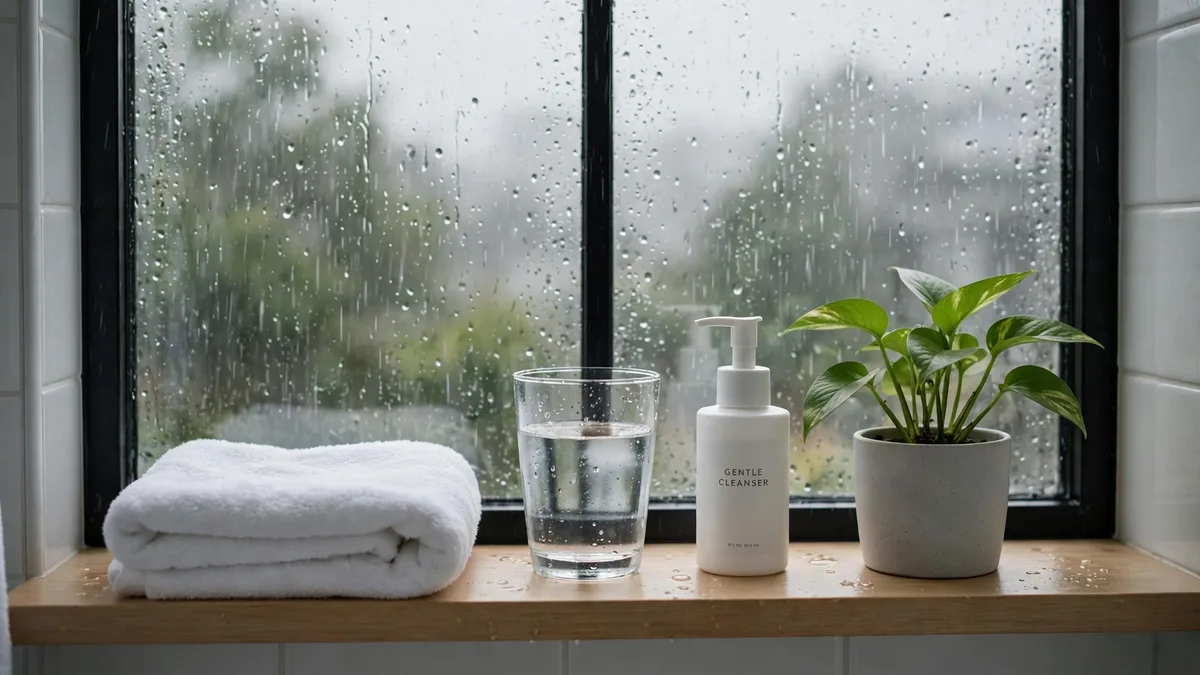
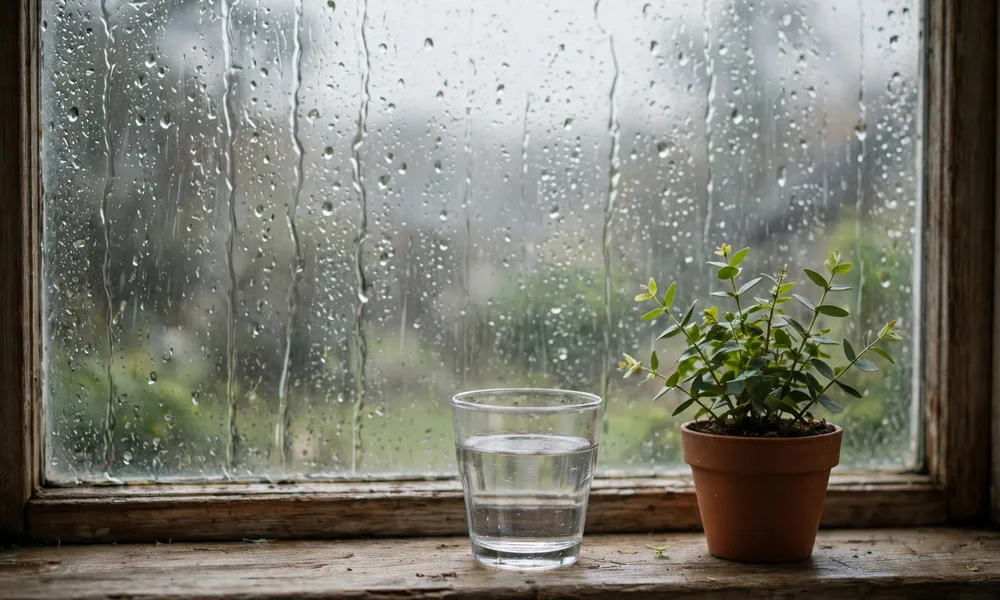
Rain changes the air before it changes anything else. The light goes soft and grey, the air turns damp, and your skin notices before you do. It may feel sticky by midday, a little itchy under damp clothes, or tight after a wash that was too hot.
Skin that stays calm on rainy days is not about buying more products. It is about doing less, gently: lukewarm water, a mild cleanser, and dry clothes indoors. Small habits, repeated, keep skin steadier than any single product can.
This guide explains what rainy days do to skin, why humidity changes how skin feels, and how to build a simple morning and evening routine for wet weather. It is gentle general information only, not medical advice, and rainwater is never for drinking or for skin.
Key Takeaways
- Rainy days bring damp air, sticky skin, and damp clothes that can irritate skin.
- Wash with lukewarm clean water and a mild cleanser, never hot water or harsh scrubbing.
- Rainwater is not for drinking or for skin; use clean tap water only.
- Change out of damp clothes promptly and pat skin dry, never rub.
- Real skin problems need a doctor or dermatologist, not a home routine.
What Rainy Days Do to Skin
Rainy days change skin in three quiet ways. First, the damp air makes skin feel sticky, because sweat dries more slowly when the air is already full of moisture. Second, damp clothes cling to the body, and the friction can leave skin red or itchy, especially where clothes fit tightly. Third, the grey light hides it all, so the changes creep up unnoticed.
None of this means your skin is failing. Skin reacts to weather the way hair does: it behaves differently in damp air, and the routine that worked on a dry day may need a small change. The answer is a gentler routine, matched to the weather.
Why Skin Feels Different in the Rain
Skin feels different in the rain because humidity changes how water leaves the body. On a dry day, sweat evaporates quickly and cools the skin. On a humid rainy day, sweat stays on the surface longer, so skin feels sticky and warm, and pores can look larger by the afternoon.
Humidity also changes how products behave. A heavy cream that felt comforting in dry weather can feel greasy in damp air, and makeup can slide where it once stayed put. This is normal, and a sign to lighten the routine. The same soft-light mood that rain brings to a room is described in rainwater-inspired rituals for a calmer home, where rain slows the light and steadies the house.
A Gentle Rainy-Day Wash
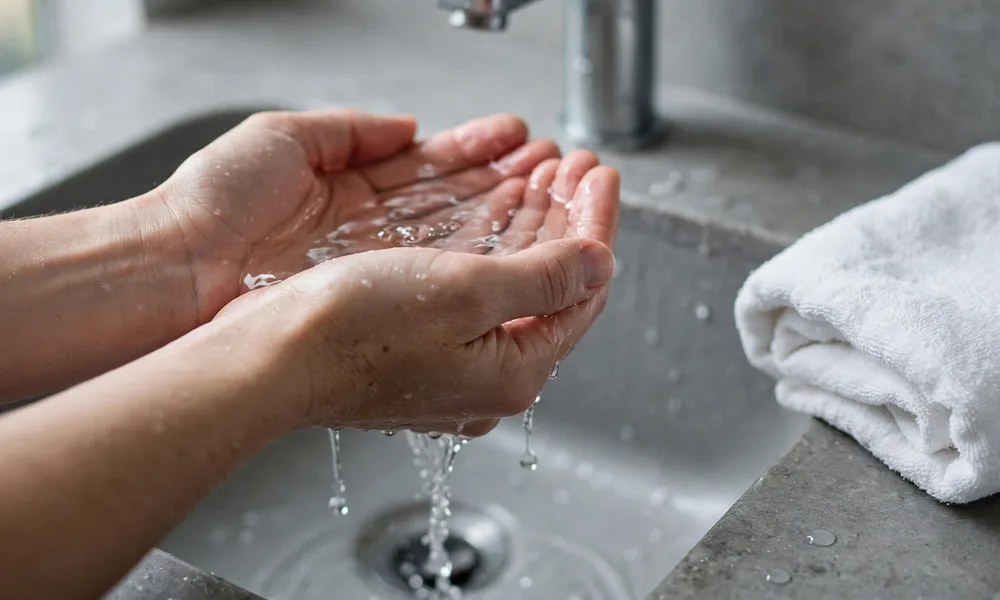
A gentle rainy-day wash starts with lukewarm water, never hot. Hot water strips the skin's natural oils and leaves it tight and dry, which is the last thing damp weather needs. Cup lukewarm clean water over your face with your hands, and use only a small amount of mild, fragrance-free cleanser.
Massage it in softly with your fingertips for half a minute, then rinse well with lukewarm water. Pat your face dry with a clean soft towel, never rub, because rubbing pulls at skin that is already softened by damp air. One wash morning and evening is enough; more can dry skin out.
Water, Humidity and Your Skin Barrier
Your skin barrier is the thin outer layer that keeps moisture in and irritants out, and damp weather tests it in both directions. Humid air can leave the barrier feeling soft and swollen, while repeated wetting and drying, from rain and from washing, can weaken it over time.
Clean water helps the barrier when it is used gently. A short lukewarm wash, followed by a light moisturiser while the skin is still slightly damp, helps hold moisture where it belongs. What harms the barrier is harshness: hot water, strong soaps, rough towels, and scrubbing. Keep the water mild and the touch light.
A Simple Rainy-Day Morning Routine
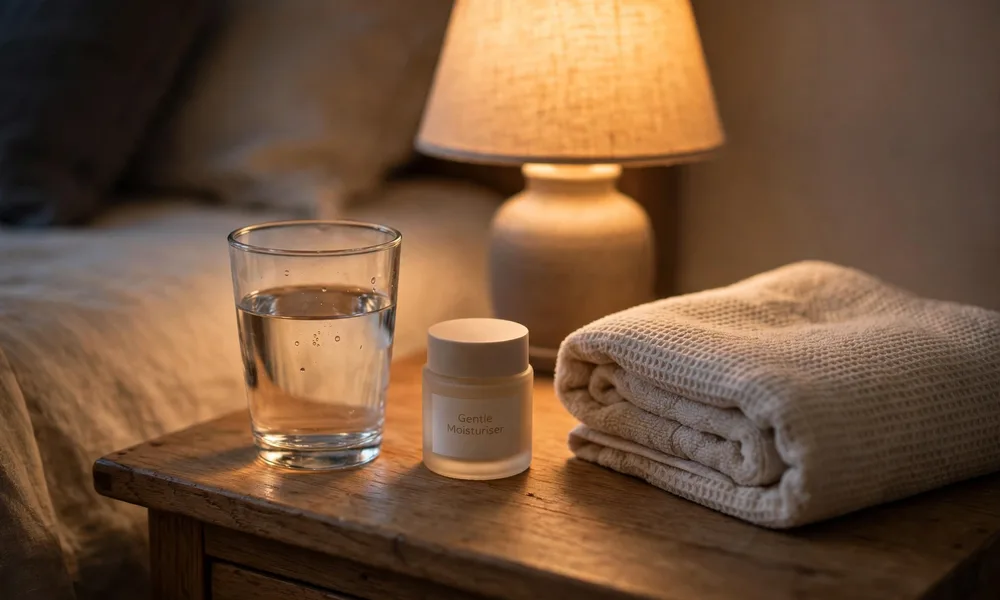
A simple rainy-day morning routine takes about five minutes. Wash with lukewarm water and a mild cleanser, pat dry, and apply a light moisturiser while the skin is still slightly damp. If you go outside, add a light sunscreen, because clouds block less sun than most people think.
Then drink a glass of fresh water slowly, and get dressed in clean, dry, loose cotton clothes. A light routine suits humid weather best, and the same idea runs through water and summer skin: a light routine, where warm weather calls for fewer layers, not more. Keep it short and gentle, and let the rain set the pace.
A Simple Rainy-Day Evening Routine
A simple rainy-day evening routine is the mirror of the morning, with one extra step: changing out of anything damp first. Come indoors, change into dry clothes, and wash your hands well before you touch your face. Then wash with lukewarm water and a mild cleanser, pat dry, and apply a light moisturiser.
If your feet got wet, wash them with lukewarm water, dry them carefully between the toes, and put on dry socks. A minute of drying prevents a week of discomfort. A layered, unhurried evening suits cold wet weather too, as described in water and winter skin: a layered routine.
Rainy Days at a Glance
| Rainy moment | Gentle step | Skin note |
|---|---|---|
| Morning wash | Lukewarm water only | Pat skin dry |
| Coming indoors | Change damp clothes | Dry folds first |
| Midday shine | Blot, never scrub | Light moisturiser only |
| Before bed | Wash hands first | Clean pillowcase weekly |
Damp Clothes, Hair and Skin
Damp clothes are the most common rainy-day skin problem, and the simplest to fix. Wet fabric clings, rubs, and keeps skin damp for hours, which can leave it red, itchy, or sore, especially under straps, waistbands, and collars. The fix is plain: change into dry clothes as soon as you come indoors, and let damp clothes dry fully before wearing them again.
Hair matters too, because wet hair dripping onto the neck and shoulders keeps that skin damp as well. Dry hair gently with a soft towel and tie it back until it dries. Keep spare dry clothes and socks by the door on rainy days.
When Skin Needs a Doctor
Most rainy-day skin discomfort fades with gentle care and dry clothes. But some signs mean it is time to see a doctor or dermatologist, and no home routine should replace that visit. See a doctor promptly if a rash spreads, blisters, or weeps, if the skin is very painful, or if itching keeps you awake at night.
Also seek care if a sore does not heal within two weeks, or if redness spreads quickly. This guide is gentle general information only, not medical advice, and it cannot diagnose or treat any condition. A doctor can look, ask, and decide what your skin actually needs.
What Rainwater Will Not Do
Be clear about what rainwater will not do. Rainwater is not clean water: as it falls it collects dust, soot, and germs from the air, and from roofs and gutters it collects far more. It is not safe to drink, and it should not be used on your face, in a bath, or on broken skin.
Rainwater will not cleanse, refresh, or heal skin, and collecting it for skin care is a risk, not a ritual. Clean tap water, in a glass and at the sink, is the only water your skin needs.
Choosing Gentle Products Honestly
Choose gentle products honestly, and expect honest sellers to do the same. A good cleanser is mild and fragrance-free, with a short list of ingredients you can read. A good moisturiser is light and plain, without strong scent or bold claims on the label. If a product promises to cure, detox, or transform your skin, do not believe it.
Prices vary, and a simple product often works as well as a costly one. Patch-test anything new on a small area first, and stop using anything that stings. The gentlest routine is usually the shortest one, and the shortest one is the easiest to keep.

Your Rainy-Day Calm Skin Checklist
- Wash with lukewarm clean water and a mild cleanser, morning and evening.
- Pat skin dry with a clean soft towel, never rub.
- Change out of damp clothes promptly when you come indoors.
- Use clean tap water only; rainwater is never for drinking or skin.
- Apply a light moisturiser while skin is still slightly damp.
- See a doctor or dermatologist if a rash spreads, blisters, or does not heal.
Frequently Asked Questions
Should I wash my face more on rainy days?
No. Washing more often can dry the skin out and make it produce more oil. One gentle wash in the morning and one in the evening, with lukewarm water and a mild cleanser, is enough on rainy days.
Is rainwater good for my skin?
No. Rainwater collects dust, soot, and germs as it falls, and more from roofs and gutters. It is not safe to drink and should not be used on your face, in a bath, or on broken skin. Use clean tap water only.
Why does my skin feel sticky when it rains?
Humid air slows how fast sweat evaporates, so sweat stays on the surface longer and skin feels sticky and warm. This is normal in damp weather, and a light routine with lukewarm water suits it best.
What should I do if damp clothes irritate my skin?
Change into dry clothes as soon as you come indoors, and let damp clothes dry fully before wearing them again. Pat the skin dry gently, and see a doctor if redness spreads.
Can I skip moisturiser on humid rainy days?
You can use less, but skipping it entirely can leave skin tight after washing. A small amount of light moisturiser, applied while the skin is still slightly damp, holds moisture where it belongs without feeling heavy.
When should I see a doctor about my skin?
See a doctor or dermatologist promptly if a rash spreads, blisters, or weeps, if the skin is very painful, if itching keeps you awake, or if a sore does not heal within a week or two.
The Bottom Line
Rainy days ask for less, not more: lukewarm water, a mild cleanser, dry clothes, and time.
Keep it gentle, keep it simple, and let the rain set the pace.
A Note for Rainy Days
Keep it soft, keep it dry, keep it calm. The rain will pass, and your skin will thank you.