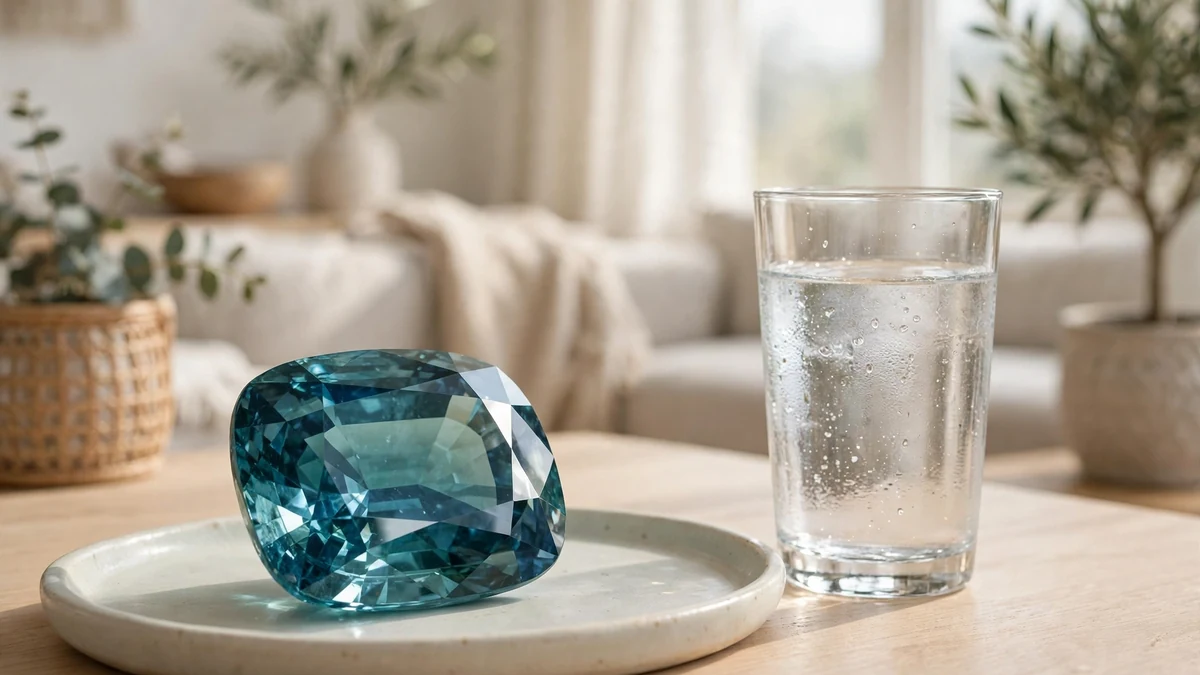
There is a shade of blue that never shouts. It is the colour of shallow water over pale sand, of a lagoon seen from a low cliff on a windless afternoon. It feels cool to look at, like a breeze through an open window, and it asks for nothing at all from the person looking.
Teal sapphire carries that shade. It is a corundum stone coloured somewhere between blue and green, neither one nor the other, with a gentle glow that changes a little as the light moves across it. A faceted piece throws back small flashes of sea colour, while a smooth one holds its colour quietly.
This guide spends a slow day with teal sapphire: what the stone is made of, how to pick a piece you will enjoy, and how to give it a place beside a glass of water. The stone is something to admire, not a remedy, and it will not fix anything about your health.
Key Takeaways
- Teal sapphire is a soft blue-green corundum, cool to the touch.
- Its colour sits between blue sapphire and green sapphire, softer than either one alone.
- Teal sapphire suits calm days, slow hours, and gentle light.
- The stone is for looking at only, beside water, never in a drink.
- A small piece on a pale tray, with water nearby, is all it needs.
What Teal Sapphire Is
Teal sapphire is a variety of corundum, the same mineral family that gives us blue sapphire and ruby. Corundum is aluminium oxide, and it is one of the hardest stones used in jewellery, ranking 9 on the Mohs scale, just below diamond. That hardness is why it keeps its polish and feels cool and solid in the hand.
Its colour comes from tiny traces of iron and titanium held inside the crystal as it grew. When the balance tips toward green, the stone leans teal; when it tips toward blue, it reads as a soft sea blue. The best pieces are even from edge to edge, and they glow most in soft daylight.
Why Soft Blue Suits Calm Days
Soft blue is the colour of a day with nothing urgent in it. It reminds the eye of still water and open sky, two things that never hurry, and that reminder can slow a whole afternoon down. A soft blue-green lets the eye wander and rest, which is exactly what a calm day wants.
Teal adds a little green warmth to that blue, so the stone never feels cold or distant. On a pale tray in a bright room, it looks like a small piece of the sea brought indoors. That is the whole charm: the stone does nothing dramatic, and the quiet it brings is enough.
Choosing a Teal Sapphire Piece
Look at teal sapphire in daylight before you decide, because lamplight can hide the green in it. Hold the stone near a window and turn it slowly. A good piece keeps its blue-green tone from every angle.
Keep the piece small. A pebble about the size of a broad bean suits a tray, and a single faceted stone the length of your thumbnail is plenty. Ask the seller to say plainly that the stone is a natural teal sapphire, and check the edges for chips.

A Calm Day with Teal Sapphire
Begin the morning by setting the teal sapphire on its pale tray, a tall glass of cool water at the far end. Drink the water slowly, rest your eyes on the blue-green stone for a moment, and let the day start without a rush.
Leave the tray where daylight reaches it, and glance at it as you pass. The colour will shift a little as the sun moves, greener at noon and bluer toward evening. The stone promises nothing; the calm comes from the unhurried hours themselves.
Teal Sapphire Beside Water
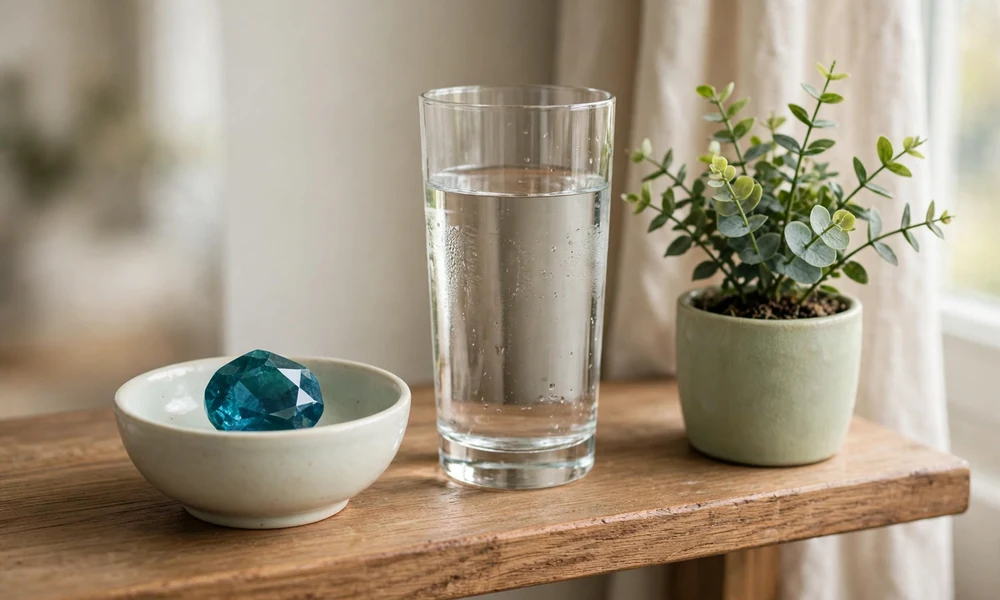
Teal sapphire and water make a fine pair on one tray, as long as they stay apart. Set the glass on one side and the stone on the other, leaving a dry space between them, and never let the stone slide into the glass. The water should stay clean for drinking.
If a splash lands on the stone, dab it dry with a soft cloth at once, and keep the tray away from the edge of the table. Wash your hands after handling the stone, keep it away from food and from small children, and the pairing stays simple and safe.
Teal Sapphire at a Glance
| Soft blue-green stone | Calm days | Display only |
|---|---|---|
| Corundum, hard, glossy | Tray, shelf, windowsill | Wash hands after |
| Cool, smooth, clear | Daylight, slow hours | Never in water |
| Small piece, even colour | Morning, afternoon, evening | Dry cloth wipe |

Teal Sapphire and Blue Sapphire
Blue sapphire is the best-known stone in the family, and the closest cousin teal has. Blue sapphire for calm days covers a deep blue corundum, rich and even, the classic sapphire most people picture first.
Teal is gentler than that deep blue. Where blue sapphire is bold and unmistakably blue, teal sapphire softens the blue with green, like shallow water over sand. One suits a day that wants depth; the other suits a day that wants lightness.
Teal Sapphire and Green Sapphire
Green sapphire sits on the other side of teal, and the two can look like siblings at first glance. Green sapphire for calm days covers a fresh green corundum, lively as new leaves after rain.
Teal holds back some of that green. Where green sapphire is leafy and vivid, teal sapphire keeps one foot in the blue, so the colour feels cooler and quieter. One wakes a fresh morning; the other settles a calm afternoon.
Teal Sapphire and the Other Sapphires
The sapphire family holds many more colours, and none of them is teal. Orange sapphire glows warm as morning sun, purple sapphire is soft violet, and padparadscha is a tender peach-pink. White sapphire is clear and bright, and pink sapphire is a soft rose.
Yellow sapphire is sunny gold for bright days, star sapphire carries a pale six-rayed star across a soft blue dome, and the general sapphire guide rests a deep blue stone beside water for deep rest. Paraiba tourmaline for fresh days is not a sapphire at all, yet its bright blue-green glow is the nearest rival to teal, more electric where teal stays soft.
Teal, Black and Bi-Colour Sapphire
Two newer sapphires in this batch sit far from teal. Black sapphire, article 722, is a deep black stone for quiet evenings, dark through and through, with a stillness that suits lamplight and late hours. Teal is its opposite: pale, sea-coloured, and made for bright calm days.
Bi-colour sapphire, article 726, is different again, because it shifts between two colours in a single stone, so the eye never settles on one shade. Teal keeps one steady colour, soft blue-green from every angle. Black is for the dark, bi-colour is for change, and teal is for calm.
Caring for Teal Sapphire
Teal sapphire is hard, but it still deserves gentle care. Keep it in a dry place, a small lined box or a shelf out of strong sun, and never toss it loose into a pocket with keys or coins, since even a hard stone can chip. A soft dry brush lifts dust without scratching.
Wipe it with a dry, soft cloth when it looks dull, and leave soap, sprays, and polishing creams in the cupboard. If the tray gets damp, lift the stone aside, dry the tray, and only then set the stone back.
Stones That Must Never Touch Water
Some stones are far less forgiving than sapphire, and knowing their names matters before any tray is set out. Malachite is the one to remember first: it should never be dropped into a glass, a jug, or a bath, because it can release things that have no place in drinking water. Hematite stays out of every drink too.
Apatite belongs on the same dry list, and so does lepidolite, whose soft grey layers hold lithium within them. Pyrite, angelite, and amber must also stay dry. Teal sapphire is tougher, yet the habit stays the same: it rests beside the glass, and the water is never touched by stone. If a health worry is troubling you, speak with a doctor rather than turning to any stone.
Your Calm Days Checklist
- Set the teal sapphire on a dry tray with water nearby.
- Look at the stone in daylight and enjoy how its colour shifts.
- Rinse your hands with soap after you have held the stone.
- Choose a shop that labels the stone plainly as true teal sapphire.
- Store the stone dry, far from children and food.
- For any health worry, ask a doctor — a stone has no answers for that.

Frequently Asked Questions
What is teal sapphire?
Teal sapphire is a soft blue-green variety of corundum, the mineral family that includes blue sapphire and ruby. Its colour comes from tiny traces of iron and titanium, and it sits between blue and green, greener than a blue sapphire and bluer than a green one.
Is teal sapphire the same as blue sapphire?
No, although the two are close cousins. Blue sapphire is a deep, unmistakable blue, while teal sapphire blends blue with green into a softer sea colour that looks lighter in daylight.
Is teal sapphire the same as paraiba tourmaline?
No, and the difference is in the mineral itself. Paraiba tourmaline is a different stone with a brighter, more electric blue-green glow, while teal sapphire is a corundum with a softer blue-green colour and a much harder surface.
Can teal sapphire go in drinking water?
No, it must never go in a drink. The stone rests on the tray beside the glass, never inside it, and any water it touched should not be drunk. A splash should be dabbed dry at once.
Will teal sapphire calm me down?
No. It is a beautiful stone made for looking at, and if a slow afternoon beside it leaves you calmer, that calm comes from the unhurried hours and the quiet room, not from the stone itself.
Where should I keep teal sapphire at home?
Keep it where soft daylight falls and the air stays dry, on a pale tray, a quiet shelf, or a windowsill, with a glass of water nearby but always separate, beyond small children's reach.
The Bottom Line
Teal sapphire brings calm days a soft blue-green quiet: a cool, glossy stone glowing gently in daylight, resting on a pale tray near a clear glass of water, admired and never drunk.
A Note for Calm Days
Keep the light soft and the stone dry all day. A blue-green pebble, a glass of water, and a few unhurried hours are all a calm day asks for.