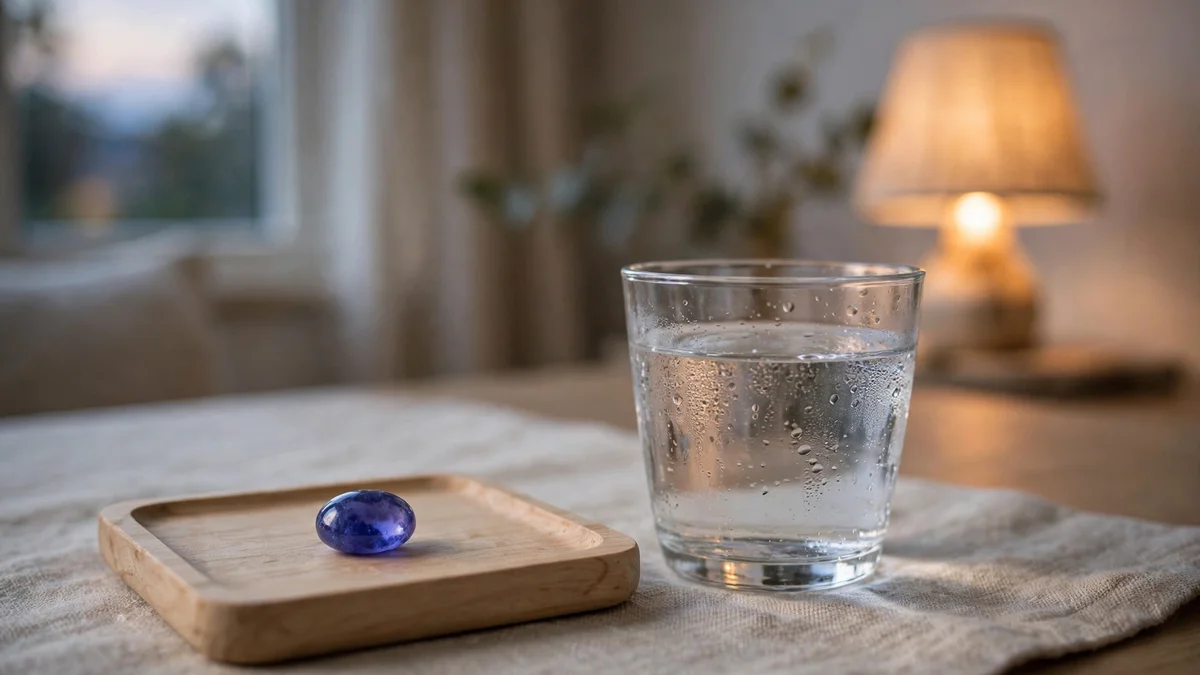
Evenings change colour before they change mood. The sky outside the window turns a soft violet-blue, the room grows quiet, and the day finally loosens its grip. It is the gentlest hour of the day, and it asks for very little.
Tanzanite violet light suits that hour. Tanzanite is a violet-blue stone, and in the low light of evening its colour deepens and warms, the way the sky does. It looks calm simply sitting there, beside a glass of water.
This article is a gentle guide to tanzanite violet light for evening calm: what the stone is, why its colour changes in lamplight, how to choose one, how to keep it safely beside water, and how to build a small evening corner around it. It is a companion, never a treatment.
Key Takeaways
- Tanzanite violet light means the violet-blue stone enjoyed in soft evening light, beside water.
- Tanzanite is a blue-violet zoisite, so keep it dry and handle it gently.
- The stone always stays beside drinking water, never in it; this is the only safe way.
- Tanzanite changes colour with the light: bluer in daylight, more violet in lamplight.
- Tanzanite is a beautiful object, not a treatment, and it will not change your evening.
What Tanzanite Is
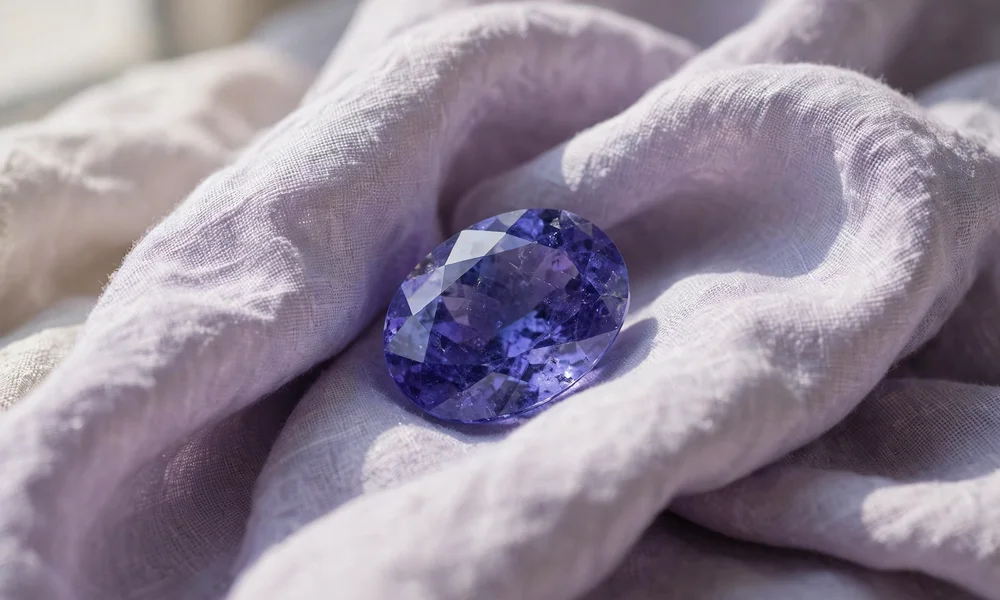
Tanzanite is a blue-violet variety of the mineral zoisite, and it comes from only one place on earth: the hills near Mount Kilimanjaro in Tanzania. Its colour runs from soft lavender to deep violet-blue, and no two pieces look quite the same.
First found in the late 1960s, it is young beside agate and quartz, yet its colour made it loved very quickly. It is pleochroic, which means it shows different colours when you turn it in the light: blue from one angle, violet from another, and sometimes a flash of soft burgundy. Hold it up to daylight and it looks cooler and bluer; hold it under a warm lamp and the violet comes forward.
Why Violet Light Calms Evenings
Violet light is the colour of the hour after sunset, when the sky turns soft and the edges of the day blur. It is a colour that asks for nothing: it does not wake you up the way bright white light does, and it does not hurry you the way a glowing screen does.
A violet stone on a tray borrows that feeling. When the lamp is low and the room is quiet, the stone catches the light and gives your eyes somewhere gentle to rest. It is simply a beautiful colour in a calm room, and that is enough.
Choosing a Tanzanite Stone
Choose a tanzanite you can see before you buy it. Look for a clear violet-blue colour that stays rich in ordinary daylight, not a pale stone that only looks blue under a shop lamp. Hold it up and turn it slowly: the colour should shift gently between blue and violet, never jump or flash harshly.
Tanzanite is often sold as small polished stones, and a piece that fits in your palm is enough. Avoid stones with visible cracks, cloudy patches or a dull surface, and avoid any piece dyed a bright, even purple. Buy it plainly named, from a seller who can tell you it comes from Tanzania.
Tanzanite Beside Water, Never in It
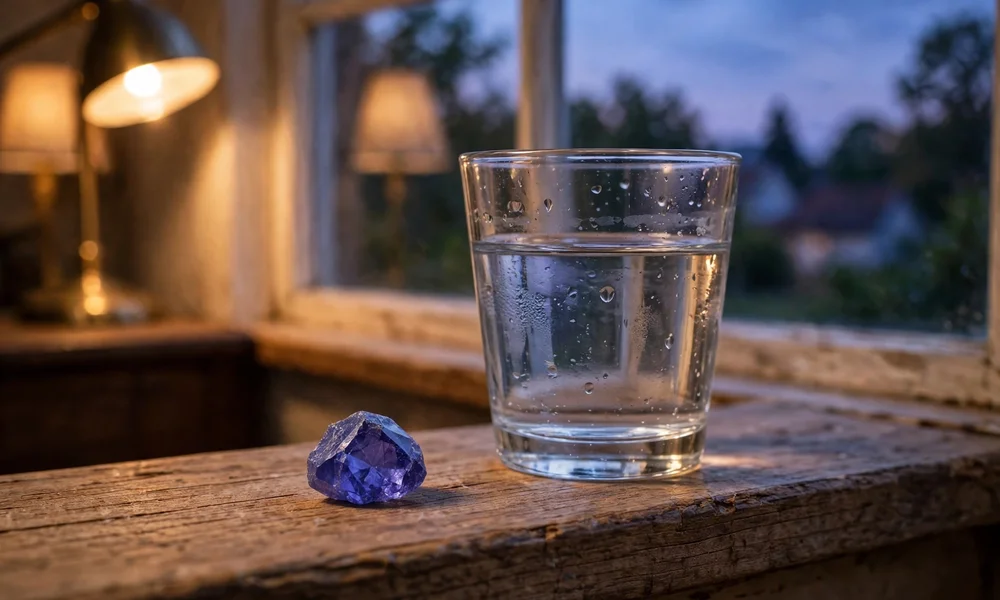
The safety rule is simple and absolute: the stone stays beside the water, never in it. A glass of fresh drinking water stands on the tray, and the tanzanite rests beside the glass. The water stays plain, and the stone stays dry. This is the only safe way to pair a stone with drinking water.
Tanzanite must never be soaked, and it must never go into a drink. It is a fairly soft stone, so water and handling can dull its polish, and no stone belongs in drinking water: even a clean-looking stone can carry dust and oils. Keep the glass and the stone as neighbours, never as one.
Setting Up a Violet Evening Corner
A violet evening corner needs very little: a small tray, a glass of water, the stone, and a lamp you can dim. Set the tray where the evening light falls, near a window if you have one, and keep the corner tidy.
Choose a spot you pass each evening, like a bedside table or a shelf beside your chair. Lay a soft cloth under the tray, set the glass at one end and the stone at the other, and leave the space clear. The corner works because it is simple, and simple is what the evening needs.
An Evening in Small Steps
An evening takes no planning at all, and it starts with the tray. When the light begins to turn violet, pour a glass of fresh water and set it beside the tanzanite. Drink it slowly, in small sips, and look out of the window.
Then dim the lamp, put the phone in another room, and choose one quiet thing to enjoy: a chapter, a cup of tea, or simply sitting still. Let the evening arrive in its own time. The stone marks the start of the pause, like a bookmark at the start of a free hour.
Reading and Resting Beside Your Stone
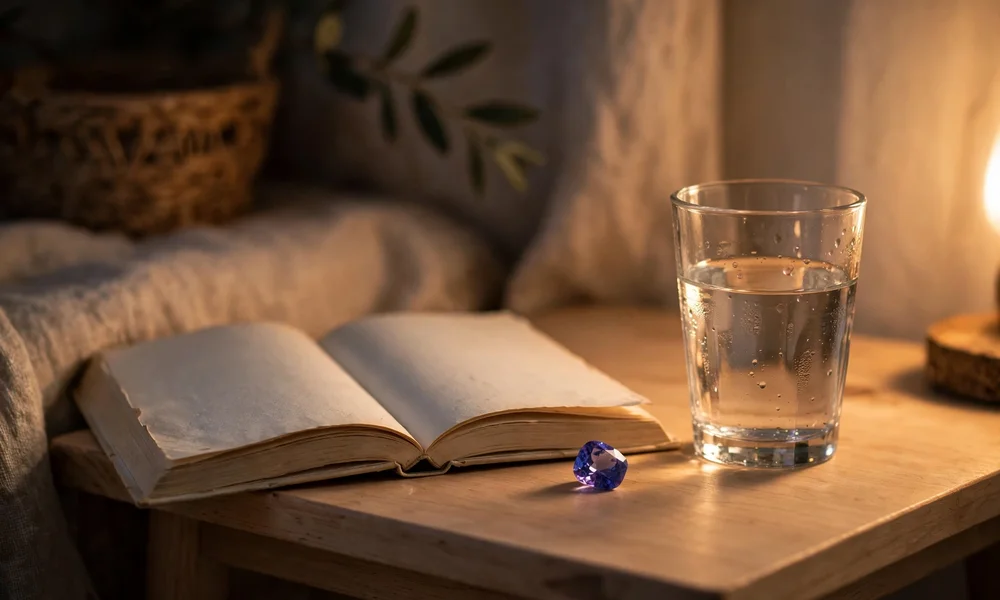
An evening is made for reading, and a stone beside the book makes the pause feel deliberate. Open your book beside the tanzanite and read a chapter without checking the time. When it ends, set the book down and look at the stone.
Keep the reading spot simple: a chair, a cushion, a glass of water and the stone. The same gentle idea runs through sugilite calm for quiet evenings, where a deep purple stone marks a quiet hour at the end of the day.
Tanzanite on the Bedside Table
The bedside table is where evenings end, and a small stone there can slow the whole room down. Set the tanzanite beside a glass of water, where you will see it while you wind down.
Keep the routine short and gentle. Drink the water slowly, dim the lamp, and leave the stone on the table, dry and safe. Wipe it if it catches any splashes, and do not wear it to bed. A quiet stone rests well, as in lepidolite calm stones for anxious evenings, where a soft lilac stone keeps a short evening pause.
Caring for a Violet Stone
Tanzanite needs gentle care, because it is softer than quartz and can scratch or chip. Clean it with a dry, soft cloth, or one barely dampened with plain water, then dry it at once. Never soak it, and never use vinegar, lemon juice or harsh chemicals.
Handle it gently: tanzanite can chip if it is dropped on a hard floor, so keep it away from harder stones and metal. Do not wear it while gardening, cleaning or doing heavy work. Store it dry, in its own pouch or on its tray, as explained in how to cleanse crystals with water safely.
Carrying Tanzanite Through the Day
Some evenings begin away from home, and the stone can travel with you. A small tanzanite in a soft pouch fits in a pocket, a bag or a desk drawer. The pouch protects it, because even a careful hand can knock it against keys.
Choose a soft cloth pouch with room for one stone and nothing else, and keep the tanzanite away from cleaning products. Take it out at your desk when you need a pause, then put it back. In the evening, set it back on its tray, where the violet light waits.

What Tanzanite Will Not Do
Be honest about what a stone can and cannot do. Tanzanite will not calm you, cure anxiety or make a busy day easy. It will not help you sleep, balance your energy or change your luck. It is a beautiful object, and its value is the pleasure of looking at it and the calm of the routine around it.
The same honesty applies to the water beside it: fresh water drunk slowly is good for you, but it is not a treatment either. No stone or ritual will replace rest and sleep. If evenings feel restless week after week, the answer is a lighter schedule or a professional's advice.
| Evening step | Water beside | Stone care |
|---|---|---|
| Pour fresh water | Glass beside stone | Wipe dry cloth |
| Hold stone briefly | Sip water slowly | Store in pouch |
| Read one chapter | Plan on paper | Keep stone dry |
| Dim lamp low | Lukewarm wash first | Clean soft cloth |
Your Tanzanite Violet Light Checklist
- Choose a violet-blue tanzanite with colour that shifts gently between blue and violet.
- Set a glass of fresh water beside the stone each evening, never in it.
- Drink the water slowly, hold the stone briefly, and take one slow breath.
- Read one chapter beside the stone, then rest your eyes for a minute.
- Carry the stone in its own soft pouch and keep it away from keys and hard stones.
- Clean the stone with a dry soft cloth, never soak it, and store it dry on its tray.
Frequently Asked Questions
What is tanzanite?
Tanzanite is a blue-violet variety of the mineral zoisite, found only near Mount Kilimanjaro in Tanzania. Its colour runs from soft lavender to deep violet-blue, and it changes with the light.
Can I put tanzanite in drinking water?
No. Tanzanite should never go into drinking water: keep the stone beside the glass, never in it. Water can dull its polish, and no stone belongs in a drink.
Why does tanzanite change colour in lamplight?
Tanzanite is pleochroic, so it shows different colours from different angles and in different light. In daylight it looks bluer, and under a warm lamp the violet comes forward.
Is tanzanite the same as sugilite?
No, but both are purple stones for quiet evenings. Sugilite is a manganese stone with a deep grape purple, while tanzanite is a blue-violet zoisite whose colour shifts in the light.
How do I clean tanzanite safely?
Wipe it with a dry, soft cloth, or with a cloth barely dampened with plain water, then dry it at once. Never soak it or use vinegar, lemon juice or harsh chemicals, and store it dry in a soft pouch.
Will tanzanite help me sleep?
Tanzanite is a companion for a calm evening routine, but it will not change your sleep on its own. The routine around it — water, low light, a book and a pause — is what helps an evening feel restful.
The Bottom Line
Tanzanite violet light is a violet-blue stone, a glass of water beside it, and an evening with room in it.
Set your stone out tonight, and let the evening arrive slowly.
A Note for Quiet Evenings
Keep it violet, keep it dry, keep it beside the water. The quiet hours can still belong to you.


