Some days arrive with a soft ache in them. Nothing is badly wrong, yet the heart feels a little bruised, the way a petal looks after rain, and the hours ask to be handled gently rather than hurried through.
A pink pearl fits a day like that. Its colour is a soft blush pink, pale and warm, like the inside of a seashell held up to morning light or the first petals of a rose opening in a quiet garden.
This guide looks at pink pearl in plain terms: what the gem is, how its soft pink differs from the other pearls and shells, and how to choose a piece you will enjoy holding on tender days. Pearls here are jewellery and display only, never in drinking water, and they cannot heal anything. If something about your health worries you, talk to a doctor, because a pearl cannot help with that.
Key Takeaways
- Pink pearl is a soft blush pink round gem, polished into beads, necklaces and bracelets.
- Pink pearl is a new pearl colour here, the only pink pearl, for tender days.
- Its soft pink suits slow days, pale linen, warm wood and clear glass.
- Pearls are jewellery and display only; a pink pearl heals nothing and stays out of every drink.
- Keep the pearl beside drinking water, never inside it, and never left to soak.
What Pink Pearl Is
A pink pearl begins life inside a shelled mollusc, where thin coats of a smooth substance called nacre build up one over another until a round gem forms. Those coats bend the light back softly, so the bead seems to glow from inside rather than glitter, and the best pieces show a blush pink that stays even all round.
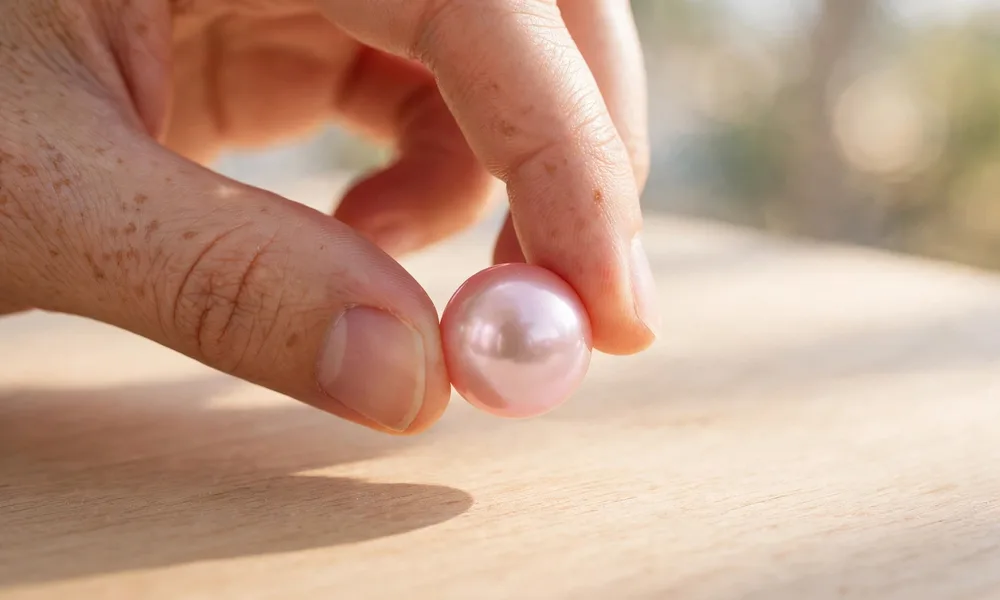
A single pink pearl feels cool in the hand, smooth all over and a touch weighty for its size. A good one shows an even surface, free of rough patches and dull spots, and the pink stays soft and even as you turn it in the light.
Why Soft Pink Suits Tender Days
Soft pink is the colour of kindness, and that is exactly why it suits a tender day. A tender day asks for little: a plain breakfast eaten slowly, a tidy room, a glass of water, and an unhurried hour before the day begins.
Choosing a Pink Pearl Piece
Shop for a pink pearl in daylight, with the piece in your own hand. Look for a smooth, even surface with a soft blush pink colour and a gentle glow, not a chalky pink or a grey, cloudy look.
A single strand necklace is the tender choice, and small stud earrings or a simple bracelet suit a quiet day just as well. Choose a seller who can explain plainly whether the pearls are cultured or natural, and walk away from anyone who claims a pearl can improve your health.
A Tender Day with Pink Pearl
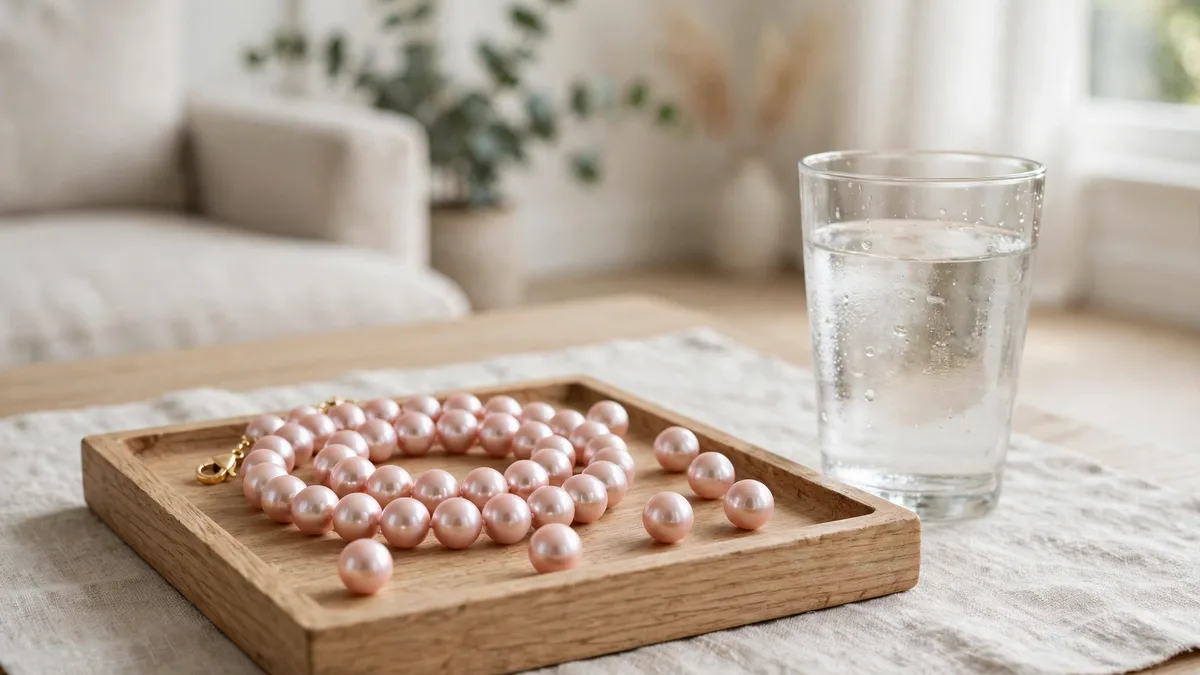
Start a tender day by setting the pink pearls on their tray, then filling a clear glass and placing it beside them, where daylight can reach them both. Sit down, drink slowly, and lift a bead for a moment to feel its cool weight before the day begins.
Lift the piece again after supper, when lamplight warms its pink a touch. The day asks for nothing grand, only a few quiet minutes and a gentle pace.
Pink Pearl Beside Water
Pour fresh drinking water into a clear glass and place the glass on the tray beside the pink pearls. The two share a tray, never a glass: the pearls stay out of every drink, and they never rest in a soak, which would dull their glow, loosen their stringing and could carry dust into the water.
Pearls are soft gems, so handle them gently and keep them dry. Should the glass tip over, lift the pearls clear right away, dab them dry with a soft cloth, and set them back only once the tray has dried fully.
Pink Pearl at a Glance
| Soft pink pearl | Tender days | Display only |
|---|---|---|
| Blush pink, gentle glow | Tray, shelf, desk | Glass stays separate |
| Cool, smooth, round | Daylight, lamplight, pause | Wipe with dry cloth |
| Pale, warm, even | Morning, midday, evening | Keep it dry |

Pink Pearl and Pearl
Pink pearl and white pearl are the closest pair in this journal, since both are round gems grown layer upon layer inside a mollusc. White pearl is the classic one: a soft white gem with a gentle lustre, cool and calm, kept for classic mornings when the room is tidy and the light comes in softly. Pearl for classic mornings is about that white gem; this guide is about a pink one.
Pink pearl has no white in its heart at all, and it carries a different mood. White feels plain and classic, while pink feels warm and tender. If soft white pleases you, choose pearl; if you want a blush pink piece that feels like a kindness, choose pink pearl. The same family holds two more colours: golden pearl, warm and golden, and black pearl, dark and deep. Pink pearl sits between them in feeling, pale and gentle, never gold and never dark, and it suits tender days rather than bright or dramatic ones.
Pink Pearl and Mother of Pearl
Mother of pearl is the glossy coat that lines a shell's inside, pale and white, throwing soft rainbow colours as it turns, and people usually keep it as a flat piece, a dish, or a tray inlay. Mother of pearl for classic days is about that flat shell; this guide is about a whole round gem.
A pink pearl is round and blush pink, with a soft glow and no rainbow colours at all. Mother of pearl is flat and pale, with pinks and blues drifting across it as you turn it.
Pink Pearl and Abalone
Abalone comes from a sea snail whose shell, once cut and polished, flashes strong blue, green and violet, bright as a wave in sunlight. It suits fresh days, open windows and bright mornings, when the air feels clean and the light feels new.
Pink pearl could hardly look more different. Where abalone is bold and vivid, pink pearl is pale and quiet, a blush pink bead that asks for nothing. If a bright shell lifts you on a fresh day, choose abalone; if a tender day needs something soft to hold, choose pink pearl.
Pink Pearl and Pink Coral
Pink coral shares the soft pink colour, and at first sight the two look alike, though the materials could hardly differ more. Pink coral is a soft pink branch material, polished into beads and jewellery, with the forked shape of something that grew in the sea. Pink coral for tender days is about that pink branch material; this guide is about a round pink gem.
Pink coral keeps the shape of a branch, while pink pearl is round and smooth, grown layer upon layer inside a shell. Both suit tender days, and both share the same soft pink, but only one of them is a pearl.

Caring for Pink Pearl
Pink pearls ask for very little care, but they still deserve a soft touch. Give them a small plate or tray of their own in good light, away from radiators, hot car seats and cleaning sprays. One light wipe a week with a clean, dry cloth keeps them looking their best.
On the Mohs scale a pearl measures only 2.5 to 4.5, much softer than most gems, so one sharp knock on a table edge can mark a bead.
Stones to Keep Far from Water
A handful of stones should never come near water, and learning their names is worth a minute. Malachite is one: it should never sit in water or in any elixir, since it can release harmful matter. Hematite is another that should never go into drinking water. The same ban covers apatite, pyrite, angelite and amber, none of which belong in a drink or a soak, and lepidolite too, which holds lithium inside it.
Pink pearl follows the same habit: it rests on the tray beside the glass, never inside the glass, and never left soaking.
Your Tender Days Checklist
- Set the pink pearls on a tray, a full glass standing beside them.
- Drink a glass of fresh water slowly as the tender day opens.
- Rest a pink pearl bead in your palm for a few slow breaths.
- Buy pearls only from a trusted seller, and keep the receipt.
- Keep the pearls out of drinks and soaks, beside the glass only.
- The pearl heals nothing; health worries go to a doctor.

Frequently Asked Questions
What is pink pearl?
Pink pearl is a soft blush pink round gem grown inside a shelled mollusc, polished by hand into beads, necklaces and bracelets for tender days. Do not confuse it with pearl powder, a fine skincare powder made from pearls, not a whole round gem.
How is pink pearl different from white pearl?
White pearl is soft white and kept for classic mornings. Pink pearl is blush pink with no white in its heart, and it suits tender days when you want a warm, gentle piece to hold.
Is pink pearl the same as mother of pearl?
No. Mother of pearl is the flat pale lining of a shell, with a rainbow shine. Pink pearl is a whole round gem, blush pink, with a soft glow and no rainbow colours.
Is pink pearl the same as pink coral?
No. Pink coral is a soft pink branch material with a forked sea-grown shape. Pink pearl is a round smooth gem grown layer upon layer inside a mollusc.
Is pink pearl safe beside water?
Yes, provided the two never meet. Keep the glass alongside the pearls on the tray, and never slip a pearl into a drink or leave it to soak.
Will pink pearl heal anything?
No. It is a lovely object to display, wear and hold; any calm you feel comes from the quiet minute, not the pearl.
The Bottom Line
Pink pearl brings soft pink to tender days: a blush pink round gem with a gentle glow, resting on its tray while a full glass stands nearby, each keeping its own place.
A Note for Tender Days
Let the pink stay soft, the pearls stay dry, and the day stay unhurried. One blush bead, one glass of water, and a few quiet minutes are plenty for a tender day.


