Some days arrive already bright. The sun is up early, the windows are open, and the whole house feels warm before breakfast is even finished. Those are the days to enjoy slowly, with a glass of water, a quiet corner, and something warm to look at.
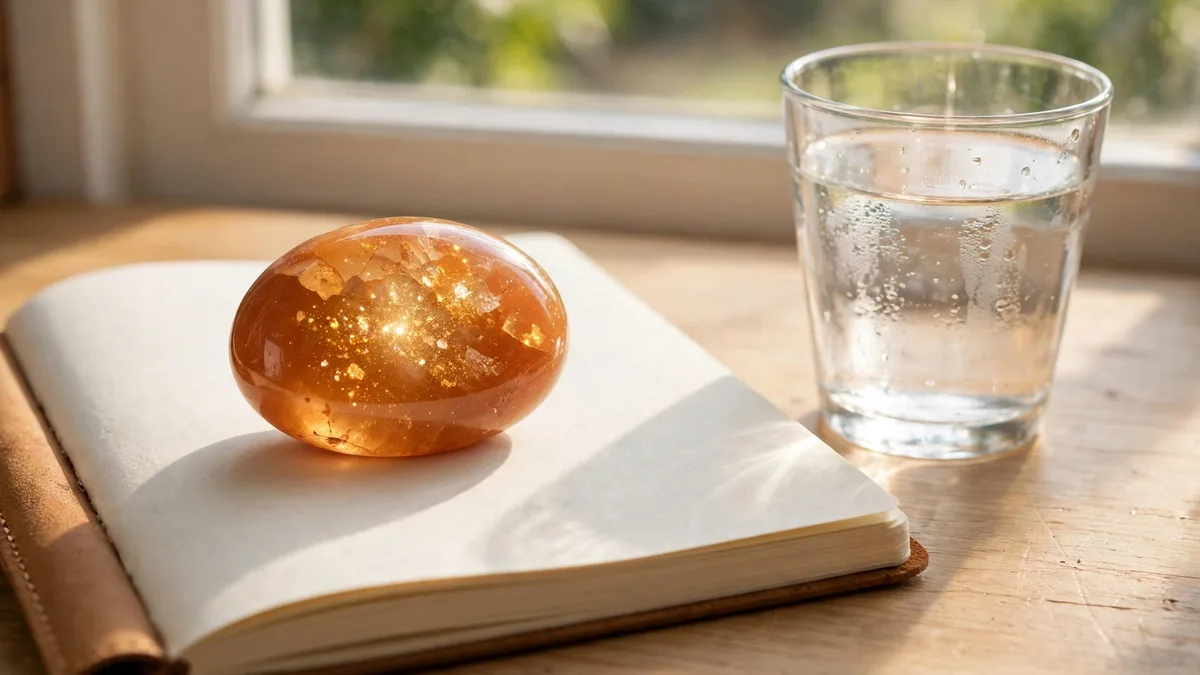
Sunstone is a stone that looks the way those days feel. It is a warm orange stone, often with a soft golden sparkle inside it, like sunlight caught in glass. Set it on a table in bright daylight and it glows gently, a small piece of sunshine you can hold in your hand.
This guide explains what sunstone is, where its warm sparkle comes from, how to choose one, how to keep it safely beside water, and how to build a short bright-day habit around it. The stone is display and handling only, never a treatment, and it will not heal anything or change your luck.
Key Takeaways
- Sunstone is a warm orange stone, often with a soft golden sparkle inside it, like sunlight in glass.
- The sparkle comes from tiny flat flakes of minerals held inside the stone as it formed.
- Sunstone is for display and handling only; it will not heal anything.
- The stone stays beside drinking water, never in it; this is the only safe way.
- A bright-day habit needs very little: warm light, a glass of water, and one stone.
What Sunstone Is
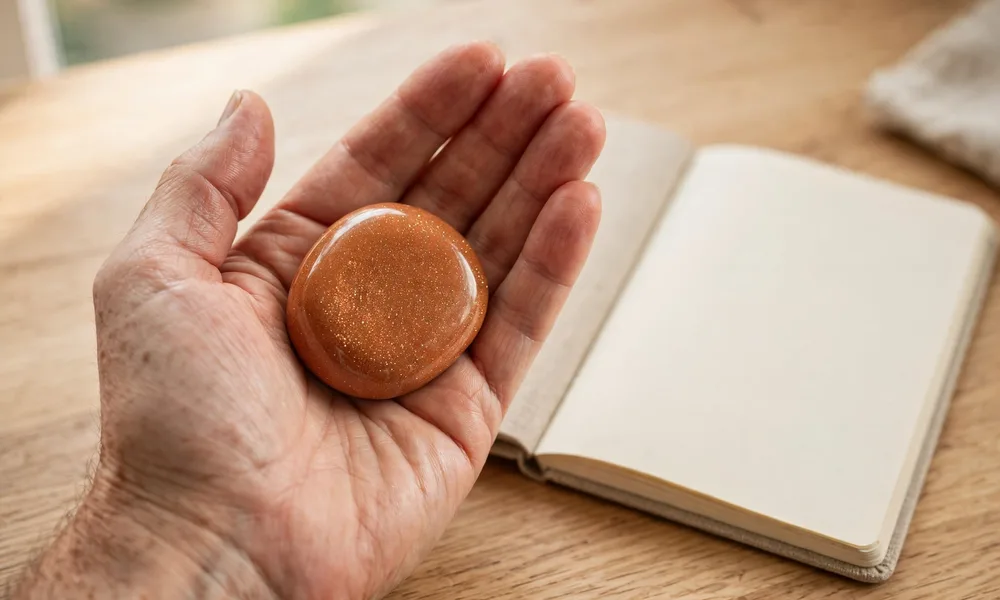
Sunstone is a warm orange variety of feldspar, a common family of minerals found in rocks all over the world. Its colour runs from pale peach to deep burnt orange, and the best pieces glow with a warm, even light, like the last hour of a summer afternoon. It is usually sold as smooth polished tumbled pieces, or as a cabochon set in a ring or pendant.
The stone feels smooth and cool in the hand, with a little weight that makes it pleasant to hold. Hold one up to a bright window and the orange deepens, the way honey looks darker in a jar than on a spoon. Its warm orange cousin is described in tangerine quartz warm orange for bright mornings, where a warm orange stone starts the day gently.
The Warm Sparkle Inside Sunstone
The warm sparkle inside sunstone has a name: aventurescence, which simply means the stone glitters when it catches the light. Tiny flat flakes of minerals, often hematite or copper, sit inside the stone as it formed, and each flake reflects a little flash of gold or copper when the stone turns in your hand.
Not every sunstone sparkles strongly, and that is normal. Some pieces show a soft shimmer across the whole surface, while others flash brightly in one spot and stay quiet elsewhere. Turn the stone slowly in bright daylight to find its best angle, and enjoy the sparkle as a small pleasure, not as a sign of anything more.
Choosing a Sunstone
Choose a stone you can see clearly before you buy it, in daylight if you can. Look for a warm orange colour you can see without squinting, a smooth polish with no sharp edges, and a size that fits comfortably in your palm. The colour should look like ripe peach or warm honey, not like paint.
Look for the sparkle too, but do not chase the brightest flash. A soft even shimmer across the stone is more pleasing to live with than one hard glittering spot. Buy from a trusted seller who can tell you plainly that the stone is natural sunstone, and never from one who promises it will heal you or change your fortune.
Keeping It Beside Water
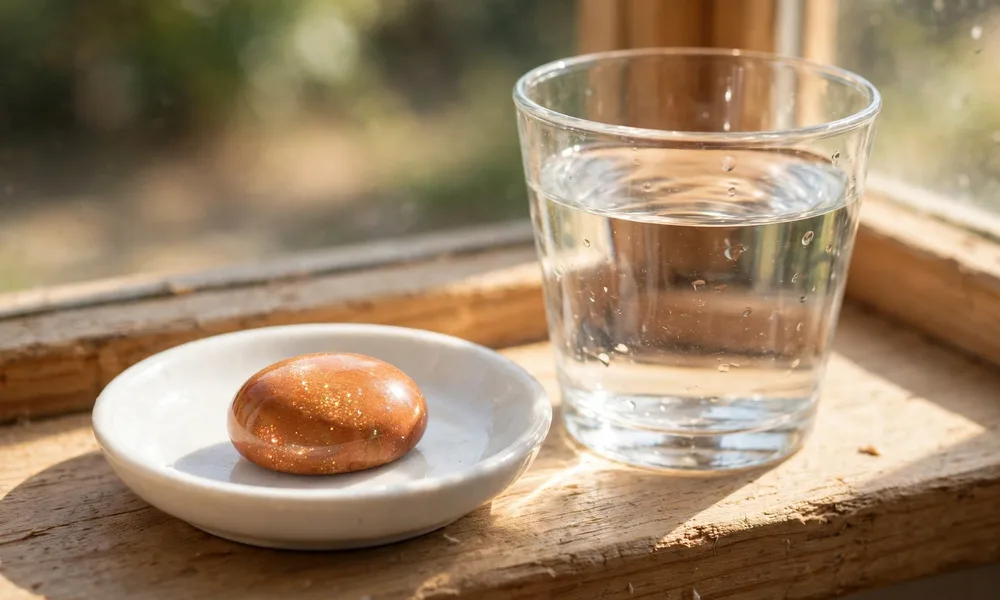
Sunstone is a fairly hard stone, but the rule for this journal never changes: stones stay beside water, never inside drinking water. Keep a glass of fresh water on the table, and the stone on its dish beside the glass, where you can see them both in the bright light.
This matters because a stone in a glass can chip, can carry dust into the water, and can be swallowed by accident if it is small. A stone beside the glass gives you the same warm orange sight with none of the risk, and the water stays plain and safe to drink.
A Bright-Day Corner
A bright-day corner takes only a few minutes to set up, and it starts the evening before. Leave a glass ready, the journal open, and the stone on its dish where the morning light will find it. A table set the night before says, without words, that tomorrow's bright hours matter.
When the morning comes, pour fresh water, sit down, and hold the stone for a moment if you like, feeling its cool weight and watching the sparkle move as you turn it. Then drink your water slowly, and write one bright thought in the journal: a plan, a hope, a small thing you are glad about. Bright days go better when they start gently.
Sunstone on Bright Days Outdoors
Sunstone belongs outdoors on bright days as much as it belongs on a desk. Carry it in a pocket on a walk, set it on a garden table while you rest, and let the sun do what indoor light cannot: wake the sparkle fully. In strong sunlight the flakes inside the stone flash gold, and the orange glows like a small ember.
Keep the stone safe while you are out, though, and do not leave it lying on hot stone or bare earth. A small cloth pouch keeps it clean and stops it rolling away, and shade is kinder than a baking-hot surface. Bring it home before evening, wipe it clean, and set it back on its dish beside a fresh glass of water.
Cleaning and Caring for the Stone
Cleaning sunstone is simple, because feldspar is hard and sturdy. Wipe it with a soft, dry cloth after handling, and wash it now and then with lukewarm water and a drop of plain soap, rinsing well and drying straight away. Keep it on its dish, away from the edge, so it cannot roll off and chip.
Do not soak the stone, do not scrub it roughly, and do not leave it in strong sunlight all day, because harsh sun can fade some stones over time. Morning light is gentle; a hot windowsill in midsummer is not, so move the dish into the shade when the sun grows strong.
What Sunstone Will Not Do
Be honest about what sunstone will not do. Sunstone will not heal anything: it will not cure an illness, ease a medical condition, bring good luck, or make a dull day bright on its own. It is a beautiful stone, and a stone is all it is, and no honest seller should claim otherwise.
The bright day is the part that helps, in an ordinary way: warm light, fresh water, and a few unhurried minutes can lift a mood the way a good walk can. The stone keeps you company while you enjoy that light, and that is a real, modest pleasure, not a treatment.
Buying Honestly
Buy sunstone honestly, and expect honest sellers to do the same. A good seller will tell you the stone is natural sunstone, show you the piece before you pay, and never promise that it heals, protects, or changes your luck. If a seller makes medical claims, walk away.
Prices vary with size, colour, and sparkle, and a small tumbled piece costs very little. The same plain honesty runs through golden healer warm light for bright mornings, where a warm golden stone keeps company on bright mornings, never as a cure.

Sunstone at a Glance
| Warm colour | Bright sparkle | Gentle care |
|---|---|---|
| Peach to orange | Gold flakes flash | Wipe stone dry |
| Smooth cool touch | Best in sunlight | Dish beside glass |
| Fits in palm | Soft shimmer pleases | Shade from harsh sun |
| Natural feldspar stone | Turn stone slowly | Mild soap only |
Your Sunstone Bright Days Checklist
- Leave a glass ready, the journal open, and the stone on its dish each night.
- Keep the stone beside your glass of water, never inside it.
- Turn the stone slowly in bright daylight to find its best sparkle.
- Carry it in a small cloth pouch on walks, never loose on hot stone.
- Wipe the stone with a soft dry cloth and keep it out of harsh sun.
- Remember the stone will not heal anything; the bright day is the part that helps.

Frequently Asked Questions
What is sunstone?
Sunstone is a warm orange variety of feldspar, coloured from pale peach to deep burnt orange, often with a soft golden sparkle inside it. It is sold as smooth polished pieces or cabochons, kept as a display and handling stone, never as a treatment.
Why does sunstone sparkle?
Sunstone sparkles because tiny flat flakes of minerals, often hematite or copper, sit inside the stone as it formed. Each flake reflects a little flash of gold or copper when the stone turns in bright light, an effect called aventurescence.
Will sunstone heal anything?
No. Sunstone will not heal anything: it will not cure an illness, ease a medical condition, bring good luck, or make a dull day bright on its own. It is a beautiful stone, and the bright day is the part that helps.
Can I put sunstone in my drinking water?
No. Stones always stay beside drinking water, never in it. Keep the stone on its dish beside the glass. A stone in a glass can chip, can carry dust into the water, and can be swallowed by accident if it is small.
How do I choose a good sunstone?
Look at the stone in daylight before you buy it, and choose one with a warm orange colour you can see clearly. Pick a smooth polish with no sharp edges, a size that fits in your palm, and a trusted seller who says plainly that the stone is natural sunstone.
Which warm stone suits autumn days?
A warm stone with a soft glow suits autumn days, carried in a pocket and kept beside water. One good example is described in fire opal warm glow for autumn days, where a warm orange stone glows through quiet autumn days.
The Bottom Line
Sunstone is a warm orange stone with a golden sparkle, and a bright day is one small act of looking, done slowly.
Put the stone on its dish, pour the water, and enjoy the light.
A Note for Bright Days
Keep it warm, keep it bright, keep it slow. The sunshine will do the rest.