Autumn evenings arrive earlier than we expect. The light turns gold, then amber, then gone, and the house grows quiet while the air outside turns cool. These are the evenings for slowing down: a warm drink, a closed door, and a small corner that feels like yours.
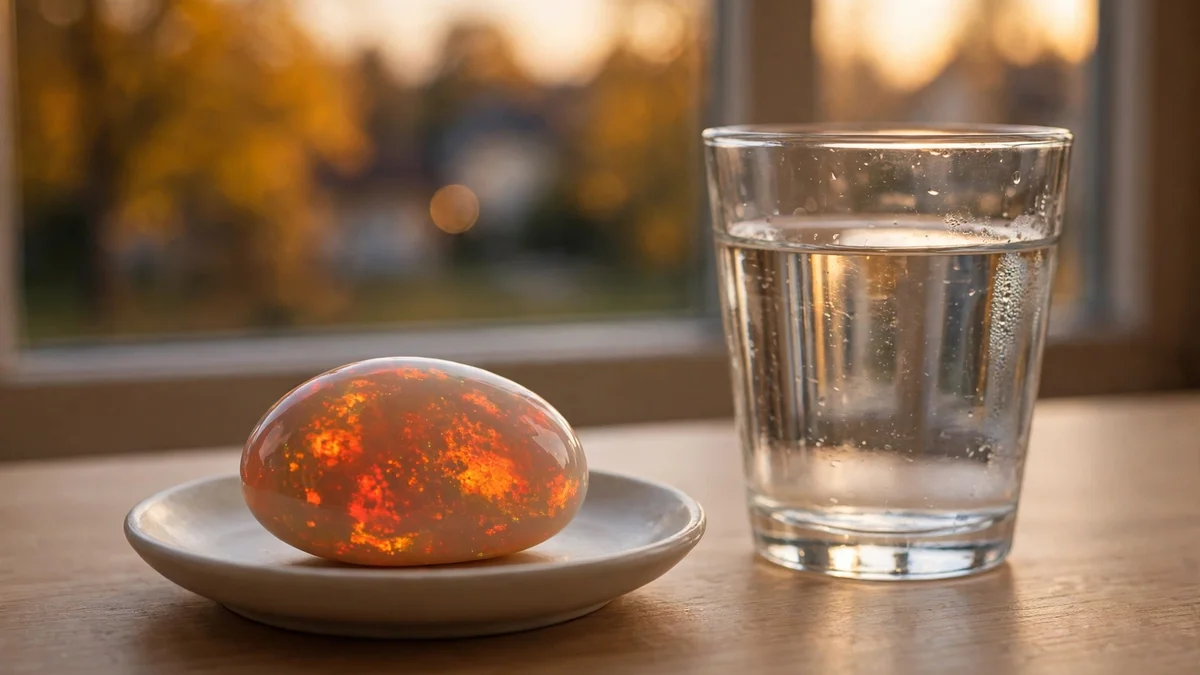
Fire opal is a stone that looks like an autumn evening kept in your hand. It is warm orange, sometimes with flashes of red and gold that move as the stone turns, like embers glowing low in a grate. It asks for nothing and does nothing, and that is exactly the point.
This guide explains what fire opal is, how to choose one, how to keep it safely beside water, and how to build a short warm evening ritual around it. The stone is display and handling only, never a treatment, and it will not heal anything.
Key Takeaways
- Fire opal is an orange opal with warm flashes of red and gold that move in the light.
- An autumn evening needs very little: warm light, a drink, a quiet corner, and one stone.
- Fire opal is for display and handling only; it will not heal anything.
- The stone stays beside drinking water, never in it; this is the only safe way.
- A warm evening ritual needs very little: a dish, a glass of water, and ten quiet minutes.
What Fire Opal Is
Fire opal is a variety of opal in warm shades of orange, red-orange, and honey gold. Some pieces are a clear, glassy orange; others hold a play of colour, small flashes of red, green, and gold that appear and disappear as the stone turns in the light. That moving fire is what gives the stone its name, and no two stones carry quite the same pattern.
Why Autumn Evenings Suit It
Autumn evenings suit fire opal because both are about warmth kept small. Summer is bright and loud, and winter asks for heavy blankets and closed curtains, but autumn sits between the two: a little cool outside, a little warm inside, and light that turns gold before it fades. The stone matches that mood exactly, warm without being bright, and glowing without demanding attention.
Choosing a Fire Opal Stone
Choose a stone you can see clearly before you buy it, in daylight if you can. Look for a warm, even orange colour, flashes of red or gold that move when you turn the stone, and a smooth polish with no sharp edges. A size that fits in your palm is best, big enough to see the colour and small enough to hold easily.
Be wary of stones that look too perfect, with flat painted-on orange or a plastic shine. Real fire opal feels cool, has a little weight, and shows small natural marks inside when held to the light. Buy from a trusted seller who can tell you plainly that the stone is natural fire opal.
Keeping It Beside Water
Fire opal is a soft stone, so it needs gentle care, and the rule for this journal never changes: stones stay beside water, never inside drinking water. Keep a glass of fresh water on the desk, and the stone on its dish beside the glass, where you can see them both in the evening light.
This matters because a stone in a glass can chip, can carry dust into the water, and can be swallowed by accident if it is small. A stone beside the glass gives you the same warm orange sight with none of the risk, and it keeps the stone dry and safe.

A Warm Evening Ritual
A warm evening ritual takes about fifteen minutes, and it starts with the light. As the sun goes down, put the stone on its dish, pour a glass of fresh water, and make a warm drink. Sit down where the lamplight is soft, and leave the phone in another room so the evening belongs to you.
Hold the stone for a moment if you like, feeling its cool weight and watching the orange flashes move. Then drink your water slowly, and write down one good thing from the day, or one small plan for tomorrow. One line is enough, and a quiet evening kept is worth more than a busy one forgotten by morning.
Fire Opal and Autumn Light
Autumn light is the best light for fire opal, because it is low, warm, and golden. In the morning the stone looks soft and pale, but in the evening, under a lamp or beside a window at dusk, the orange deepens and the flashes of red and gold wake up. The stone changes with the hour, and that is part of its charm.
Try keeping the stone near the window in the late afternoon, so the last sun finds it before it sets. Then move it to the desk when the lamp comes on, and watch how the colour shifts from daylight orange to lamplight amber. The same gentle idea runs through blue opal soft shimmer for daytime, where a pale opal changes softly with the daylight.

Cleaning and Caring for the Stone
Cleaning fire opal is simple, but it must be gentle, because fire opal is soft and can scratch easily. Wipe it with a soft, dry cloth after handling, and wash it only now and then with lukewarm water and a drop of plain soap, rinsing well and drying straight away. Keep it on its dish, away from the edge, so it cannot roll off and chip.
Do not soak the stone, do not scrub it roughly, and do not use hot water or harsh cleaners, because fire opal can crack with sudden heat. Keep it away from other stones in a drawer, since harder stones can scratch it, and keep it out of strong sunlight all day.
What Fire Opal Will Not Do
Be honest about what fire opal will not do. Fire opal will not heal anything: it will not cure an illness, ease a medical condition, warm your hands, or make an autumn evening better on its own. It is a beautiful stone, and a stone is all it is, and no honest seller should claim otherwise.
The warm evening is the part that helps, in an ordinary way: sitting down, drinking water, and writing one line can make a long day feel finished, and doing it again tomorrow can make the season feel calm. The stone keeps you company while you do that work, and that is a real, modest pleasure, not a treatment.
Buying Honestly
Buy fire opal honestly, and expect honest sellers to do the same. A good seller will tell you the stone is natural fire opal, show you the piece before you pay, and never promise that it heals, protects, or changes your health. If a seller makes medical claims, walk away.
Prices vary with size and colour, and a small polished piece costs very little, while a large stone with strong play of colour costs more. The same plain honesty runs through honey calcite warm glow for autumn, where a warm golden stone keeps company through autumn.

| Evening step | Desk setup | Stone care |
|---|---|---|
| Pour fresh water | Stone on dish | Wipe stone dry |
| Make warm drink | Glass beside dish | Keep stone dry |
| Write one line | Lamp light soft | Shade from harsh sun |
| Phone away | Journal open nightly | Mild soap only |
Your Fire Opal Autumn Evenings Checklist
- Put the stone on its dish and pour a glass of fresh water each evening.
- Keep the phone in another room so the evening hour belongs to you.
- Hold the stone for a moment and watch the orange flashes in the lamplight.
- Write down one good thing from the day, or one small plan for tomorrow.
- Wipe the stone with a soft dry cloth and keep it out of harsh sun.
- Remember the stone will not heal anything; the quiet evening is the part that helps.

Frequently Asked Questions
What is fire opal?
Fire opal is a variety of opal in warm shades of orange, red-orange, and honey gold, sometimes with a play of colour: small flashes of red, green, and gold that move as the stone turns. It forms in volcanic rock and is sold as smooth polished pieces, kept as a display and handling stone, never as a treatment.
Will fire opal heal anything?
No. Fire opal will not heal anything: it will not cure an illness or ease a medical condition. It is a beautiful stone, and the warm evening is the part that helps, one quiet hour with water, a warm drink, and a line written down.
Can I put fire opal in my drinking water?
No. Stones always stay beside drinking water, never in it. Keep the stone on its dish beside the glass. A stone in a glass can chip, can carry dust into the water, and can be swallowed by accident if it is small. Fire opal is also soft, so soaking can damage it.
How do I choose a good fire opal?
Look at the stone in daylight before you buy it, and choose one with a warm, even orange colour and flashes that move when you turn it. Pick a smooth polish with no sharp edges, a size that fits in your palm, and a trusted seller who says plainly that the stone is natural fire opal.
How do I clean fire opal?
Wipe it with a soft, dry cloth after handling, and wash it only now and then with lukewarm water and a drop of plain soap, rinsing well and drying straight away. Do not soak it, scrub it roughly, or use hot water, and keep it away from harder stones that could scratch it.
Which stone suits a bold day?
A bold day suits a warm stone carried in a pocket and a short pause with water. One good example is described in fire agate warm spark for bold days, where a banded brown stone with orange flashes sits beside water through a busy day.
The Bottom Line
Fire opal is a warm orange stone, and an autumn evening is one quiet hour, kept simply.
Put the stone on its dish, pour the water, and begin.
A Note for Autumn Evenings
Keep it warm, keep it orange, keep it small. The evening will do the rest.