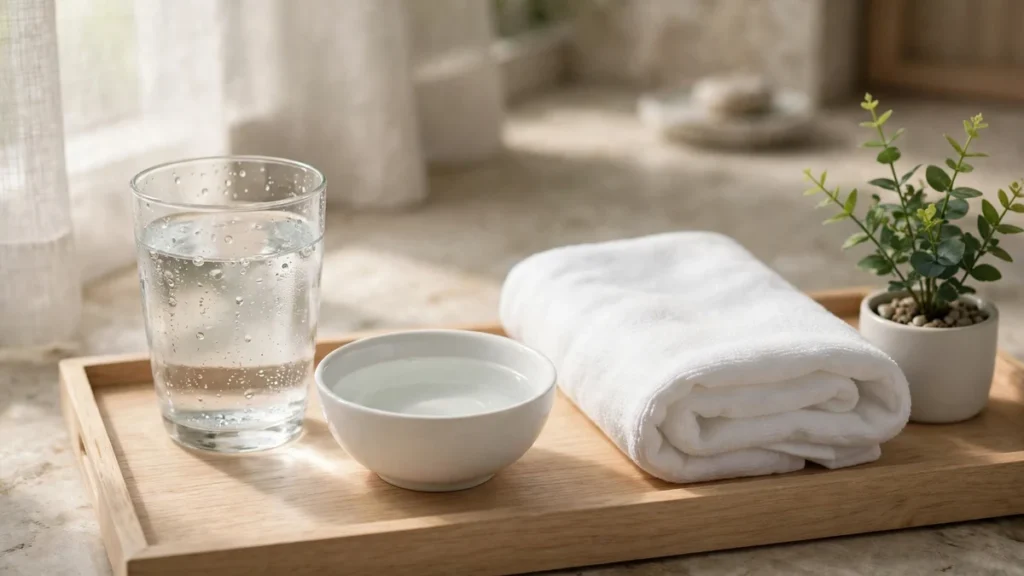
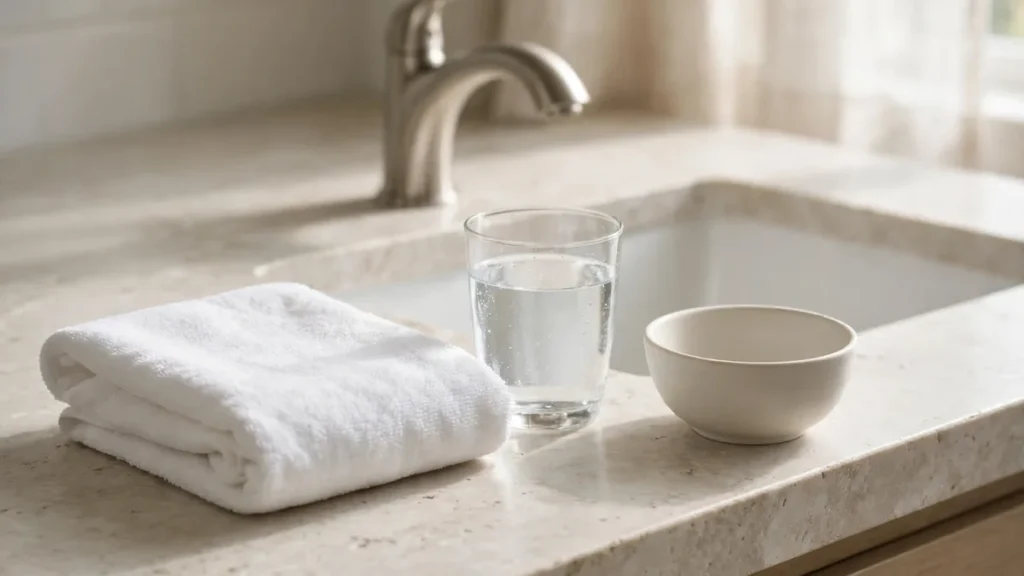
Some work needs a quiet desk and a clear head. The phone keeps buzzing, the list keeps growing, and the first page stays blank for far too long. More often than not, the hardest part is not the work itself. It is the beginning: the slow, restless moment before you settle down and start.
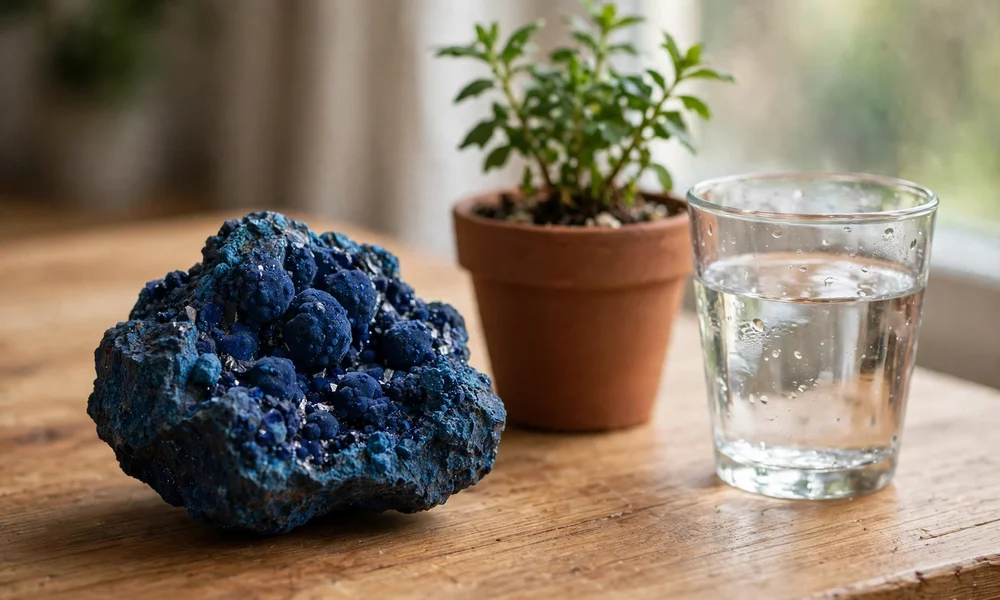
A deep blue stone can mark that moment. Azurite is a rich, dark blue mineral, the colour of a clear evening sky just after sunset, and it has been admired for centuries for its depth of colour. Set on a desk beside a notebook and a glass of water, it gives the eye somewhere calm to rest before the work begins.
This article is a careful guide to azurite deep blue for focused work: what the stone is, how to choose one, how to set up a desk around it, and the safety rules that must never be broken. Azurite is a stone to display and handle with care, never to put in water, and this guide treats that rule as the first and most important fact about it.
Key Takeaways
- Azurite deep blue is the rich, dark blue colour of the copper mineral azurite, a stone for display only.
- Azurite is toxic if swallowed, so it must never go in drinking water, and hands should be washed after handling it.
- A focus ritual is a short, repeatable start: place the stone, sip water, choose one task, then begin.
- Work in short blocks with breaks, and keep the desk clear, calm, and free of clutter.
- The stone is a companion for the routine, not a treatment, and it will not make you focus on its own.
What Azurite Deep Blue Means
Azurite is a copper carbonate mineral, and its colour is a deep, vivid blue that can look almost violet in some lights. The finest pieces are a rich midnight blue with lighter blue patches, and the surface often shows a soft, velvety sheen. It is a striking stone, and even a small piece can change the feel of a desk.
Why a Deep Blue Stone Suits Focused Work
Deep blue is a quiet colour. It does not shout for attention the way bright red or yellow does, and it does not fade into the background like pale grey. A deep blue stone on a desk gives the eye a calm anchor, a single point of colour in a space that is otherwise paper, wood, and glass.
Other blue stones are used in the same way at different times of day. Lapis lazuli, for example, belongs to the evening in lapis lazuli evening water ritual, where its deep blue suits the slow close of the day. Azurite belongs to the working hours, when its colour is a reminder to begin and to keep going.
The Safety Rule: Azurite Is Never in Water
This is the most important part of this article, and it must be understood before anything else. Azurite is copper carbonate, and copper compounds are toxic if swallowed. Azurite must never be placed in drinking water, never be soaked in water for drinking, and never be used to make crystal water or any kind of elixir.
The safe rule is simple and absolute: the stone stays beside the glass, never in it. A glass of fresh drinking water stands on the desk, and the azurite rests on the wood or on a small tray beside the glass. The water stays plain water, and the stone stays dry. This is the indirect method, and it is the only safe way to pair azurite with water.
Handling azurite is fine, but wash your hands after handling it, especially before eating or drinking. Do not let children handle azurite unsupervised, and keep the stone away from food and drink. If a piece of azurite ever falls into a glass of water by accident, throw the water away, wash the glass, and wash your hands.
Choosing an Azurite Stone
Choose an azurite you can see before you buy it. The best stones are a rich, even deep blue, with a smooth surface and no crumbling edges. Hold it up to daylight and turn it slowly: the colour should stay deep and steady, not patchy or faded. A small, well-formed piece often looks better than a large, rough one.

Setting Up Your Desk for Focus
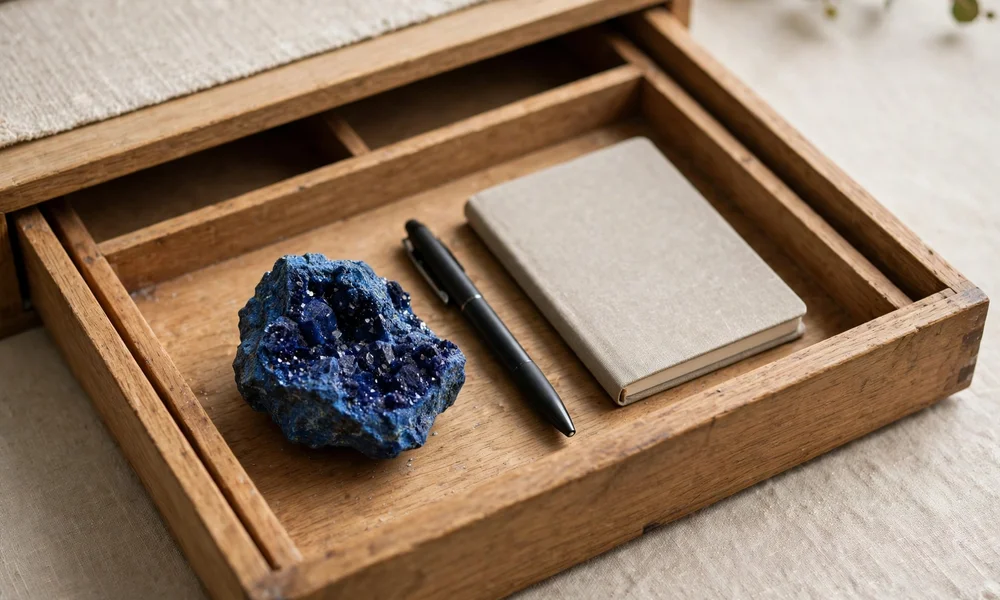
A focused desk is a clear desk. Start by removing everything you do not need for the next hour: old papers, empty cups, chargers, and anything that belongs somewhere else. Wipe the surface clean, then put back only what the work needs: the notebook, a pen, the glass of water, and the azurite.
A Simple Focus Ritual Before You Begin
A ritual is a short sequence you repeat every time, and its power is in the repetition. Before you start work, place the azurite in its spot, pour a glass of fresh water, and set it beside the stone. Then sit down, take a slow sip of water, and choose one task to begin with.
Choose one task only, and write it at the top of the page. Not three tasks, not a list of everything due this week, but a single clear sentence about what you will do first. A single task is easy to start, and starting is the hardest part of the work.
Working in Short Blocks with Breaks
Long, unbroken work rarely stays focused. The mind drifts, the shoulders tighten, and the page blurs, even when the work matters. Short blocks work better: twenty-five or thirty minutes of steady work, then a short break of five minutes, then another block.
Between blocks, stand up, stretch, and look out of the window. Drink some water, walk to another room, and let the eyes rest. Fluorite is another stone people pair with morning focus in fluorite focus water mornings, and the habit is the same there: short blocks, fresh water, and regular breaks.

Caring for Azurite Through the Week
Azurite needs gentle, regular care. Dust it with a soft, dry cloth once a week, and never use water, soap, or cleaning sprays on it. Water can dull the surface and loosen crumbly edges, and chemicals can damage the colour. A dry cloth is all it needs.
Store the stone in its tray or in a soft pouch when it is not on the desk, and keep it away from harder stones that could scratch it. Do not leave it in direct sun for long hours, and do not carry it loose in a bag with keys and coins. A little care keeps the colour deep and the surface smooth.
What Azurite Will Not Do
Be honest about what a stone can and cannot do. Azurite will not make you focused, clever, or productive. It will not cure a wandering mind, fix a bad night of sleep, or finish the work for you. It is a beautiful object, and its value is the pleasure of looking at it and the calm of the routine around it.
Sodalite is another deep blue stone used for study, described in sodalite focus stones for study and work, and the honesty is the same there: the stone marks the start, and the work itself is yours. Azurite is no different, and no stone should ever be sold or used as a cure.
| Focus step | Water beside | Stone care |
|---|---|---|
| Place stone down | Glass beside stone | Wipe dry cloth |
| Sip fresh water | Sip water slowly | Wash hands after |
| Choose one task | Keep glass full | Store in tray |
| Work short block | Drink between breaks | Keep out sun |
Your Azurite Focus Checklist
- Choose a small, solid azurite with a rich, even deep blue colour.
- Keep the stone beside drinking water, never in it, and wash hands after handling.
- Clear the desk, place the stone in its fixed spot, and pour a glass of water.
- Choose one task, write it down, and begin with a short work block.
- Take a five-minute break between blocks, stand up, and drink water.
- Dust the stone with a dry cloth weekly and store it safely in its tray.
Frequently Asked Questions
What is azurite deep blue?
Azurite deep blue is the rich, dark blue colour of azurite, a copper carbonate mineral. The finest pieces are a deep midnight blue with lighter blue patches, and the colour holds its depth in both daylight and lamplight.
Is azurite safe to handle?
Yes, azurite is safe to handle briefly with normal care, but you should wash your hands after handling it, especially before eating or drinking. Do not let children handle it unsupervised, and keep it away from food and drink.
Can I put azurite in drinking water?
No, never. Azurite is copper carbonate and toxic if swallowed, so it must never go into drinking water or be used to make crystal water. Keep the stone beside the glass, never in it, and throw the water away if the stone ever falls in by accident.
How do I use azurite for focused work?
Place the stone in a fixed spot on a clear desk, pour a glass of fresh water beside it, choose one task, and begin with a short work block of about thirty minutes. Take a short break, then begin the next block.
How do I clean azurite safely?
Dust it with a soft, dry cloth only. Never use water, soap, or cleaning sprays, because water can dull the surface and damage crumbly edges. Store it in a tray or a soft pouch away from harder stones.
What is the difference between azurite and sodalite?
Azurite is a copper carbonate mineral with a rich, deep blue colour and strict safety rules, because it is toxic if swallowed. Sodalite is a different deep blue stone, often marked with white calcite veins, and it is used as a desk companion for study without the same toxicity warning.
The Bottom Line
Azurite deep blue is a rich colour for a quiet desk: a small stone, a glass of water beside it, one task, and a short block of work. Handle it with care, keep it out of water, and let the routine do the rest.
Set your stone out tomorrow morning, and begin with a single task.
A Note for Quiet Evenings
Keep the desk clear, keep the stone dry, keep the water beside it. The work will not always feel easy, but a calm desk and a steady habit will carry you through it.