Autumn arrives quietly, and the skin notices it first. The air turns cooler, the wind grows sharper, and the soft warmth of summer fades from the mornings. Skin that felt easy in July can feel tight, dry and a little tired by October.
Honey calcite warm glow is a small, golden idea for this season. The stone is warm honey in colour, smooth and soft to hold, and it sits on the shelf like a drop of late sunlight kept indoors. It does nothing at all, and that is the point.
This article is a gentle guide to honey calcite warm glow for autumn skin: what the stone is, how to choose one, how to keep it safely beside water, and how to build a short, warm routine around it. The stone is a companion, never a treatment.
Key Takeaways
- Honey calcite warm glow means a warm honey-coloured calcite stone kept nearby as a golden autumn companion.
- Honey calcite is calcium carbonate, so keep it dry, handle it gently, and display it only.
- The stone always stays beside drinking water, never in it; this is the only safe way.
- Autumn skin needs gentleness: lukewarm water, a soft cloth, and a simple routine.
- Honey calcite is a beautiful object, not a treatment, and it will not change your skin.
What Honey Calcite Warm Glow Means
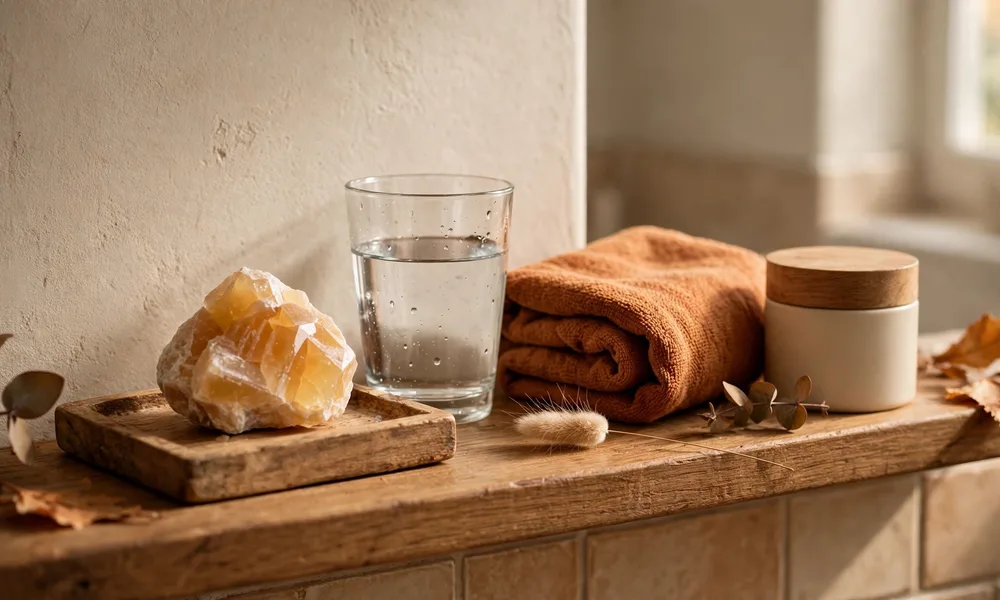
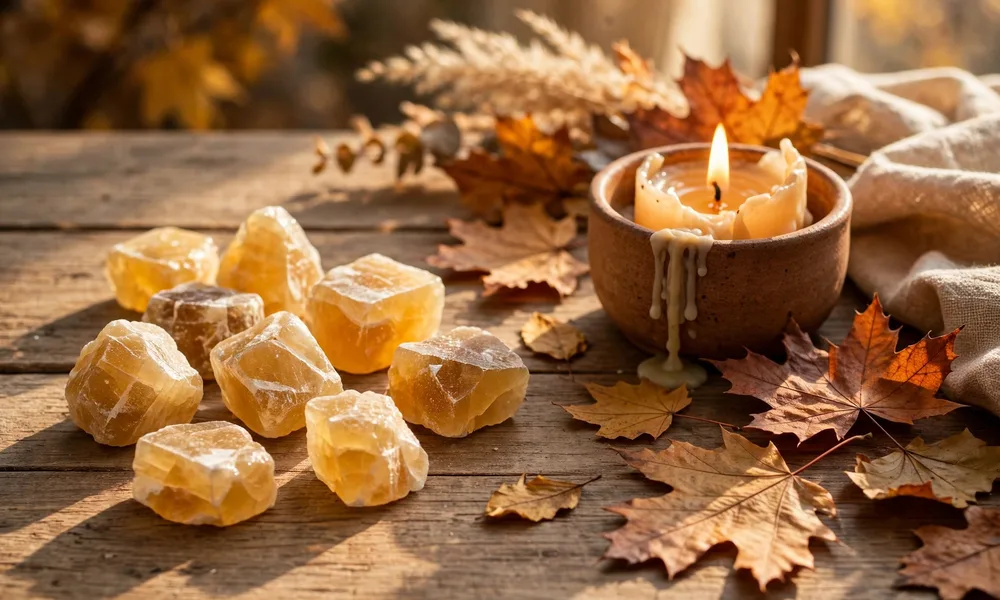
Honey calcite is a variety of calcite in warm shades of honey, amber and pale gold. Its colour looks like sunlight caught in stone, sometimes banded with softer cream, sometimes clear and glowing through. In daylight the surface stays warm and even, and the stone feels smooth, cool and solid in the hand.
The stone takes its colour from tiny traces of iron in the rock, and no two pieces look quite the same. Some are deep amber, some are pale gold, and some hold soft bands of cream.
Why Autumn Skin Needs Gentleness
Autumn asks more of the skin than summer does. Cold air outside and warm air inside pull moisture from the skin in both directions, and the wind dries the cheeks faster than any summer sun. Skin can feel tight after washing, rough at the edges, and dull in the mirror.
A gentle routine answers all of this without any fuss. Lukewarm water instead of hot, a soft cloth instead of scrubbing, and a plain moisturiser while the skin is still damp will carry most faces through the season.
Choosing a Honey Calcite Stone
Choose a honey calcite stone you can see before you buy it. Look for a warm, even honey colour, with a smooth surface and a soft, gentle shine, rather than a painted look or a harsh orange dye. Hold it up to daylight: the colour should glow warmly, and the stone should feel cool, dry and solid, with a gentle weight in the hand.
Honey calcite is often sold as small tumbled stones, and a piece that fits in your palm is enough. Avoid stones with cracks, chips or chalky patches, and avoid any piece that feels rough or leaves dust on your fingers.

Honey Calcite Beside Water, Never in It
The safety rule is simple and absolute: the stone stays beside the water, never in it. A glass of fresh drinking water stands on the shelf, and the honey calcite rests beside the glass. The water stays plain, and the stone stays dry. This is the only safe way to pair a stone with drinking water.
Honey calcite is calcium carbonate, the same substance found in shells and limestone, and it must never be soaked or placed in a drink. Even a clean-looking stone can carry dust and oils, and no stone belongs in drinking water.
A Warm Autumn Skin Routine in Small Steps
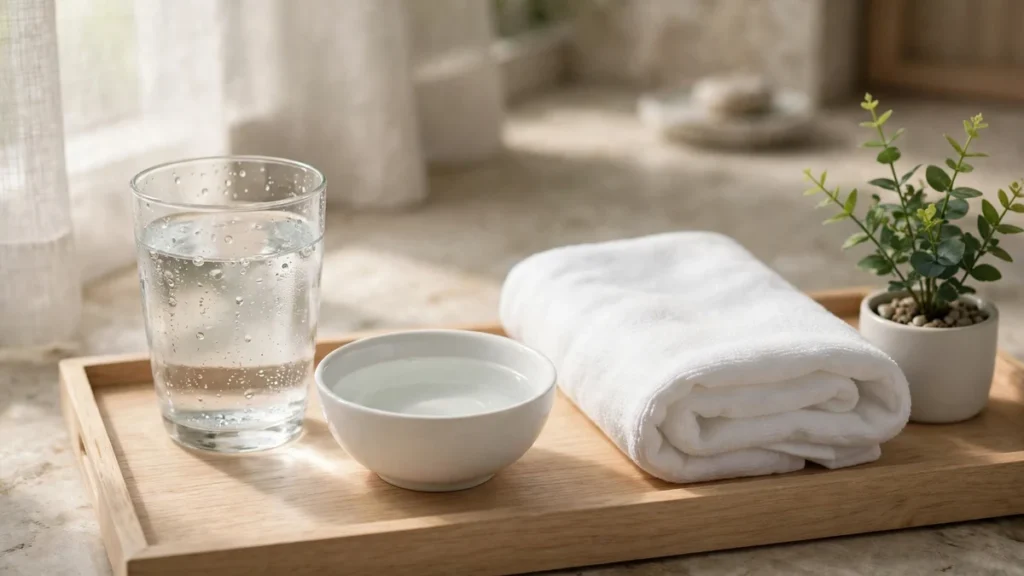
A warm autumn skin routine takes no planning at all, and it starts with the tray. Set out the glass, the stone and what you need for the morning — a soft cloth, a plain cleanser, a simple moisturiser — so the day does not begin with searching.
When you sit down, pour a glass of fresh water and set it beside the honey calcite. Drink it slowly, in small sips, and look out of the window at the autumn leaves for a minute. Then wash your face with lukewarm water, pat it dry gently, and smooth on moisturiser while the skin is still damp.
Holding the Stone in Your Palm
Holding the stone is the quietest part of the routine. Pick up the honey calcite, close your fingers around it, and feel its cool, smooth weight. Turn it once, look at the warm golden surface, and set it back down.
This takes less than a minute: it gives your hands a task while your mind settles.
Reading and Resting Beside Your Stone
An autumn day is made for short pauses, and a stone beside the book makes the pause feel deliberate. Between tasks, close the laptop for a minute and read a page of your book beside the honey calcite. When it ends, set the book down and look at the stone for a moment.
The same gentle idea runs through aragonite warm earth for steady mornings, where a warm brown stone marks a quiet start to the day.
Honey Calcite on the Shelf
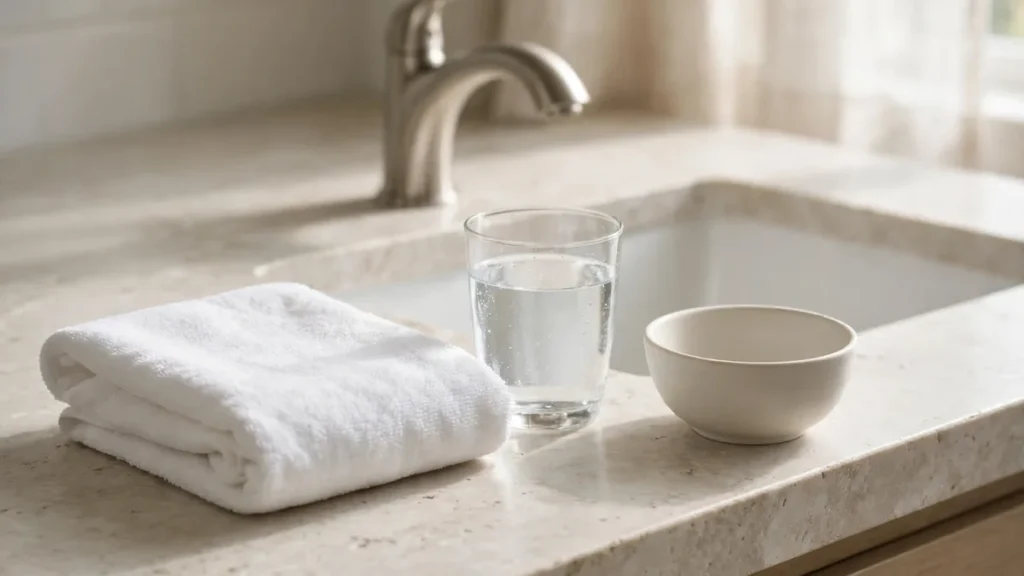
The bathroom shelf is where a stone earns its keep, and a small honey calcite on the shelf can slow the whole morning down. Set the honey calcite beside a folded cloth and a glass of water, where you will see it every time you reach for your skincare.
Wipe the shelf once a week with a dry cloth, and keep the stone away from splashes and sticky jars.
Carrying Honey Calcite Through Autumn
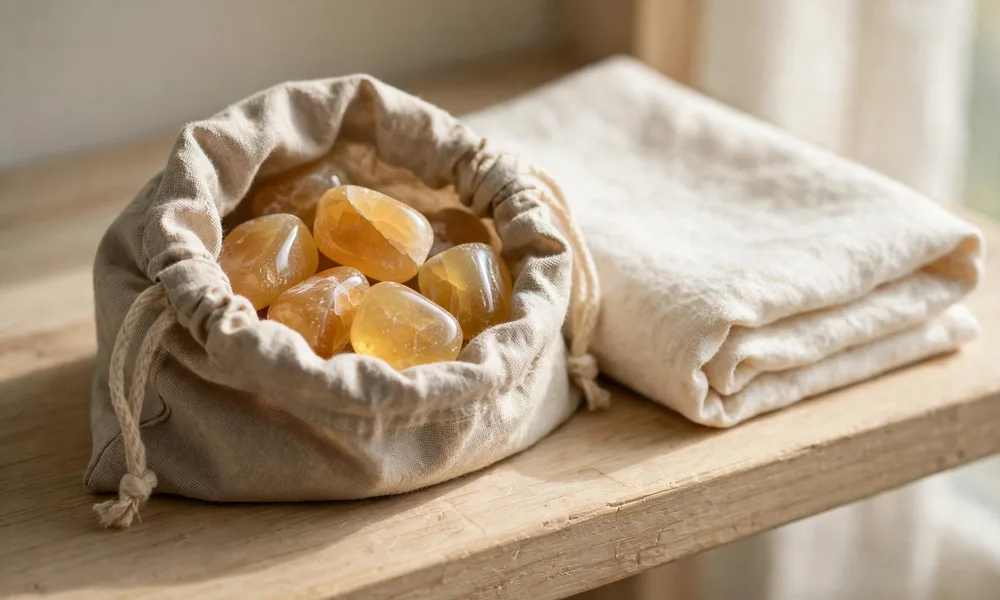
Some autumn days still ask you to move around, and the stone can travel with you. A small honey calcite in a soft pouch fits in a pocket, a bag or a drawer. The pouch protects the stone, because even a fairly hard stone can chip against keys.
Choose a soft cloth pouch with room for one stone and nothing else, and keep the honey calcite away from cleaning products. In the evening, set it back on its tray. A quiet stone travels well, as in rose water and glycerin, where a simple pairing sits happily beside a morning glass of water.
Caring for a Soft Golden Stone
Honey calcite needs gentle care, because it is a soft stone. Clean it with a dry, soft cloth, or with a cloth barely dampened with plain water, then dry it at once. Never soak it, and never use vinegar, lemon juice or harsh chemicals, which can dull the warm surface.
Handle it gently: honey calcite can scratch and chip if it is dropped on a hard floor, so keep it away from harder stones and metal. Store it dry, in its own pouch or on its tray, as explained in how to cleanse crystals with water safely.
What Honey Calcite Will Not Do
Be honest about what a stone can and cannot do. Honey calcite will not warm your skin, clear spots, cure dryness or make autumn kinder to your face. It will not help you sleep, balance your energy or change your luck. It is a beautiful object, and its value is the pleasure of looking at it and the calm of the routine around it.
The same honesty applies to the water beside it: fresh water drunk slowly is good for you, but it is not a treatment either. No stone or ritual will replace rest, sleep and a simple skincare routine. If your skin stays sore, cracked or unhappy week after week, the answer is advice from a doctor or dermatologist.
| Warm pause | Water beside | Stone care |
|---|---|---|
| Drink fresh water | Glass beside stone | Wipe with cloth |
| Hold stone briefly | Sip water slowly | Store in pouch |
| Watch autumn leaves | Warm water first | Keep stone dry |
| Rest eyes briefly | Plan day calmly | Clean gently weekly |
Your Honey Calcite Warm Glow Checklist
- Choose a warm honey calcite stone with a smooth, even surface and no cracks.
- Set a glass of fresh water beside the stone each morning, never in it.
- Drink the water slowly, hold the stone briefly, and take one slow breath.
- Wash with lukewarm water, pat dry gently, and moisturise while skin is damp.
- Carry the stone in its own soft pouch and keep it away from keys and hard stones.
- Clean the stone with a dry soft cloth, never soak it, and store it dry on its tray.
Frequently Asked Questions
What is honey calcite?
Honey calcite is a variety of calcite in warm shades of honey, amber and pale gold. Its colour comes from tiny traces of iron in the rock, and no two pieces look quite the same.
Can I put honey calcite in drinking water?
No. Honey calcite should never go into drinking water: keep the stone beside the glass, never in it. Even a clean-looking stone can carry dust and oils, and no stone belongs in a drink.
Is honey calcite the same as aragonite?
No, but they are close cousins. Both are calcium carbonate, and both need the same care: keep them dry and display them only. Aragonite is usually warm brown and banded, while honey calcite is golden and glowing.
How do I clean honey calcite safely?
Wipe it with a dry, soft cloth, or with a cloth barely dampened with plain water, then dry it at once. Never soak it or use vinegar, lemon juice or harsh chemicals, and store it dry in a soft pouch.
Can I keep honey calcite in the bathroom?
Yes, if you treat it gently. Keep it on its tray beside your glass of water, away from splashes, steam and harder stones, and wipe it with a dry cloth once a week.
Will honey calcite make my skin glow?
Honey calcite is a beautiful companion for a gentle autumn routine, but it will not change your skin on its own. The routine around it — lukewarm water, gentle washing and moisturiser on damp skin — is what helps skin through autumn.
The Bottom Line
Honey calcite warm glow is a golden stone, a glass of water beside it, and an autumn skin routine with gentleness in it.
Set your stone out tonight, and let tomorrow move a little more slowly.
A Note for Autumn Skin
Keep it warm, keep it dry, keep it beside the water. The golden hours can still belong to you.