Mornings can feel rushed, and the face is often the first place to show it. The mirror catches tired eyes, tight shoulders, and skin that feels dry after the night. Most of us reach for the same quick fix: a splash of water, a dab of cream, and out of the door before the day has properly begun.
Gua sha offers a slower start. It is a smooth, flat stone, often rose quartz or jade, shaped to glide across the skin with a little water or mist. Used gently, it turns a hurried wash into a calm few minutes of care, and the cool stone against the cheek is a small pleasure in itself.
This article is a gentle guide to gua sha water: what the stone is, how to choose one, how to prepare the skin with water, and the slow strokes to try first. The pressure is always light, the skin is always damp, and the routine makes no promises beyond a quieter morning.
Key Takeaways
- Gua sha water means using a smooth, flat gua sha stone on damp skin with a water mist or light lubricant.
- Use feather-light pressure only, and never use the stone on broken, irritated, or sunburned skin.
- Always work on damp or moisturised skin, never dry skin, so the stone glides without pulling.
- Slow, outward and upward strokes, repeated a few times, are enough for a gentle routine.
- Gua sha is a moment of care, not a treatment, and it will not cure or reshape the face.
What Gua Sha Water Means
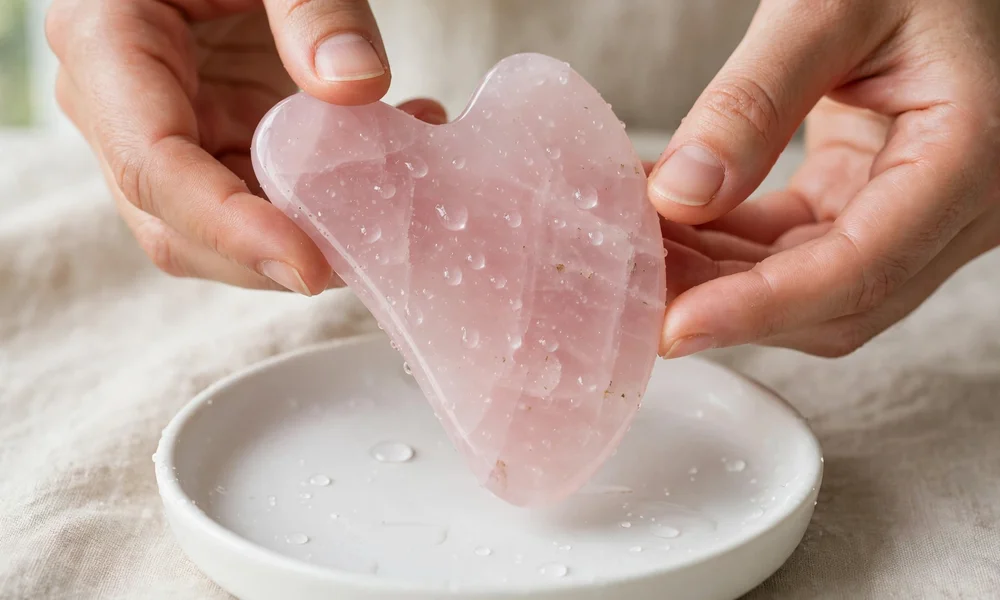
Gua sha is a traditional practice from China, where a smooth tool is drawn gently across the skin. The modern face stone is usually a flat piece of rose quartz, jade, or another smooth stone, shaped with a long edge, a curved edge, and a small notch. It fits in the palm of the hand and feels cool to the touch.
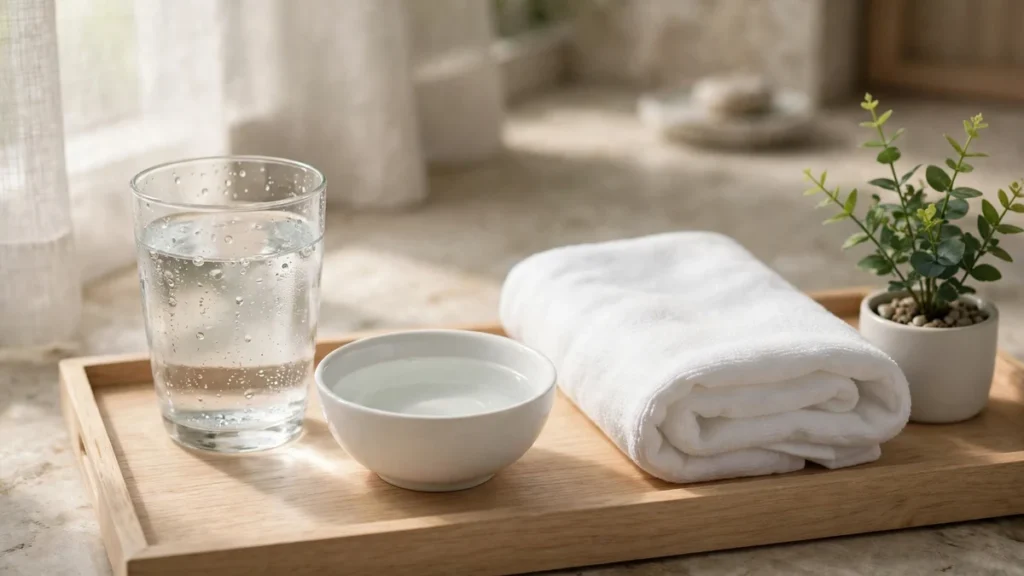
The water in gua sha water is the mist or light moisture that lets the stone glide. A fine spray of plain water, a damp face after washing, or a light water-based mist is enough. The stone should never drag or catch on dry skin, and the water is what keeps the movement smooth and comfortable.
Why Water Makes Gua Sha Gentle
Dry skin and a hard stone do not mix. Without moisture, the stone can pull, tug, and leave the skin feeling sore, and the strokes feel scratchy instead of smooth. Water changes everything: the stone floats across the cheek, the hand relaxes, and the whole routine feels softer.
Cool water feels especially pleasant in the morning. A stone kept somewhere cool, a face washed with lukewarm water, and a fine mist together make the routine feel fresh and waking. Cucumber water and jade share the same cooling idea in cucumber water jade cooling skin, where cool water and a cool stone bring calm to warm skin.
Choosing a Gua Sha Stone
Choose a stone that feels smooth all over, with no sharp edges, chips, or rough patches. Run a fingertip slowly around every edge before you buy it, and hold it in your hand to check the weight. It should feel solid but not heavy, and the shape should sit comfortably in your palm.
Rose quartz is a popular first choice. It is a soft pink stone, smooth and cool, and its gentle colour suits a calm morning. Jade is another good choice, a little harder and cooler, and it has been used for face tools for a long time. Either stone works well, so choose the one you like looking at.

Preparing Your Skin and Your Stone
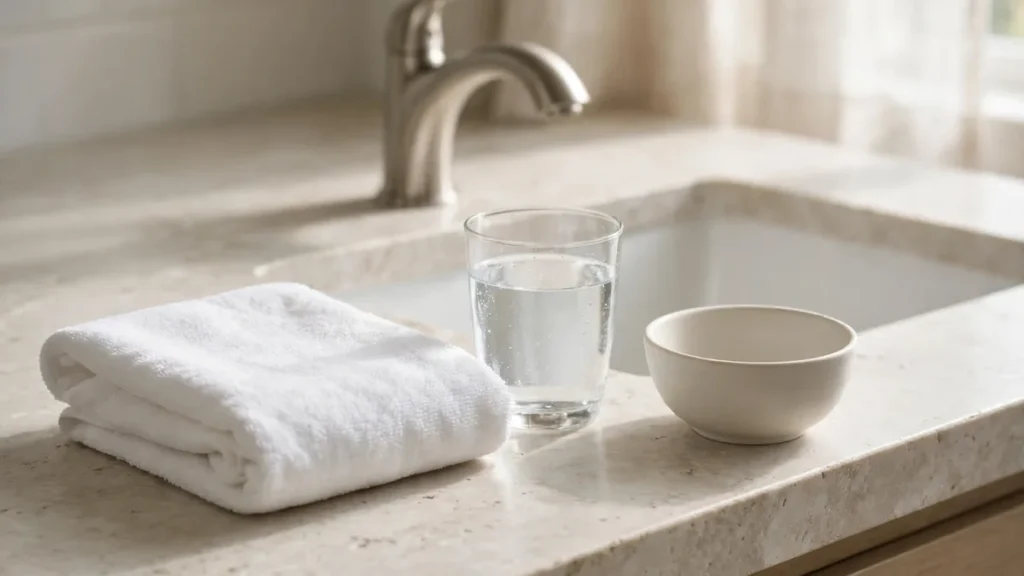
Start with clean hands and a clean face. Wash the face with lukewarm water and a gentle cleanser, then rinse and pat it lightly, leaving the skin slightly damp. This is the foundation of the whole routine, and a calm wash is worth doing well, as described in calm guide to washing your face well.
Next, prepare the stone. Rinse it under lukewarm water, pat it dry, and hold it for a moment to feel its coolness. Mist the face lightly with plain water or a water-based mist, so the skin is damp and ready. If the skin starts to dry during the routine, mist it again.
A Gentle Morning Routine, Step by Step
Begin with the neck, using very light strokes downward, from the jaw toward the collarbone. The neck is often tight in the morning, and a few slow strokes help the shoulders relax before the face work begins. Keep the pressure feather-light, and let the stone do the work.
Then move to the jaw, gliding the long edge of the stone from the chin outward toward the ear, slowly and steadily. Repeat each stroke three or four times, then move to the next area. Breathe slowly as you work, and keep the hand relaxed rather than gripping the stone hard.
Strokes for Cheeks and Jaw
The cheeks are the easiest place to begin, because the surface is broad and smooth. Hold the stone almost flat against the skin, at a low angle, and glide it slowly from the side of the nose outward toward the ear. The movement should feel like a slow, smooth stroke, not a scrape, and the skin should move gently with the stone.
Repeat each stroke three or four times on one side, then do the same on the other side. Keep the pressure light and even, and mist the skin again if it starts to feel dry. If the stone ever catches or pulls, stop, add more water, and start again more slowly.
Strokes for Forehead and Eyes
The forehead is a broad, flat area, and it suits long, slow strokes. Place the long edge of the stone just above the brow and glide it upward toward the hairline, moving slowly across the forehead from one side to the other. Repeat each stroke a few times, and keep the pressure light.
The brow bone is a smaller area, and the small notch of the stone fits it well. Glide the notch gently along the brow, from the inner corner outward, with the lightest touch. This is a delicate area, so slow down and use even less pressure than on the cheeks.
Rinsing and Drying Your Stone
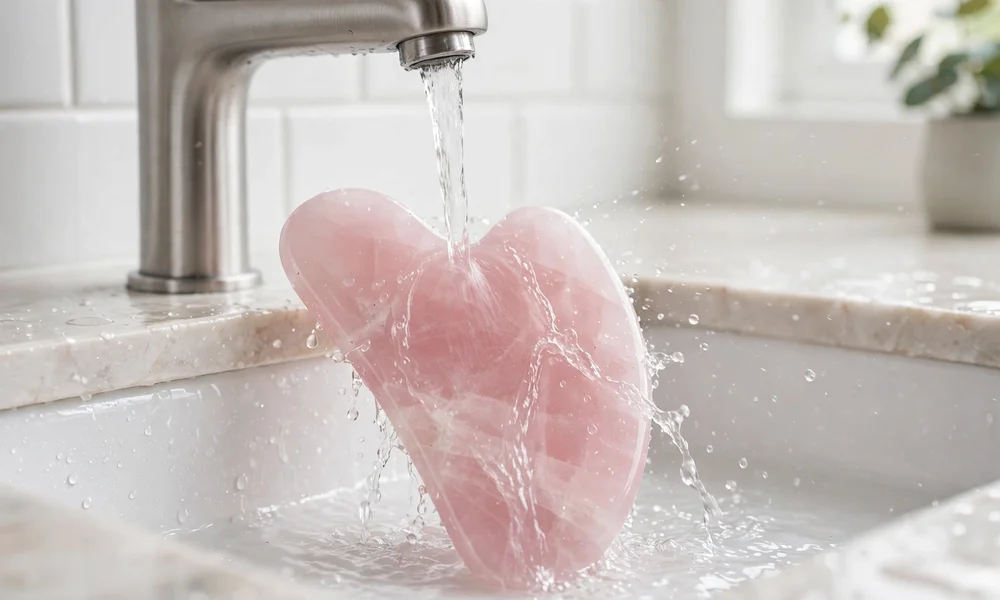
When the routine is done, rinse the stone under lukewarm water to wash away any mist, moisturiser, or skin oils. Use a drop of mild soap if you like, then rinse well and pat the stone dry with a soft towel. Let it air dry fully before putting it away.
Store the stone in its pouch or on a clean towel, away from hard surfaces where it could chip. Do not leave it in a damp bathroom corner, and do not drop it on tiles. A stone that is kept clean and dry stays smooth, and a smooth stone is a gentle stone.

What Gua Sha Will Not Do
Be honest about what gua sha can and cannot do. It will not lift the face, erase lines, cure spots, or reshape the jaw. It will not detox the body, drain anything harmful, or fix a skin condition. It is a gentle routine, and its value is the calm of the few minutes and the pleasure of cool water on the skin.
Jade rolling is a close cousin of gua sha, described in jade stone facial rolling for beginners, and the honesty is the same there: a roller is a simple tool for a calm moment, not a promise of change. Gua sha is no different, and no face tool should ever be sold or used as a cure.
| Routine step | Water beside | Stone care |
|---|---|---|
| Wash face first | Lukewarm water first | Rinse stone clean |
| Mist skin lightly | Mist face again | Pat dry cloth |
| Glide stone slowly | Keep skin damp | Store in pouch |
| Rest and breathe | Sip water slowly | Keep out sun |
Your Gua Sha Water Checklist
- Wash your face with lukewarm water and leave the skin slightly damp.
- Mist the skin lightly with plain water so the stone glides smoothly.
- Use feather-light pressure only, and never use the stone on broken skin.
- Glide slowly outward and upward, three or four strokes per area.
- Rinse the stone after every use, pat it dry, and store it safely.
- Keep the routine short, about five minutes, and stop if skin feels sore.
Frequently Asked Questions
What is gua sha water?
Gua sha water is a gentle face routine that pairs a smooth, flat gua sha stone with plain water or a water-based mist. The water lets the stone glide across damp skin without pulling, and the strokes are slow, light, and outward.
Is gua sha safe for sensitive skin?
Gua sha can be gentle enough for sensitive skin if the pressure is feather-light and the skin is damp, but skip it if the skin is broken, irritated, sunburned, or sore. If you are unsure, try one very light stroke on the cheek and wait a day.
How much pressure should I use?
Use feather-light pressure only, about the weight of the stone itself. The stone should glide smoothly, never scrape or press hard. If the skin turns red or feels sore, the pressure is too much.
Can I use gua sha on dry skin?
No, never use gua sha on dry skin. Always work on damp or moisturised skin, with a water mist or a light water-based lubricant, so the stone glides without pulling or dragging.
How often should I do gua sha?
A few times a week is enough for most people, for about five minutes at a time. Daily use is fine if the pressure stays light and the skin feels comfortable, but stop for a few days if the skin feels sore.
How do I clean my gua sha stone?
Rinse the stone under lukewarm water after every use, with a drop of mild soap if you like, then pat it dry with a soft towel and let it air dry. Store it in a pouch or on a clean towel away from hard surfaces.
The Bottom Line
Gua sha water is a quiet morning habit: a clean face, a fine mist, a cool stone, and slow, light strokes. It costs almost nothing, and it asks for only five gentle minutes.
Try it tomorrow morning, and let the day begin slowly.
A Note for Calm Mornings
Keep it gentle, keep it damp, keep it slow. The mirror will still be there tomorrow, and the stone will still be cool, and the morning will still be yours.