Some days are made to be spent outside, with your hands in the soil and the sun moving slowly across the leaves. The garden does not hurry: one pot watered, one bed weeded, one seedling checked. A garden day asks for patience, not speed, and a quiet green stone fits that pace.
Green aventurine looks like it belongs in a garden. It is a soft green quartz, smooth and cool, with a gentle leafy colour and fine golden speckles. Set it on a dish beside your pots, and it gives your eyes a calm green place to rest.
This guide explains what green aventurine is, how to choose one for the garden, how to keep it safely beside water, and how to build a gentle garden-day rhythm around it. The stone is for display only, never a treatment, and it will not heal anything or make plants grow.
Key Takeaways
- Green aventurine is a soft green quartz, smooth and cool, with a leafy colour and golden speckles.
- Its fresh green suits garden days: outdoor hours beside plants, soil, and water.
- The stone stays beside drinking water, never in it; this is the only safe way.
- A garden day needs very little: one stone, one glass of water, and one task at a time.
- The stone is for display and handling only; it will not heal anything or help plants grow.
What Green Aventurine Is
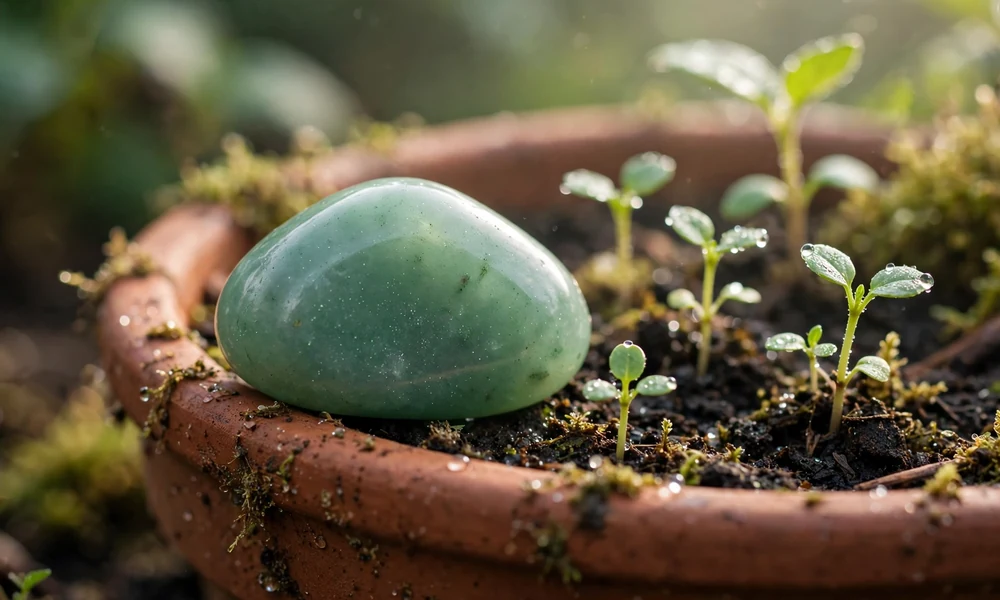
Green aventurine is a variety of quartz, one of the most common minerals on earth, coloured a soft green by tiny traces of minerals held inside the stone as it formed. The best pieces are a clear, even leafy green, sometimes pale, sometimes deeper, with fine golden speckles. It is usually sold as smooth polished tumbled pieces.
Hold one up to the light and the green glows softly, like leaves in morning sun. That is the whole charm: a stone to hold, look at, and keep on a dish beside your plants.
Why Fresh Green Suits Garden Days
Fresh green suits garden days because the stone and the garden speak the same colour. Green is the colour of new leaves and fresh growth, and a small green stone on the table feels like part of the garden. When you look up from the soil, the stone is there, steady and green.
A garden day also suits green aventurine because the stone is simple. It needs no preparation and no long ceremony. It is simply there in the morning light, waiting on its dish while you work. Indoors, the same green stone suits dull-skin mornings, as in green aventurine glow water for dull skin.
The Safety Rule First: Never in Water
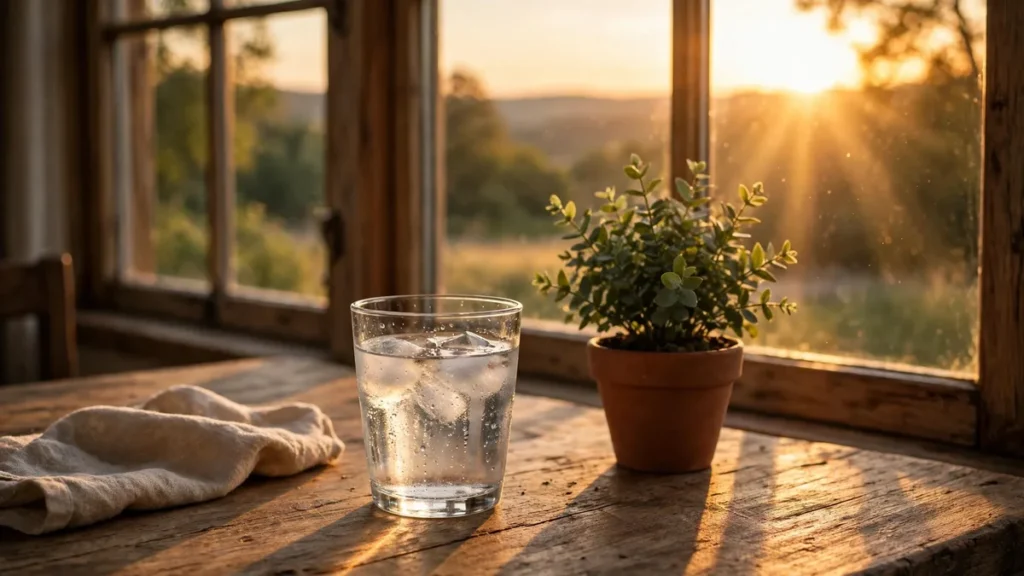
This is the most important part of this article. Green aventurine stays beside drinking water, never in it. Keep a glass of fresh water on the garden table, and the stone on its dish beside the glass, where you can see them both. The water stays plain and safe to drink, and the stone stays dry.
The same beside-water-only rule applies to every stone. Malachite must never go in water or elixirs at all. Other stones must never touch drinking water or soaks either, including apatite, lepidolite, which contains lithium, pyrite, angelite, and amber. Keep every stone dry and beside the glass.
Choosing a Garden Stone
Choose a stone you can see clearly before you buy it, in daylight if you can. Look for an even soft green, a smooth polish with no sharp edges, and a size that fits in your palm. Its colour should look like leaves, not paint. Be wary of stones that look too bright, with a flat electric green or a plastic shine.
Buy from a trusted seller who makes no medical claims, and ask for a photograph of the actual piece online. A garden stone lives outdoors in sun and dust, so a sturdy piece is better than a thin one.
Setting Up a Garden Corner
A garden corner takes only a few minutes to set up, and it starts the evening before. Clear a small space on the garden table, and put back only what the day needs: the stone on its dish, a glass of water, a notebook, and a pencil. Keep the watering can nearby, filled and ready.
In the morning, sit down slowly, drink your water, and look at the stone. Then write down the one garden task that matters most today, in a single short line, and let that line lead the day.
A Morning in the Garden
A garden morning is best taken slowly. Begin with the watering, while the air is still cool and the soil can drink before the sun grows strong. Move from pot to pot, giving each plant what it needs, and let the stone sit on its dish where you can see it. Then check the seedlings for new leaves.
Between tasks, pause for a minute. Stand up, stretch, look across the garden, and drink some water. The same slow start runs through aventurine green luck for calm mornings, where a green stone rests beside water before a quiet day.

Watering Plants and Drinking Water
Watering plants and drinking water belong together on a garden day, but they must never be mixed up. The plants get the watering can, and you get your own clean glass, filled fresh from the tap. The stone sits beside your glass, never in it, and never in the watering can either. A stone in a can could chip or block the spout.
Keep the two waters apart: the can stays by the beds, and your glass stays on the table by the stone. Refill each in its own place when it runs empty.
Green Aventurine at a Glance
| Soft leaf green | Golden speckles | Garden day |
|---|---|---|
| Smooth tumbled quartz | Cool in hand | One garden task |
| Beside water only | Never in elixirs | Water plants first |
| Dish on table | Dry cloth clean | Drink water often |
Afternoon Shade and Rest
By afternoon the sun is high, and a good garden day slows down. Move the stone and your glass into the shade, so neither sits in harsh direct sun. Strong sun can heat a stone until it is uncomfortable to hold, and warm your drinking water.
Rest in the shade with your notebook, and write down what you noticed: which plant grew, which pot dried out fastest, and what to do tomorrow. A garden notebook becomes a quiet record of the season, written one calm afternoon at a time.
Cleaning and Caring for the Stone
Cleaning green aventurine is simple, because everything is dry. Dust the stone with a soft, dry cloth once a week, and wipe off any soil. Do not use soap, cleaning sprays, or harsh scrubbing, and do not soak it. A quick wipe after each garden day is enough.
Store it indoors overnight on its dish or in a soft pouch, away from harder stones. Never cut, grind, or break the stone, and wash your hands after handling it, especially before eating.

What It Will Not Do
Be honest about what green aventurine will not do. It will not heal anything: it will not cure an illness, ease a medical condition, or make a scattered day calm on its own. It will not help your plants grow, keep pests away, or change the soil. It is a beautiful green quartz stone, and no honest seller should claim otherwise.
The quiet is the part that helps, in an ordinary way: a clear corner can steady a busy day, and one clear task can keep the garden hours calmer. Plants grow because you water them.
Buying Honestly
Buy green aventurine honestly, and expect honest sellers to do the same. A good seller will tell you the stone is a natural quartz, show you the actual piece before you pay, and never promise that it heals, protects, or changes your health or your garden. If a seller makes medical claims, walk away.
Prices vary with size and colour, and a small piece costs less than a large display piece. The grounding garden habit runs through unakite grounding garden days, where a different stone keeps the same slow outdoor pace.
Your Garden Day Checklist
- Clear the garden table each night, the stone on its dish, and the notebook open.
- Keep the stone beside your glass of water, never inside it.
- Write down one garden task for the day, in a single short line.
- Water the plants first, while the morning air is still cool.
- Drink water through the day, and wash your hands after handling the stone.
- Remember the stone will not heal anything; the garden work is the part that helps.

Frequently Asked Questions
What is green aventurine?
Green aventurine is a variety of quartz, coloured a soft leafy green by tiny traces of minerals inside the stone as it formed. It is usually sold as smooth polished tumbled pieces, often with fine golden speckles.
Can I put green aventurine in drinking water?
No, never. Green aventurine stays beside drinking water, never in it. Keep the stone on its dish beside the glass. If a piece ever falls into a glass by accident, throw the water away, wash the glass, and wash your hands.
Is green aventurine different from the stone in calm morning guides?
Yes, the stone is the same, but the day is different. Aventurine green luck for calm mornings keeps the stone indoors for a slow morning, while this guide takes the same stone outside into the garden, beside plants, soil, and a watering can.
How is it different from green aventurine for dull skin?
The dull-skin guide in Green aventurine glow water for dull skin keeps the stone indoors beside a glass while you wake up and care for your skin. This guide is about outdoor garden hours, planting and watering, not about skin at all.
How do I clean a garden stone?
Dust it with a soft, dry cloth once a week, and wipe off soil after each garden day. Never use water, soap, or cleaning sprays on it, and never soak it. Store it indoors overnight on its dish or in a pouch.
Will green aventurine help my plants grow?
No, it will not help your plants grow, keep pests away, or change the soil. Plants grow because you water them, give them light, and tend them. The stone is a calm companion on the table, and the garden work makes the difference.
The Bottom Line
Green aventurine is a fresh green quartz stone full of calm colour, and a garden day is one task at a time, taken slowly.
Put the stone on its dish, pour the water, and step into the garden.
A Note for Garden Days
Keep it green, keep it gentle, keep it growing. The garden will do the rest.