A steady day moves at the pace of the kettle and the clock. The same mug comes down from the same shelf, the same chair waits in the same patch of light, and the small jobs of the house follow one another in their usual order.
Axinite is a stone that fits that unremarkable goodness. It is a warm brown borosilicate mineral, honeyed at the edges and deeper at the core, whose crystals grow in sharp flat wedges like the blade of a small axe. That wedge shape is where its name comes from, and it is the first thing you notice when a piece catches the light.
This guide looks at axinite in plain words: what the mineral is, how to choose a piece, and how to keep it on a tray beside a glass of water. It is a handsome object to look at and hold for a moment, and it treats nothing in the body.
Key Takeaways
- Axinite is a warm brown borosilicate with sharp wedge-shaped crystals, honeyed at the edges.
- Its warm brown suits steady days, plain routines, and hours that move slowly at home.
- Axinite is something to admire and pick up for a moment; it heals nothing and treats nothing.
- Keep the drinking water in its glass, and keep the stone dry and apart from it.
- One piece is plenty for a steady day.
What Axinite Is
Axinite is a borosilicate mineral, a stone built from boron and silica that forms in flat, sharp-edged crystals. The Greek word for axe gave it its name, because a finished crystal looks like a little axe head, one edge thin and keen, the other thick where it joins the rock. Most pieces sold for the home are a warm clove brown.
A polished piece feels cool and smooth in the palm, with a glassy shine that deepens as you turn it. A rough cluster is different: its wedges stand up at angles, and the edges can catch a fingertip, so handle it with care.
Why Warm Brown Suits Steady Days
A bright stone would argue with that mood, and a pale one would disappear into the daylight. Warm brown does neither. It holds its corner of the tray through morning light and evening lamplight alike, giving the eye one solid warm place to rest while the hours pass quietly.
Picking an Axinite Piece
Choose a piece in ordinary daylight, turning it slowly so the light moves across the wedges. The brown should stay warm from every angle, honeyed where it is thin and deeper where it is thick, with no dull grey wash and no painted-looking surface.
Pick a piece that fits comfortably in a closed hand, about the size of a plum, and run a fingertip along its edges to learn where they are sharp. Ask the seller where the piece was found, and walk away from any promise about your health.

A Steady Day with Axinite
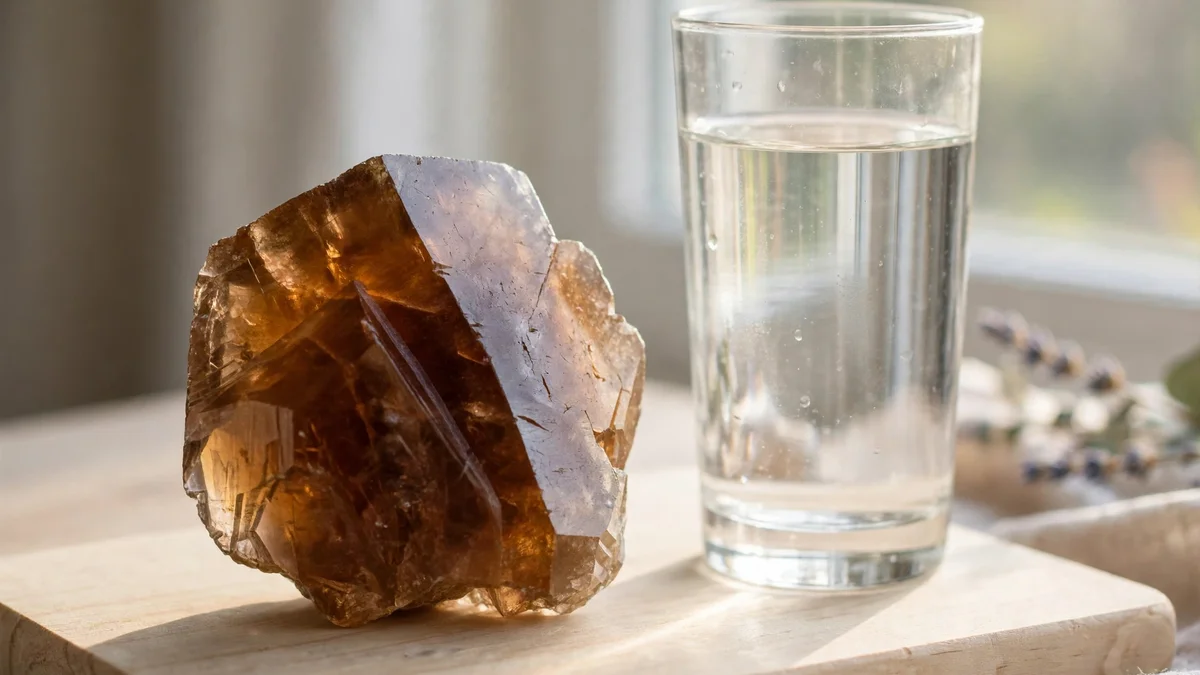
Set a small wooden board near the window, the stone at one end and a tall glass of water at the other. Drink the water in slow sips while the morning settles, and let your eyes rest on the warm brown wedges.
Then lift the stone for a moment, feel its cool weight and its keen edges, and set it back down. There is no ceremony to follow and nothing to finish. The board, the glass, and the stone are the whole plan.
Axinite Beside Water
Put the tumbler at the far end of the board and the axinite at the near end, leaving bare wood in the middle so the drink stays untouched and the mineral stays free of moisture. A board lets the two sit near each other for show; it is not a basin, and nothing is ever dipped in it.
After handling the piece, clean your hands with soap before you reach for your drink, and never drop the mineral into a tumbler, a jug, or a bath. Wetness would take the gloss off and might snap a thin edge.
Axinite at a Glance
| Warm brown wedges | Tray, shelf, desk | Display only |
|---|---|---|
| Honey tones, glassy | Slow days, soft light | Keep it dry |
| Sharp-edged crystal | Steady hours, calm | Hands washed after |
| Palm-sized piece | Water beside it | Never in drinks |
Axinite and Brown Jasper
Brown jasper for steady days wears the same warm brown and the same steady-days mood, so the pair can look alike in a photograph at first. Their minerals differ, though, and one look shows the gap between them once held. Brown jasper comes from the quartz family, its chestnut tone set by iron held deep in the rock, and it shows one flat, unbroken colour, free of stripes, speckles, or scenes.
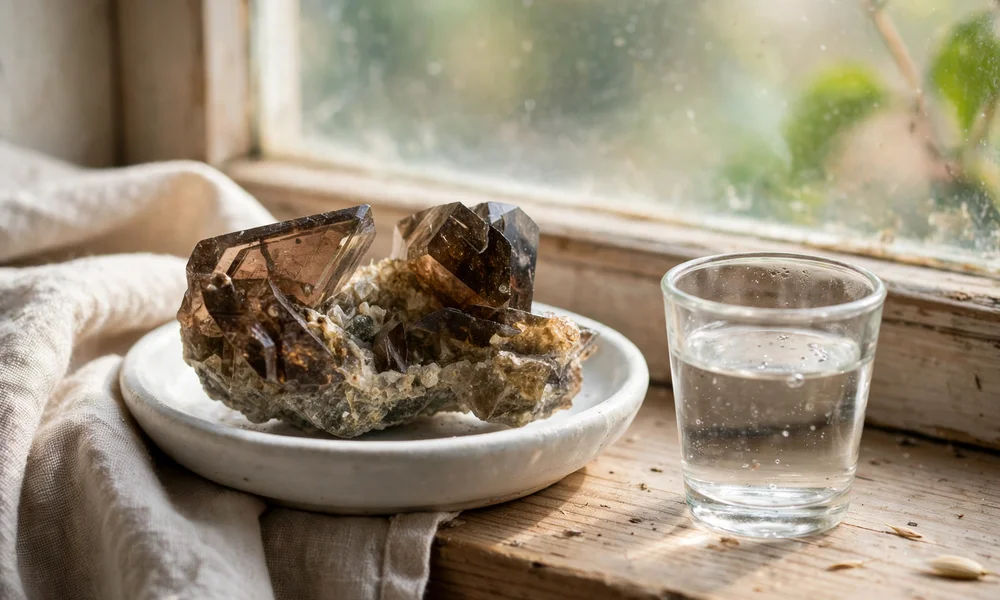
Axinite is a borosilicate, and its sharp wedge crystals are the easiest way to tell the two apart. Brown jasper keeps a single chestnut tone edge to edge, much like polished walnut, while axinite breaks its brown into angled planes that flash as the piece is tilted.
Axinite and Brown Onyx
Brown onyx for steady days is the other warm brown neighbour, a banded chalcedony laid down in thin layers. Its bands run in cream, caramel, and deep chestnut across the surface, giving the brown a quiet rhythm to follow with the eye. Where brown onyx shows its pattern openly, axinite shows its shape.
Brown onyx is smooth and banded, its cream and caramel lines running across a polished face. Axinite is angular and wedge-shaped, its flat crystal faces meeting at sharp edges. One is brown with a pattern, the other is brown with corners, and the two suit the same steady day in different ways.
Axinite and the Other Brown Stones
The brown shelf holds more stones still, and none of them is this wedge-shaped mineral. Brown jade for steady days is a dense nephrite, earthy and chestnut brown, with a soft waxy glow and darker veins wandering through it like grain in oak. Chocolate calcite is a deep cocoa brown calcite with pale bands, softer than axinite and smooth all over.
Smoky topaz is a clear, faceted warm brown topaz, bright and glassy where axinite is wedge-shaped and earthy. Smoky quartz is a soft grey-brown stone for a grounding morning ritual, and it is rinsed under running water in its own guide, a treatment axinite must never receive. Axinite stands apart by being brown, sharp-edged, and wedge-shaped at once.

Where Axinite Sits at Home
Give axinite a quiet corner that catches gentle daylight: the top of a low bookcase, one end of a work desk, or a small tray on a chest. The piece should be easy to see and hard to knock, with nothing brushing past it.
Keep that corner far from the kitchen sink, the kettle's steam, and damp bathroom air, and high enough that little hands cannot reach a keen edge. A spiky cluster does best where nobody walks close in dim light.
Keeping Axinite Clean and Dry
Looking after axinite is a light job. Once a week, pass a dry, soft cloth over it and leave it at that — no soap, no polish, no sprays, and no scrubbing, because moisture and cleaners take the gloss away and can chip a thin edge.
Between displays, wrap the piece in its own soft cloth bag, kept apart from keys, loose change, and tougher stones that might mark it. Strong sunlight through glass can bleach the brown over time, so choose a shaded shelf, and keep the piece out of taps and basins altogether.
Stones That Must Stay Dry
Not every mineral is happy near a drink, and some carry substances that should stay far from your mouth. Malachite's green bands hide copper, which must never enter a glass. Hematite left damp will freckle with rust and mark whatever it rests on.
Angelite softens and wears away when wet, and amber — fossilised tree resin rather than stone — turns cloudy and dull after a long soak. Apatite is too fragile for baths, lepidolite hides lithium in its flaky layers, and pyrite dulls and rusts in damp air. Axinite follows the same rule as all of them: it rests beside the tumbler, dry, and never inside it.
Your Steady Days Checklist
- Lay the axinite on a dry board, a full glass standing apart.
- Sip the water slowly while the morning light grows.
- Lift the stone, look at it once, then put it back down.
- Wash your hands with soap after the stone is back on its board.
- Tuck it in a cloth bag alone, far from keys and hard stones.
- When a health worry lingers, ask a doctor; a stone mends nothing.

Frequently Asked Questions
What is axinite?
Axinite is a warm brown borosilicate mineral whose crystals grow in sharp flat wedges like the blade of a small axe. A polished piece is smooth and glassy, cool when lifted, honeyed at the edges.
How is axinite different from brown jasper?
Brown jasper is a dense quartz with one flat chestnut colour and nothing to study inside it. Axinite is a borosilicate built of pointed wedges, so although both wear warm brown, one is smooth and unbroken while the other is all angles.
How is axinite different from brown onyx?
Brown onyx is a banded chalcedony, smooth and polished, with cream and caramel bands running across its surface. Axinite is angular instead of banded, its flat crystal faces meeting at sharp edges that catch the light as the piece turns.
How is axinite different from smoky quartz?
Smoky quartz is a soft grey-brown stone used in a grounding morning ritual, and its own guide rinses it under running water. Axinite is a warmer brown borosilicate with sharp wedge crystals, and it must stay dry, never rinsed or soaked.
Is axinite safe to hold?
A short hold suits most people, as long as you mind the keen edges on a rough cluster. Set the piece back on its tray when you are done, clean your hands with soap, and store it out of children's reach and away from meals and drinks.
Where should I keep axinite at home?
Find a quiet, dry corner for it — a low bookcase top, a desk end, or a small tray on a chest. Leave a gap between the tumbler and the piece, guard the stone from damp and bumps, and keep the tray shaded from harsh sun.
The Bottom Line
Axinite gives steady days a warm brown companion: one wedge-shaped stone in soft light, a glass of water beside it, never in it.
A Note for Steady Days
Keep the day slow and the stone dry: one warm brown axinite, one glass of water, a few unhurried hours.


