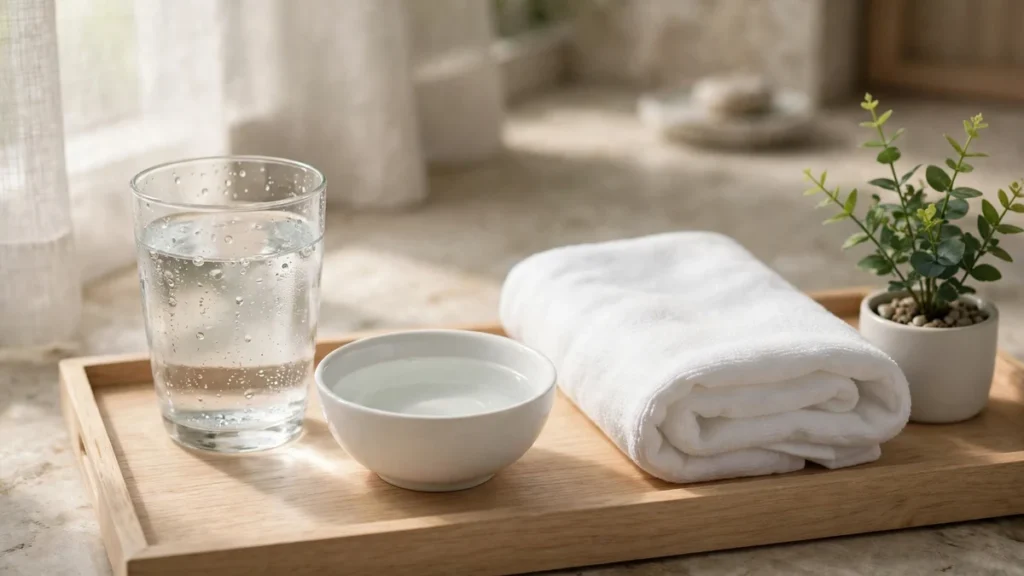
Every wash begins with the same small choice: turn the tap hot, warm, or cold. It takes two seconds, and most of us make it without thinking, yet the skin notices the difference.
Hot water feels good on a cold morning. Cold water feels sharp and waking on a warm day. Warm water, in between, feels like nothing at all — and that quiet feeling is often the kindest choice.
This guide to water temperature skin explains how hot, warm, and cold water feel on the skin, and why lukewarm water is the gentlest daily default. It is general information only, never medical advice.
Key Takeaways
- Water temperature skin means how hot, warm, and cold water each feel on the skin.
- Lukewarm water is the gentlest daily choice for washing the face and body.
- Very hot water strips natural oils and can leave skin tight, dry, and irritated.
- Ice-cold water is a shock, not a daily wash, and it suits only a brief splash.
- Wash briefly, pat dry gently, and moisturise while the skin is still slightly damp.
What Water Temperature Skin Means
Water temperature skin is a simple idea: the temperature of the water you wash with changes how your skin feels afterwards. The skin is covered in a thin layer of natural oils that keep moisture in. Water can wash those oils away, and hotter water washes them away faster.
Think of washing a greasy pan: hot water cuts grease quickly, and that is useful for a pan. On skin, the same effect is less welcome, because the oils on your skin are there for a reason. Lukewarm water cleans without stripping.
Why Lukewarm Wins Most Days
Lukewarm water feels neither hot nor cold on the inside of your wrist — close to body temperature and comfortable. It rinses away sweat, dust, and the night's oils without shocking the skin or stripping it bare.
Most skin feels calm after a lukewarm wash: clean, soft, and neither tight nor flushed. It suits dry, oily, and sensitive skin alike, because it asks so little. If you remember only one thing, remember this: when in doubt, choose lukewarm. The same calm habit sits at the heart of thermal spring water for skin, where gentle water is used well.
How Hot Water Feels on Skin
Hot water feels wonderful at first. On a cold morning, a hot shower warms the whole body and loosens stiff shoulders. The skin turns pink, the steam rises, and for a few minutes everything feels easy.
But hot water is a strong cleanser, and strong is not always kind. It strips the natural oils quickly, and after the warmth fades the skin can feel tight, dry, and itchy. People with dry or sensitive skin notice this first. A long, very hot shower is lovely while it lasts, and drying once it ends.

The Problem with Very Hot Water
Very hot water does more than dry the skin. It can irritate sensitive skin, redden cheeks that flush easily, and make itching worse. It can also leave the skin less able to hold moisture, so the dryness lasts long after the shower.
The rule is simple: if the water makes your skin turn red, or if the mirror steams up thickly and the room feels like a sauna, the water is too hot. Turn it down until it feels warm, not hot, on your wrist. Save hot water for the radiators, not for your face. Short, warm washes protect the skin far better than long, hot ones.
How Warm Water Helps
Warm water is the middle ground, and it does most of the work. It is warm enough to rinse away sweat and grime, but cool enough to leave the skin's natural oils mostly in place. A warm wash feels comfortable, and the skin afterwards feels clean and calm.
Warm water also suits cleansing best. A gentle cleanser works well in warm water, rinsing clean without leaving the skin tight. Use warm water for your face morning and evening, and for your body in the shower.
How Cold Water Feels on Skin
Cold water feels sharp, waking, and alive. A cold splash on the face in the morning can feel like a small shock that clears the sleep from your eyes. The skin tightens for a moment, and you feel awake.
That waking feeling is real, and many people enjoy it. But cold water is not a good daily wash: it does not rinse away oils and grime as well as warm water, and it can leave the skin feeling chilled and tight. Enjoy it as a brief splash, not a long wash. A careful cold splash, as in ice water for puffy eyes in the morning, is a short moment, never a routine.
The Problem with Ice-Cold Extremes
Ice-cold water is an extreme, not a habit. Plunging the face into ice water, or standing under a freezing shower for minutes, shocks the body: the breath catches, the heart beats faster, and the skin can go numb.
For most people, that shock is unpleasant and unnecessary. For people with heart or circulation problems, it can be risky, and they should talk to a doctor before trying any cold plunge or ice bath. Cold water has its place — a brief splash, a cool rinse on a hot day — but ice-cold extremes are not a daily step. The full-body version carries real risks, explained in cold plunge skin for beginners.
Testing the Temperature First
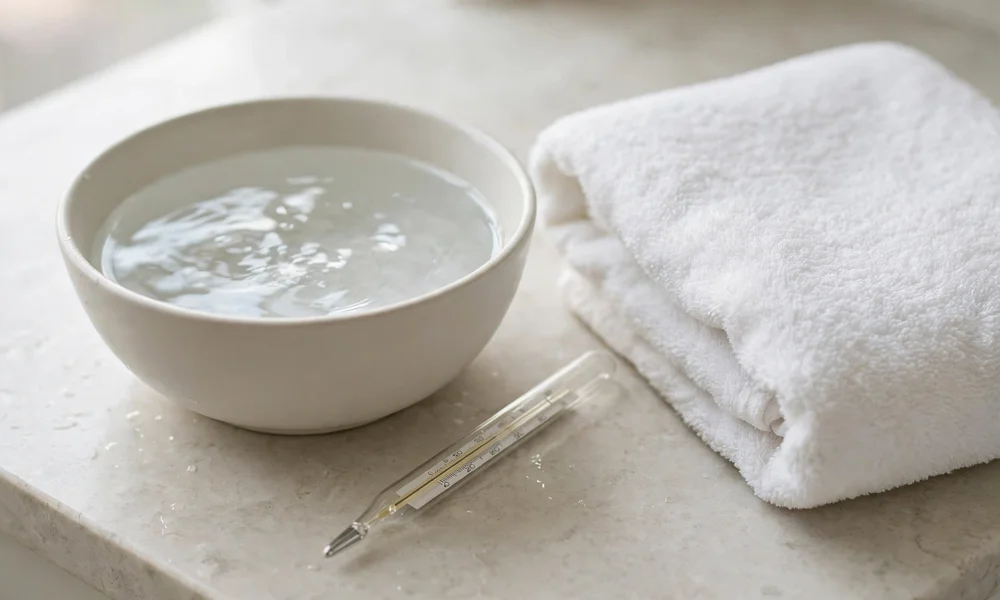
Testing the water takes five seconds. Run the water over the inside of your wrist, where the skin is thin and sensitive. It should feel warm and comfortable, never hot or stinging.
For a bath, test with your wrist or elbow before stepping in. For a shower, test the water on your hand before you step under it. For a face wash, splash a little on your cheek first. If you flinch, the water is too hot or too cold. Adjust, test again, and only then begin.
A Gentle Daily Wash Routine
A gentle daily wash is short, warm, and simple. Wet the face with lukewarm water, use a small amount of a mild cleanser, and massage it softly for half a minute. Rinse with lukewarm water, and pat the skin dry with a soft towel instead of rubbing.
That is the whole routine, morning and evening. No scrubbing, no very hot water, no ice water. Keep the water lukewarm, the wash short, and the towel soft. The skin does not need drama; it needs consistency, and a quiet routine does more than any extreme.

After the Wash: Moisturise Gently
What you do after washing matters as much as the water itself. While the skin is still slightly damp, apply a light moisturiser with clean hands, smoothing it gently over the face and neck. Damp skin holds moisture better.
Choose a plain, fragrance-free moisturiser if your skin is sensitive, and use only a small amount: a thin, even layer is enough. In the morning, follow with sun protection when you go outside. Moisturiser seals in the comfort of a lukewarm wash.
Water Temperature Through the Seasons
The best water temperature changes a little with the seasons, but lukewarm stays the default. In winter, when the air is cold and dry, keep the water warm, not hot, and keep showers short. Hot water feels tempting in winter, and that is when it dries the skin most.
In summer, a cooler wash can feel refreshing. Try lukewarm to cool water, never ice-cold, and enjoy the freshness without shocking the skin. In spring and autumn, lukewarm suits most days. Let the season nudge the temperature, never push it to an extreme.
What Water Temperature Will Not Do
Be honest about what water can and cannot do. Lukewarm water will not cure acne, erase wrinkles, or make skin glow overnight. Cold water will not close pores, and hot water will not open them: pores do not open and close like doors. These are old stories, not facts.
Water temperature is a comfort choice, not a treatment. It can make washing kinder or harsher, but it will not change your skin on its own. Good habits — gentle washing, moisturiser, sun protection, and sleep — work slowly and quietly. If your skin is sore, broken, or worrying you week after week, talk to a doctor.
| Water type | Skin feel | Daily use |
|---|---|---|
| Hot water | Warm, then tight | Avoid daily |
| Lukewarm water | Clean and calm | Best daily choice |
| Cold splash | Sharp and waking | Brief splash only |
| Ice-cold water | Shock and numbness | Not daily care |
Your Water Temperature Checklist
- Test the water on the inside of your wrist before every wash.
- Choose lukewarm water for your face, morning and evening, every day.
- Keep washes short and gentle, and never scrub the skin hard.
- Avoid very hot water: if the skin turns red, turn the tap down.
- Use cold water only as a brief splash, never as a long wash or ice plunge.
- Pat the skin dry softly and moisturise while it is still slightly damp.

Frequently Asked Questions
What is the best water temperature for skin?
Lukewarm water is the best daily choice for most skin. It feels neither hot nor cold on the inside of your wrist, cleans without stripping natural oils, and leaves the skin feeling calm.
Is hot water bad for skin?
Very hot water can be unkind to skin: it strips natural oils, leaves skin tight and dry, and can irritate sensitive skin. Warm water cleans just as well without that drying effect, so keep the tap warm, not hot.
Does cold water close pores?
No. Pores do not open and close like doors, and neither hot nor cold water changes their size. Cold water can make skin feel tighter for a moment, but that feeling is temporary.
Should I wash my face with cold water in the morning?
A brief cold splash can feel waking and fresh, and many people enjoy it. For the actual wash, use lukewarm water to clean properly, then finish with a cool splash if you like the feeling.
How long should a shower be?
Keep showers short, around five to ten minutes, with warm rather than hot water. Long, very hot showers dry the skin more than short, warm ones.
Can ice water help puffy eyes?
A brief, cool splash can feel refreshing on puffy eyes in the morning. Keep it brief and gentle, never plunge the face into ice water, and stop if it feels painful or numbing.
The Bottom Line
Water temperature skin is simple: lukewarm for the daily wash, warm never hot, and cold only as a brief splash.
Turn the tap down, wash gently, and let lukewarm water do the quiet work.
A Note for Gentle Washing
Keep it lukewarm, keep it short, keep it kind. Your skin will notice the difference before you do.