There is a particular kind of tired that only a warm bath seems to understand. Your skin feels dry or dull, and all you want is twenty quiet minutes where nothing needs deciding. A Himalayan salt water soak fits that moment beautifully: warm water, pink mineral salt, and a little unhurried time.
Pink Himalayan salt gets its blush from trace minerals inside the crystals. When those crystals dissolve in warm water, an ordinary bath feels more intentional: the water feels silkier, and afterwards skin often feels softer and looks more awake.
This guide explains how to take a Himalayan salt water soak well and what it can realistically do for your skin: a calm habit that supports soft, glowing skin when done gently and regularly.
Key Takeaways
- A Himalayan salt water soak is warm bath water with dissolved pink Himalayan salt, enjoyed for fifteen to twenty minutes.
- Warm water and dissolved minerals can leave skin softer and fresher, by supporting gentle cleansing and relaxation.
- Use about one cup of fine pink salt for a full bath, keep the water warm rather than hot, and rinse lightly afterwards.
- Soak two or three times a week, moisturise on slightly damp skin, and skip the soak if skin is broken or irritated.
- A salt soak is a supportive ritual, not a medical treatment — check with a clinician first if you have a health condition.
What Is a Himalayan Salt Water Soak?
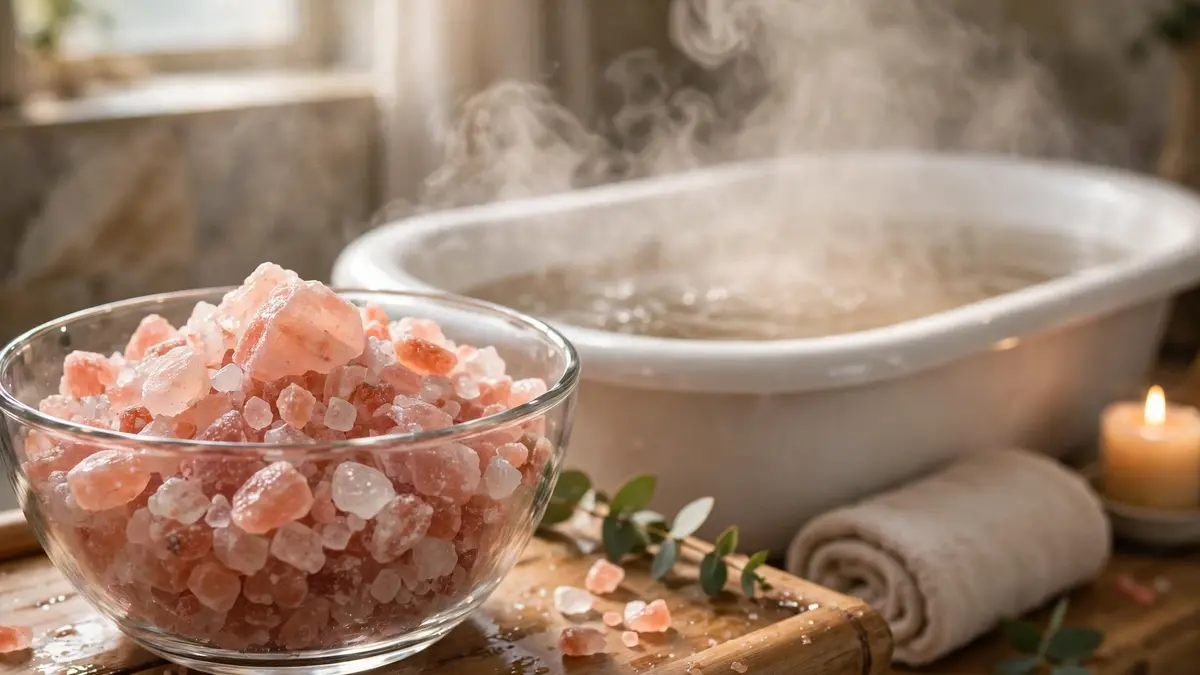
A Himalayan salt water soak is a bath in which pink Himalayan salt has been dissolved in warm water. The salt comes from ancient mineral deposits in the Punjab region. Its pink and rose tones come from small amounts of iron oxide and other trace minerals.
People have bathed in mineral-rich waters for centuries, from hot springs to salt lakes, and a Himalayan salt water soak brings a small echo of that tradition home: just a clean bath, warm water, a cup of salt, and a towel.
The dissolved salt changes how the water feels and helps loosen dry, flaky patches, while the warm water encourages relaxation. Repeated a few times a week, it becomes its own reward: softer skin on soak days and a slower evening.
Why Salt Water Feels So Good on Skin
Warm water softens the outer layer of skin, encourages blood flow near the surface, and helps the shoulders and neck let go of the day. Dissolved pink salt adds a subtle slipperiness many describe as silky, and skin afterwards often feels noticeably softer than after a plain bath.
Part of that softness comes from gentle cleansing. Warm water loosens the dry surface cells that make skin look dull, and dissolved salt helps those cells lift away without scrubbing. This is not harsh exfoliation — never rub salt crystals directly into skin — but the minerals support a mild smoothing, most noticeable on rough areas like elbows, knees, and heels.
Salt soaks also slow you down: twenty still minutes give the nervous system a small pause that often shows as calmer, more rested skin. Drinking water supports skin from within, while a soak and moisturiser support it from outside, so the quiet art of staying hydrated pairs beautifully with an evening bath ritual.

How to Take a Himalayan Salt Water Soak, Step by Step
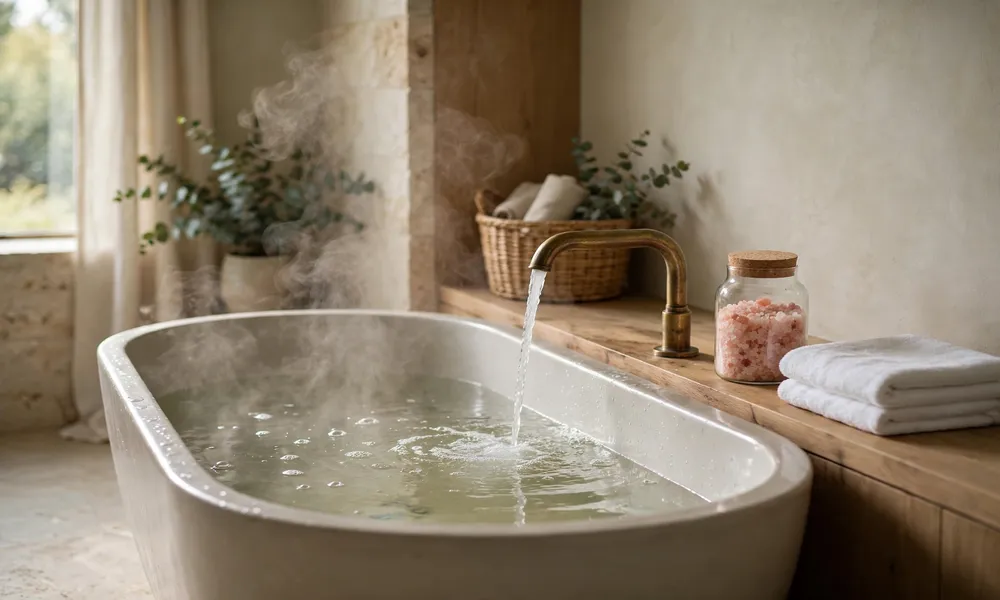
Rinse the bath, then run water that feels comfortably warm on the inside of your wrist, around 37 to 39 degrees Celsius. Water that is too hot can strip skin and leave it tight, so warm is genuinely better than hot. Add the salt while the tub fills so it dissolves fully.
For a full bath, about one cup of fine pink Himalayan salt is a good starting point; half a cup for a half bath, two or three tablespoons for a foot soak. Fine salt dissolves faster than coarse crystals, so choose fine grains and stir until the last crystals disappear. The water should look clear with a faint rosy tint.
Settle in for fifteen to twenty minutes, shoulders below the waterline, screens away. A few drops of lavender oil are a nice extra, but keep additions simple.
When time is up, stand up slowly and rinse briefly with clean, lukewarm water. Pat dry, then smooth on moisturiser or body oil while skin is still slightly damp, so the softness lasts into the next day.
| Soak type | Pink salt | Water temperature | Soak time |
|---|---|---|---|
| Full bath | 1 cup fine salt | Warm, 37–39°C | 15–20 minutes |
| Half bath | 1/2 cup fine salt | Warm, 37–39°C | 15 minutes |
| Foot soak | 2–3 tablespoons | Warm, 37–39°C | 10–15 minutes |
| Hand soak | 1 tablespoon | Warm, 37–39°C | 5–10 minutes |
Two or three soaks a week suits most people. Daily soaks are fine for short periods, but if skin feels dry or tight, ease back to twice a week. Listen to your skin: it will tell you quickly when something is too much.
Himalayan Salt Water Soaks for Different Skin Types
If your skin is dry, keep the water warm rather than hot, stay closer to fifteen minutes, and be generous with moisturiser afterwards. A thicker cream or body oil on damp skin seals in the softness, and skipping soap helps too.
If your skin is sensitive, go gently: half the usual salt, a ten- to fifteen-minute soak, and no essential oils, bath bombs, or fragranced products. Watch how skin responds over the next day, not just the first hour. If it feels calm the next morning, keep the ritual as it is.
Oily or combination skin often enjoys a salt soak most, because warm water and minerals leave skin clean without the stripped feeling harsh cleansers cause. A full twenty minutes is usually comfortable, and a light moisturiser is still worth using — even oily skin needs moisture.
Mature skin loves the warmth and ritual as much as the minerals, and the key is gentleness: lukewarm water, a shorter soak, and a rich moisturiser with shea butter or squalane. Whatever your skin type, the soak should feel soothing during it and comfortable afterwards. Building a routine that respects your skin is a quiet skill, and a skin routine with room to breathe explores that gentle approach alongside a weekly soak.

What a Salt Soak Can and Cannot Do
A salt soak can leave skin softer and fresher, loosen dry surface cells, and support relaxation. These are real benefits, and they are enough — a ritual need not promise miracles.
A salt soak cannot cure skin conditions, erase wrinkles, detox your body, or replace medical care. Claims about drawing toxins out through the skin are not supported by good evidence. The minerals in pink salt are present in small amounts and shape the feel of the water, but they are not a medicine. If you have eczema, psoriasis, or any persistent skin concern, a soak may still be enjoyable, but it complements proper care and never replaces it.
There are also times to skip the soak altogether. Do not soak with open cuts, broken skin, a fresh sunburn, a flaring rash, or a skin infection. Avoid very hot water if you are pregnant, and check with your clinician about baths. People with heart conditions, low blood pressure, or diabetes should ask a clinician before long, hot baths. When in doubt, a short, lukewarm soak or a foot soak is safer.
The glow after a salt soak is real, but it comes from a combination of things: warm water increasing blood flow, gentle smoothing of dry cells, relaxation softening the face, and moisturiser on damp skin.
Common Mistakes to Avoid
The most common mistake is making the water too hot. Hot water feels wonderful at first, but it strips the skin's natural oils and leaves it tight and dry, undoing much of what the soak is for. Warm water is the right temperature — if skin looks flushed when you step out, it was too hot.
Another mistake is using too much salt. More salt does not mean more benefit, and a very salty bath can irritate skin. One cup is enough; if skin feels itchy afterwards, try half a cup. Never scrub with undissolved crystals — they can cause tiny scratches — so let the salt dissolve fully first.
Skipping moisturiser is the third mistake, and the easiest to fix. A soak softens skin, but without something to hold moisture in, the softness fades within an hour. Keep moisturiser beside the bath so applying it becomes part of the ritual. Finally, do not turn the soak into another task to perfect. Wellbeing without the overwhelm makes this point gently: a ritual that adds pressure is not a ritual anymore. Keep the soak simple, keep it short, and let it be enough.

Your Salt Soak Checklist
- Rinse the tub, then run warm water at 37–39°C.
- Add one cup of fine pink salt and stir until it dissolves completely.
- Soak for fifteen to twenty minutes, shoulders below the waterline, screens away.
- Stand up slowly, rinse briefly with clean lukewarm water, and pat skin dry with a soft towel.
- Smooth on moisturiser or body oil while skin is still slightly damp.
- Skip the soak if skin is broken, irritated, or sunburnt; soak two or three times a week.
Frequently Asked Questions
How often should I take a Himalayan salt water soak? Two or three times a week suits most people. If skin feels dry or tight, ease back to once or twice a week.
How much Himalayan salt should I use in a bath? About one cup of fine pink salt for a full bath is a good starting point — half a cup for a half bath, two or three tablespoons for a foot soak. Fine salt dissolves faster than coarse crystals.
Can a Himalayan salt water soak help dry skin? It can help dry skin feel softer, especially with warm water, a fifteen-minute soak, and moisturiser on damp skin afterwards. Skip soap, since it can add to dryness.
Is a salt water soak safe for sensitive skin? It can be, if you go gently: half the usual salt, a ten- to fifteen-minute soak, and no fragranced products. Test once and watch how skin feels the next day.
Should I rinse off after a salt water soak? Yes — a brief rinse with clean, lukewarm water removes salt residue. Pat dry and apply moisturiser while skin is still slightly damp.
Can I take a Himalayan salt water soak every day? Daily soaks are fine for short periods, but most skin does better with two or three soaks a week. If daily soaking brings dryness, take a break.
The Bottom Line
A Himalayan salt water soak is one of the simplest beauty rituals you can keep: warm water, a cup of pink salt, twenty quiet minutes, and moisturiser on damp skin. It leaves skin softer and fresher and gives you a regular pause. Keep the water warm, let the salt dissolve, listen to your skin, and let the ritual stay simple.
A Final Note
The glow you are looking for is rarely found in a complicated routine. Sometimes it is warm water, a little pink salt, and twenty minutes that belong entirely to you.