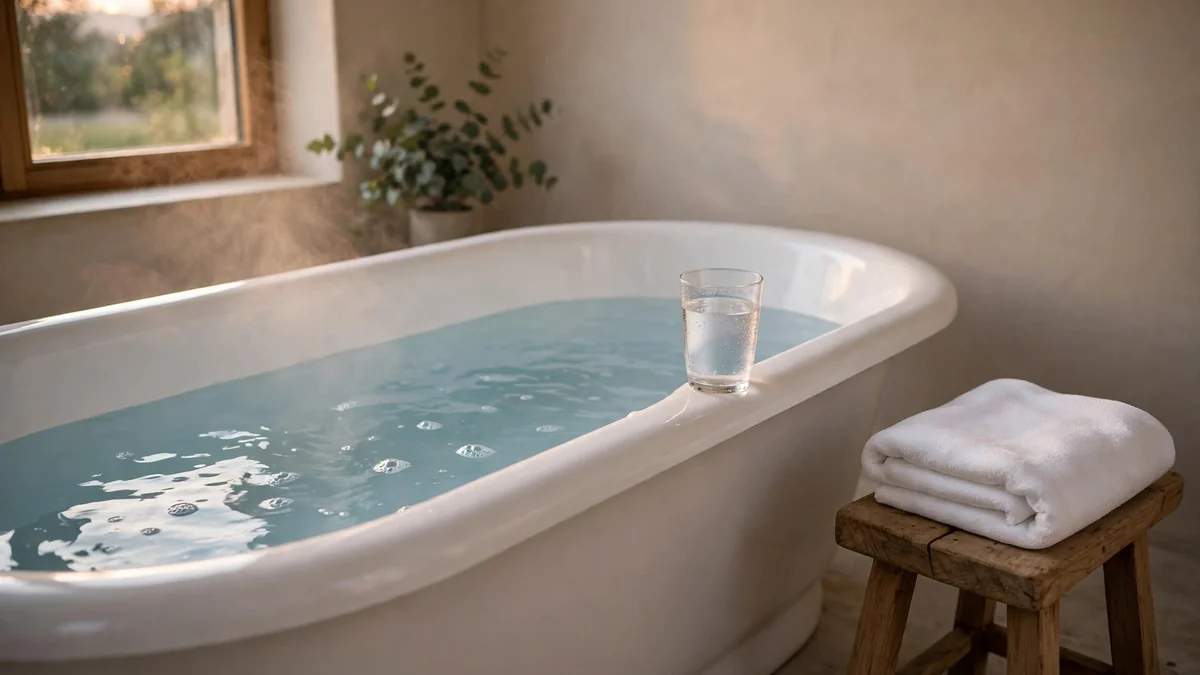
Most baths are rushed. You get home tired, you wash quickly, and you climb out feeling only slightly cleaner than when you climbed in. It was a chore squeezed between work and dinner, not a pause.
A bath time ritual changes that without adding an hour to your day. It is the same bath, taken with a little more intention: five minutes of preparation, water at the right temperature, twenty minutes of quiet soaking, and a few calm minutes afterwards.
This guide shows how to make bath time feel like a ritual on any ordinary evening: preparation, water temperature, the twenty minutes in the tub, and the slow wind-down after work.
Key Takeaways
- A bath time ritual is a short everyday habit: prepare, soak for about twenty minutes, then wind down slowly.
- Warm water at 37–39°C feels comfortable and relaxing; hotter water can leave you drained and dry out skin.
- Prepare the bathroom first, so the bath itself is free of small errands and interruptions.
- Keep the ritual simple: warm water, a clean towel, a glass of water, and quiet are enough.
- A bath is a comfort and a habit, not a medical treatment, and it never replaces rest or care.
What a Bath Time Ritual Is, and Is Not
A bath time ritual is an ordinary bath given a clear beginning, middle, and end: lay out a towel, fill the tub, soak for twenty quiet minutes, then dry off slowly and moisturise. The steps are the same each time, and that sameness is what makes it feel like a ritual rather than a wash.
It is not a long ceremony, and it is not reserved for weekends. The best-known bath on this site belongs to Sunday afternoon: a slow Sunday bath ritual protects one unhurried hour a week. This one is different. It fits a Tuesday after work, a Thursday before bed, or any evening when you have twenty minutes and need to unwind. Short, repeatable, and ordinary is the whole point.
Why Twenty Minutes After Work Works
After work, the body and the mind are still running at daytime speed. Warm water helps because it asks nothing of you: you lie back, the water holds your weight, and there is nothing to answer, fix, or decide for a while.
Twenty minutes is the right length for a weekday. It is long enough to feel warm all the way through and to let your shoulders drop, but short enough to fit between coming home and eating dinner. A bath in the early evening, an hour or two before bed, suits most people well: it marks the end of the working day, and the warmth followed by cooling down afterwards can help the evening feel slow and sleepy.
Preparing the Bathroom in Five Minutes
Prepare the bathroom before you run the water, so the bath itself is free of small errands. Lay out a clean towel and a second towel for your hair, if you like one. Put a glass of fresh water nearby, because warm baths make you thirsty, and set out a plain moisturiser for afterwards.
Tidy the counter a little: a clear surface makes a small room feel calm. Hang the towel where you can reach it without climbing out dripping, and put a dry mat on the floor. Close the door, and leave your phone in another room for the whole twenty minutes.
If your bathroom has a window, let the evening light in; if not, a single warm lamp is kinder than a harsh overhead bulb. You do not need candles, though one small candle is pleasant if you enjoy it. Keep it safe: never leave a flame unattended near towels or curtains.
Water Temperature: Warm, 37–39°C
Water temperature decides whether a bath feels restful or draining. The comfortable range for most people is 37–39°C, close to body temperature and just above it. At that warmth the water feels welcoming, your muscles can relax, and you can soak for twenty minutes without feeling overheated.
Hotter water feels good for a minute and then works against you. Water above 40°C can leave you dizzy when you stand up and make your skin feel tight and dry afterwards. If your skin looks flushed or feels tight after a bath, the water was probably too hot, so turn it down next time.
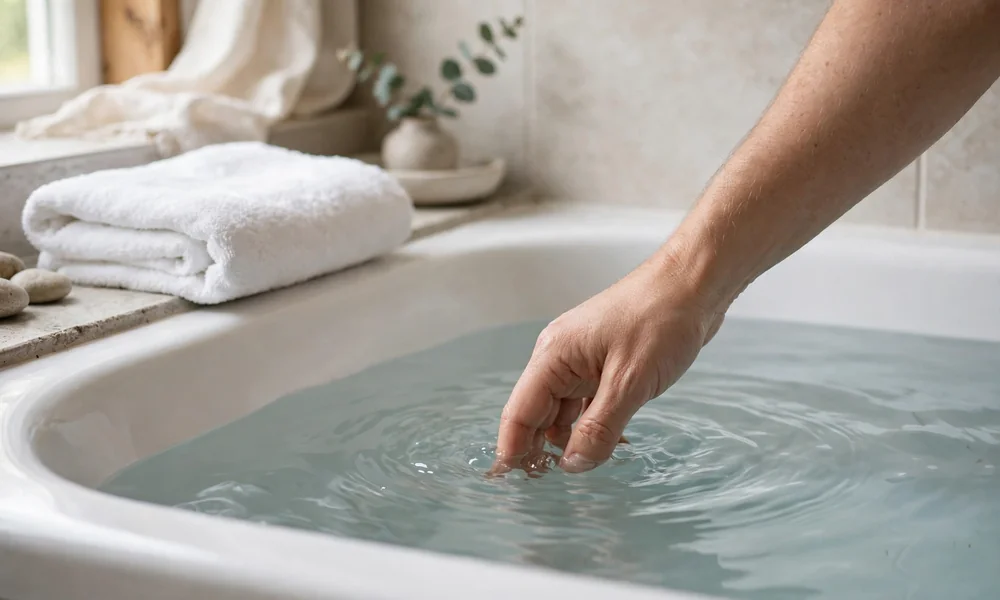
Test the water with your wrist before you get in; it feels heat more honestly than your hand. Run the bath to cover your shoulders when you lie back, and top it up with a little warm water halfway through if it starts to cool.
The Twenty-Minute Bath, Step by Step
Run the bath warm, not hot, and let it fill while you finish preparing. Step in slowly and give yourself a few minutes to settle: breathe, let your shoulders drop, and let the water do its quiet work. Wash gently with a mild soap, rinse, and then simply rest.
Keep the bath quiet. A book or gentle music suits a ritual bath well. Keep your phone in another room, so the twenty minutes stay free of messages, news, and work. If thoughts about tomorrow keep arriving, let them pass without answering them.
| Stage | Time | What to do |
|---|---|---|
| Prepare | 5 minutes | Lay out towels, water, moisturiser; tidy the counter |
| Fill | 5 minutes | Run warm water at 37–39°C; test with your wrist |
| Settle | 3 minutes | Step in slowly, breathe, let shoulders drop |
| Soak | 17 minutes | Wash gently, rinse, then rest in the water |
| Step out | 5 minutes | Stand slowly, dry off, drink some water |
Scent, Sound and Light
Small touches make a bath feel like a ritual, and they need not cost anything. A few drops of a plain bath oil or a handful of bath salts can make the water feel silkier. Choose one thing you enjoy and keep it the same each time, so the scent itself becomes a signal that the working day is over.
Sound matters too. Some people prefer silence, and that is a fine choice. Others like soft music playing quietly. What matters is that the sound is calm and chosen by you, not the noise of notifications or a television left on. If you enjoy a stone nearby while you soak, a rose quartz bath ritual for soft skin describes a gentle way to keep a stone beside the tub, never in the water.
After the Bath: Skin and a Slow Evening
What you do after the bath matters as much as the bath itself. Pat your skin dry gently with a soft towel, pressing rather than rubbing, and moisturise while it is still slightly damp. That is when moisturiser works best. Use a plain, gentle moisturiser, and take your time.
Wrap your hair in a towel and let it dry on its own. Put on soft, comfortable clothes, and drink the glass of water you set out earlier, slowly. Then sit somewhere comfortable for ten minutes and do nothing much at all.
Keep the rest of the evening slow too: a simple meal, a short walk, or a quiet hour with a book. If your bath is part of a wider wind-down, a five-step night routine with stone and water gives the evening a gentle shape after the bath. Avoid filling the hour after your bath with chores or screens.
What a Bath Time Ritual Will Not Do
Say plainly what a bath time ritual will not do. It will not cure insomnia, anxiety, sore muscles, or any skin condition, and it will not undo a hard week or a bad day at work. It will not replace sleep, movement, or medical care, and it will not fix a difficult problem simply because you spent twenty minutes in warm water.
What it can do is simpler: twenty minutes of quiet, skin that feels clean and soft, and a calmer evening. It can mark the end of the working day more clearly than changing clothes or turning on the television. If a health concern is persistent or worrying, please speak to a qualified health professional.
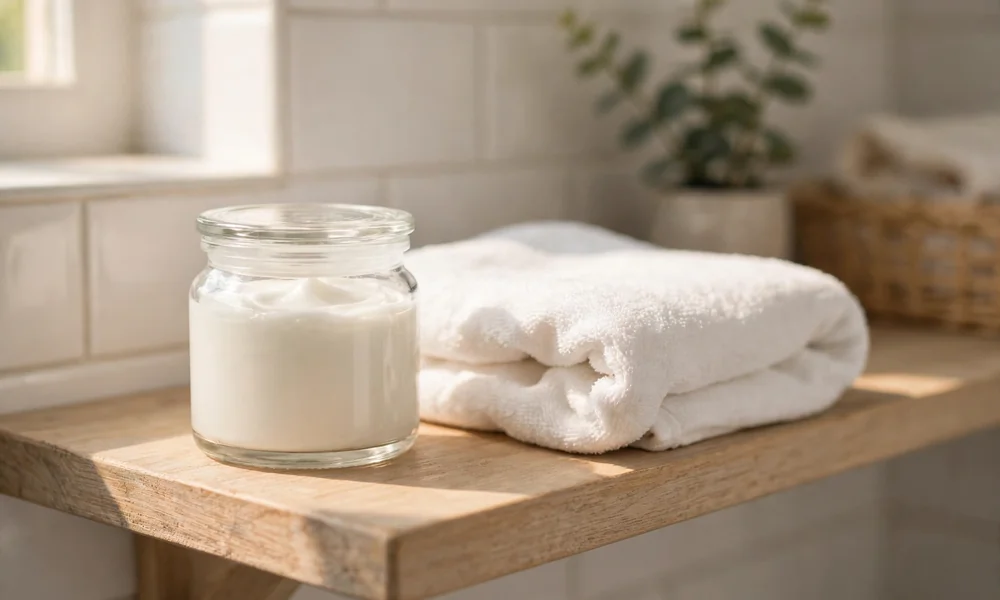
Your Bath Time Ritual Checklist
- Lay out a clean towel, a glass of water, and moisturiser before you run the bath.
- Run warm water at 37–39°C and test it with your wrist.
- Leave your phone in another room for the whole twenty minutes.
- Soak for about twenty minutes: wash gently, rinse, then rest.
- Stand up slowly, pat skin dry, and moisturise while still slightly damp.
- Keep the evening slow: a simple meal, water nearby, and an early night.
Frequently Asked Questions
How long should a bath time ritual take? About thirty minutes in total: five minutes to prepare, twenty minutes in the water, and five minutes to dry off and moisturise. It fits easily into an ordinary evening after work.
How warm should the bath water be? Warm, not hot: 37–39°C is comfortable for most people. Test it with your wrist before you get in, and turn it down next time if your skin looks flushed or feels tight afterwards.
Do I need bath salts, oils, or candles? No. Warm water alone is enough for a bath time ritual. A few drops of bath oil, a handful of salts, or one small candle can make it feel more special, but they are pleasures, not requirements.
Can I take a ritual bath every day? Yes, if your skin is comfortable with it. Keep the water warm rather than hot, wash gently with a mild soap, and moisturise afterwards. If your skin feels dry, shorten the soak or take the ritual bath every other day.
Is a bath before bed a good idea? For many people, yes. A warm bath an hour or two before bed, followed by a slow wind-down, can help the evening feel calm. Avoid very hot water late at night, as it can leave you feeling overheated.
What if I only have a shower? You can still keep the ritual: the same preparation, the same twenty unhurried minutes under warm water, and the same gentle aftercare. The slowness and the quiet matter more than the tub.
The Bottom Line
A bath time ritual is a small, everyday gift: five minutes of preparation, twenty minutes of warm water at 37–39°C, and a slow wind-down afterwards. It costs nothing and needs no new products. It asks only that you protect twenty minutes on an ordinary evening and spend them doing very little, very quietly.
Begin tonight with whatever you already have: a tap, a towel, a glass of water, and twenty minutes you refuse to give away. Run the bath warm, get in slowly, and let the working day wash off gently.
A Note for Ordinary Evenings
Keep it short, keep it warm, and keep it yours. The best rituals are the ones that fit an ordinary Tuesday, repeated evening after evening, until the bath becomes the quiet hinge the whole day turns on. Stay curious. Stay clear.



