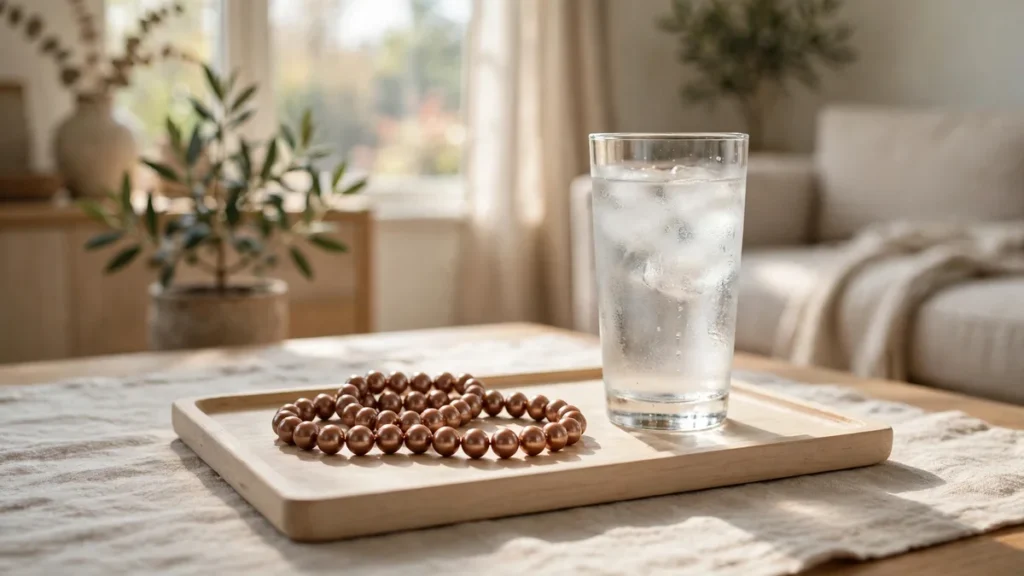
A steady day has its own rhythm, and it is not the rhythm of a holiday or a celebration. The kettle hums at the usual hour, the post arrives, the washing gets hung out, and the small jobs of the house are ticked off one by one. Nothing is urgent, nothing is dramatic, and that ordinariness is exactly what makes the day pleasant.
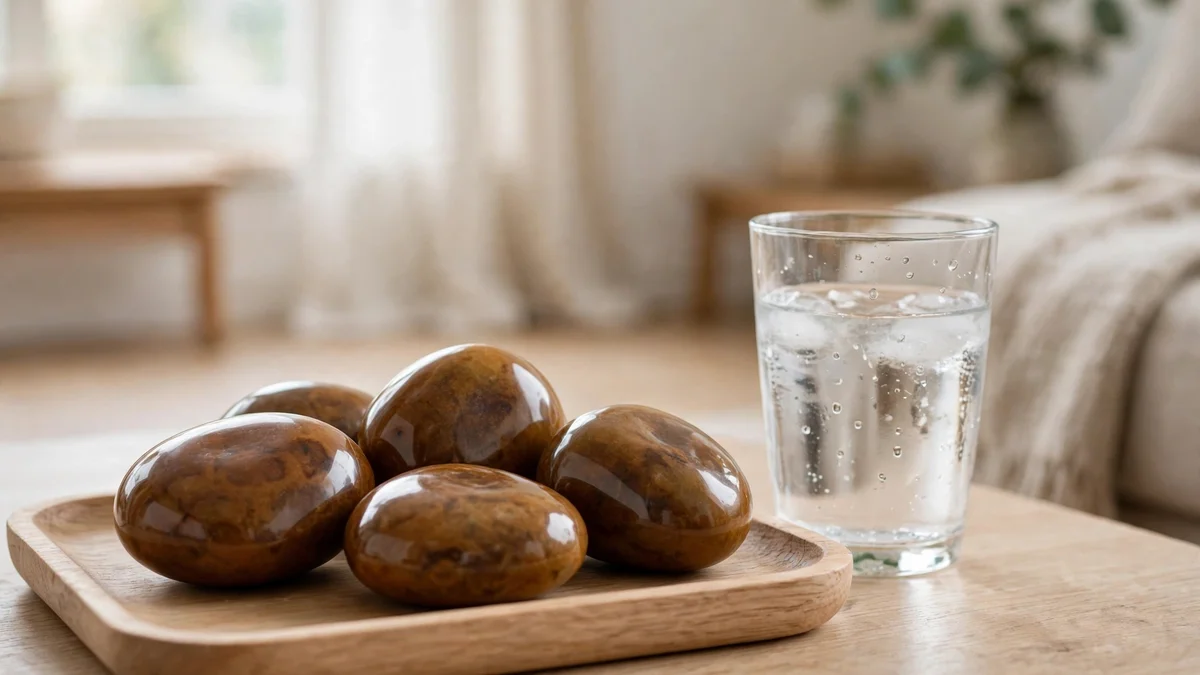
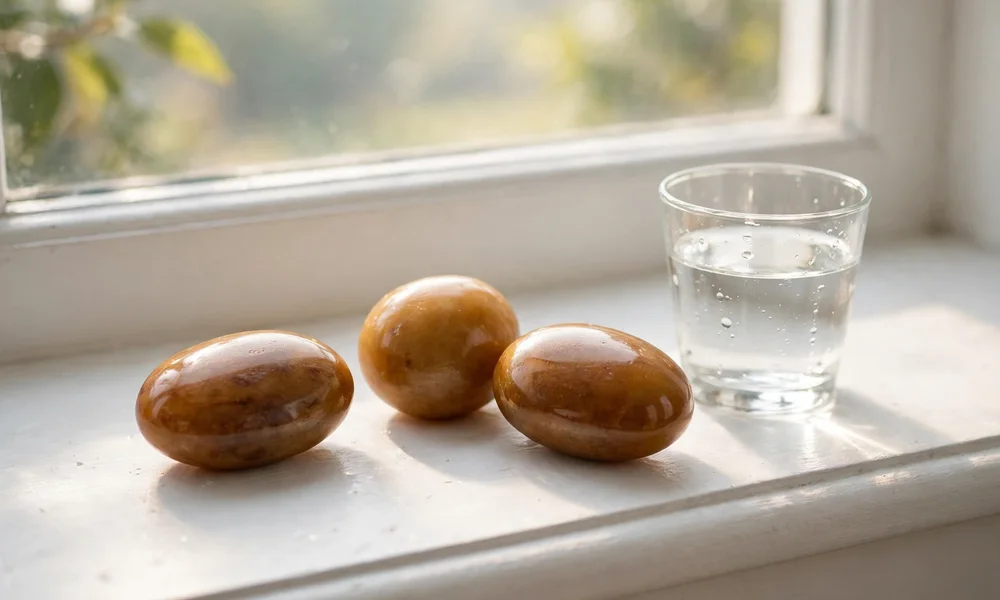
Brown jade fits that rhythm because its colour is the colour of ordinary, dependable things. It is the brown of a wooden spoon worn smooth by years of stirring, of chestnuts split open in autumn, of garden soil after rain. A polished piece holds that warmth without shouting about it, and it looks at home beside a glass of cool water.
This guide looks at brown jade in simple terms: what the stone is, how its warm brown differs from the other jades in this journal, and how to choose a piece you will enjoy keeping nearby. The stone is simply something to display and to hold; it carries no power to heal.
Key Takeaways
- Brown jade is a warm chestnut brown jade, earthy and steady, new among the jades here.
- Its brown suits steady days, plain routines, wooden trays and unhurried hours.
- Brown jade differs from green, white, black, lavender, purple, yellow, red and blue jade.
- Brown jade is for display and handling only; it holds no power to heal.
- Water stays in its own glass; the stone never enters a drink or a soak.
What Brown Jade Is
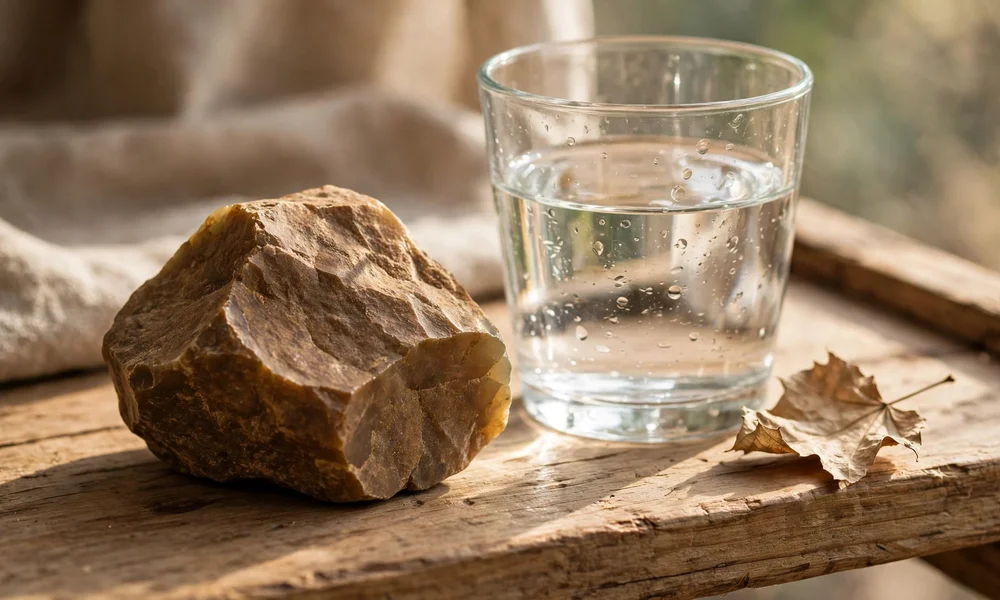
Jade is a dense, hard-wearing mineral that cutters shape into smooth pebbles and cabochons, and brown jade is the earthy member of that family. Its body colour runs from a pale milky coffee to a deep chestnut, often with darker brown veins wandering through it like the grain in a piece of oak. The polished surface carries a soft, waxy shine rather than a sharp glitter, and the stone feels cool when you first lift it, warming gently as it rests in your hand.
Most brown jade on sale is nephrite, a mineral made of fine fibres pressed tightly together, and that tight structure gives the stone its toughness and its smooth face. The brown comes from small amounts of iron inside the mineral, and the finest pieces show it evenly, without grey patches or muddy streaks.
Why Warm Brown Suits Steady Days
Warm brown is a colour that asks for nothing. It does not lift the mood the way a bright yellow might, and it does not cool the room the way a pale blue can. Instead it steadies the eye, the way a wooden table steadies a room, and it pairs naturally with the plain work of a steady day: folding laundry, watering the plants, mending a hem, writing a shopping list.
In morning light the brown looks soft and honeyed, and by evening lamplight it deepens toward the colour of toasted bread crust. It sits comfortably next to the everyday objects of the house, a ceramic mug, a linen cloth, a clear glass of water.
Choosing a Brown Jade Stone
Shop for brown jade in daylight, holding the piece in your own hand before you decide. Turn it slowly and look for a brown that stays warm and even as the light moves across it, brightening a little in the sun, with no grey wash and no streaks that look painted on.
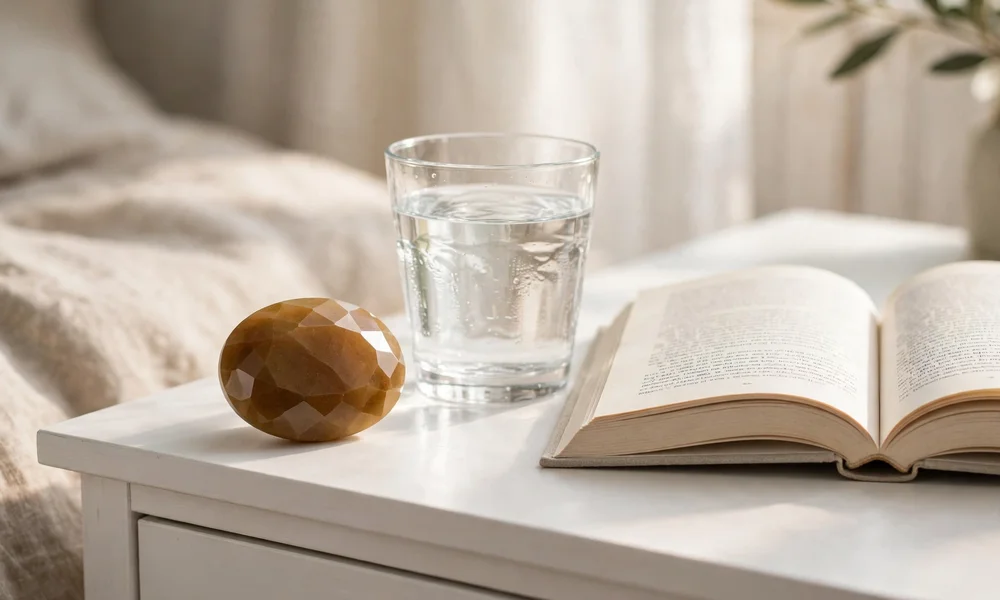
Run a fingertip across the polish: it should feel glass-smooth, with no rough pits along the edge of a faceted cut. A good piece has a pleasant weight when you first pick it up, and a small pebble sits neatly in a closed fist. Leave behind any seller who promises the stone can improve your health.
A Steady Day with Brown Jade
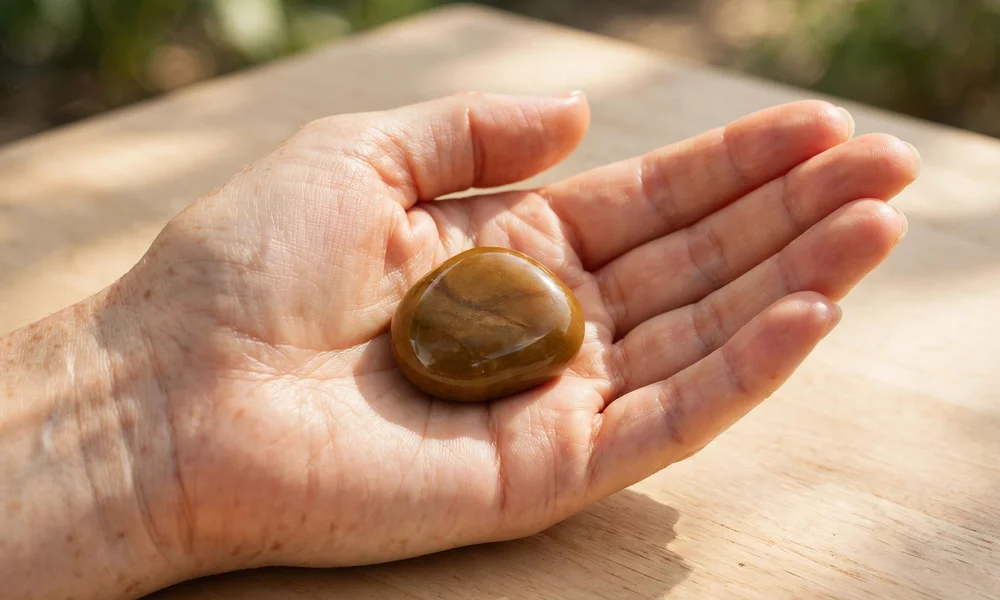
Begin a steady day by placing the stone on its tray, then filling a clear glass and setting it beside the stone, where daylight can reach them both. Drink the water slowly while the house wakes up, then lift the brown jade and turn it so the chestnut colour catches the morning sun.
Put the stone back on its tray and get on with the day, the tray resting on a desk or a shelf in the light. Lift it again in the afternoon, and once more in the evening.
Brown Jade Beside Water
Pour fresh drinking water into a clear glass and set it on the tray beside the brown jade. Tray-mates only: the stone never enters the glass, and it never sits soaking, which would dull its shine and could carry dust into the water.
Should the glass tip, lift the stone clear at once, dry it with a soft cloth, and return it only after the tray has dried. Once a week, a wipe with a plain dry cloth is plenty, and wash your hands afterwards.
Brown Jade at a Glance
| Warm brown jade | Steady days | Display only |
|---|---|---|
| Chestnut brown, soft glow | Desk, shelf, tray | Glass stays separate |
| Warm, smooth, weighty | Morning, afternoon, pause | Wipe with dry cloth |
| Brown, earthy and calm | Chores, rest, routine | Keep it dry |
Brown Jade and Green Jade
Green jade and brown jade are the two most garden-like jades in this journal, yet they belong to different hours. Green jade is the colour of new leaves, a soft calm green kept for slow mornings, and it brings a fresh, leafy feeling to the first light of the day. Green jade for slow mornings is about that green stone; this guide is about an earthy brown one.
Brown jade is the colour of the soil those leaves grow in, warmer and quieter than green, and it suits a whole steady day rather than a single morning.
Brown Jade and the Other Jades
Other jades live in this journal too, each with its own mood. White jade is pale and creamy, a stone for calm mornings in gentle light. Black jade is deep and dark, a stone for quiet days when the light is low.
Lavender jade is pale lilac, a soft violet stone for quiet days, and purple jade is its deeper cousin, a warm violet stone for the same unhurried hours. Yellow jade is warm yellow, a stone for steady days like this one, only brighter in colour, and red jade is warm red, a stone for bold days. Blue jade is soft blue, a stone for calm days. Brown jade sits among them as the earthy member, the only brown jade, warmer than black and quieter than yellow. Yellow jade for steady days shares the steady mood, while lavender jade for quiet days shares the quiet one, and brown jade is neither yellow nor violet.
Brown Jade and Other Brown Stones
Brown jade is not the only brown stone in this journal, and the differences are worth knowing. Brown zircon is a warm brown gem, clear and bright, kept for steady days, and it sparkles where jade glows softly. Smoky topaz is a warm brown crystal, clear and glassy, and its transparency sets it apart from the solid face of jade.
Dravite is a warm brown tourmaline, dark and rich, while chocolate calcite is a warm brown calcite with pale bands running through it. Mahogany obsidian is a deep brown volcanic glass with reddish swirls. Each is a different mineral from jade.
Caring for Brown Jade
Brown jade is easy to look after. Give it a shallow dish on a shelf where daylight falls, far from heaters, sunny car dashboards and spray bottles. A soft dry cloth once a week keeps it clean; that is all it needs.
The stone is tough and shrugs off light marks, but a sharp knock on a table corner can still chip an edge, so let it live apart from keys and coins.
Stones That Must Never Touch Water
A handful of stones should never meet water at all, so their names deserve a place here. Malachite: keep it out of water and out of elixirs entirely, because it can give off harmful substances. Hematite belongs nowhere near drinking water. The same goes for apatite, pyrite, angelite and amber, and for lepidolite, which holds lithium, whether in a drink or a soak.
For brown jade the rule is simple: it sits next to the glass, stays out of the drink, and never spends time soaking. Keep every stone on that list well away from glasses, jugs and sinks, and wash your hands after you have handled one.
Your Steady Days Checklist
- Put the brown jade on a small dish with a filled glass next to it.
- Start the steady day with a slow glass of fresh water.
- Hold the brown jade in your palm and take three slow breaths.
- Let the stone sit next to the glass, never inside a drink.
- Dust the brown jade with a dry cloth weekly, then wash your hands.
- Remember the stone cures nothing; see a doctor for health worries.
Frequently Asked Questions
What is brown jade?
Brown jade is a warm chestnut brown jade, a dense, hard-wearing stone polished to a soft waxy shine, kept for display on steady days.
How is brown jade different from green jade?
Green jade is a soft calm green stone for slow mornings. Brown jade is an earthy chestnut brown stone for whole steady days, and it is the only brown jade here.
Is brown jade the same as brown zircon?
No. Brown zircon is a clear, bright brown gem that sparkles, while brown jade is a solid stone with a soft waxy glow, and they feel quite different when held.
Is brown jade safe beside water?
Yes, when the two stay apart. Put the glass beside the stone on the tray, and keep the stone out of drinks and out of soaks.
Will brown jade heal anything?
No. It is a pleasant object to look at and to hold; any calm you notice comes from the quiet moment itself, not from the stone.
Where should I keep my brown jade?
Give it a bright spot on a tray or shelf, with a glass of water close by and daylight or lamplight falling on them.
The Bottom Line
Brown jade is warm chestnut brown for steady days: an earthy stone with a soft glow, resting on its tray while fresh water waits beside it, never touching.
A Note for Steady Days
Let the brown stay warm, the stone stay dry, and the day stay unhurried. One small brown jade, one glass of water, and a few unhurried minutes are plenty for a steady day.