
Some afternoons slow down on their own. The curtains move a little, the kettle clicks off, and the house settles into that unhurried stretch between lunch and evening when nothing needs doing right away.
Purple jade belongs in that kind of afternoon. Its colour is a deep, warm violet, richer than lilac and softer than a royal purple, the shade of dusk settling over a garden wall. A polished piece glows rather than flashes, and it sits easily on a wooden tray next to a glass of cool water.
This guide walks through purple jade in plain terms: what the stone is, how its deep violet differs from its paler lavender cousin, and how to pick a piece you will enjoy looking at. The stone is something to display and to hold, nothing more, and it will not heal anything.
Key Takeaways
- Purple jade is a deep warm violet jade, richer and darker than lavender jade's pale lilac.
- Purple is a new jade colour here, the only purple jade, distinct from black, lavender, white and green jade.
- Its deep violet suits quiet days, soft lamplight, a tray and unhurried hours.
- Purple jade is for display and handling only; it claims no power to heal.
- Keep the stone beside the glass, out of every drink and out of every soak.
What Purple Jade Is
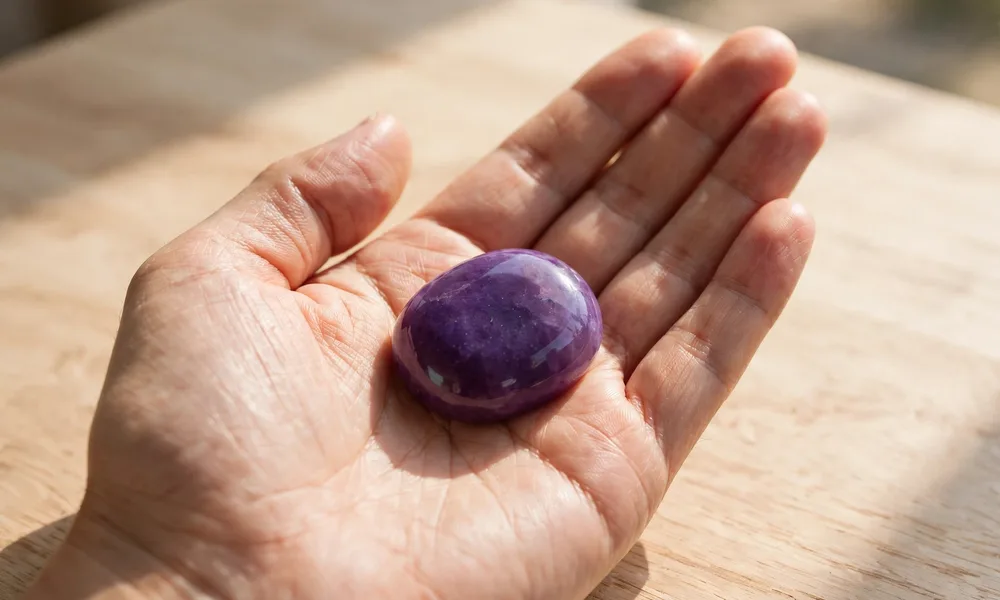
Jade is a dense, tough mineral that cutters polish to a smooth, even finish, and purple jade is the violet member of that family. Its body colour runs from a medium grape violet to a deeper plum, often with lighter violet patches drifting through it. The polished surface has a soft waxy glow rather than a sharp sparkle, and the stone feels cool when you first pick it up, warming slowly in your hand.
Most jade sold today is nephrite, a mineral built from fine fibres packed tightly together, and that tight build gives the stone its strength and smooth face. The violet comes from small traces of iron and manganese inside the mineral, and the best pieces show it evenly, without grey smudges or dark blotches. A tumbled pebble is the simplest form to start with, while a smooth cabochon shows the colour at its richest.
Why Deep Violet Suits Quiet Days
Deep violet is a colour that settles rather than stirs. It sits between calm blue and warm rose, and in its deeper form it feels like evening light, low and kind. On a quiet day, when the house is still and the hours stretch gently, that shade gives the eye somewhere restful to land, without asking for attention the way a bright red would.
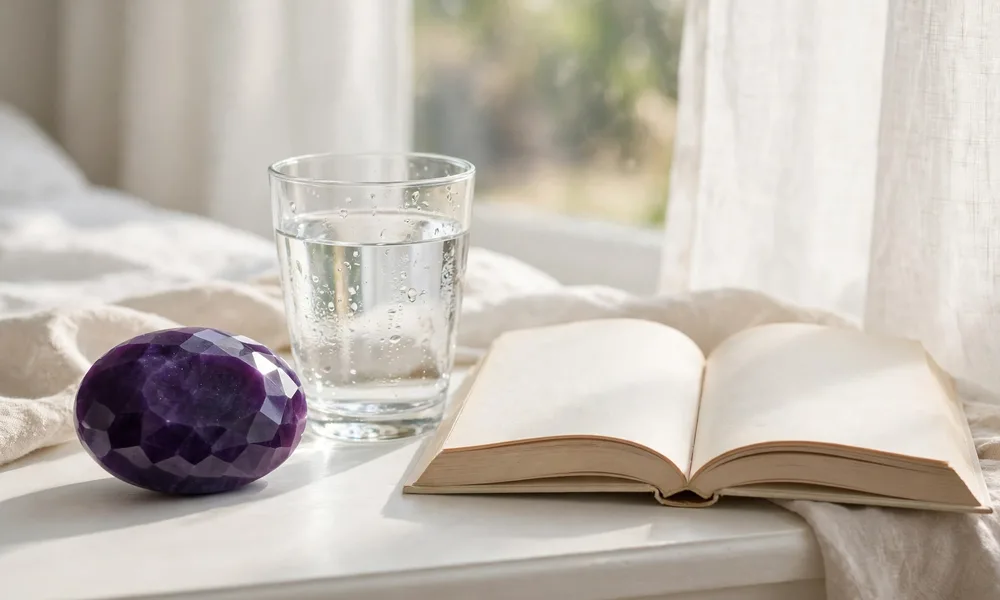
In lamplight, the purple deepens a little, and the lighter patches inside the stone show up more clearly. It pairs well with the ordinary things of a slow afternoon: a wooden tray, a clear glass of water, a paperback on the bedside table.
Choosing a Purple Jade Stone
Shop for purple jade in daylight, with the piece in your own hand. Look for a violet that stays deep and even as you rotate it, brightening a touch in the sun, with no grey wash and no dye-bright streaks.
Feel the polish with a fingertip: it should be glass-smooth, with no nicks along the rim of a faceted cut. A good piece has a cool heft when you first lift it, and a small pebble fits a closed fist. Start with one smooth tumbled stone; add a faceted oval later, once the colour has grown on you. Walk away from any seller who claims the stone can change your health.
A Quiet Day with Purple Jade
Start a quiet day by setting the stone on its tray, then filling a clear glass and placing it beside the stone, where window light can reach them both. Sit down, drink slowly, then lift the purple jade and turn it so the violet catches the daylight.
Set the stone down again and let the day drift on, the tray on a desk or shelf in the light. Pick it up once more in the afternoon, and once in the evening, when lamplight makes the purple deeper.
Purple Jade Beside Water
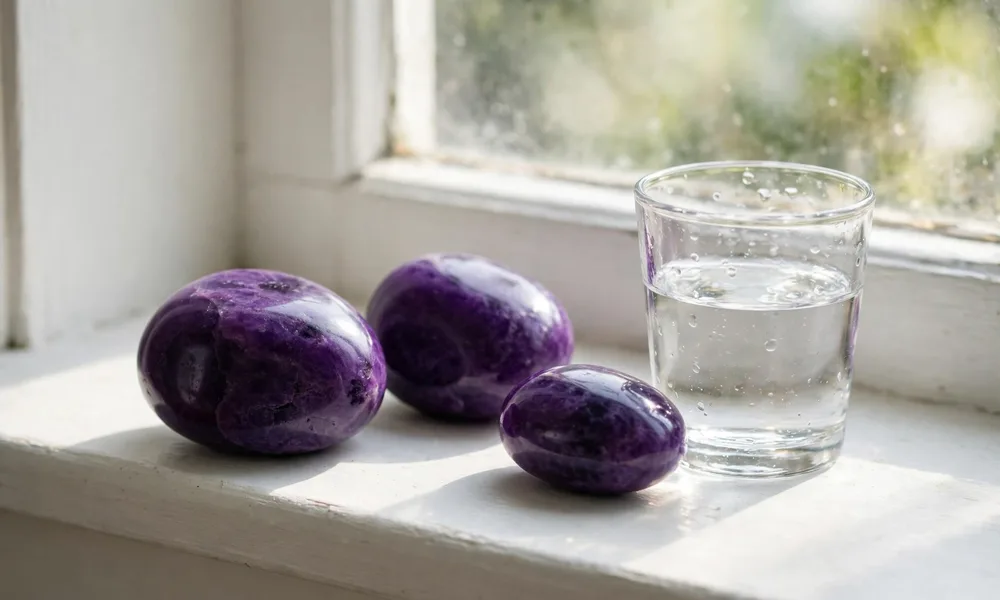
Fill a clear glass with fresh drinking water and place it on the tray next to the purple jade. The two share a tray, never a glass: the stone stays out of every drink, and it never sits in a soak, which would dull its shine and could wash dust into the water.
If the glass tips, move the stone aside at once, pat it dry with a soft cloth, and return it only when the tray is dry again. A weekly wipe with a plain dry cloth is enough, followed by washing your hands.
Purple Jade at a Glance
| Deep purple jade | Quiet days | Display only |
|---|---|---|
| Grape violet, waxy shine | Desk, shelf, tray | Glass stays separate |
| Cool, smooth, weighty | Lamplight, daylight, pause | Wipe with dry cloth |
| Purple, deeper than lilac | Afternoon, evening, rest | Keep it dry |
Purple Jade and Lavender Jade
Purple jade and lavender jade are the closest pair in this journal, since both are violet stones for quiet days. Lavender jade is the paler sister: a light lilac, airy as lavender flowers in morning shade. Lavender jade for quiet days is about that pale stone; this guide is about a deeper one.
Purple jade is warmer and darker, a grape violet that still reads as purple in dim light, where lavender can fade toward grey. Side by side, lavender looks like a whisper of violet and purple looks like the colour itself, full and warm. If pale shades please you, choose lavender; if you want a violet you can see across the room at dusk, choose purple.
Purple Jade and the Other Jades
Purple jade is not the only jade here, and each colour keeps its own mood and hour. White jade is the pale one: a creamy white stone, kept for calm mornings in soft light. White jade for calm mornings is about a white stone for the first quiet minutes of the day; this guide is about a deep violet stone for a whole quiet day.
Black jade is the dark one: a deep black stone, kept for quiet days in low light. Black jade for quiet days is about a black stone like a small piece of night; this guide is about a warm purple stone like a small piece of dusk. Green jade is the garden one: a soft calm green stone for slow mornings. The sibling jades in this batch are yellow, red and blue jade, and purple sits among them as the deep violet member, warmer than blue and softer than red.
Purple Jade and the Other Violet Stones
Purple jade is not the only violet stone here. Amethyst is a deep purple quartz, clear and glassy, kept for calm nights, and it grows in sharp crystal points rather than the smooth face of jade. Purple sapphire is a soft violet corundum, clear and bright, kept for quiet days, and it sparkles where jade glows softly. Purple agate is a soft violet agate with gentle bands, and its banding sets it apart from the even colour of jade.
Purple fluorite is a deep violet mineral with pale bands, kept for creative evenings, and lepidolite is a soft purple mica stone, kept for calm nights. Each is a different mineral from jade.
Caring for Purple Jade
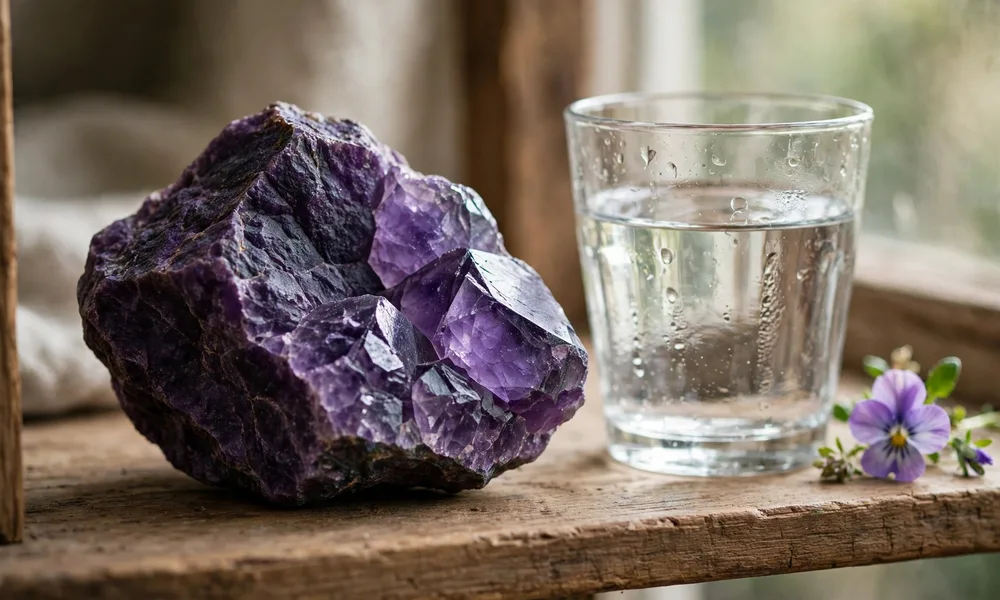
Purple jade needs little, yet it deserves a gentle hand. Set it on a dish or tray in good light, away from radiators, hot car dashboards and cleaning bottles. A weekly wipe with a dry, soft cloth is all the cleaning it needs.
Jade resists scratches well, yet one hard knock on a table edge can nick a facet or chip a tumbled rim. Give it its own spot, apart from keys, coins and harder gems, and pat it dry at once if it ever gets wet.
Stones That Must Never Touch Water
Some stones must stay away from water altogether, and the names are worth remembering. Malachite must never go in water or in elixirs, since it can release harmful substances. Hematite must never go in drinking water, and neither must apatite, lepidolite, which contains lithium, pyrite, angelite or amber, whether in a drink or a soak.
Purple jade follows the same rule: it stays beside water, never in it, and it is never soaked. Keep any stone on the never-touch-water list far from glasses, jugs and sinks, and wash your hands after handling it.
Your Quiet Days Checklist
- Set the purple jade on a dish, a full glass standing beside it.
- Drink a glass of fresh water slowly as the quiet day opens.
- Rest the purple jade in your palm for a few slow breaths.
- Keep the stone out of drinks and soaks, beside the glass only.
- Wipe the purple jade with a dry cloth each week, then wash your hands.
- The stone heals nothing; health worries go to a doctor.
Frequently Asked Questions
What is purple jade?
Purple jade is a deep warm violet jade, a dense tough stone with a smooth waxy polish, kept as a display piece for quiet days.
How is purple jade different from lavender jade?
Lavender jade is pale lilac. Purple jade runs deeper and warmer, a grape violet that stays purple in dim light, and it is the only purple jade here.
Is purple jade the same as amethyst?
No. Amethyst is clear, glassy purple quartz for calm nights. Purple jade is dense jade with a soft waxy glow, and the two feel quite different in the hand.
Is purple jade safe beside water?
Yes, as long as the two stay apart. Set the glass next to the stone on the tray, and never drop the stone into a drink or leave it soaking.
Will purple jade heal anything?
No. It is a handsome object to hold and admire; any calm you feel comes from the quiet minute, not the stone.
Where should I keep my purple jade?
On a bright tray with a glass of water nearby, where daylight or lamplight can reach them both.
The Bottom Line
Purple jade brings deep warm violet to quiet days: a deep purple stone with a soft waxy glow, kept on its tray with fresh water close by, never touching it.
A Note for Quiet Days
Let the violet stay deep, the stone stay dry, and the day stay unhurried. One small purple jade, one glass of water, and a few unhurried minutes are plenty for a quiet day.


