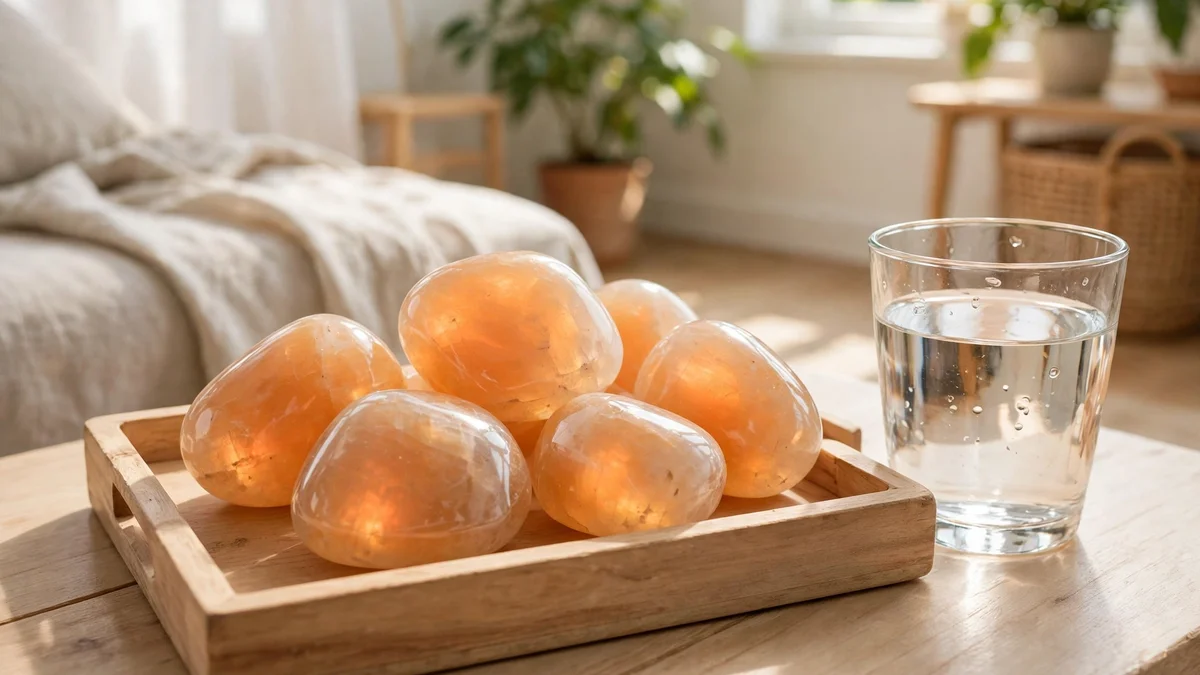
Late morning sun has a colour all its own. It turns a plain kitchen wall amber, makes the peel of an orange glow on the breakfast table, and pours through the window until the whole room looks golden. Days like that feel awake and generous, and even ordinary things seem to shine a little brighter.
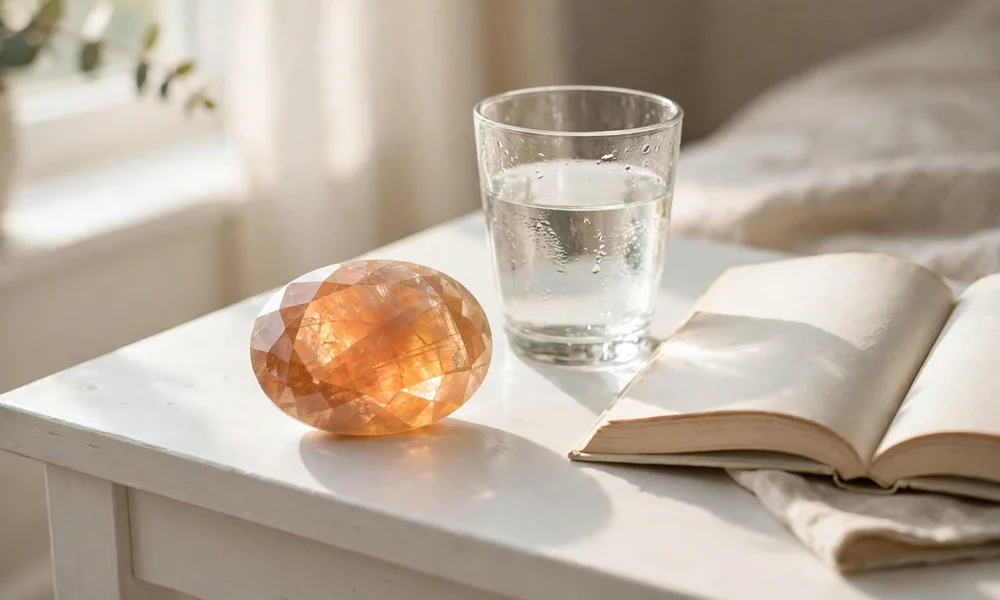
In the middle of such a day, orange moonstone fits perfectly. Hold one up and it looks like apricot lit from inside, its warm orange body crossed by a soft light that wanders as the stone turns. Rest it on a tray beside a glass of cool water and the corner of the room seems warmer at once.
What follows looks at the stone unhurriedly: where it comes from in the mineral family, how it compares with its moonstone sisters and with other orange gems, what makes a good piece, and how to spend a bright day with it on display. It is an object to admire and to hold, and nothing more than that. It cures nothing at all; if you feel lifted, the credit belongs to the quiet pause, not to the mineral.
Key Takeaways
- Orange moonstone is a warm orange feldspar whose soft light wanders, made for bright days.
- Orange is a new moonstone colour, the eighth live moonstone, unlike green, white, grey, rainbow, black or peach.
- Warm orange belongs with bright days, open windows, sunshine and slow hours.
- The stone is for display and handling, never for healing.
- Keep it beside the water glass, never inside it, and never soak it.
What Orange Moonstone Is
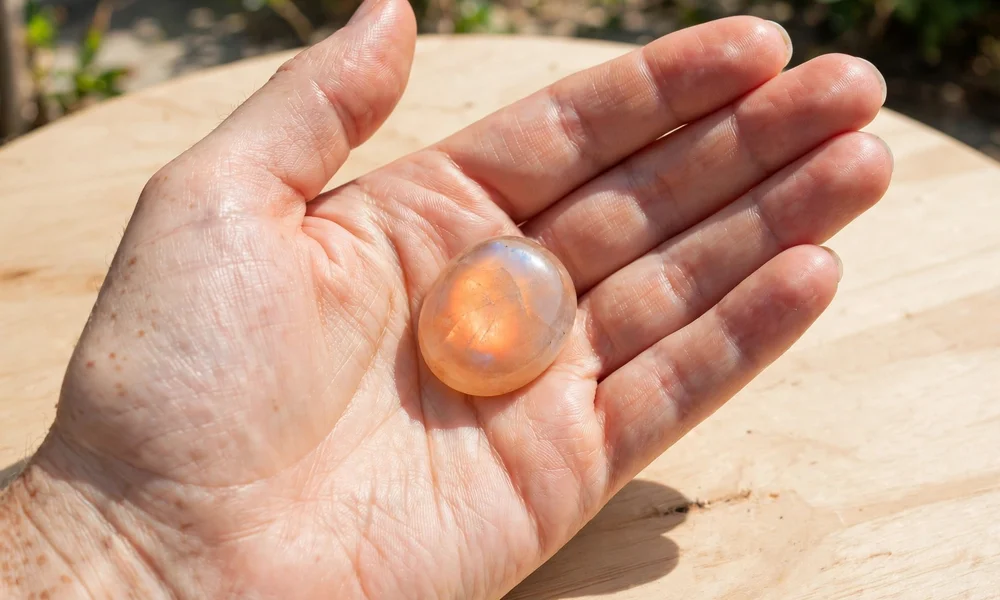
Every moonstone carries a secret: a pale light that seems to swim beneath the surface, moving as the stone moves. Cutters have a name for it, adularescence, and it is why a moonstone looks lit from within. The orange kind keeps the same secret and dresses it in apricot: some pieces are pale honey, others a deeper marmalade, all of them crossed by a silvery orange shimmer that slides when you tilt the stone.
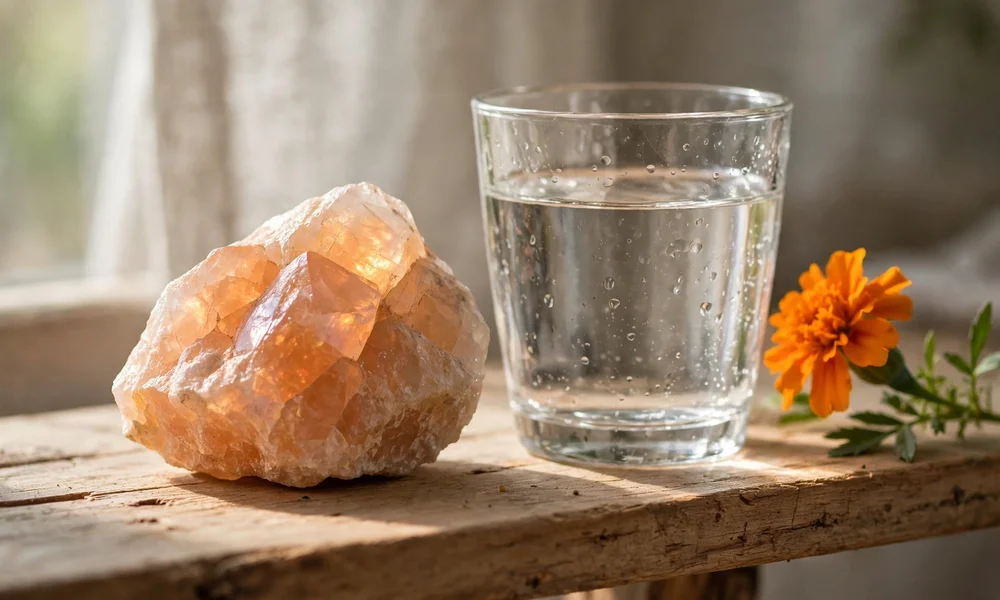
Pick one up and it feels cool at first, then warms quickly in the palm. The colour is rarely flat. Look closely and you will see honey patches beside deeper ones, the way sunlight moves across a wall through the afternoon. Rough pieces are earthier, their flat orange faces shining quietly, while a faceted oval answers the light with small bright flashes.
Shops usually offer three shapes: tumbled pebbles, smooth domed cabochons that show the wandering light best, and faceted ovals for anyone who likes sparkle. A small pebble is the easiest first piece.
Why Warm Orange Suits Bright Days
Orange wakes a room the way a lamp does, without ever shouting. On a bright day, with windows open and light pouring in, an orange stone on a tray matches the hour far better than a pale grey one, which fades away, or a deep red one, which feels heavy before noon.
Strong daylight makes the orange richer, and the wandering glow is at its best when you lift the piece toward the window and turn it slowly. It sits well with the ordinary things of a bright day: a wooden tray, a clear glass, an orange marigold on the sill, a paperback waiting on the bedside table.
Put it where your eyes will meet it by chance, on a desk or a shelf in the sun, and leave it there to be noticed in passing.
Choosing an Orange Moonstone Stone
Good light is the first tool for choosing. Hold a piece up to a window and watch for a warm, even orange that brightens in daylight, with light that wanders as you tilt it. A little cloudiness is natural, yet the orange must stay clear and honest, never muddy, never painted on.
Feel the surface with a fingertip, hunting for sharp chips, above all on the edges of a faceted stone. A good piece feels cool and solid for its size, and a tumbled pebble should settle comfortably in a closed hand. Start small and smooth; once you know you love the colour, a faceted oval makes a fine second piece.
Choose a seller with a good reputation, and leave immediately if anyone claims the stone can improve your health.
A Bright Day with Orange Moonstone
A bright day with this stone needs only a few minutes to begin. Fill a clear glass, set it on the tray, and place the moonstone beside it. Sit down, sip the water slowly, then lift the stone and turn it so the orange light slides across its face.
Set it back down and let the day carry on, the tray standing where daylight can reach both glass and stone. Come back to it in the afternoon for another look, and once more as evening lamps come on, when the orange turns soft and deep.
Orange Moonstone Beside Water
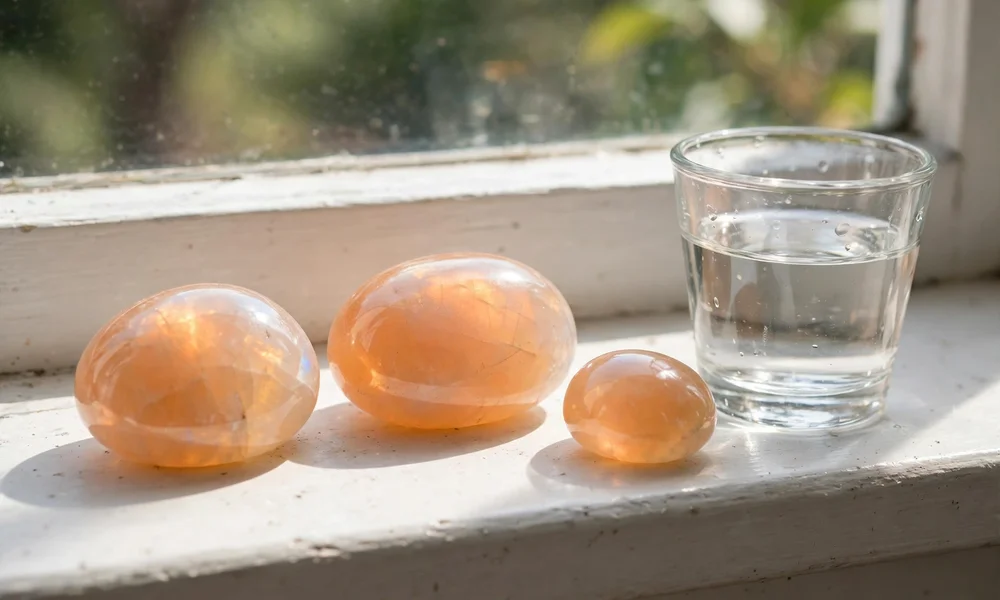
Water and stone are tray companions, never bath companions. Fill a clear glass with fresh drinking water and stand it next to the moonstone; the two sit side by side, and the stone stays dry. Never drop it into a drink, and never leave it soaking, because a long soak dulls the shine.
Should the glass tip, lift the stone away at once and pat it dry with a soft cloth. Once a week, wipe it with a dry cloth — cloth alone, nothing on it — and wash your hands afterwards.
Orange Moonstone at a Glance
| Warm orange moonstone | Bright days | Display only |
|---|---|---|
| Orange feldspar, warm glow | Tray, sill, shelf | Dry display only |
| Smooth, cool, bright | Light, water, pause | Wipe with cloth |
| Orange, not white | Morning, midday, dusk | Never soak it |
Orange Moonstone and the Other Moonstones
Eight moonstones now live here, and orange is the newest of them. White came first in spirit: pale as milk, its blue light drifting like cloud, a stone for calm mornings in soft light. White moonstone for calm mornings belongs to the first quiet minutes of the day, while this guide belongs to a whole bright day in orange.
Grey is the quiet middle shade, soft mid-grey with a pale silvery blue sheen, a stone for calm days. Grey moonstone for calm days feels like a piece of cloudy sky; orange feels like a piece of morning sun.
Peach is the nearest relative, warm and gentle with a pale shimmer, a stone for soft mornings. Peach moonstone for soft mornings suits the early hours, while orange suits the brightest hours, deeper and warmer than peach. Green is the garden stone, fresh green with a soft green glow, for calm days. Rainbow flashes blue and violet for quiet nights, and black, dark and soft grey, belongs to quiet nights too. None of them is orange: only this stone pairs a warm orange body with the wandering light of the moonstone family, and only this one is for bright days.
Orange Moonstone and the Other Orange Stones
Other warm orange stones live here too, and each one is different. Orange spinel is a clear, bright spinel, warm orange and kept for bright days. Orange sapphire is a strong orange corundum, clear through and through. Sunstone is a feldspar cousin, but where moonstone glows softly, sunstone glitters with tiny sparkling flecks. Orange topaz is clear and golden, and hessonite garnet is deep, rich orange, kept for bright days as well.
Every one of them differs from moonstone in mineral or in light, and only orange moonstone joins a warm orange body to the soft floating glow that marks its family.
Caring for Orange Moonstone
A little care goes a long way with this stone. Keep it on a dish or tray in good light, far from radiators, hot car dashboards and cleaning bottles. A weekly wipe with a dry, soft cloth is all the cleaning it needs.
Remember it is a softer gem: a single hard knock on a table edge can nick a facet. Give it its own spot, away from keys, coins and harder stones, and dry it at once if it ever gets wet.
Stones That Must Never Touch Water
Some stones are never safe near water. Malachite must never go in water or in elixirs, because it can release harmful substances. Hematite must never go in drinking water, and apatite, lepidolite — which contains lithium — pyrite, angelite and amber must never go in drinking water or in soaks either.
Orange moonstone follows the same rule: beside water, never in it, and never soaked. Keep it on its tray, keep a glass beside it, and never let the two meet.
Your Bright Days Checklist
- Set the orange moonstone on a dish, a full glass of water beside it.
- Drink a glass of fresh water slowly as the bright day begins.
- Rest the orange moonstone in your palm for a few slow breaths.
- Keep the stone beside water, never in a drink or a soak.
- Wipe the orange moonstone with a dry cloth each week, then wash your hands.
- The stone heals nothing; health worries belong with a doctor.
Frequently Asked Questions
What is orange moonstone?
It is a warm orange feldspar of the moonstone family, crossed by a soft silvery orange glow that wanders as you tilt the stone.
Is orange moonstone the same as white moonstone?
No. White moonstone is milky white with a floating blue glow, a stone for calm mornings. Orange moonstone is warm orange with a soft orange glow, a stone for bright days.
Is orange moonstone the same as peach moonstone?
No. Peach moonstone is a gentle warm peach with a pale shimmer, for soft mornings. Orange moonstone runs deeper and warmer, for the brightest hours of the day.
Is orange moonstone safe beside water?
Yes, as long as it stays dry. Stand the glass and the stone side by side on the tray; the stone never enters a drinking glass, and it never takes a soak.
Will orange moonstone heal anything?
No. It is a beautiful object to hold and admire, and any calm you feel comes from the quiet minute you took, not from the stone.
Where should I keep my orange moonstone?
In a bright corner: a small tray with a glass of water standing beside it, where daylight can reach them both.
The Bottom Line
Orange moonstone brings warm orange to bright days: an orange feldspar with a soft wandering glow, resting beside a glass of fresh water. Keep the water alongside, never around the stone, and handle it with a gentle hand.
A Note for Bright Days
Let the orange stay warm, the stone stay dry, and the day stay bright. One small orange moonstone, one glass of water, and a few unhurried minutes are plenty for a bright day.


