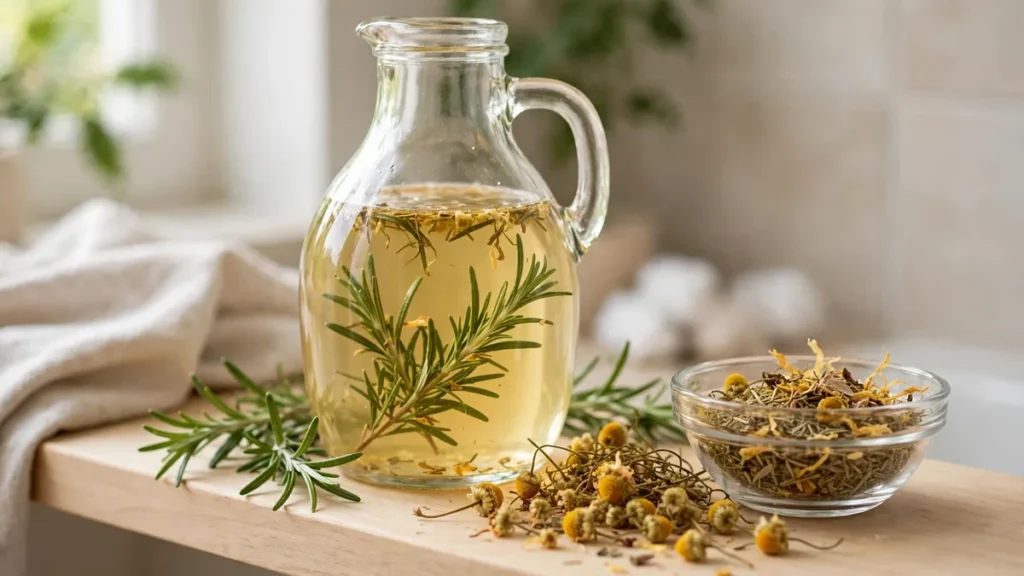
Some days are made for staying in. The light comes in low and golden, the kettle is on, a soft blanket waits on the chair, and the whole house feels slower and warmer than the street outside.
Baltic amber is that kind of glow: warm gold fossil tree resin from the shores of the Baltic Sea, honey-coloured and light in the hand.
This guide is a slow look at Baltic amber for cosy days at home: what it is, how to choose a piece, and how to keep it safe beside water. The stone is for display and handling only, and it will not heal anything.
Key Takeaways
- Baltic amber is warm gold fossil tree resin from the Baltic Sea shores, not a mineral.
- Its honey-gold glow suits slow cosy days at home, soft light and warm rooms.
- Baltic amber differs from the live amber guide, citrine, yellow calcite, imperial topaz and honey calcite.
- Baltic amber is for display and handling only; it will not heal anything.
- Amber never goes in drinking water or soaks; it stays beside a glass, never in it.
What Baltic Amber Is
Baltic amber began life as resin, the sticky golden sap that ancient pine-like trees released long ago. Over about forty-four million years, buried under earth and sea, that resin hardened into amber: light, warm and glowing.
Most Baltic amber is found along the Baltic coast — Lithuania, Latvia, Poland and the Kaliningrad region. It is the best-known amber in the world, and its colour runs from pale gold through honey to deep cognac.
Amber is soft, at about 2 to 2.5 on the Mohs hardness scale, so a key or a harder stone in the same box can scratch it, and a drop on a hard floor can crack it.
Why Warm Gold Suits Cosy Days
Warm gold suits a cosy day because it is the colour of the light in the room already. Late afternoon sun through a window, a lamp switched on early, the glow of a candle: all of these are warm gold, and a small amber stone on the tray simply joins them.
A cosy day wants softness: a blanket, a warm drink, a book, and one small point of warmth to rest the eye on. Baltic amber gives exactly that, a steady honey glow that never flashes or shouts.
A Cosy Day with Baltic Amber
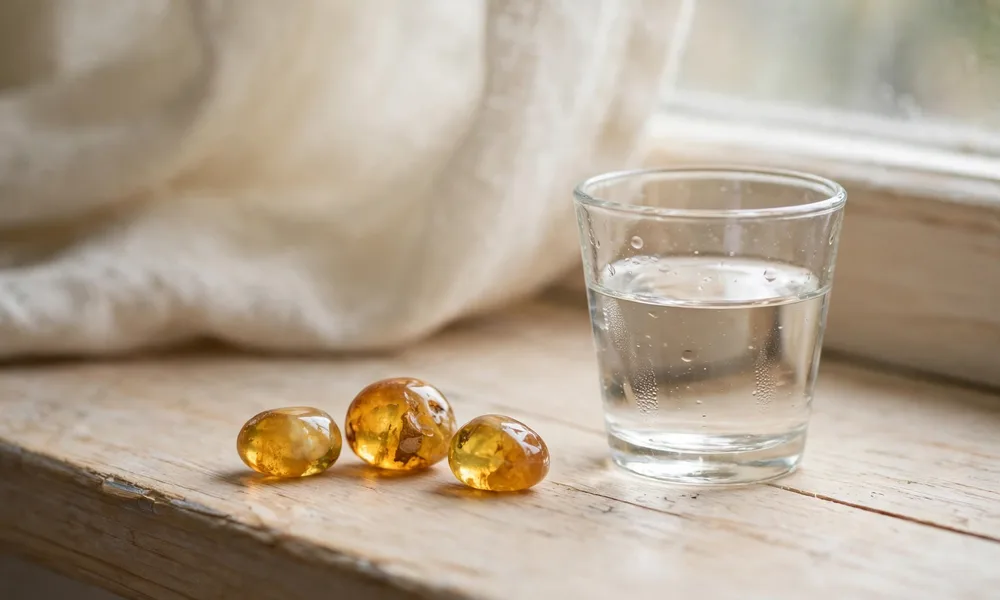
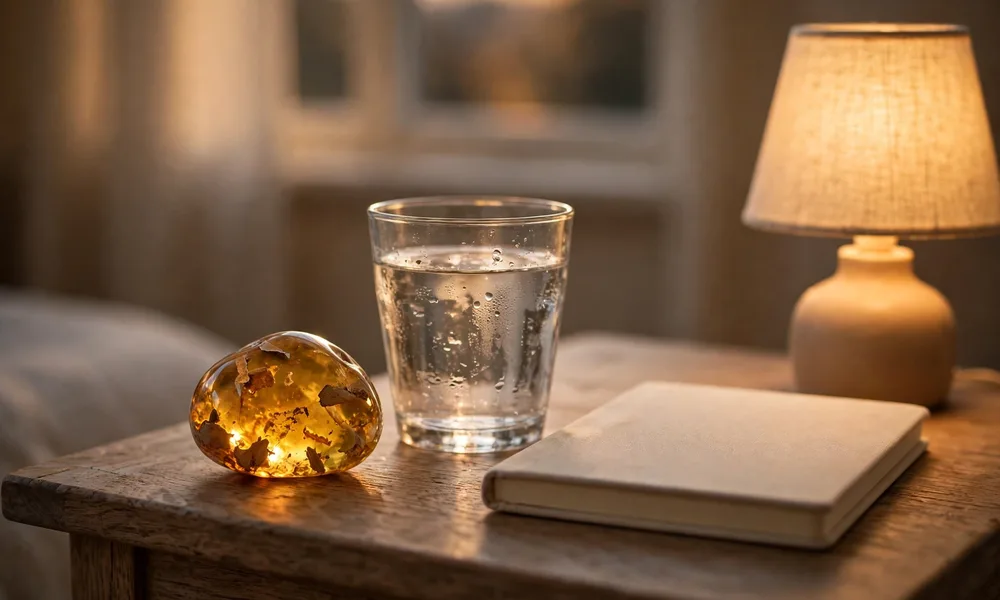
A cosy day with Baltic amber takes only a few minutes to begin. In the morning, set the stones on a wooden tray, fill a clear glass with fresh water and place it beside the tray. Sip the water slowly, and let the day start without hurry.
At midday, move the tray to the windowsill, where the amber can catch the soft daylight while you read or rest.
In the evening, bring the tray near the lamp, where the warm light deepens the honey colour. Drink slowly, and let the day close quietly, the amber glowing softly in the lamplight.
Baltic Amber Beside Water
Water belongs beside the stone, never around it. Set a clear glass of fresh drinking water next to the amber on the tray. Never place amber inside drinking water, and never soak it, because water can seep into tiny cracks and dull the surface.
Amber must never go in drinking water or in soaks of any kind, polished or raw, pale gold or deep cognac. If a piece ever falls into a glass by accident, throw the water away and wash the glass and your hands.
Keep the amber away from heat, perfumes and chemicals, and dust it with a soft, dry cloth, never soap or polish.
Baltic Amber at a Glance
| Warm gold resin | Cosy days | Display only |
|---|---|---|
| Honey gold, glowing | Soft light, slow hours | Beside water only |
| Light, warms quickly | Tray, shelf, bedside | Dust with dry cloth |
| Soft, scratches easily | Water, lamp, blanket | Never soak it |
How This Guide Differs from Amber Warmth
There is already a live guide to amber on this site, and it is worth naming clearly so the two are never confused. Amber Warmth, the live post, is a cosy-beauty guide about wearing amber as jewellery with knits and autumn colours.
This guide is a different article about the same stone: Baltic amber as a warm gold companion for cosy days at home, kept on a tray and moved through the rooms as the day passes. There is no outfit advice here, and no jewellery styling.
The live guide looks at amber on the body; this guide looks at amber on the shelf, with a glass of water, a lamp and a blanket. Same warm stone, two different days.
Baltic Amber and Citrine
Baltic amber and citrine are both warm golden stones, yet they are easy to tell apart once you hold them. Citrine is the sunny yellow variety of quartz, a hard mineral that grows in six-sided points, coloured by tiny traces of iron.
Amber is not a mineral at all. It is fossil tree resin, soft and light, with a warm honey glow rather than a clear sparkle.
Citrine for bright mornings keeps a hard yellow quartz for bright mornings; this guide keeps a soft golden resin for cosy days.
Baltic Amber and the Yellow Calcites
Baltic amber and the yellow calcites share a sunny colour, but they are different stones with different habits. Yellow calcite is a sunny lemon-yellow calcite, sometimes crossed with soft white bands, and it suits bright mornings.
Honey calcite is its warmer cousin, a honey-coloured calcite kept as a golden companion for autumn skin. Both calcites are minerals made of calcium carbonate, cool and solid in the hand.
Baltic amber is warmer, softer and lighter than either calcite, and it is fossil resin, not a mineral at all. Yellow calcite for bright mornings keeps a lemon-yellow calcite for bright mornings; this guide keeps a honey-gold resin for cosy days.
Baltic Amber and Imperial Topaz
Baltic amber and imperial topaz are both warm gold, yet they suit different kinds of day. Imperial topaz is the warmest of the topaz family, a deep golden-orange stone with a clear, glassy shine, kept for special days.
Topaz is a hard mineral, cool and solid, and a polished piece catches the light with a bright sparkle. Amber is soft and light, with a quiet honey glow that never sparkles.
Imperial topaz for special days keeps a deep golden-orange topaz for special days; this guide keeps a soft honey resin for cosy days.
Green and Red Amber: The Sibling Ambers
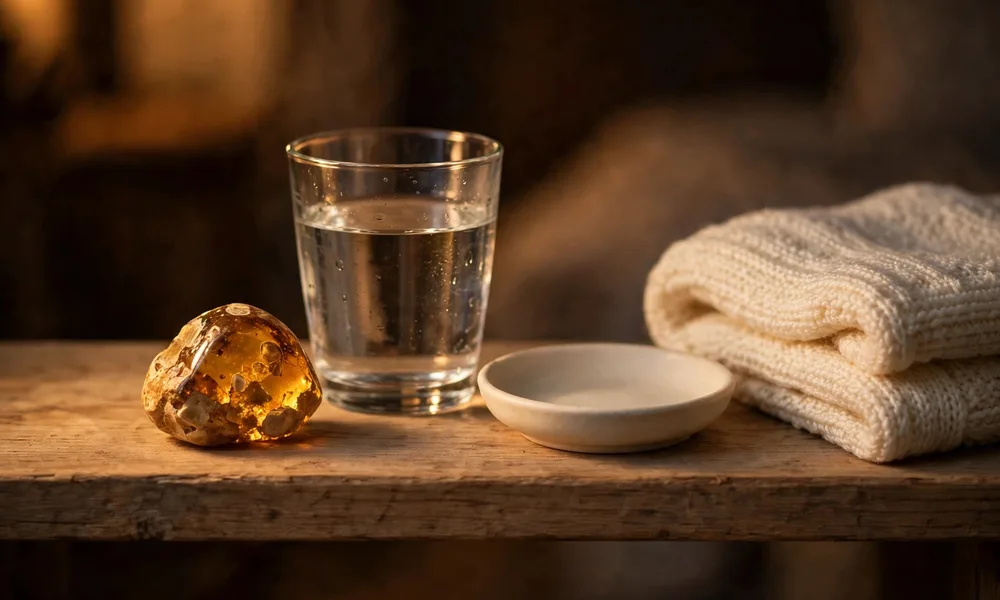
Baltic amber is not the only amber in this batch of guides. Green amber and red amber are its siblings, each with its own colour and feel.
Green amber is a soft green amber, cool and fresh, with a gentle green glow that suits calm, leafy days.
Red amber is a deep red amber, rich and bold, with a warm red glow that suits strong, striking days. Baltic amber sits between them: warm gold, neither green nor red, and made for cosy days at home.
Choosing a Baltic Amber Piece
Choosing a Baltic amber piece is mostly a matter of looking closely and trusting your eye. A good piece shows a warm, even honey-gold colour that glows in daylight, with small clouds or tiny bubbles inside.
Look for a smooth polish with no sharp chips, and check that the piece feels light for its size and warms quickly in your hand.
Buy from a seller you trust, and ask where the amber comes from. Very cheap, perfectly clear amber in large pieces deserves a second look.
Stones That Must Never Touch Water
Not every stone is safe beside water. Malachite must never go in water or in elixirs. Hematite must never go in drinking water, and apatite, lepidolite — which contains lithium — pyrite, angelite and amber must never go in drinking water or in soaks either.
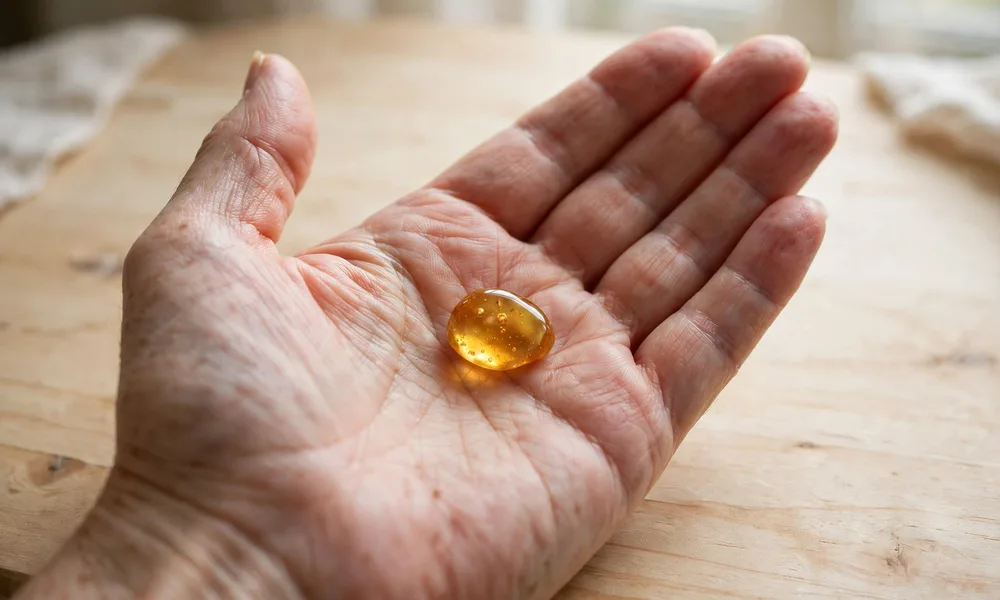
The rule stays the same for Baltic amber: it must never go in drinking water or in soaks, polished or raw, pale gold or deep cognac. Display it on a tray, keep a glass of water beside it, and never let the two meet.
Baltic amber is a gentle stone for display and handling, but it still stays beside water, never in it.
Your Cosy Days Checklist
- Set the amber on a tray beside a clear glass of fresh water.
- Drink a glass of fresh water slowly when the cosy day begins.
- Move the tray to the light at midday and enjoy the honey glow.
- Keep the amber beside water, never inside drinking water or soaks.
- Dust the amber dry weekly, and wash your hands after handling it.
- Remember the stone will not heal anything; see a doctor for health problems.
Frequently Asked Questions
What is Baltic amber?
Baltic amber is fossil tree resin from the shores of the Baltic Sea, hardened over about forty-four million years. It is not a mineral, and it is much softer than most stones.
Is Baltic amber the same as the amber in the live Amber Warmth guide?
It is the same stone, but a different guide: the live guide is about wearing amber for cosy beauty, while this guide keeps Baltic amber on display at home for cosy days.
Can I put Baltic amber in water?
No. Amber must never go in drinking water or in soaks. Keep it beside a glass of water, never in it.
Will Baltic amber heal anything?
No. Baltic amber will not heal anything. It is a beautiful object for display and handling, and the calm comes from the slow day, not from the stone.
How do I clean Baltic amber?
Dust it with a soft, dry cloth, never soap or polish. Keep it away from heat, perfumes and chemicals, and store it in a soft pouch on its own.
Where should I keep my Baltic amber?
Keep it on a small wooden tray in a warm room, with a clear glass of water beside it
The Bottom Line
Baltic amber brings warm gold to cosy days: a honey-gold fossil resin from the Baltic Sea, kept on a tray beside a glass of fresh water in soft light. Keep it beside water, never in it, and handle it gently.
A Note for Cosy Days
Keep it warm, keep it dry, keep it slow. A small golden stone, a glass of water, and a few unhurried hours can carry a cosy day.