Afternoons have a particular tiredness. The morning's energy has faded, the light has turned flat and warm, and the list of things still to do seems longer than it did at breakfast. Many of us answer with another coffee or another screen, then wonder why the rest of the day feels thin and rushed.
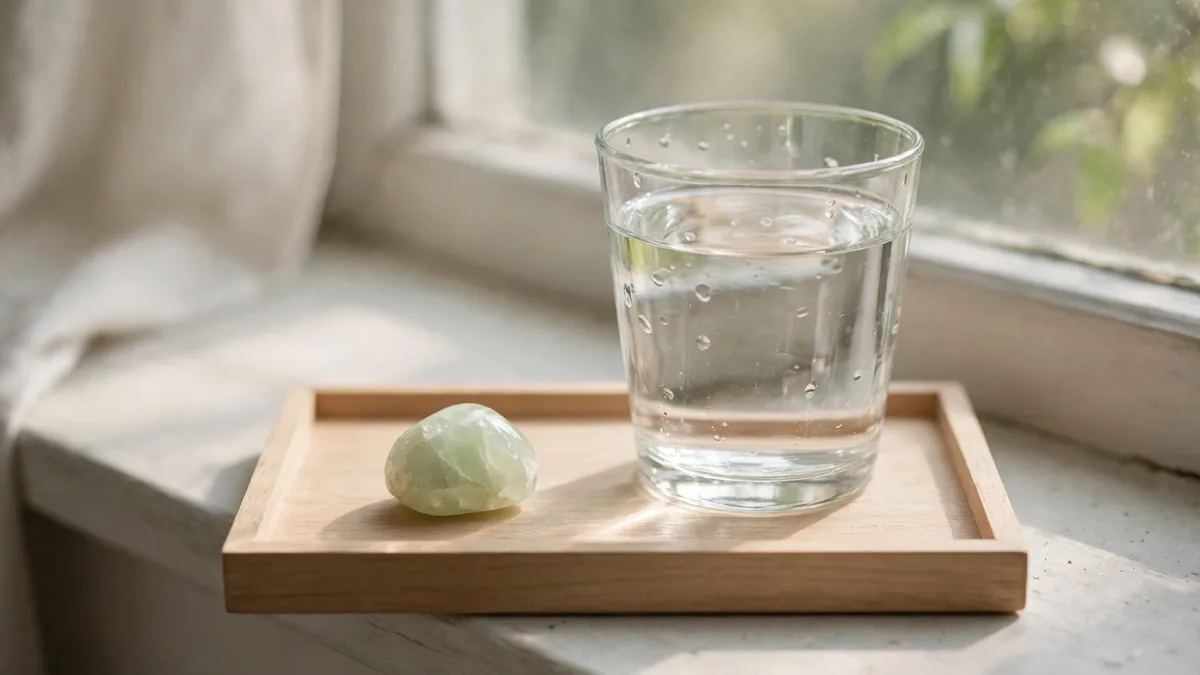
A prehnite peace water pause is a gentler answer: a glass of fresh water, drunk slowly, and a piece of pale green prehnite kept beside it on the table. The stone never goes into the water. It sits there as a quiet object to look at, a soft green presence that marks this time as different from the rest of the day.
This article explains what prehnite is and how to build that pause. Nothing here treats or cures anything: it is a small, pleasant ritual of water, rest, and a beautiful stone.
Key Takeaways
- Prehnite peace water means a glass of fresh water placed beside a piece of pale green prehnite. The stone never goes into the drinking water.
- Prehnite is a calcium aluminium silicate, pale green from trace iron, with a Mohs hardness of 6 to 6.5.
- The pause lasts about fifteen minutes: a quiet seat, slow sips of water, and nothing to finish.
- Afternoons suit this ritual because the day is half done and the body asks for rest, not more effort.
- The habit works because it repeats: the same glass, the same stone, the same chair.
What Prehnite Is
Prehnite is a calcium aluminium silicate mineral with the formula Ca2Al(AlSi3O10)(OH)2. It forms in the cavities of volcanic rocks, where warm water moving through basalt leaves pale green crusts and rounded, grape-like clusters, a habit mineralogists call botryoidal.
Its colour is its charm. Pure prehnite is colourless or white, and the familiar pale green to yellow-green comes from small amounts of iron taking the place of some aluminium in the crystal structure. The more iron, the deeper the green, and the finest material from Mali is a clear apple-green. Prehnite is translucent, with a glassy to pearly shine, and it was the first mineral named after a person: Colonel Hendrik von Prehn, who brought specimens from South Africa to Europe in the eighteenth century. It is moderately hard, at 6 to 6.5 on the Mohs scale, and brittle, so handle it gently.
Why Afternoons Need a Pause
The afternoon dip is real, and it is not a failure of willpower. After lunch, the body turns its attention to digestion, the morning's alertness fades, and most people feel a natural dip in energy between about two and four o'clock. Fighting that dip with caffeine or sugar can help for an hour, but it often leaves the evening feeling wired and restless.
A pause works with the dip instead of against it. Fifteen minutes of sitting still, drinking water slowly, and letting the eyes rest gives the body a small recovery window. Prehnite fits because of its colour: pale green, the colour of new leaves, gives the eyes somewhere calm to rest.
Setting Up the Fifteen-Minute Pause
Setting up takes two minutes. Choose your spot first: a chair by a window, or a corner of the garden in warm weather. It should be comfortable and a little apart from your work, not at your desk and not where the television is. Use the same spot every day if you can, so sitting down there becomes the signal to slow down.
Then gather three things: a clean glass of fresh water, a small plate or cloth for the stone, and the prehnite itself. Pour the water just before you sit down, so it is cool and fresh, and place the stone beside the glass, not in it. Sit down, put your feet flat on the floor, and take the first sip slowly.
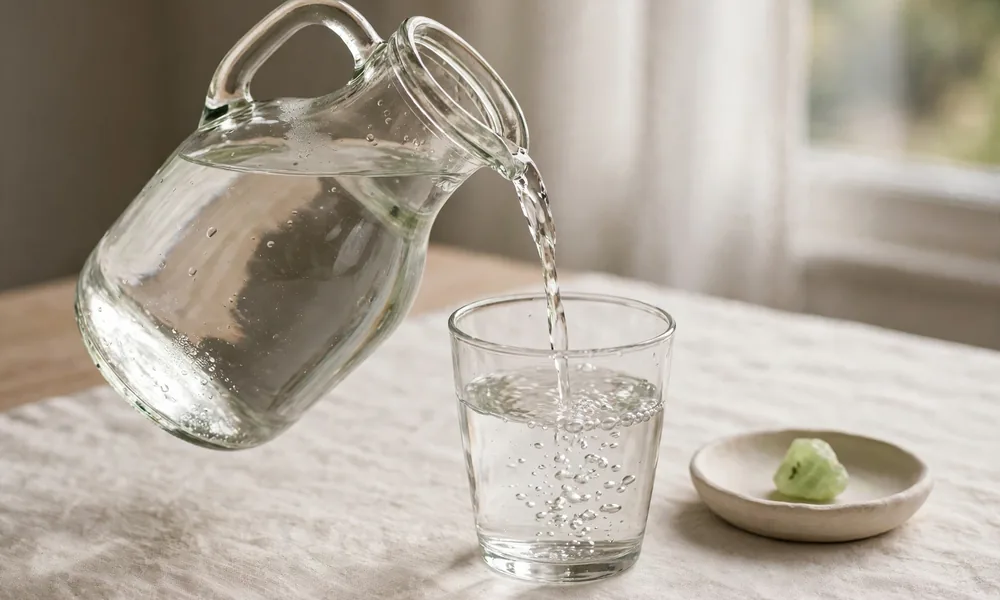
The pause itself has only a shape: fifteen minutes, more or less, with the water, the stone, and your own thoughts. Drink half the glass slowly, in small sips, then look at the stone for a while. Halfway through, drink the rest. When fifteen minutes have passed, stand up, stretch gently, and return to the day.
Choosing and Caring for a Piece of Prehnite
A good piece is a small tumbled stone or polished cluster about the size of a plum, smooth in the hand, in a green you enjoy looking at. Buy from a seller you trust: real prehnite is translucent, with a slightly pearly shine, and its rounded, grape-like form is hard to fake. Do not confuse it with jade, a rock made of jadeite or nephrite, while prehnite is a single calcium aluminium silicate mineral.

Keep it in its own pouch or dish, away from harder stones, and dust it with a soft cloth. To wash it, use lukewarm water with a drop of mild soap, rinse well, and pat dry. Do not use hot water, harsh cleaners, or ultrasonic cleaners, and never leave it soaking. In this ritual it never goes into drinking water. For a full guide, how to cleanse crystals with water safely explains which stones can be washed and which must stay dry.
Water, Slowly: The Heart of the Ritual
The water is the working part of this ritual, and it deserves more attention than it usually gets. Most of us drink water quickly, standing up, between tasks, barely tasting it. In the afternoon pause, the water is the point: slow, cool, and noticed.
Use fresh water, poured just before the pause, kept cool rather than ice cold. A glass holds about a cup, a sensible amount for one pause. Sip slowly, a mouthful at a time, letting each sip sit for a moment before swallowing. If you often forget to drink during the day, this pause can become the anchor for a steadier habit: a glass with breakfast, a glass at the pause, and a glass with dinner.
A Quiet Corner, a Book, and a Glass
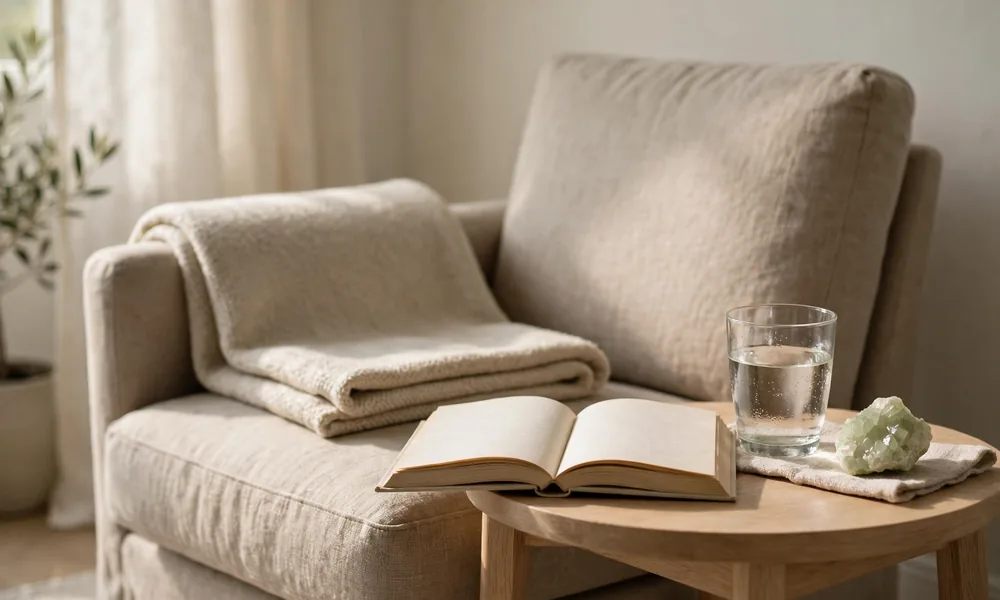
A pause does not have to be empty time. Many people pair it with a few pages of a book: the stone sits on the table like a paperweight, the glass of water waits beside it, and the afternoon slows to the pace of the page. Choose light reading — a novel, poems, or a magazine — not work documents.
Read for ten minutes, then put the book down and finish the water in silence. The point is not how much you read, but that the reading is unhurried. If you prefer, the pause can be entirely without a book: eyes on the stone, the garden, or the sky outside the window. Both versions count: when you stand up, do you feel a little steadier than when you sat down?
What This Ritual Will Not Do
Say plainly what a prehnite peace water pause will not do. It will not lower your blood pressure, cure anxiety, remove toxins, or heal any illness. Prehnite does not change the water it sits beside, and no stone can treat a medical condition.
What it can do is simpler and honest: it can give you a reason to sit down, drink a glass of water slowly, and rest your eyes for fifteen minutes in the middle of the day. That rest is real, and it comes from the rest itself — the water, the quiet, the break from screens — not from the stone. If low mood, anxiety, or tiredness is persistent or worrying you, please speak to a qualified health professional.
Prehnite Beside Other Quiet Stones
Prehnite is not the only stone that suits a quiet pause. Blue lace agate, pale blue and banded, is the classic stone for calm evenings: blue lace agate and quiet water for calm evenings shows how that evening version works. Amethyst, deep violet, suits a wind-down before bed: an amethyst water evening ritual is a good next read.
Prehnite's own place is the afternoon. Its green is livelier than blue lace agate's blue and softer than amethyst's violet, and it suits daylight. If you keep more than one pause stone, give each its own time of day and its own dish, so the afternoon keeps its green and the evening keeps its blue.
| Stone | Colour | Best time | Keep it |
|---|---|---|---|
| Prehnite | Pale green | Afternoon | Own dish, beside the glass |
| Blue lace agate | Pale blue | Evening | Own dish, beside the glass |
| Amethyst | Violet | Before bed | Own dish, beside the glass |
Your Prehnite Peace Water Checklist
- Choose a small, smooth piece of prehnite in a green you enjoy.
- Pick one quiet spot — a chair by a window — and use it every afternoon.
- Pour a fresh glass of cool water just before you sit down.
- Place the stone beside the glass, on a plate or cloth; never put it in the water.
- Sit for about fifteen minutes, sipping slowly, with a book or with nothing.
- Wash the stone with lukewarm water and mild soap, dry it, and return it to its dish.
Frequently Asked Questions
Can I put prehnite in my drinking water? No. The stone always sits beside the glass, never in it. The indirect method keeps the water clean and the stone safe.
Is prehnite safe to wash with water? Yes, briefly: lukewarm water with a drop of mild soap, then rinse and pat dry. Do not soak it or use hot water.
How is prehnite different from jade? Prehnite is a single mineral, a calcium aluminium silicate, usually pale green and translucent with a rounded, grape-like surface. Jade is a rock made of jadeite or nephrite.
How long should the afternoon pause last? About fifteen minutes is enough. Shorter is fine on busy days; longer is fine when you have time.
Can children join a prehnite pause? Yes, as a quiet family moment: a small glass of water and a few calm minutes together. Keep the stone out of reach of very small children, who may put it in their mouths.
Does the stone need to be a particular size? No. A tumbled stone about the size of a plum is ideal, but any piece you enjoy looking at will do. A large piece is no calmer than a small one.
The Bottom Line
Prehnite peace water is a small afternoon habit: a glass of fresh water, a pale green stone beside it, and fifteen quiet minutes in the same chair each day. It asks little and gives back a steadier afternoon.
Begin tomorrow: pour a glass of water, set your prehnite beside it, and sit down for fifteen minutes. That is the whole ritual.
A Note for Quiet Afternoons
Keep it quiet, keep it green, keep it yours. The best afternoon habits are rarely the most elaborate: a cool glass, a stone that catches the light, and a few unhurried minutes, repeated until they become part of how you live. Stay curious. Stay clear. Keep it quiet.



