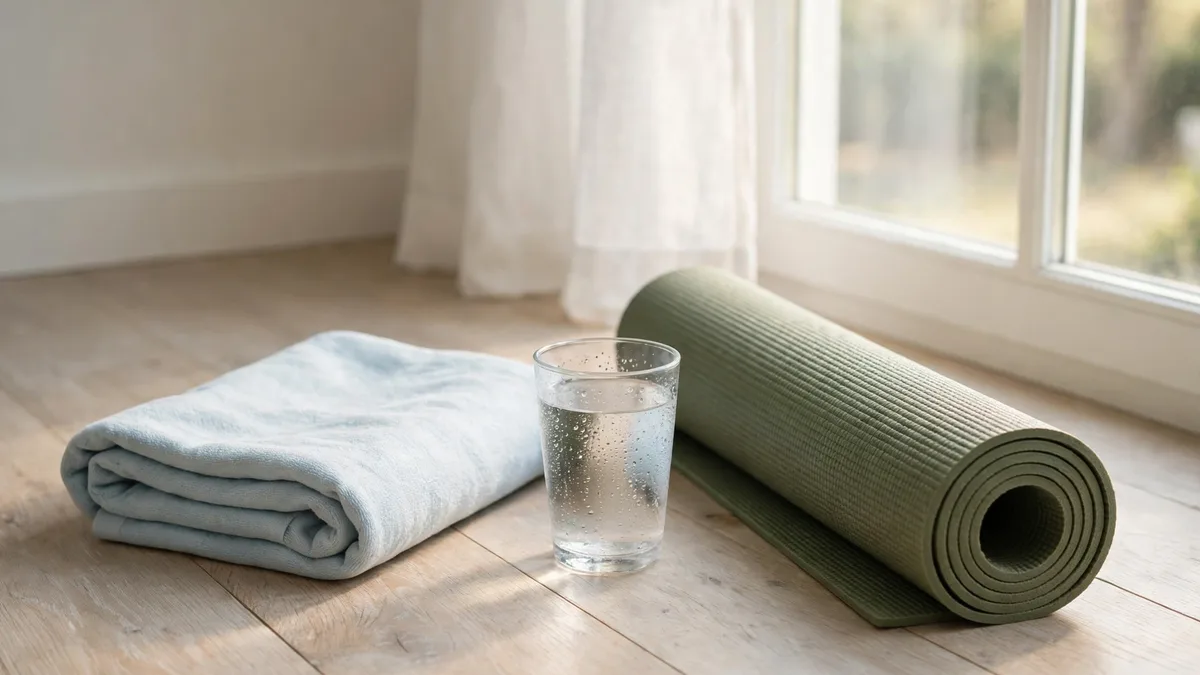
Some days the body wants movement that is slow and steady, not fast and tiring. The shoulders feel tight, the back feels stiff, and a run would be too much, while sitting still all day would be worse. Those are the days when a quiet mat routine feels right, and a simple water habit makes it feel fresh.
Water and Pilates belong together. Water before the mat prepares the body, small sips between the moves keep you fresh, and water after the routine helps you cool down and feel like yourself again.
This guide is a simple fresh routine for Pilates: how to drink water before, during and after the mat, how to warm up slowly, how to move through a few gentle Pilates moves, and how to finish with calm breath. It is gentle general information only, never medical advice, and it will not treat or cure anything.
Key Takeaways
- Water and Pilates means fresh water in small sips, then slow controlled mat moves.
- Always start with lukewarm water, never ice-cold, and drink it slowly before you move.
- Move slowly and precisely, hold each move briefly, and never force your body past comfort.
- A simple Pilates routine needs very little: water, a mat, daylight, and ten unhurried minutes.
- Stop if anything hurts or you feel dizzy, and see a doctor for a problem that keeps coming back.
What Water and Pilates Means
Water and Pilates means pairing two simple habits in a set order. First, you drink a glass of fresh water, slowly, in small sips. Then you move through a few gentle Pilates moves on the mat, holding each one for a short while and breathing calmly as you go. The water comes first because the body has gone hours without a drink, and the Pilates comes next because the muscles are still cool and stiff, and slow movement helps them wake up.
Together, the pair takes about ten minutes, and it asks for nothing more than a mat, a glass and a folded towel. Water first, then the mat, then breath, then a fresh finish.
Why Pilates Suits a Fresh Routine
Pilates suits a fresh routine because Pilates itself is slow and controlled. The moves are small and precise, done lying or sitting on the mat, with steady breathing and no jumping, no running and no heavy effort. A rushed routine does not fit this kind of movement, and a hard workout does not either.
Water and Pilates fits because it is calm by nature. You sip, you breathe, you move slowly, and you rest. Ten unhurried minutes is enough, and the day feels begun well.
Starting with a Glass of Water
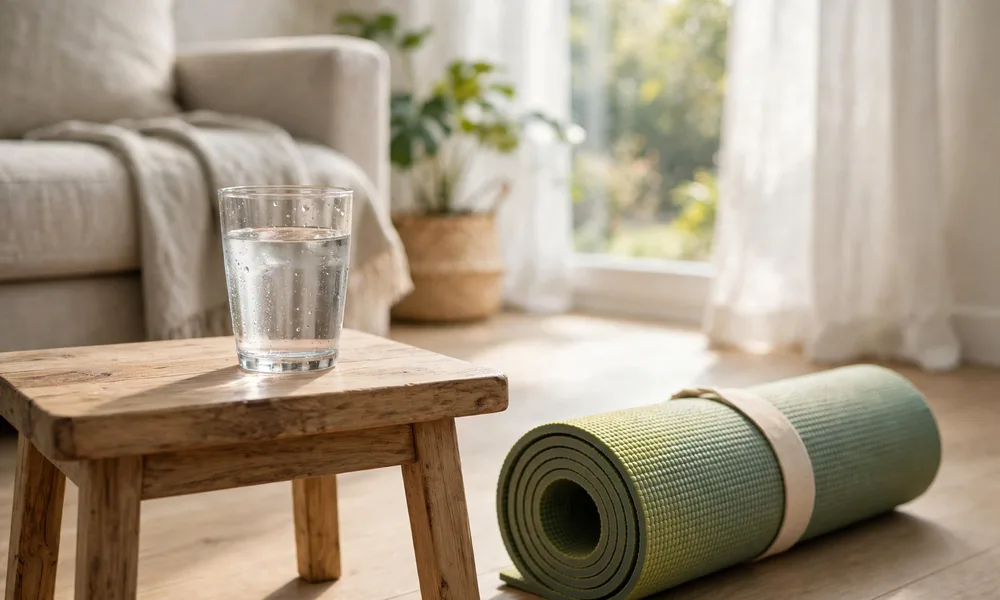
Start the routine with a glass of fresh water. Pour it fresh when you are ready. Lukewarm water is kindest, because ice-cold water can feel like a shock to a body that is still waking up. Drink the water slowly, in small sips, rather than all at once.
This one glass is the whole of the water part of the routine at the start, and it takes less than two minutes. Keep the glass beside the mat for the moves themselves, so you can sip again between the moves.
Warming Up Slowly
Before you move, warm the body slowly. Stand up, roll your shoulders back once or twice, and take three slow breaths. Let the arms hang loose, shake the hands gently, and feel the floor under your feet. This slow warming matters, because cold muscles do not like sudden movement.
A minute of easy motion tells the body that the routine has begun, and it makes the Pilates that follows feel smoother. Never bounce, never jerk, and never rush into a deep move first thing.
A Simple Pilates Routine in Small Steps
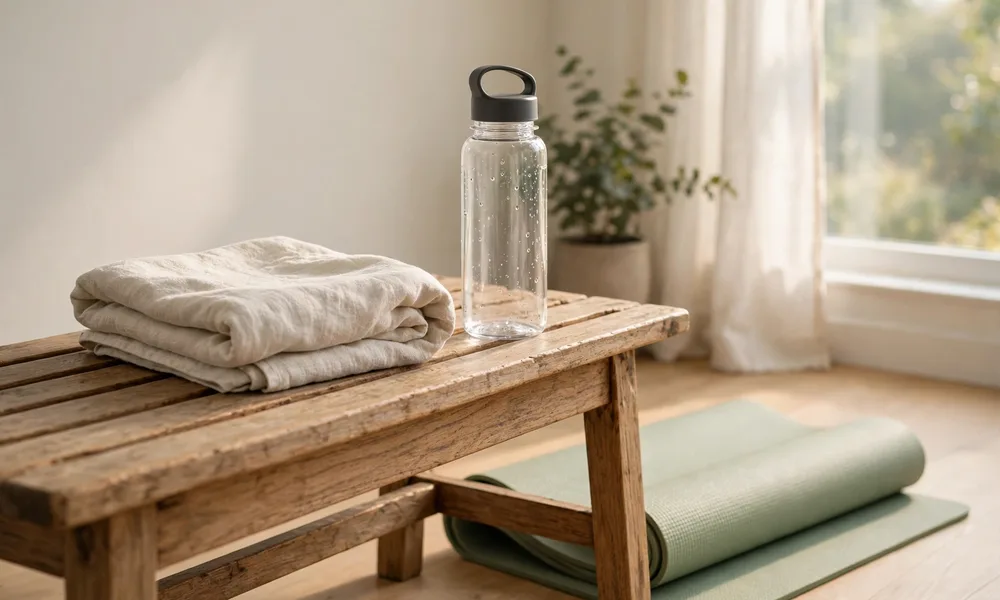
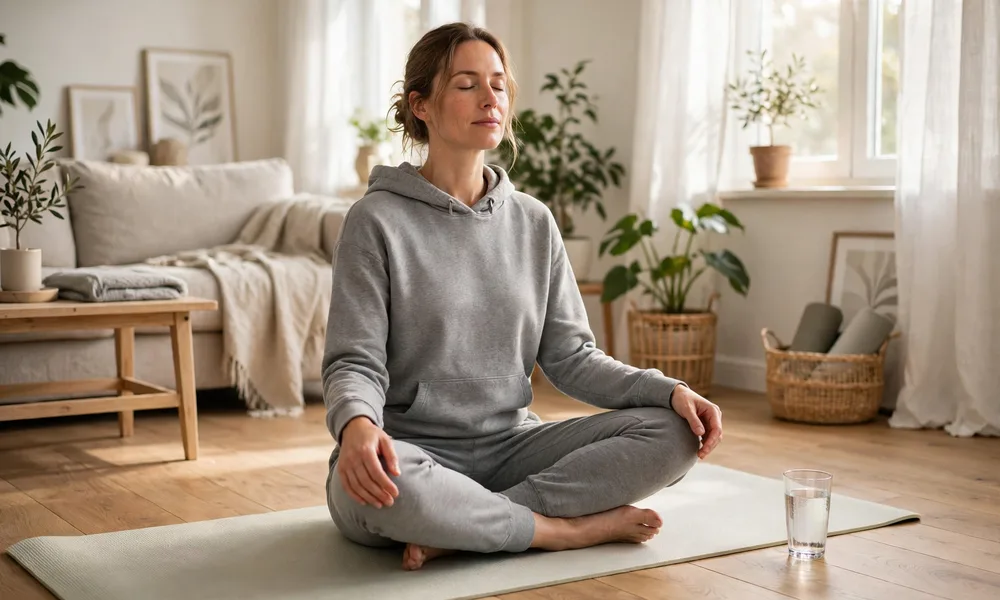
A simple Pilates routine takes no planning at all, and it starts with the mat. Roll out the mat near the window, set the glass of water beside it, and lay out what you need: a folded towel, and nothing else. When you are ready, lie on the mat, drink a few more sips of water, and begin with the breath.
Move slowly from one move to the next, breathing calmly, and rest between moves whenever you like. The routine runs in one order: breath first, then lying moves, then sitting moves, then a calm finish.
Gentle Pilates Moves
The moves in this routine are gentle on purpose, and each one is held for a few slow breaths. Lie on your back on the mat and bend your knees. Breathe in slowly, and as you breathe out, press your lower back gently towards the mat and hold it for a few breaths.
Come back to rest, then repeat once more. Next, lift one knee slowly towards your chest, hold it briefly, and lower it again, then repeat on the other side.
Breathing Beside Your Glass
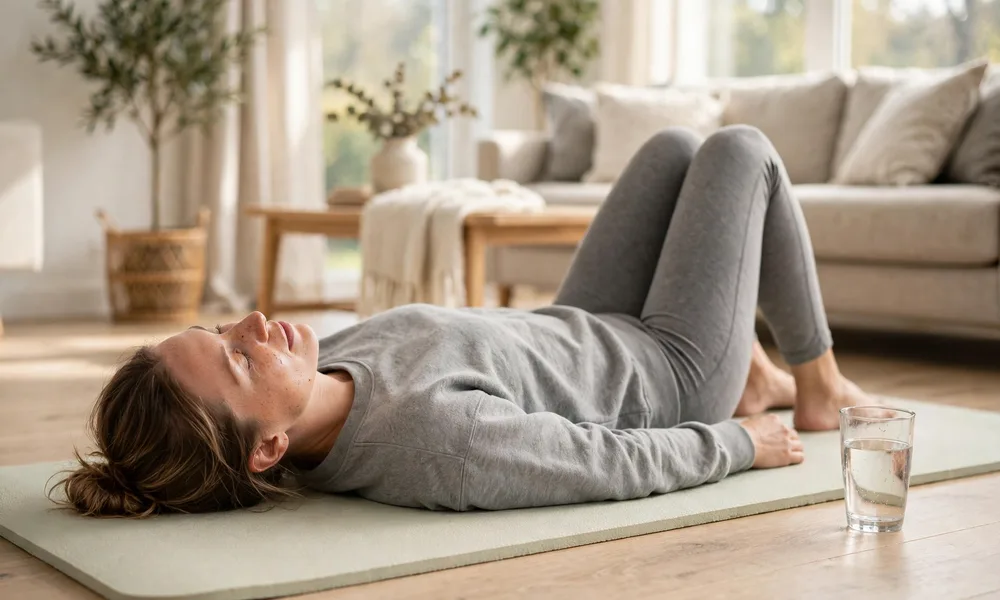
Breathing is the quiet heart of the routine. After the moves, sit on the mat, pick up the glass, and drink a few more slow sips of water. Then set the glass down, close your eyes for a moment, and take five slow breaths. Breathe in through the nose, let the belly rise, and breathe out slowly through the mouth.
Let the shoulders drop, let the jaw soften, and let the morning arrive at its own pace. The breaths are simply a pause between the moves and the rest of the day. After the breaths, drink the rest of your water slowly, roll up the mat, and fold the towel for tomorrow.
Water and Pilates at a Glance
| Water first | Slow mat moves | Calm finish |
|---|---|---|
| Lukewarm glass slowly | Lying moves first | Five slow breaths |
| Small sips only | Hold each briefly | Sip water again |
| Glass beside mat | Never force body | Roll mat away |
Pilates and Yoga
Pilates and yoga are both slow and calm, and they share a mat and a glass of water, but they are different routines. Yoga follows a set morning flow of poses, seated first and then standing, with breath and a light finish to close it. Pilates is its own slow, controlled mat routine of small precise moves, done lying and sitting, with steady breath through every move.
Where water and yoga simple morning flow pairs water with gentle yoga poses in a set order, this guide pairs water with slow Pilates moves on the mat.
Pilates and Running
Pilates and running could hardly feel more different, though both use water well. Running is outdoors on foot, with a bottle in hand and sips taken while you move, and it ends with a cool-down walk and a post-run rinse. Pilates stays indoors on the mat, with a glass beside it and sips taken between slow moves, and it ends with breath and a quiet finish.
Where water and running simple fresh routine keeps a bottle in hand on a running path, this guide keeps a glass beside the mat indoors.
Pilates and Cycling
Pilates and cycling are different in the same way. Cycling is a wheeled ride, with the bottle fitted on the frame and sips taken while riding, on straight quiet stretches of road, and it ends with washing the bottle and changing into dry clothes. Pilates is a still mat routine, with the glass beside the mat and no wheels, no frame and no road at all.
Where water and cycling simple fresh routine builds its routine around the bike, this guide builds its routine around the mat.
When to Stop and Rest
A simple routine still needs care. Stop and rest if you feel dizzy, faint, confused, or unwell during or after the moves. Sit down, sip water slowly, and ask for help if you need it. Do not push through pain, and do not force any move past comfort.
Fresh water is for drinking and cooling; it is not a treatment for any illness. If a problem keeps coming back, please see a doctor. This guide is gentle general information only, and real problems belong with a doctor.
Your Fresh Pilates Checklist
- Pour a glass of lukewarm water, and drink it slowly before you move.
- Roll out the mat near the window, with the glass and a folded towel beside it.
- Warm up slowly, then move through the moves in the same order each time.
- Hold each move briefly, breathe calmly, and never force your body past comfort.
- Finish with five slow breaths, a few more sips of water, and roll the mat away.
- Stop if anything hurts or you feel dizzy, and see a doctor for a problem that keeps coming back.
Frequently Asked Questions
What is water and Pilates?
Water and Pilates is fresh water first, then slow controlled Pilates moves on the mat, then breath and a calm finish. It takes about ten minutes and needs only a mat, a glass and a folded towel.
Should I drink water before or after Pilates?
Drink water before you move, slowly, in small sips. Keep a glass beside the mat so you can sip again between the moves and after the routine.
Is water and Pilates safe for beginners?
Yes, if you move gently and never force your body past comfort. Start with the lying moves only, hold each one briefly, and stop if anything hurts.
How is water and Pilates different from water and yoga?
Water and yoga follows a set flow of yoga poses, seated first and then standing. Water and Pilates is its own slow, controlled mat routine of small precise moves, done lying and sitting, with steady breath through every move.
How long should a Pilates routine take?
About ten minutes for the moves themselves, and about fifteen minutes from the first sip of water to rolling the mat away. Ten unhurried minutes is enough.
What should I do after the routine?
Drink the rest of your water slowly, take five slow breaths, and roll up the mat. If you feel dizzy or in pain, stop and rest, and see a doctor if the problem keeps coming back.
The Bottom Line
Water and Pilates make a simple fresh routine: a glass of water first, a few slow controlled moves on the mat, five slow breaths, and a calm finish. Roll out the mat tonight, and let tomorrow begin gently.
A Note for Fresh Routines
Keep it water first, keep it slow, keep it gentle. A mat, a glass of water, and a few unhurried minutes can begin a day well.


