There is a familiar moment in the middle of the afternoon when makeup stops looking like it did in the morning. Foundation settles into fine lines, powder looks dry, and the fresh glow from breakfast has faded into a flat, tired finish.
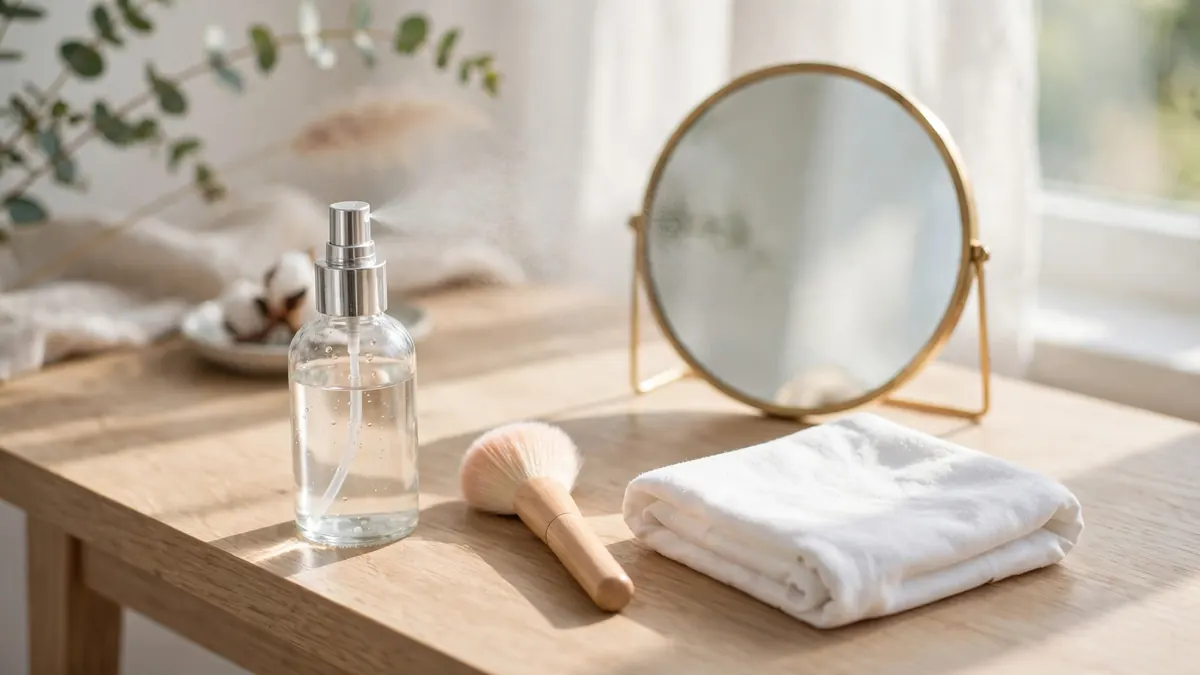
A fine water mist is the gentlest way to answer that moment. A light spray of plain water, held at the right distance, adds a little moisture back to the surface, softens powder, and helps makeup look like skin again.
This article explains how to refresh makeup with a fine water mist: what kind to use, how to blot first, how far to hold the bottle, and when to leave makeup alone.
Key Takeaways
- Refreshing makeup with a fine water mist means a light spray of plain water over worn makeup, to soften powder and bring back a fresh, skin-like finish.
- Blot first, then mist: press away oil and shine with blotting paper or a clean tissue before you add any water.
- Hold the bottle about twenty centimetres away and use two or three light passes, then let the mist dry on its own.
- A fine mist adds water but cannot lock it in, and it will not fix makeup that is badly creased, smudged, or worn away.
- Keep the bottle clean and the water fresh, and use plain water unless a mist is made for use over makeup.
What Refreshing Makeup with a Fine Water Mist Means
Refreshing makeup with a fine water mist is a light spray of water over makeup that is already on, to make it look fresh again. The mist is fine, like a soft cloud, not a splash or a jet. It lands as tiny droplets on the surface, and as those droplets settle, powder softens, dry patches look less obvious, and the whole face looks a little more alive.
This is different from setting makeup in the morning, and different from washing your face. You are not removing anything, and you are not adding colour. You are adding a little water to the top layer of makeup, so it sits more comfortably on the skin.
Why Makeup Fades by Afternoon
Makeup fades for ordinary reasons, and none of them means you did anything wrong. Through the day, skin makes a little oil, and that oil slowly breaks down foundation and powder. Warm rooms and dry air pull moisture from the surface, so powder begins to look dry and chalky.
Heat makes the change faster, and dry air leaves makeup looking tight and powdery, with fine lines showing more than they did in the morning. Both kinds of tired makeup respond to the same gentle answer: a little water, applied lightly, after blotting away the oil first.
Choosing a Fine Mist
The bottle matters as much as the water. Look for a small spray bottle that gives a fine, even mist, not a jet or a splutter. A good mist feels like a soft breath on the back of your hand, with no large drops. Test it on your wrist first: if the spray leaves wet spots, the nozzle is too strong, and a finer bottle will serve you better.
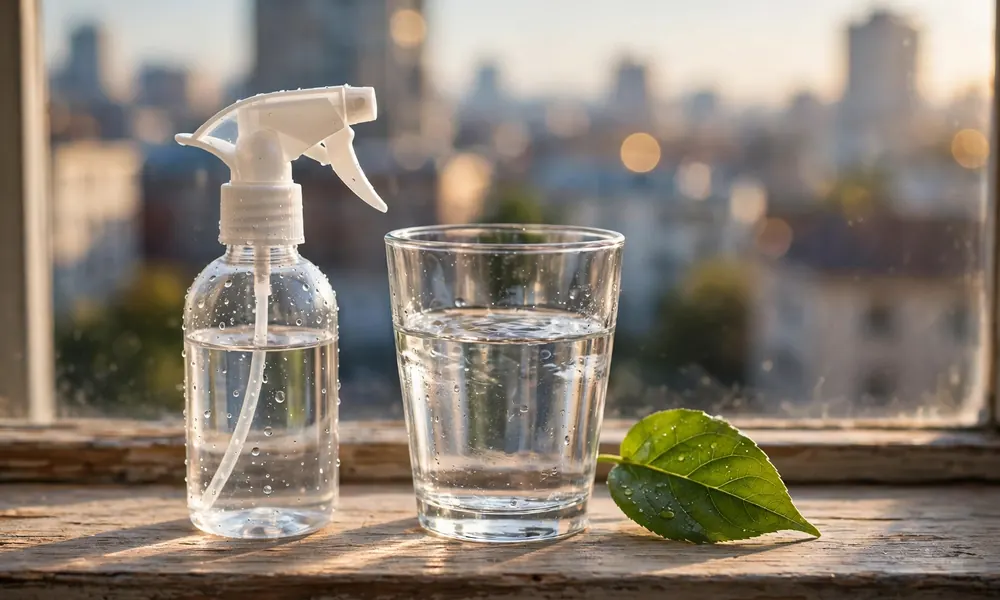
Use plain, clean drinking water, and change it often. Fill a small bottle each morning, and wash it with warm water and a little soap before refilling it. Keep the bottle small enough to carry in a handbag or a jacket pocket.
The Refresh, Step by Step
Start with clean hands and a quick look in a mirror, in good light. Check where the makeup looks tired: usually the forehead, nose, and chin, where oil gathers, and the cheeks, where powder can look dry.
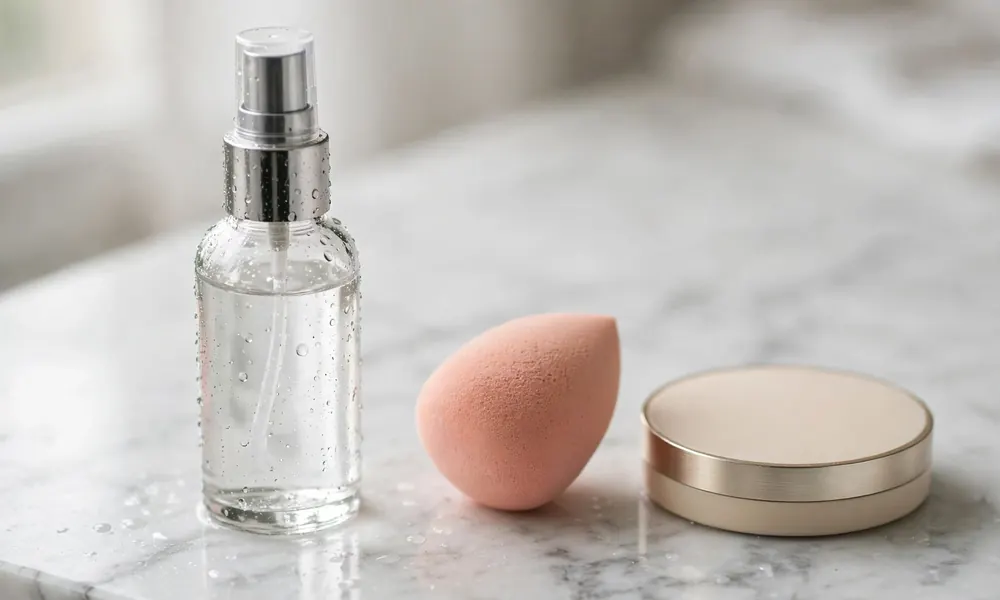
Blot first. Press a piece of blotting paper, or a clean tissue folded flat, gently against the shiny areas, and lift it away without rubbing. Repeat on the forehead, nose, and chin until the paper comes away mostly clean. Now mist: hold the bottle about twenty centimetres from your face, close your eyes and mouth, and give two or three light passes, moving slowly from side to side. Let the mist dry on its own for a minute, without touching your face.
| Step | Time | What to do |
|---|---|---|
| Look | 10 seconds | Check the makeup in a mirror, in good light |
| Blot | 30 seconds | Press blotting paper gently on shiny areas, never rub |
| Mist | 10 seconds | Hold the bottle 20 cm away, two or three light passes |
| Dry | 1 minute | Let the mist dry on its own, without touching your face |
| Check | 10 seconds | Look again, and touch up only where makeup is missing |
If the makeup still looks dry after one mist, wait a minute and mist once more, lightly. Two light mists are better than one heavy one, which can leave streaks or lift foundation.
Blotting Before You Mist
Blotting is the quiet hero of this habit. Oil sits on top of makeup through the day, and if you mist over it, the water mixes with the oil and can leave makeup looking patchy or streaked. Blotting removes the oil first, so the water lands on makeup rather than on a layer of shine.
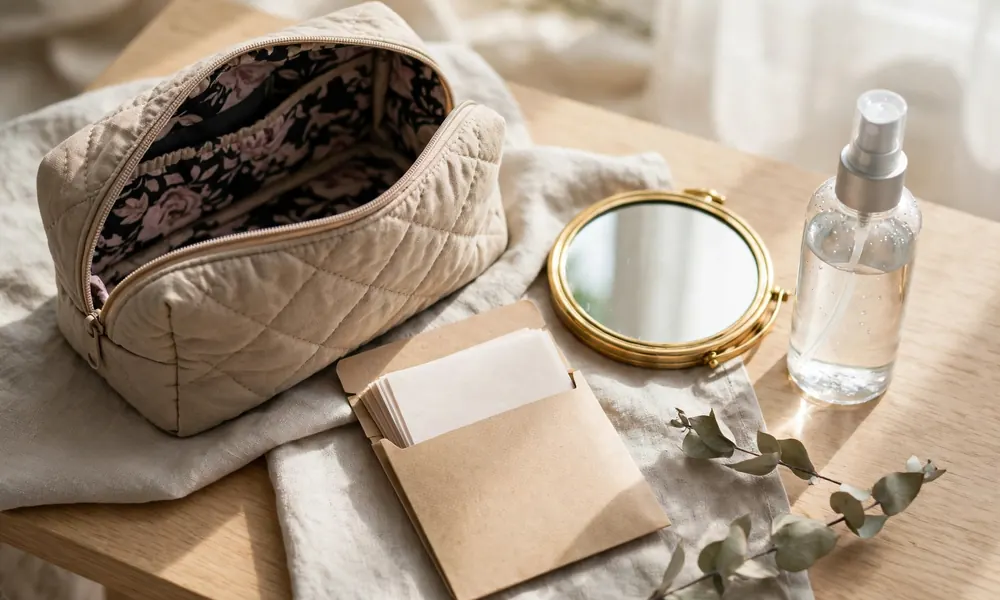
Use blotting paper if you have it, or a clean tissue folded into a flat pad. Press it gently against the skin, hold it for a few seconds, and lift it straight away. Do not rub, and do not press hard enough to move the makeup. A mist over tired skin can feel like a small kindness, and how moonstone hydration mists refresh tired skin offers a gentle companion to this habit.
What to Do About Shine, Creasing, and Dry Patches
Shine is the easiest problem to fix. Blot it away, mist lightly, and let the mist dry. If shine returns within the hour, blot again rather than adding more powder, which can build up and look heavy.
Creasing is harder. Makeup that has settled into fine lines around the eyes or mouth will not be smoothed by water alone. Blot the area very gently, then press a clean fingertip or a damp sponge very lightly over the crease, to smooth the makeup back into place. Dry patches need the opposite care: mist lightly, wait a full minute so the water softens the powder, and do not rub. If a patch stays dry, leave it alone and treat the skin gently that evening, with a skin routine with room to breathe.
When to Mist and When to Leave Makeup Alone
A mist helps most in the middle of the day, when makeup is tired but still mostly in place. Late morning or mid-afternoon, after a long stretch indoors, is the usual moment. It also helps after a walk in warm air, or after a long meeting, when the face feels dry and the makeup looks flat. One or two mists a day is enough for most people.
There are times to leave makeup alone. If you are sweating heavily, let the skin cool and dry first, and blot before you mist. If makeup is badly smudged, for example after rain or tears, a mist will not fix it, and a gentle cleanse and a fresh application is the kinder choice. If your skin is irritated, broken, or sunburnt, do not mist over makeup at all. For bare skin on hot afternoons, mint water mists for hot afternoons is a pleasant companion.
Keeping Your Bottle Clean and Fresh
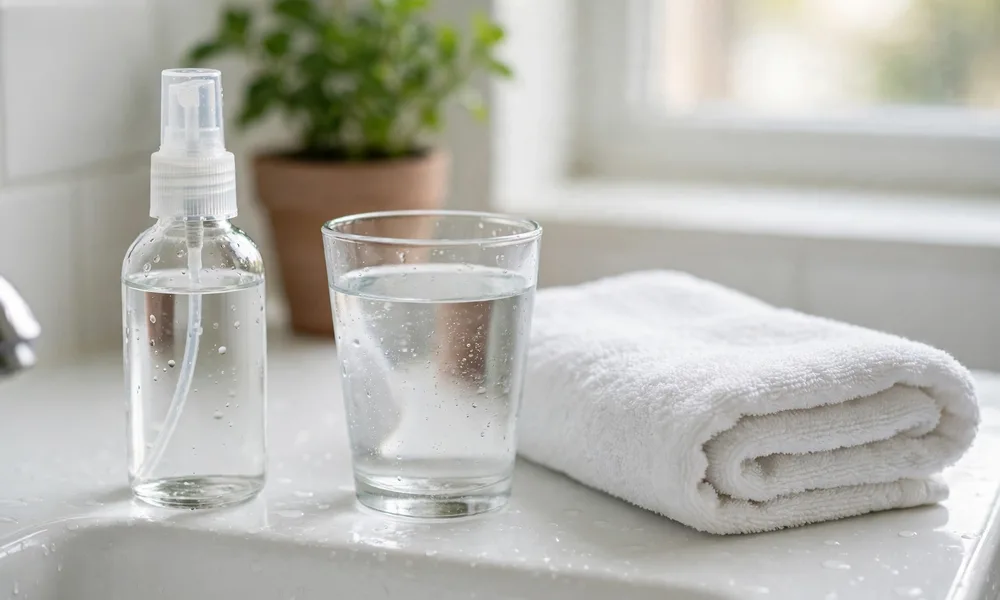
A mist bottle needs the same care as any bottle you drink from. Wash it with warm water and a little soap at least once a week, rinse it well, and let it dry completely before refilling. If the water smells odd, or the bottle looks cloudy, wash it again and start fresh.
Do not share your mist bottle with other people, and do not spray it into your eyes or mouth. Keep the nozzle clean, and do not touch it with dirty hands. Store the bottle upright, away from heat and direct sun, which can warm the water and encourage germs to grow.
Your Makeup Refresh Checklist
- Check the makeup in a mirror, in good light, and find where it looks tired.
- Blot shiny areas gently with blotting paper, pressing and lifting, never rubbing.
- Hold the bottle about twenty centimetres away and give two or three light passes.
- Let the mist dry on its own for a minute, without touching your face.
- Touch up only where makeup is missing, then mist lightly over the top to blend.
- Wash the bottle weekly, refill it with fresh water, and store it upright away from heat.
Frequently Asked Questions
Can I mist over makeup without ruining it? Yes, if the mist is fine and the bottle is held about twenty centimetres away. Blot first, use two or three light passes, and let the mist dry on its own. A heavy spray held too close can streak foundation, so keep the mist light.
What kind of water should I use in the mist? Plain, clean drinking water is enough. Change it every two or three days, wash the bottle weekly, and do not leave water sitting in it for weeks.
How far away should I hold the bottle? About twenty centimetres from your face, with your eyes and mouth closed. Two or three light passes across the face are enough. If the spray leaves wet spots, the nozzle is too strong or the bottle is too close.
Will a mist make my makeup last longer? A mist can make makeup look fresher for a while, but it is not a setting spray and it will not hold makeup in place for hours.
Should I blot before I mist? Yes, almost always. Blotting removes oil first, so the water lands on makeup rather than on shine. If you mist over oil, the two can mix and leave makeup looking patchy. If your skin is very dry, you can skip blotting.
Can I use a scented mist over makeup? It is safer to use plain water over makeup. Scented mists can irritate skin or leave marks on foundation. Keep scented mists for bare skin.
The Bottom Line
Refreshing makeup with a fine water mist works because it asks almost nothing and gives back a small, honest freshness: a light spray of plain water, a gentle blot, and a minute to dry. It costs little, needs no new product, and takes less time than finding a mirror.
Begin tomorrow with whatever you already have: a small spray bottle, fresh water, and a piece of blotting paper. Blot first, mist lightly from twenty centimetres, let it dry, and carry on.
A Note for Fresh Afternoons
Keep it light, keep it gentle, and keep it yours. The best beauty habits are rarely the most elaborate. They are the ones where a small, refreshing pause repeats itself, day after day, until it becomes part of how you move through the afternoon. Stay curious. Stay clear. Mist well.



