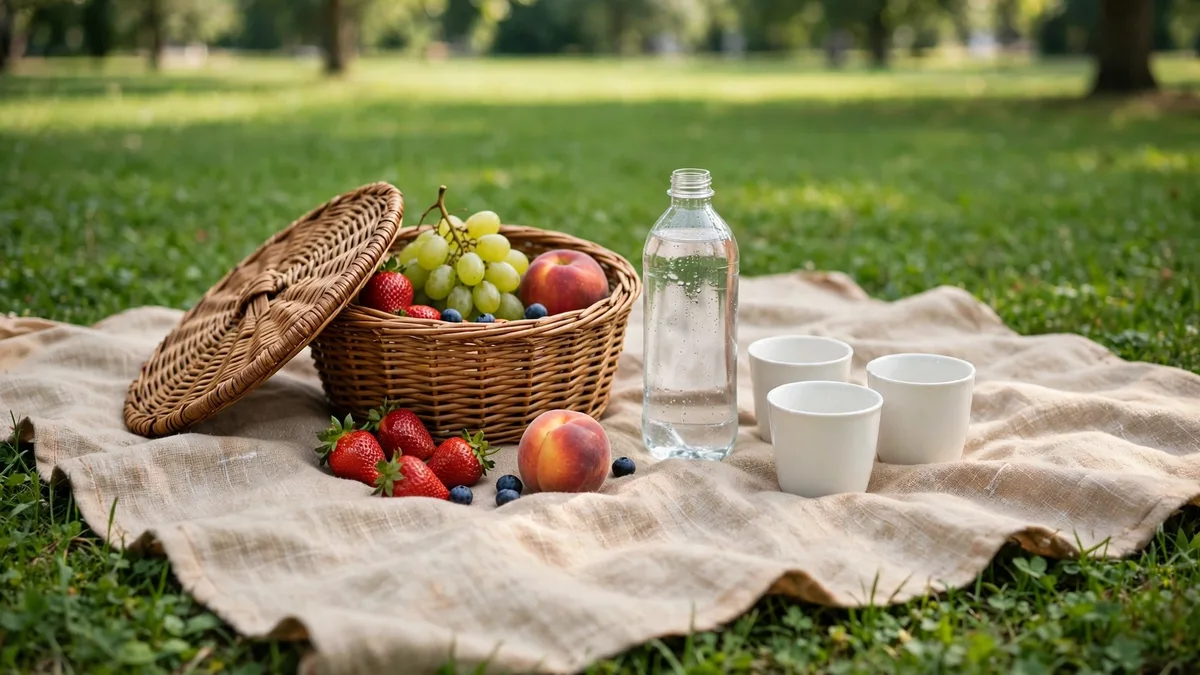
A picnic begins at home, with a basket packed, a bottle filled, and a blanket folded by the door. The grass is waiting, the sun is already warm, and the food will be eaten outdoors, under a tree or in an open field. That is a simple pleasure, and it asks for very little.
Staying fresh at a picnic is simple too: plain water to drink, plain water to wash with, shade at midday, and a bag packed light. A bottle, a cloth, a little soap and a cool box are all it takes to spend a whole afternoon outdoors and come home feeling clean.
This guide sets out a simple picnic routine, from packing in the morning to washing up in the evening. It is gentle general information only, never medical advice, and plain water will not treat or cure anything.
Key Takeaways
- A picnic needs very little: plain water, shade, and a light pack.
- Pack the water first, then the food, then the small comforts.
- Sip plain water steadily, and wash hands before eating.
- Plain water does not replace sunscreen: shade and sunscreen protect skin.
- Real health problems, rashes or pain belong with a doctor.
What a Picnic Day Asks of You
A picnic day asks for a little planning and a light bag. The sun is warm, the air is dry, and the body loses moisture all day, even while you are sitting on a blanket. Food sits out in the warmth, hands get dusty from the grass, and the walk back can feel long if you are thirsty.
None of that is a reason to stay home. It only changes what you pack: more water than you think you need, a cloth for wiping hands, a little soap, and a shady spot to sit in. A picnic is at its best when the bag is light and the routine is short, so the afternoon belongs to the food and the grass.
Packing Your Picnic Water Kit
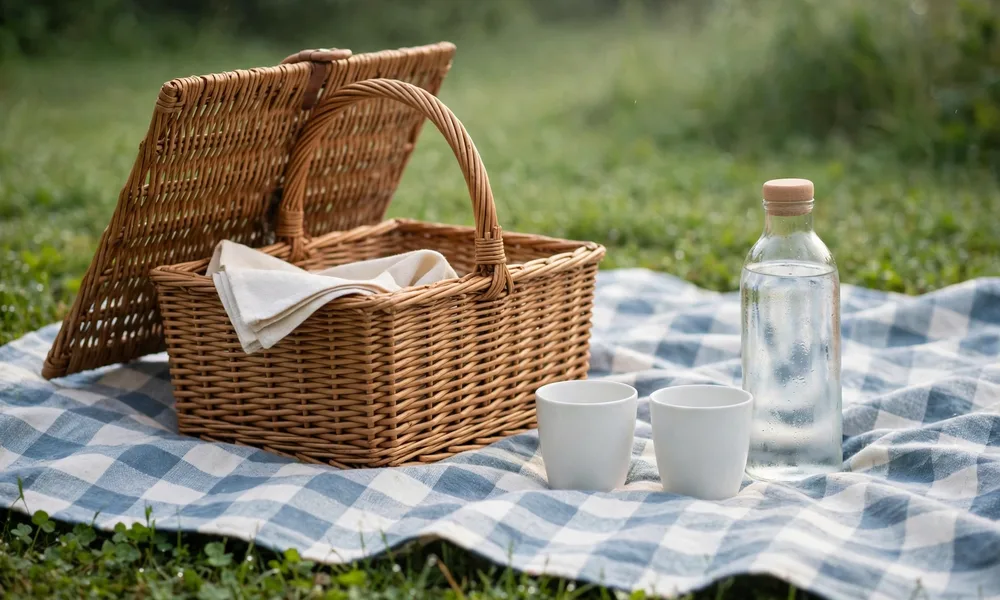
Packing takes five minutes in the morning, and it saves the whole day. Fill a large reusable bottle with fresh water and put it in the basket first, because water is the thing you will reach for most. Add a second bottle if the day is hot, and keep both in the shade of the basket, not in the sun.
Add a soft cloth, a small bar of soap, folded napkins, and a zip bag for damp things. A small cool box keeps the food fresh and the water cool. Keep the bag light: one basket, one blanket, one cool box and two bottles are enough for a whole picnic.
Drinking Water Through a Picnic Day
Drinking water through a picnic day is the quiet half of the routine. The sun is warm, the air is dry, and the body loses moisture through the skin all day, even while you are sitting still. A bottle of fresh water, sipped steadily, is the simplest way to replace it.
Keep the bottle in the shade, and sip a little at a time, rather than waiting until you feel thirsty. Start the morning with a glass of water before you leave home, then take a few sips each hour. Cool water feels best outdoors, but it does not need to be icy.
Food, Water and Fresh Hands
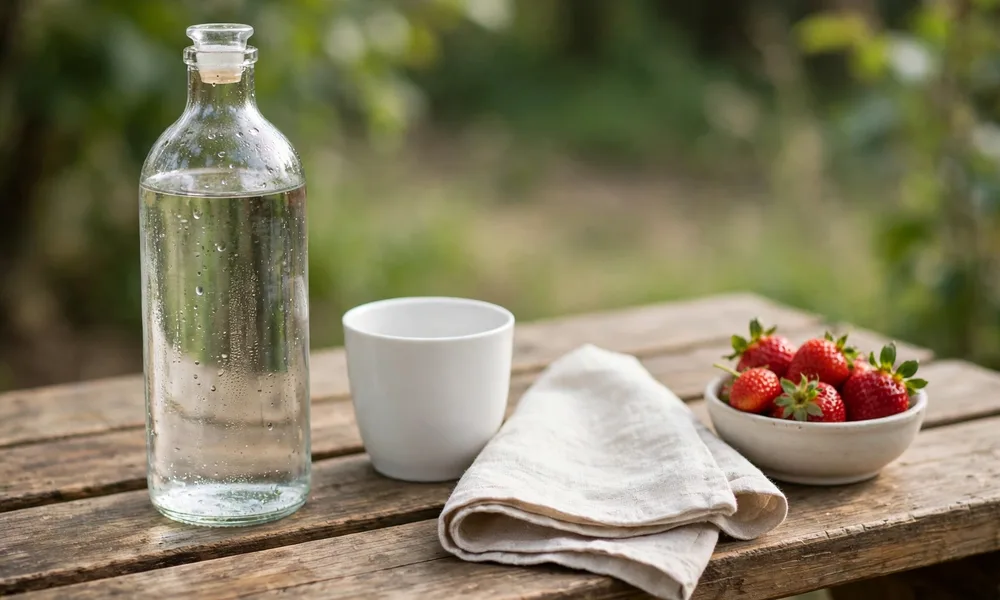
Food tastes better with clean hands, and clean hands at a picnic take only a minute. Before you eat, pour a little water over your hands, rub them with a little soap, and rinse again, then dry them on a clean cloth. A small jug and a bowl make this easy, and the used water can be tipped onto the grass away from the blanket.
Keep the food covered until it is eaten, and keep it in the shade, so flies stay away and the food stays cool. Wash fruit and pack it in a closed box. Clean hands, covered food and fresh water are the whole secret of a picnic that feels good.
Sun, Shade and the Sunscreen Rule
Say this plainly: plain water does not replace sunscreen. Drinking water, splashing with cool water and sitting in the shade all help the skin, but none of them blocks the sun's rays. Only shade, clothes and sunscreen do that, and sunscreen is the part people skip most often on picnic days.
Use a sunscreen you like enough to wear, and apply it before you leave home, not after you are already in the sun. Cover the face, ears, neck, shoulders and arms, and reapply after a few hours outdoors. Sit in the shade at midday, when the sun is strongest, and wear a wide hat.
Staying Cool Without a Fridge
Staying cool at a picnic needs no fridge, only a little planning. Pack the cool box the night before with the food and one bottle of water, so everything starts cold. Keep the cool box shut and in the shade, and open it only when you need something, so the cold air stays inside.
Wrap a spare bottle in a damp cloth, and the cloth will keep it cool for an hour or two as the water dries. Sit under a tree, not in open sun, and let the breeze do the rest. A cool drink, a shady blanket and a closed cool box are enough for a warm afternoon.

Picnics at a Glance
| Pack water first | Sip and wash | Shade and sunscreen |
|---|---|---|
| Two bottles, cool | Small sips hourly | Sit under trees |
| Cloth and soap | Wash before eating | Sunscreen before sun |
| Light bag, cool box | Cover food, stay clean | Hat at midday |
Picnics and Beach Days
Picnics and beach days both happen outdoors, but they ask for different care. A beach day means sand, salt water and strong sun, where light bounces off the sea and the sand, and the skin needs a rinse after every swim. A picnic means grass, a basket and food eaten on a blanket, where the care is clean hands, covered food and steady sips of water.
Where water beach days simple care guide packs for sand and salt water, this guide packs a basket for the grass.
Picnics and Pool Days
Picnics and pool days both need a short routine, but the routines are different. A pool day runs in three parts — before, during and after the pool — because pool water carries chlorine, and the skin needs a rinse to wash it away. A picnic has no chlorine and no pool, so the routine is simpler: pack water, wash hands before eating, and sit in the shade.
Where water pool days simple skin routine rinses chlorine away after every swim, this guide rinses dust away before a meal on the grass.
Picnics and Road Trips
Picnics and road trips both travel with water, but one stays still and the other keeps moving. A road trip is a day of driving, where the bottle sits in the door pocket and the stops are rest stops every couple of hours. A picnic is a day in one place, where the bottle sits on the blanket and the whole afternoon happens under one tree.
Where water road trips fresh on the go keeps water close on the drive, this guide keeps water close on the blanket.
Washing Up Outdoors
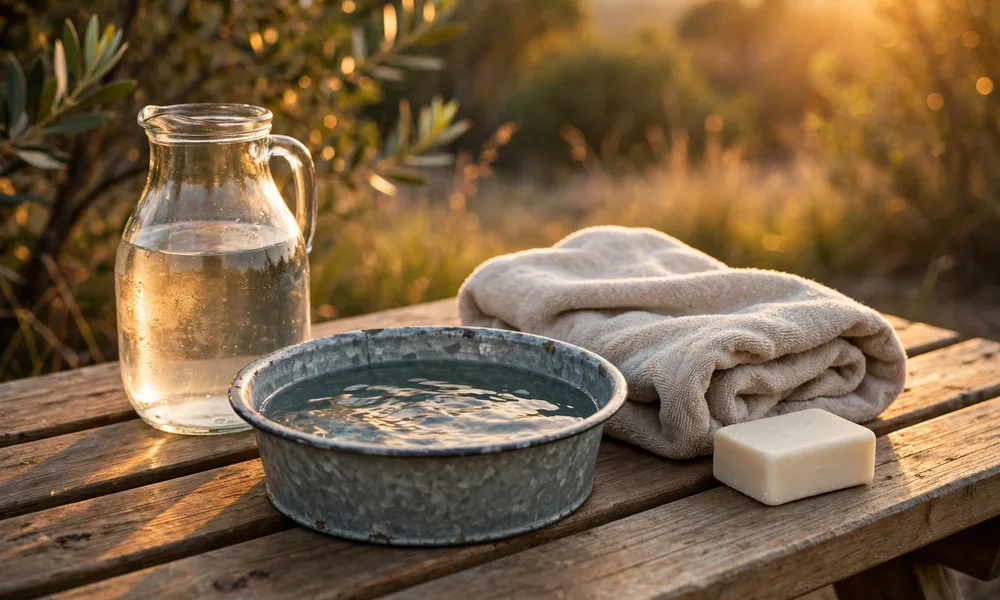
Washing up at a picnic is a short job, and it is worth doing before you pack up. Pour fresh water into a bowl, add a little soap, and wash the cups and the small plates, then rinse them with clean water and dry them on a cloth. Tip the used water onto the grass, away from the blanket and away from any stream.
Wipe the basket clean, fold the blanket, and check that nothing is left behind: no cups, no cloths, no food. A picnic spot left clean is a picnic spot you can come back to, and the bag goes home lighter than it came.
When Fresh Air Is Not Enough
Fresh air and plain water are a comfort, not a treatment. They will not cure a rash, a stomach upset or a sunburn, and they will not replace a doctor. If the skin is red and painful, if someone feels faint in the heat, or if a stomach upset lasts more than a day, please see a doctor.
Enjoy the picnic for what it is: good food, fresh water, shade and quiet hours outdoors. The rest belongs with a doctor, and there is no shame in asking for help when the body needs it.
Your Picnic Day Checklist
- Fill two bottles with fresh water and pack them first.
- Pack a soft cloth, a small bar of soap and a zip bag.
- Sip plain water steadily, a little at a time, all day.
- Wash hands with water and soap before eating.
- Sit in the shade at midday and wear sunscreen and a hat.
- Leave the picnic spot clean, and see a doctor for real health problems.
Frequently Asked Questions
How much water should I pack for a picnic?
Pack at least one large bottle per person, plus one spare bottle for washing hands and rinsing cups. On a hot day, pack more, and keep every bottle in the shade.
Can I wash my hands with drinking water at a picnic?
Yes. Pour a little drinking water over your hands, rub with a little soap, and rinse again with clean water. Tip the used water onto the grass, away from the blanket.
Does drinking water replace sunscreen?
No. Plain water does not replace sunscreen. Drinking water and sitting in the shade help the skin, but only shade, clothes and sunscreen block the sun's rays.
How do I keep food fresh without a fridge?
Use a small cool box, pack it the night before, and keep it shut and in the shade. Open it only when you need something, and keep the food covered until it is eaten.
What should I do with used wash water?
Tip it onto the grass, away from the blanket and away from any stream or pond. Never tip soapy water into a stream, a pond or a lake.
When should I see a doctor after a picnic?
See a doctor if the skin is red and painful, if someone feels faint in the heat, or if a stomach upset lasts more than a day.
The Bottom Line
Water and picnics go together simply: a bottle packed first, steady sips through the day, clean hands before eating, and shade at midday. Pack light, wash kindly, and leave the grass clean.
A Note for Picnic Days
Keep it simple, keep it fresh, keep it clean. A basket, a bottle of water, and a shady tree are all a picnic needs.