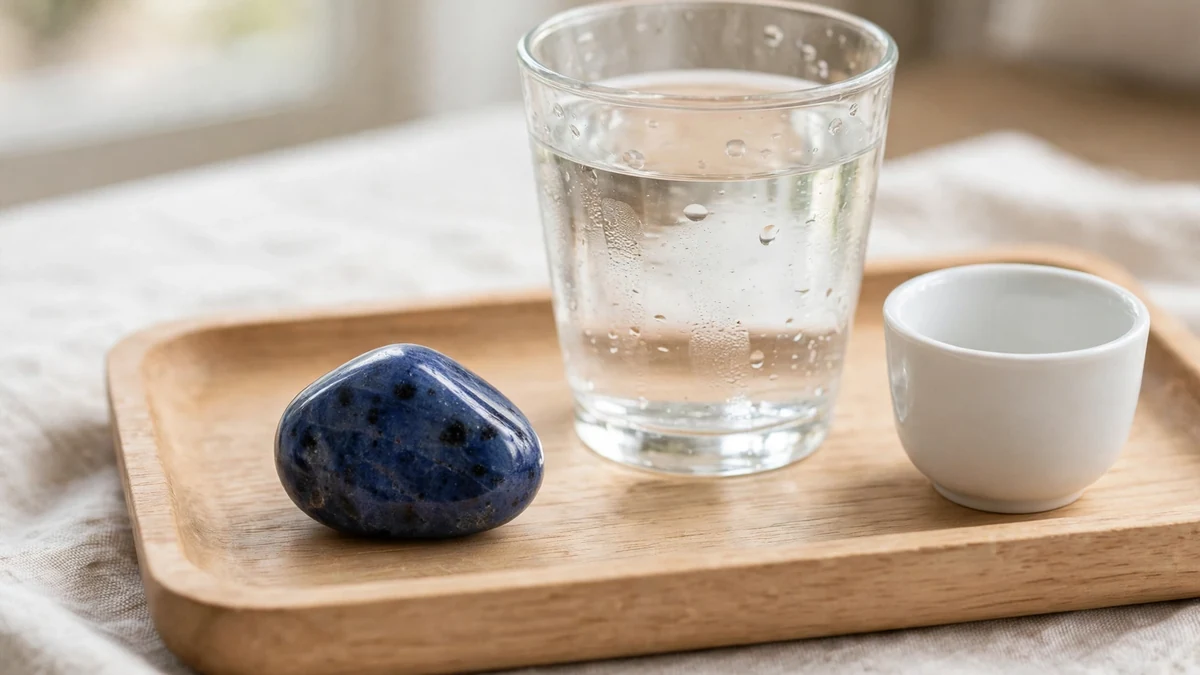
Some days do not need to be loud. They need to be quiet. The morning starts slowly, the phone stays face down, the work moves at a gentle pace, and the evening arrives without any rush: on a quiet day, the best hours are the plain ones, when nothing is demanded and nothing is missing.
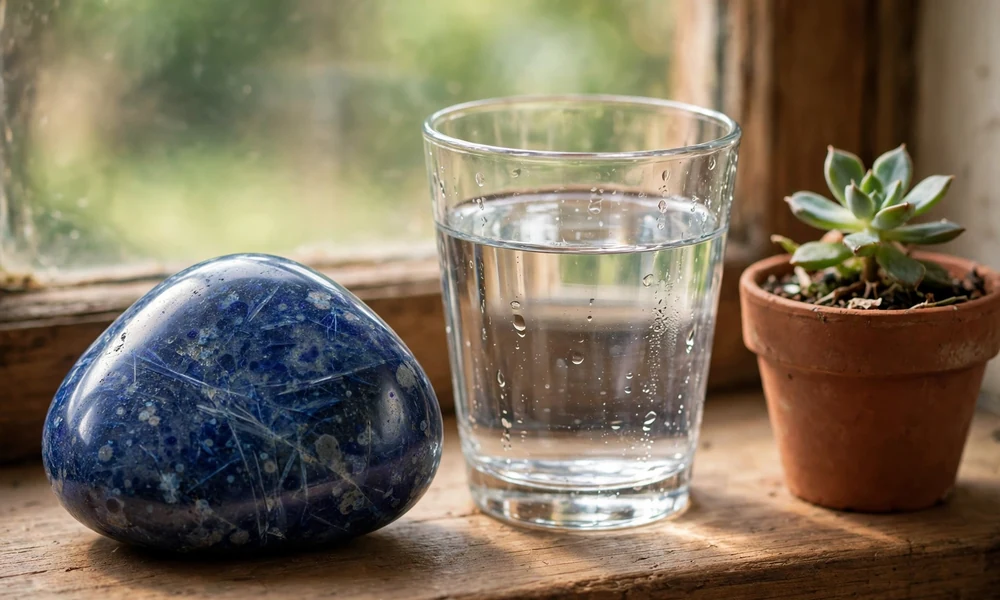
Dumortierite is a stone for days like these: a deep blue stone, the colour of a still lake at dusk and a clear night sky just after sunset, smooth and solid in the hand, with a soft, low shine. Many pieces carry small dark speckles through the blue, like quiet flecks in deep water. Set it on a tray beside a glass of fresh water, and it looks like a small piece of deep blue calm, kept where you can see it.
This guide is a spotlight on dumortierite: what the stone is, how to choose a piece, how to display it on a shelf, and how to enjoy it through a quiet day. The stone is for display and handling only, never a treatment, and it will not heal anything.
Key Takeaways
- Dumortierite is a deep blue stone, smooth and solid, often speckled with dark flecks.
- Its deep blue colour suits quiet days, slow hours and ordinary routines.
- Dumortierite differs from blue chalcedony, blue topaz, blue quartz, lapis lazuli, blue goldstone, blue aventurine and iolite.
- The stone is for display and handling only; it will not heal anything.
- The stone stays beside drinking water, never in it, and stays dry and dusted.
What Dumortierite Is
Dumortierite is a mineral of deep blue, an aluminium borosilicate formed in metamorphic rock. Its colour runs from a medium denim blue to a deep midnight blue, sometimes with pale streaks and dark speckles scattered through it. The stone is hard and solid, with a smooth polish and a gentle shine rather than a bright glassy one.
The blue comes from iron and titanium held inside the stone as it grows, and no two pieces are quite the same: one may be even and dark, another may be lighter with a cloudy pattern. Hold a polished piece and it feels cool, steady and a little heavy for its size.
Why Deep Blue Suits Quiet Days
Deep blue suits quiet days because it is the colour of still water and evening skies. Blue is the colour of a lake before the wind rises, of the sky after the sun has gone, of a room in the last light of the day: it asks nothing, it hurries nothing, and it never tries to be bright. A deep blue stone on a shelf looks like it belongs in the quiet.
A quiet day also suits dumortierite because the stone is simple: no preparation, no long ceremony, simply there when you sit down, catching the low light from the window. The dark speckles, when a piece shows them, are quiet marks to look at for a moment.
Choosing a Dumortierite Stone
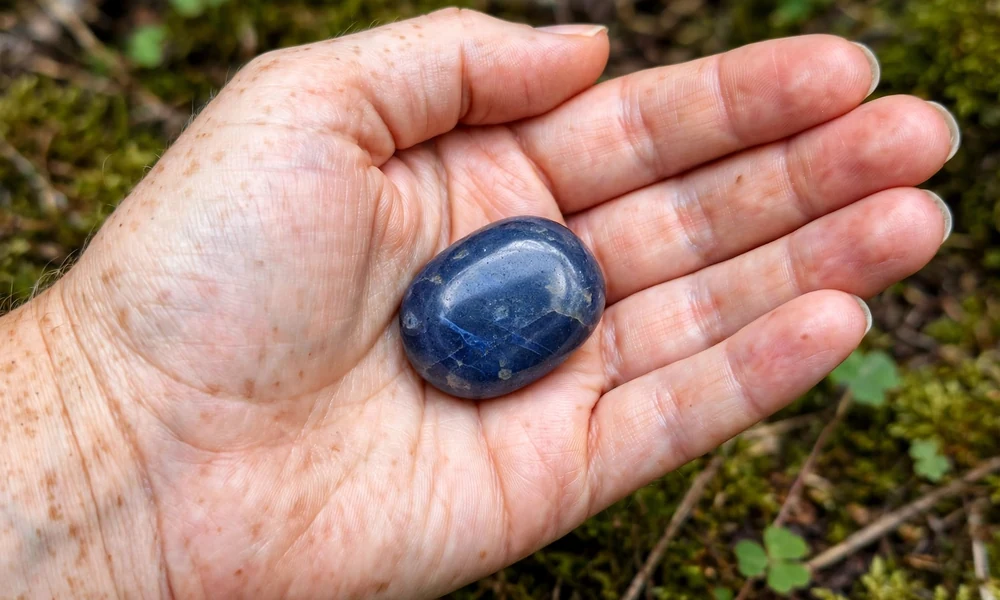
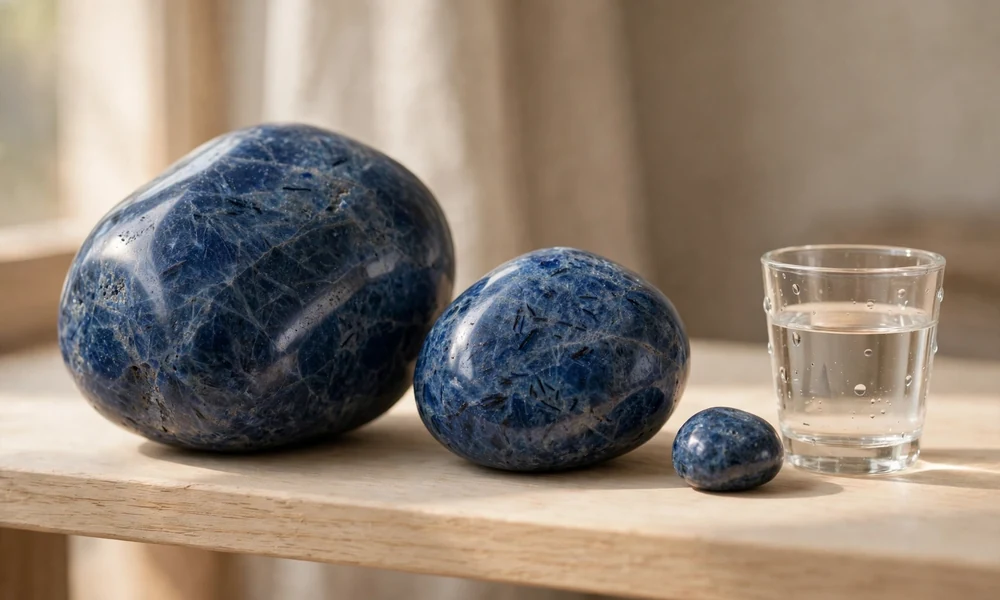
Choosing a dumortierite is mostly a matter of looking closely and trusting your eye. A good piece shows a deep, even blue, not a pale washed-out blue or a grey-blue, and the surface should be smooth with no sharp chips. If you like the speckles, look for a piece where the dark flecks are spread evenly through the blue. Turn the stone slowly in daylight to see how the blue changes.
A palm-sized tumbled stone is enough for a quiet-day shelf, and it is easy to hold, dust and move. If a piece feels pleasant in your hand, it is the right one. Buy from a trusted seller, never one who promises it will change your health.
Dumortierite on a Shelf
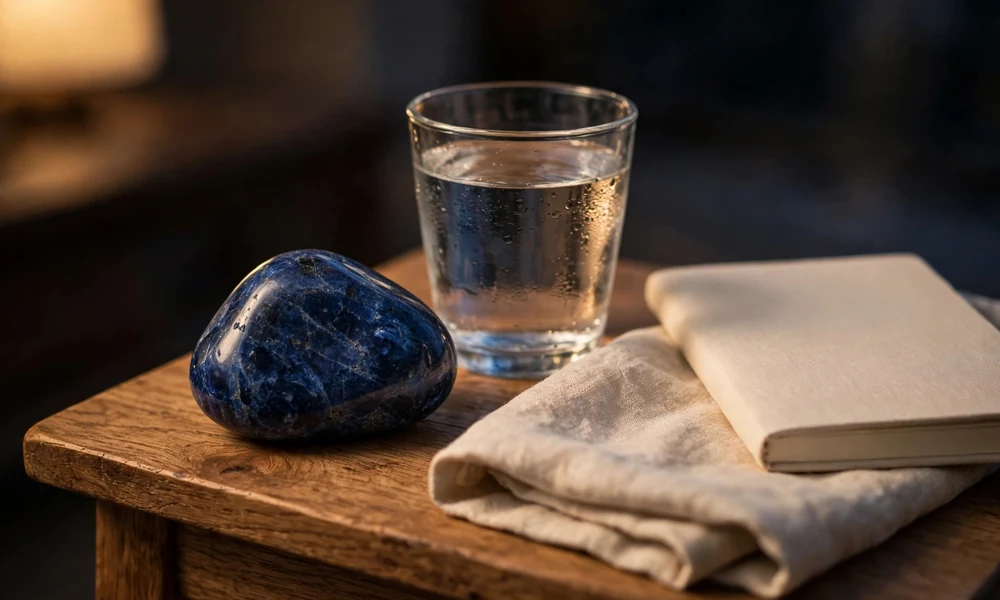
A shelf gives dumortierite a home, and a home makes the quiet day easier to keep. Choose a small, clear surface where the daylight can find it: a living-room shelf, a bedside table, or a corner of a desk. Set down a small tray, the stone on it, a clear glass beside it, and little else.
Keep the shelf the same from day to day, so the stone is always where you expect it, and the quiet pause becomes a habit instead of a decision.
A Quiet Day with Dumortierite
A quiet day with dumortierite takes only a few minutes to begin: place the stone on its shelf, fill a clear glass with fresh water, and set it beside the stone. When you sit, drink the water slowly, in small sips, and then pick up the stone and look at its deep blue colour for a few breaths.
Put the stone back on the shelf, and let the day carry on at its own pace: the work, the meals, the small jobs, and the quiet hours in between. The day is water, light, one deep blue stone, and a short pause whenever you need one.
Dumortierite Beside Water
Water belongs beside the stone, never around it: set a clear glass of fresh drinking water next to the stone on the shelf. They share a shelf, not a glass. Never place the stone inside drinking water, and never soak it.
If the glass spills, lift the stone away, dry it with a soft cloth, and set it back once the shelf is dry. Keep them apart, and both stay clean and bright for the quiet day ahead.
Keeping the Stone Dry and Clean
Dumortierite is a hard stone, but it still deserves gentle, dry care. Dust it weekly with a soft, dry cloth, never soap or polish, and never scrub it. Handle it with clean, dry hands and store it alone.
Keep the stone away from damp windowsills, steamy bathrooms and kitchen sinks. If it ever gets wet, dry it at once and leave it in open air for an hour. A little dry care keeps the deep blue bright and the polish smooth for years.
Dumortierite at a Glance
| Deep blue stone | Quiet days | Keep it dry |
|---|---|---|
| Even deep blue | Slow hours, rest | Beside water only |
| Dark speckle flecks | Water, light, pause | Dust with dry cloth |
| Smooth solid feel | One stone, one shelf | Never soak it |
Dumortierite and Blue Chalcedony
Dumortierite and blue chalcedony share blue colours, but they are different stones for different days. Blue chalcedony is a soft, pale blue chalcedony, smooth and gentle, the colour of a morning sky, and it suits calm conversations. Dumortierite is a deep, dark blue stone, the colour of still water at dusk, with dark speckles through it, and it suits quiet days spent mostly in silence.
Where blue chalcedony soft blue calm conversations keeps a pale blue stone for calm conversations, this guide keeps a deep blue one for quiet days.
Dumortierite and Lapis Lazuli
Dumortierite and lapis lazuli are both deep blue stones, but they are different blues for different evenings and days. Lapis lazuli is a rich royal blue stone, often flecked with gold pyrite, bold and bright, the colour of a palace wall, and it suits quiet evenings. Dumortierite is a quieter, softer deep blue, speckled with dark flecks rather than gold, and it suits slow days from morning to evening.
Where lapis lazuli deep blue quiet evenings keeps a royal blue stone with gold for quiet evenings, this guide keeps a soft deep blue one for quiet days.
Stones That Must Never Touch Water
Not every stone is safe beside water, and some must never touch water at all. Malachite must never go in water or in elixirs, because it can release harmful substances. Hematite must never go in drinking water, and apatite, lepidolite — which contains lithium — pyrite, angelite and amber must never go in drinking water or in soaks either.
Dumortierite is different: a stable stone for display and handling, safe to hold and keep on a shelf, but it still stays beside water, never in it. Where blue quartz soft blue calm mornings keeps a soft blue stone beside water for calm mornings, this guide keeps a deep blue stone beside water for quiet days.
When a Stone Is Not the Answer
A stone is not the answer to a health problem, and dumortierite is no exception: it will not heal anything, and it will not replace rest, food, water or a doctor. If you feel unwell, please see a doctor, and enjoy the stone for what it is: deep blue calm with quiet speckles.
Your Quiet Days Checklist
- Set the stone on a shelf or tray beside a clear glass of water.
- Drink a glass of fresh water slowly when the day begins.
- Hold the stone for a few breaths and look at its deep blue colour.
- Keep the stone beside water, never inside drinking water.
- Dust the stone weekly with a soft, dry cloth, never soap.
- Remember the stone will not heal anything; see a doctor for health problems.
Frequently Asked Questions
What is dumortierite?
Dumortierite is a deep blue mineral, an aluminium borosilicate formed in metamorphic rock, smooth when polished and often speckled with dark flecks. It is a hard, solid stone kept for display and handling.
Is dumortierite safe beside water?
Yes, it is safe to keep beside a glass of drinking water, on the same shelf or tray. It must never be placed inside drinking water or soaked, because water can dull its polish and stain the shelf.
What are the dark speckles in dumortierite?
The dark speckles are small flecks of darker minerals scattered through the blue stone as it grows. Not every piece shows them, and a plain deep blue piece is just as much dumortierite.
Will dumortierite heal anything?
No. Dumortierite will not heal anything. It is a beautiful object for display and handling, and the calm comes from the pause and the quiet day.
How do I clean dumortierite?
Dust it once a week with a soft, dry cloth, never soap or polish, and never scrub it. If it gets wet, dry it at once.
Where should I keep my dumortierite?
Keep it on a small tray or shelf in a dry room, with a clear glass of water beside it — a living-room shelf or a bedside table works well.
The Bottom Line
Dumortierite brings deep blue to quiet days: a blue stone, sometimes speckled with dark flecks, held beside a glass of fresh water in soft daylight. Keep it beside water, never in it, and dust it dry.
A Note for Quiet Days
Keep it deep, keep it dry, keep it quiet. A small blue stone, a glass of water, and a few slow minutes can carry a day well.


