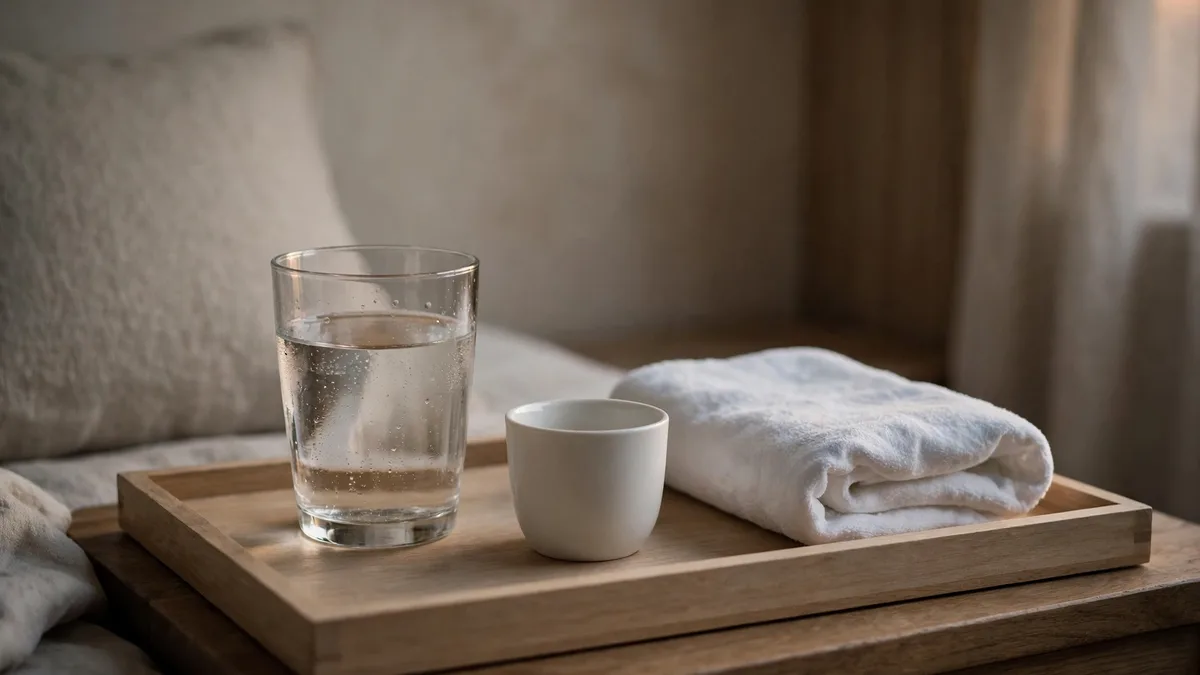
Some days leave a weight behind. A hard conversation, a long list, a small worry that keeps turning in the mind: by evening, the day is over, but the feeling stays, and the night begins before the day has truly ended.
Water and letting go offer a small answer to that weight. A glass of fresh water, drunk slowly, a few lines written down, and a quiet wash of the hands can close the day gently, without forcing anything away.
This guide explains what letting go means, why water suits it, and how to build a simple evening ritual around the two. It is gentle general information only, never a treatment, and it will not heal anything.
Key Takeaways
- Letting go means closing the day gently, not forcing feelings away.
- Water suits letting go because it is plain, cool and easy to hold.
- The ritual needs very little: water, a notebook, a towel and twenty minutes.
- Drink the water slowly, write the day down, then wash your hands.
- The ritual will not heal anything; real distress needs proper support.
What Letting Go Means
Letting go means putting the day down on purpose, instead of carrying it into the night. It is not forgetting what happened, and it is not pretending the day was easy. It is simply deciding that the day is finished, and that the evening belongs to rest.
A day can end in many small ways: a door closed, a bag put away, a glass of water drunk slowly. Letting go is one of those small endings, repeated each evening until it becomes a habit. The weight does not vanish, but it loosens, and the night feels lighter.
Letting go also means giving tomorrow its own time. The list that is not finished tonight can wait until morning, and the conversation that went badly does not need to be replayed all night. When the day is put down, the mind has room to rest, and sleep comes more easily. That rest is the real gift of the ritual, and it costs nothing but a few quiet minutes.
Why Water Suits Letting Go
Water suits letting go because it is plain and honest. A glass of fresh water asks nothing of you: it is cool, clear and always ready, and drinking it slowly gives the hands something simple to do while the mind slows down.
Water also suits letting go because it moves and then settles. Pour it, watch it still, drink it in small sips, and the body follows the same rhythm: a small movement, then a pause. That rhythm is the whole ritual, and it asks for very little.
Setting Up Your Evening Corner
An evening corner needs very little: a chair or a cushion, a small table, and a glass of fresh water. Choose a spot near a window if you can, where the evening light comes in softly, and keep it free of clutter so the eye has somewhere calm to rest.
Set out what you need before you begin — the glass, a folded towel, a small notebook and a pencil. When everything is ready, the ritual can start at once, and the evening does not begin with searching. Keep the corner simple, and keep it yours.

The Simple Evening Ritual
The simple evening ritual takes about twenty minutes, and it follows the same order every night. First, pour a glass of fresh drinking water and drink it slowly, in small sips, standing by the window. Then sit down, open the notebook, and write three short lines about the day.
Next, fold the towel, wash your hands with clean water, and dry them slowly. Then close the notebook, put the glass aside, and sit quietly for a few minutes. The ritual is water, words, washing and stillness — and then the evening is yours.
Keep the steps in the same order each night, because the order itself is calming. When the body knows what comes next, the mind stops deciding and starts resting. If a step feels rushed one night, slow it down rather than skipping it: a slow sip, a short line, a careful wash. The ritual works because it is small, and small things are easy to keep.
Water First, Then Stillness
The order matters: water first, then stillness. Pour a glass of fresh drinking water and drink it slowly, in small sips, before you sit down to write. The water marks the beginning, and the slow drinking gives the day its first pause.
After the water, sit still for a few minutes and breathe slowly, letting thoughts pass without chasing them. The stillness is short, only a few minutes, but it gives the evening a clear start. Drink first, then rest, and the rest feels earned.
Writing the Day Down
Writing the day down is the heart of letting go. Open the notebook and write three short lines: one thing that went well, one thing that was hard, and one thing you will leave until tomorrow. Keep each line short, plain and honest, with no long explanations.
When the three lines are written, close the notebook. The day is now on the page, not in your head, and the evening can begin. If a thought returns later, remind yourself that it is written down, and it will wait until morning.

Letting Go at a Glance
| Fresh water | Write it down | Wash and rest |
|---|---|---|
| Drink it slowly | Three short lines | Wash hands gently |
| One glass, small sips | Day on the page | Dry them slowly |
| Water first, then rest | Close the notebook | Sit quietly, then sleep |
A Quiet Room for the Evening
A quiet room makes letting go easier, and a quiet room needs very little. Dim the bright lights, open the window a little for cool air, and put the phone away in another room. A plain room with soft light is enough.
Keep the room the same from evening to evening, so the ritual becomes a habit instead of a decision. The same chair, the same glass, the same notebook: small sameness helps the mind let go.
Letting Go and Golden Hour
Letting go and golden hour share the same soft light, but they are different evenings. Golden hour is the last hour before sunset, when low sunlight turns warm and soft, and a glass of water glows on the windowsill.
Where water golden hour light simple evening watches warm light fade before sunset, this guide closes the day after dark — writing the day down, washing hands, and letting go, with water beside you.
Letting Go and Meditation
Letting go and meditation share the same quiet sitting, but they are different pauses. Meditation is five quiet minutes of sitting still, breathing slowly, and letting thoughts pass, with a glass of water drunk first.
Where water meditation five minute reset sits still for five minutes at any time of day, this guide adds writing and washing to the evening — a fuller close to the day, not just a short reset.
Letting Go and Sunsets
Letting go and sunsets share the same evening hour, but they are different rituals. Sunsets are about watching the sun go down, colours changing in the sky and in the water, with water beside you as you watch.
Where water sunsets simple evening ritual watches the sun set and the colours change, this guide looks inward after the sun is gone — writing, washing and closing the day, with no watching at all.
When the Day Was Hard
When the day was hard, the ritual stays the same, only gentler. Drink the water even more slowly, write even shorter lines, and wash your hands with extra care. A hard day does not need a bigger ritual; it needs a smaller, kinder one.
If the weight feels too heavy, or the worry does not ease over days, please reach out for proper support — a trusted person, a counsellor, or a doctor. A ritual can close a day, but it cannot carry what needs real help, and asking for help is a strong step.
On the hardest evenings, you may also shorten the ritual to its simplest form: one glass of water, one line in the notebook, and clean hands. That is enough, and it still counts. The ritual is not a test to pass, and a short, kind version is better than no evening at all. Rest first, and let tomorrow bring its own help.

Your Evening Checklist
- Pour a glass of fresh water and drink it slowly, in small sips.
- Sit down and write three short lines about the day.
- Close the notebook and put the pencil aside.
- Wash your hands with clean water and dry them slowly.
- Sit quietly for a few minutes before bed.
- Remember the ritual will not heal anything; seek proper support when needed.

Frequently Asked Questions
What is letting go?
Letting go means putting the day down on purpose, instead of carrying it into the night. It is not forgetting what happened, but deciding the day is finished and the evening belongs to rest.
How long does the evening ritual take?
About twenty minutes: water first, then three short lines in a notebook, a hand wash, and a few quiet minutes. It can be shorter on busy nights, and that is fine.
Do I need anything special for the ritual?
No. You need a glass of fresh water, a small notebook, a pencil, a towel and a quiet corner. Nothing special, nothing expensive, and nothing you must buy.
Can I do the ritual if the day was hard?
Yes, and keep it gentler: drink the water more slowly, write shorter lines, and wash your hands with care. If the weight does not ease over days, please reach out for proper support.
Will the ritual heal anything?
No. The ritual will not heal anything. It is a gentle habit for closing the day, and the calm comes from the pause, the water and the writing.
What if I miss an evening?
Nothing is lost. Simply begin again the next evening, with the same glass, the same notebook and the same short steps. A missed evening is not a failure.
The Bottom Line
Water and letting go close the day gently: a glass of fresh water, three short lines, clean hands, and a few quiet minutes. Keep it simple, keep it slow, and let the evening be yours.
A Note for Quiet Evenings
Keep it plain, keep it slow, keep it kind. A glass of water, a notebook, and a few quiet minutes can close even a heavy day well.