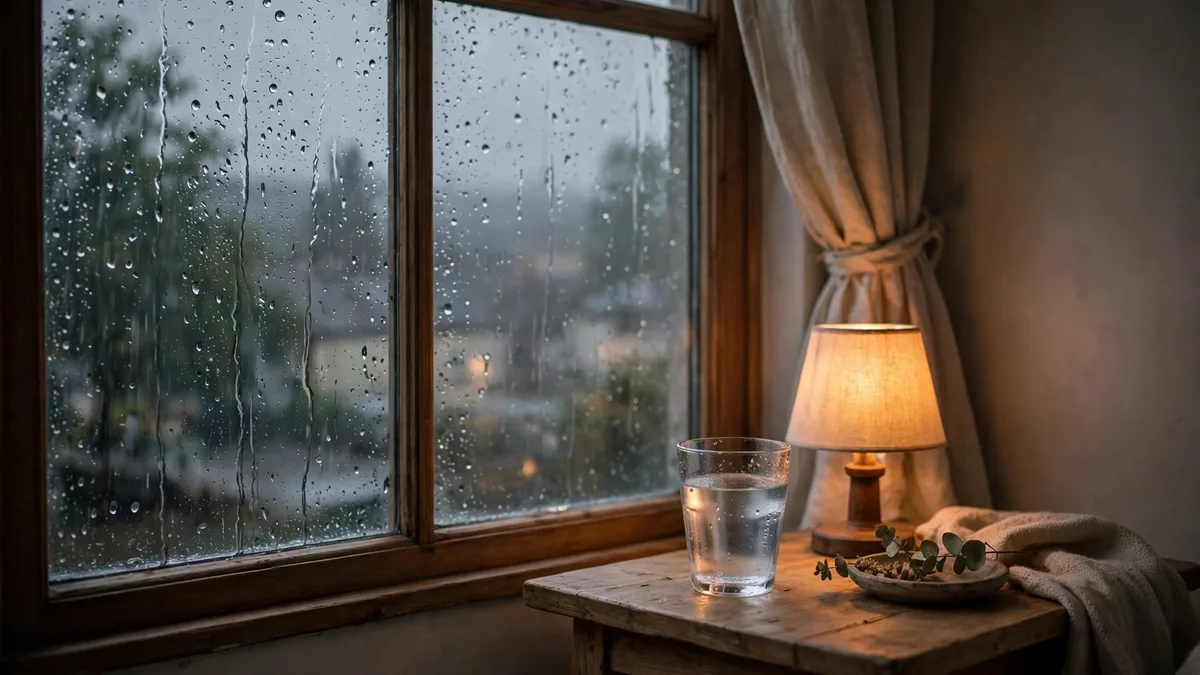
Some evenings ask for nothing at all. The day is done, the lights are low, the phone is face down, and the best thing you can do is sit still for a while. On evenings like that, silence can feel too empty, and music can feel too much. What suits a quiet evening is a sound that asks nothing of you.
Water and rain sounds are that kind of sound: rain on a window, rain on leaves, rain on a quiet street, steady and soft, filling the room without filling your mind.
This guide is about listening to rain as evening ambience — how to set up a quiet evening, how to choose rain sounds, and how to let the evening slow down around you.
Key Takeaways
- Water and rain sounds mean listening to rain as soft evening ambience.
- Rain sounds suit quiet evenings because they are steady, soft and ask nothing of you.
- Rain sounds differ from bath music, rainy-day skin care and rainwater home rituals.
- Listening to rain sounds is a comfort and a habit, never a treatment.
- Rainwater is not for drinking or for skin; use clean tap water only.
What Water and Rain Sounds Are
Water and rain sounds are the sounds of rain falling on different surfaces: rain on a window, rain on leaves, rain on a roof, rain on a stone path. Each surface gives the rain a slightly different voice, and together they make one steady sound that stays the same from minute to minute.
You can listen to real rain through an open window on a wet evening, or to a recording of rain when the sky is dry. Rain on a tin roof sounds bright and quick, while rain on soft earth sounds low and slow, and each one suits a different kind of evening. A recording is simply rain sounds played back: no pictures, no voices, no music over the top. The sound itself is the whole point, and it needs nothing else.
Why Rain Sounds Suit Quiet Evenings
Rain sounds suit quiet evenings because they are steady. The sound does not rise and fall like a song, and it does not ask you to follow a tune or a story. It stays even, minute after minute, and that evenness gives your thoughts somewhere soft to rest.
A quiet evening also suits rain sounds because they cover the small noises of the house without adding new ones. The tap of a pipe, the hum of a fridge, the distant traffic — rain folds them into one gentle sound, and the room feels calmer for it.
Choosing Rain Sounds
Choosing rain sounds is mostly a matter of listening closely and trusting your ear. A good rain recording sounds soft and even, like real rain on a window, with no sharp clicks, no voices, and no music hiding underneath. Light rain on leaves suits reading, while heavier rain on a roof suits simply sitting still.
Try a few kinds and notice which one you stop noticing first. The right rain sound is the one that fades into the room after a minute or two. If a recording sounds sharp or tinny, try another one, because a harsh rain sound will wake the mind instead of resting it. Keep the volume low, so you can still hear the glass of water you set down and the page you turn.

A Quiet Evening Routine
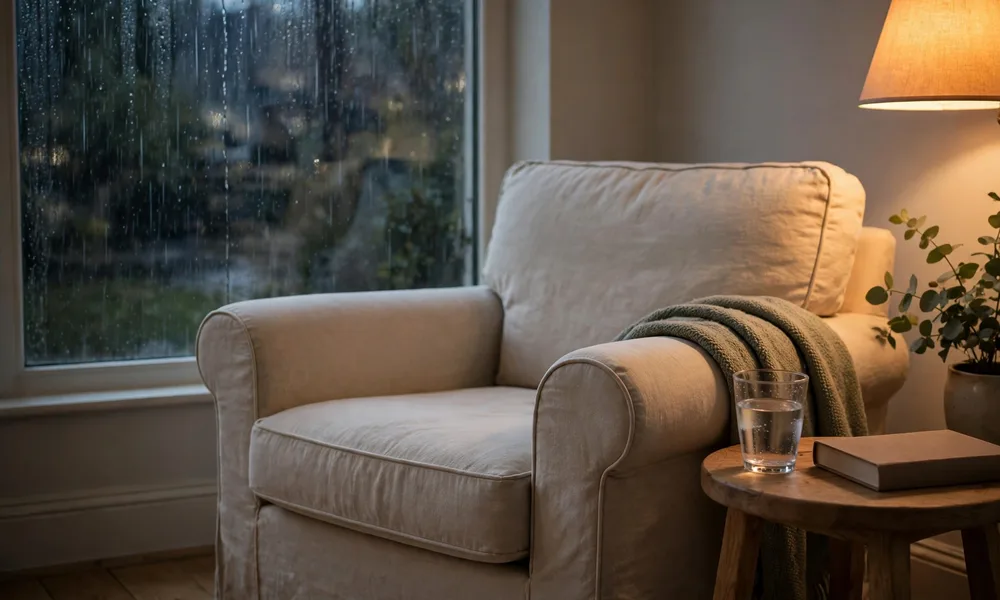
A quiet evening routine takes only a few minutes to set up, and it starts before dark: choose your chair by the window, set a clear glass of fresh water on the side table, and turn the lamp on low. When the evening comes, sit down, start the rain sounds, and drink the water slowly, in small sips.
Then do nothing at all for a while. Read a page, look at the rain on the glass, or simply sit. The routine is water, soft light, one chair, and rain sounds — and on a quiet evening that small setup is enough.
Rain Sounds and a Glass of Water
A glass of fresh water belongs beside the listening chair, never anywhere near a speaker or a phone. Set the glass on the side table, and keep every speaker and phone far from water, on a dry shelf across the room. Electronics and water never mix, and the rain sounds play just as well from a safe distance.
If the glass spills, dry the table at once and set the glass back once the wood is dry. Keep water and electronics apart, and both stay safe and simple.
Keeping the Evening Simple
A quiet evening stays quiet when you keep it simple. One chair, one lamp, one glass of water, one rain sound — that is the whole setup, and it needs nothing more. A second sound, a bright screen, or a long list of things to do will pull the evening back toward the day.
Keep the room dim and the phone face down in another room if you can. If the evening feels restless, do not add more to it. Drink some water, listen to the rain for a few more minutes, and let the restlessness pass on its own.
Water and Rain Sounds at a Glance
| Soft steady rain | Quiet evenings | Keep it low |
|---|---|---|
| Rain on glass | One chair, one lamp | Water far from speakers |
| Rain on leaves | Water, light, pause | No bright screens |
| Even, gentle sound | Sit still, listen | Rainwater never for drinking |
Rain Sounds and Bath Music
Rain sounds and bath music are both soft sounds for the evening, but they belong to different rooms. Bath music is soft music played quietly while you soak in warm water, with every speaker kept far from the bath. Rain sounds are rain alone, played in a dry room, while you sit in a chair by the window.
Where water music relaxing bath pairs warm bath water with soft music for a relaxing soak, this guide pairs a dry chair with rain sounds for a quiet evening — same gentle hour, different room, different sound.
Rain Sounds and Rainy-Day Calm
Rainy days change more than the sound of the evening: they change the air, the light, and how your skin feels. Damp air can make skin feel sticky, damp clothes can irritate it, and a heavy cream can feel greasy in wet weather. A rainy-day skin routine answers that with lukewarm water, a mild cleanser, and dry clothes indoors.
Where water rainy days calm skin keeps a gentle skin routine for wet weather, this guide keeps only the sound of the rain for a quiet evening. Rainwater is never for drinking or for skin in either guide; use clean tap water only.
Rain Sounds and Rainwater Rituals
Rain changes a house before anyone touches anything in it: the light goes soft and grey, the sound outside turns steady, and the rooms seem to slow down. A rainwater-inspired ritual borrows that feeling for the home, with a clear shelf, a glass of water, a plant, and a few minutes of sitting still.
Where rainwater inspired calm home rituals shapes small home habits around the qualities of rain, this guide shapes only the listening: rain sounds in the evening, in one chair, with one glass of water. Neither guide uses collected rainwater, which is not safe to drink and should not be used on your face or in a bath.
Rain Sounds Are Not a Treatment
Listening to rain sounds is a comfort and a habit, never a treatment. Rain sounds will not heal anything, and they will not replace rest, food, water or a doctor. If you feel unwell, anxious, or worried about your health, please see a doctor, and enjoy the rain sounds for what they are: a soft, steady sound for a quiet evening.

Your Quiet Evenings Checklist
- Choose a chair by the window and set a glass of fresh water beside it.
- Turn the lamp on low and put the phone face down away from you.
- Start soft rain sounds at a low volume, with speakers far from water.
- Drink the water slowly, in small sips, and sit still for a while.
- Keep rainwater out of drinking glasses and off your skin.
- Remember rain sounds will not heal anything; see a doctor for health problems.

Frequently Asked Questions
What are water and rain sounds?
Water and rain sounds are the sounds of rain falling on windows, leaves, roofs and stone paths, listened to as soft evening ambience — either real rain through a window or a simple recording of rain.
Can I listen to rain sounds every evening?
Yes. Rain sounds are a gentle habit, and you can listen every evening if you like. Keep the volume low, keep the evening short and simple, and stop if the sound ever feels tiring.
Will rain sounds help me sleep?
Rain sounds are a comfort for a quiet evening, not a treatment, and they will not heal anything. Many people find a steady, soft sound pleasant before bed, but poor sleep that lasts should be talked over with a doctor.
Do I need special equipment for rain sounds?
No. A phone or a small speaker on a dry shelf across the room is enough. Keep every speaker and phone far from water, and keep the volume low enough that you can still hear the room.
Is rainwater safe to drink or use on skin?
No. Collected rainwater is not safe to drink, and it should not be used on your face or in a bath. The rituals here use clean tap water only, in a glass beside your chair.
Where is the best place to listen to rain sounds?
Sit in a comfortable chair by a window, with a lamp on low and a glass of fresh water on the side table. A quiet, dim room lets the rain sound fill the evening without competing with anything else.
The Bottom Line
Water and rain sounds bring soft rain to quiet evenings: a steady, gentle sound in a dim room, with a glass of fresh water beside your chair. Keep the volume low, keep water far from speakers, and listen for a while.
A Note for Quiet Evenings
Keep it soft, keep it low, keep it quiet. A chair by the window, a glass of water, and the sound of rain can end a day well.