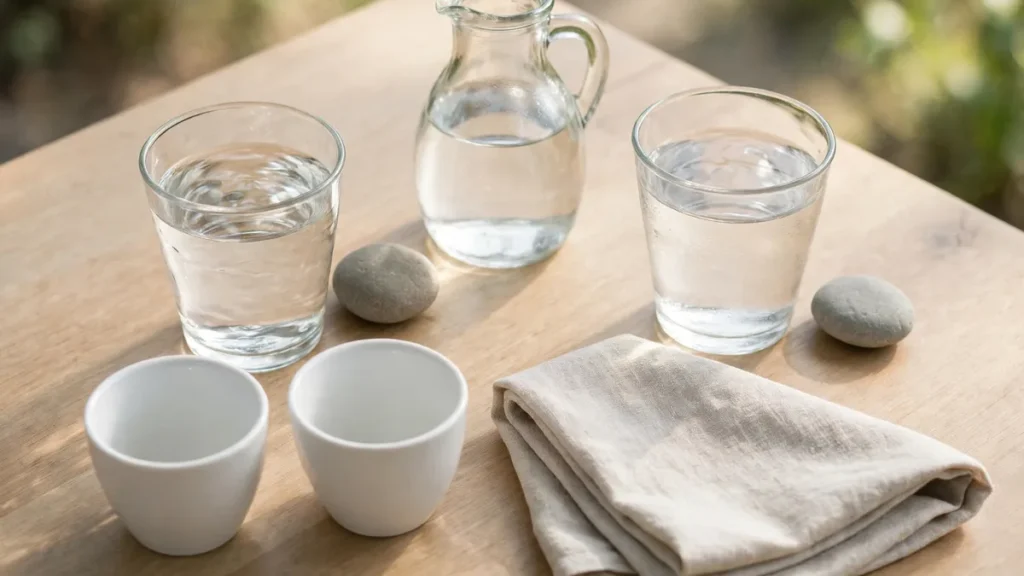
Some bright days arrive all at once, and the best thing to do is meet them with colour. The sun is high, the light is warm, and the whole room feels awake before breakfast is even finished. On days like that, a pale quiet stone can look washed out, and a dark stone can feel too heavy for the light. What suits a bright day is something full of colour, a stone that holds the warmth of the sun and the colours of a desert in one small piece.
Polychrome jasper is that kind of stone. Its name means many colours, and one polished piece can hold swirling bands of terracotta red, sandy ochre, teal blue and soft cream, flowing together like the layers of a desert canyon. A good piece sits on a sunny tray like a small piece of the desert itself, warm and bright.
This guide explains what polychrome jasper is, how to choose a piece, how to keep it safely beside water, and how to build a simple bright-day habit around it. The stone is for display and handling only, never a treatment, and it will not heal anything. Real health problems belong with a doctor.
Key Takeaways
- Polychrome jasper is a jasper of many colours, with swirling terracotta, ochre, teal and cream in one stone.
- Its warm desert colours suit bright days, strong sunlight and cheerful rooms.
- Polychrome jasper is for display and handling only; it will not heal anything.
- The stone stays beside drinking water, never in it, and it should be kept dry and dusted.
- A bright day needs very little: sunlight, plain water, one colourful stone, and a slow start.
What Polychrome Jasper Is
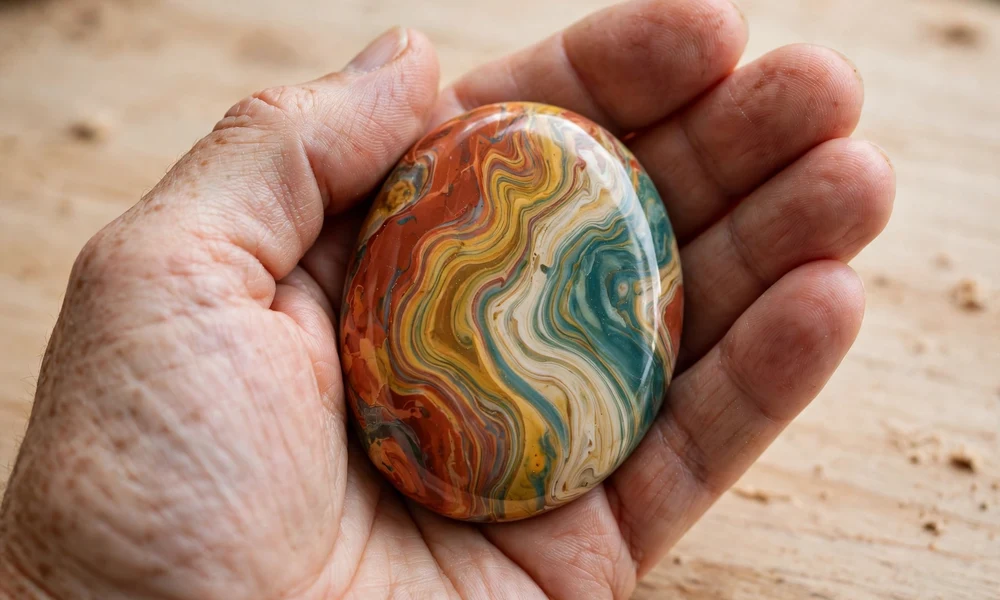
Polychrome jasper is a variety of jasper, a dense form of quartz that takes a smooth polish, and its name comes from the Greek words for many colours. A single piece can show terracotta red, sandy ochre, teal blue, soft cream and sometimes a flash of pale pink, all swirling together in bands and waves that never repeat in quite the same way. The colours come from tiny traces of iron and other minerals laid down as the stone formed, layer upon layer, over a very long time. Hold one and it feels cool, solid and smooth, with a soft shine that moves across the swirls as you turn it.
Why Desert Colours Suit Bright Days
Desert colours suit bright days because they are the colours of strong light itself. Terracotta is the colour of sun-baked earth, ochre is the colour of sand at midday, and teal is the colour of a desert sky in a small pool. Together they look their best in bright sunlight, when the warm tones glow and the cool teal bands stand out against them. A pale stone would fade in that light, but polychrome jasper holds its own. The swirling pattern helps too: the bands catch the eye for a moment, and looking at them for a second slows you down before the busy day begins.
The Safety Rule First: Beside Water Only
The stone stays beside water only, never inside drinking water, never soaked, and never used in elixirs of any kind. If a piece ever falls into a glass by accident, throw the water away and wash the glass and your hands.
Some stones must never touch water at all. Malachite must never go in water or elixirs, apatite, lepidolite and pyrite must never go in drinking water, lepidolite contains lithium, angelite must never be soaked, and amber and hematite must never go in drinking water or soaks. Polychrome jasper itself is a hard, polished stone, but every stone must stay dry and out of every drink. No stone belongs in a drink.
Choosing a Polychrome Jasper Piece
Choose a piece you can see clearly before you buy it, in bright daylight as well as in shop light. Look for clear swirling bands of terracotta, ochre, teal and cream across a smooth, polished surface, rather than a dull stone where the colours are faint or muddy. The stone should feel cool and solid, with a little weight for its size, and it should sit flat without rocking. Avoid pieces with a painted-on look or a plastic shine, and any whose polish is patchy or chipped. Buy from a trusted seller who can tell you plainly that the stone is natural polychrome jasper, and never from one who promises it will change your health.
A Bright Day with Polychrome Jasper
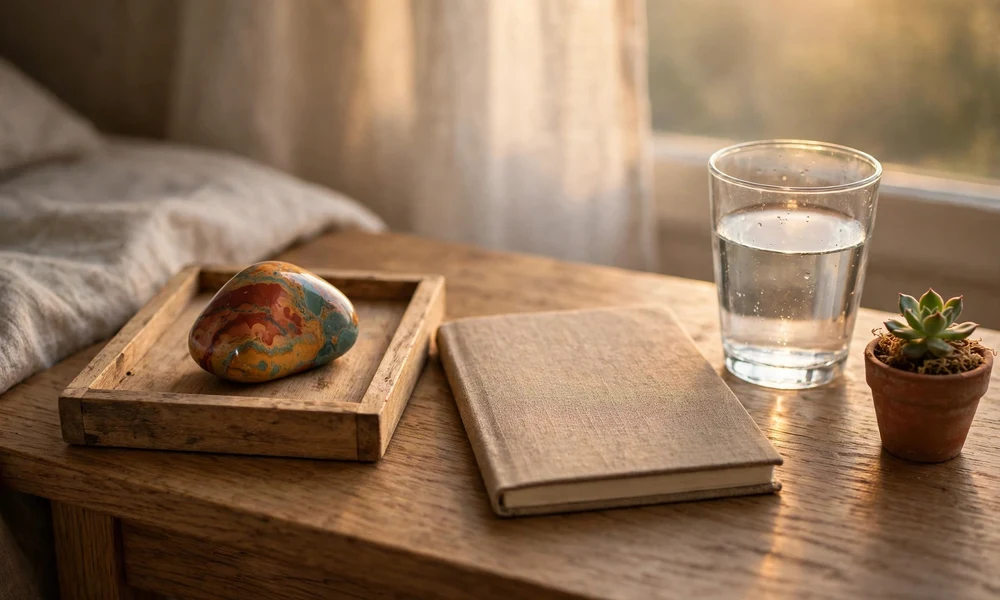
A bright day takes only a few minutes to set up, and it starts the evening before: leave the tray clear, the glass washed, and the stone where the morning sun will find it. When the morning comes, open the curtains wide, pour a glass of fresh water, and sit down for a moment. Hold the stone briefly if you like, then drink your water slowly and open the notebook to a fresh page. Write one line about the day ahead, or none at all.
Water first, then a plain breakfast, then nothing else until the morning has settled. Bright days reward a cheerful start.
Polychrome Jasper in Your Palm
Holding the stone is the brightest part of the routine. Pick up the polychrome jasper with both hands, feel its cool, solid weight, and turn it once in the light to watch the terracotta, ochre and teal swirls catch the sun. Then set it back down on its tray, where the light can reach it all morning.
Hold the stone gently and never drop it on a hard floor, so the polish keeps its shine for years. Where ocean jasper soft circles for calm mornings keeps a stone of soft green, cream and pale blue circles for calm mornings, this guide keeps a stone of many swirling desert colours for bright days. The family is the same, but the pattern is different, and the habit is different too.

Bright Days and a Simple Routine
Bright days like a simple routine. Plain water, an open window, a short page in a notebook and a colourful stone on the tray will carry most mornings. Where picture jasper earth art for calm spaces keeps a stone of painted desert scenes for calm spaces, this guide keeps a stone of swirling desert colours for bright days. One shows a quiet landscape, and the other shows many colours at once. The same desert serves both, but the habits are different: one is a still shelf and a calm room, the other is a sunny tray and a bright start.
Polychrome Jasper at a Glance
| Desert swirls | Bright days | Stone care |
|---|---|---|
| Terracotta red bands | Strong morning sunlight | Dust with soft cloth |
| Sandy ochre waves | Tray near window | Hold with care |
| Teal blue swirls | Space around piece | Never soak stone |
| Cream soft lines | Notebook close by | Shade from harsh heat |
Caring for a Polychrome Jasper Piece
Polychrome jasper is a hard stone, and its care is simple. Dust it once a week with a soft, dry cloth, working lightly across the swirls. Never use vinegar, lemon juice or harsh chemicals. If it needs more than dusting, wipe it with a cloth barely dampened with plain water, then dry it at once, and keep it away from harder stones and metal.
A brief wipe is enough for a deeper clean. Do not soak the stone, and never put it in drinking water.
What It Will Not Do
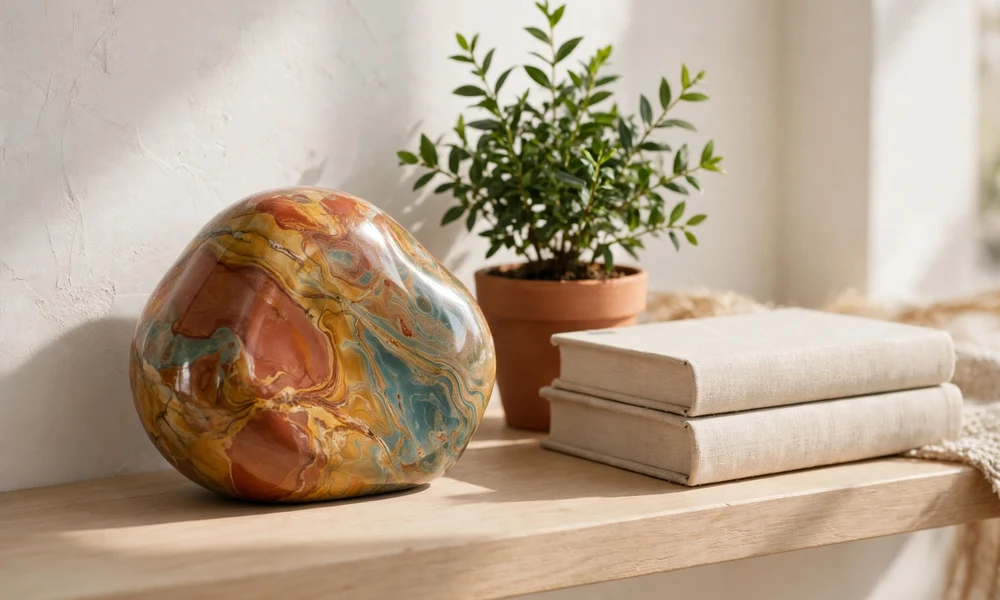
Be honest about what a stone can and cannot do. Polychrome jasper will not heal anything: it will not cure an illness, ease a health problem, protect you from harm, or steady your mood by itself. It is a beautiful stone, and a stone is all it is. The bright morning is the part that helps: a sunny start, a glass of water and an open window can make a day feel lighter.
No stone or ritual will replace rest, sleep and medical advice. If a health problem stays with you week after week, the answer is a doctor, not a new stone.
Your Polychrome Jasper Bright Days Checklist
- Choose a polychrome jasper piece with clear swirling bands of terracotta, ochre, teal and cream.
- Set a glass of fresh water beside the stone each morning, never in it.
- Place the stone on a tray where bright light reaches it, a little back from the edge.
- Hold the stone gently with both hands, and never drop it on a hard floor.
- Dust it weekly with a soft dry cloth and keep it away from hard stones.
- Drink your water slowly, open the notebook, and let the day begin brightly.
Frequently Asked Questions
What is polychrome jasper?
Polychrome jasper is a variety of jasper whose name means many colours. One polished piece can hold swirling bands of terracotta, ochre, teal and cream, and it is kept as a display stone, never as a treatment.
Will polychrome jasper heal anything?
No. It will not cure an illness, ease a health problem, or protect you from harm. Real health problems belong with a doctor.
Can I put polychrome jasper in my drinking water?
No. Keep the stone beside the glass, never in it. No stone belongs in a drink, and soaking can dull its polish over time.
How is polychrome jasper different from ocean jasper?
Ocean jasper is a stone of soft green, cream and pale blue circles for calm mornings, while polychrome jasper holds many swirling desert colours for bright days. Where ocean jasper soft circles for calm mornings keeps a circled stone for calm mornings, this guide keeps a many-coloured stone for bright days.
How is polychrome jasper different from red jasper?
Red jasper is a single warm red stone for cold days, while polychrome jasper holds many colours at once. Where red jasper warmth for cold days keeps a plain red stone for cold weather, this guide keeps a swirling desert-coloured stone for bright days.
How do I clean polychrome jasper safely?
Dust it with a soft, dry cloth, working lightly across the swirls. Never use vinegar, lemon juice or harsh chemicals, and store it dry on its tray.
The Bottom Line
Polychrome jasper is a many-coloured stone, a glass of water beside it, and a day that begins in bright light. Set your stone out tonight, and let tomorrow begin brightly.
A Note for Bright Days
Keep it colourful, keep it dry, keep it bright. The sunny hours belong to you.