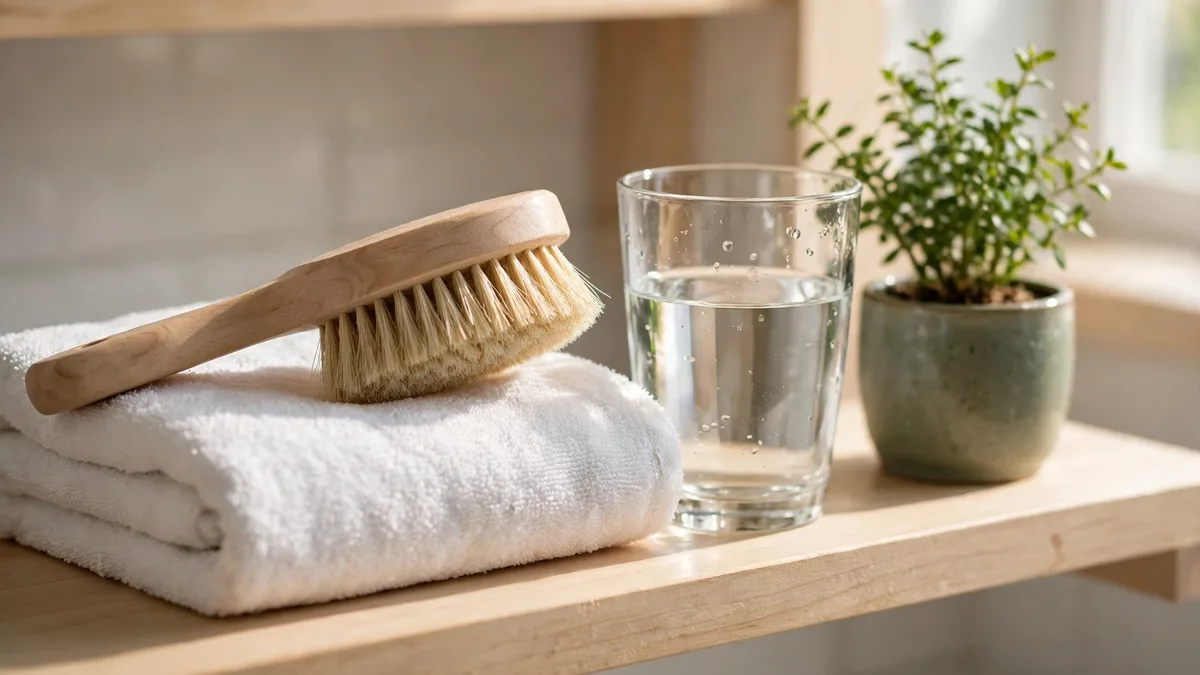
Some rituals ask for nothing more than a brush, a towel and a glass of water. Water and dry brushing is one of those rituals: a few soft strokes over dry skin, then warm water, then a plain moisturiser, in less than ten minutes. There is no machine and no hurry, only a quiet sequence that leaves the skin feeling clean, smooth and calm.
Dry brushing means brushing dry skin with a soft natural-bristle brush before you wash, always in light strokes towards the heart. It suits mornings best, when the body is still waking up. The brush wakes the skin gently, the water rinses it clean, and the moisturiser seals in the softness.
This guide explains what dry brushing is, how to choose a brush, and how to finish with water and a plain moisturiser. It is gentle general information only, never a treatment. Patch-test any new product first, and see a doctor for real skin problems.
Key Takeaways
- Water and dry brushing is a gentle ritual: soft brushing on dry skin, then warm water, then plain moisturiser.
- Brush lightly, in short strokes towards the heart, and never press hard.
- The brush stays dry, the skin stays dry, and the water comes after the brushing, never before.
- A plain moisturiser and a soft towel finish the ritual.
- This is gentle general information only, and real skin problems belong with a doctor.
What Dry Brushing Is
Dry brushing is brushing dry skin with a soft brush before washing, in light, short strokes. The brush is usually made of natural plant bristles set in wood, with a short handle or a long handle for the back. The skin is dry, the brush is dry, and the strokes are light: the bristles should sweep across the skin, never dig into it. The skin should look faintly pink afterwards, never red or sore.
The ritual has three parts. First the brush, on dry skin, for a few minutes. Then the water, warm and brief, to rinse the skin clean. Then the moisturiser, plain and fragrance-free, pressed gently into damp skin. Keep the whole ritual under ten minutes, and let the quiet be part of it.
Why Water and Dry Brushing Belong Together
Water and dry brushing belong together because each half does what the other cannot. The brush lifts away loose, dry flakes and wakes the skin with a light touch, but a brush alone leaves the skin dusty and dry. Warm water rinses that dust away and softens the skin. Together they leave the skin feeling smooth, fresh and ready for moisturiser.
Brushing on wet skin can drag and sting, so the skin stays dry while the brush works, and the water waits its turn. A brief warm wash after brushing feels kinder than a long hot shower. That is the whole idea: two simple things, in the right order. The same gentle water-first thinking runs through cold water splash tired skin, where cool water wakes tired skin softly.
The Gentle Rule First: Soft Strokes Only
The first rule of dry brushing is softness. Use light pressure, short strokes, and always brush towards the heart: up the legs, up the arms, and in small circles on the belly. Never press hard, never scrub the same spot twice, and never brush over broken, sunburnt, irritated or sore skin. If the skin stings, you are pressing too hard, so soften your hand and try again more lightly.
Skip the face entirely, because facial skin is too tender for a body brush, and skip any area that feels sore or looks red. Brush for three to five minutes at most, two or three times a week, and rest the skin on the other days. This guide offers gentle general information only: it will not cure a skin condition, and a brush is not a treatment. If your skin is sore, broken or unwell, leave the brush on the shelf and see a doctor.
Choosing a Dry Brush
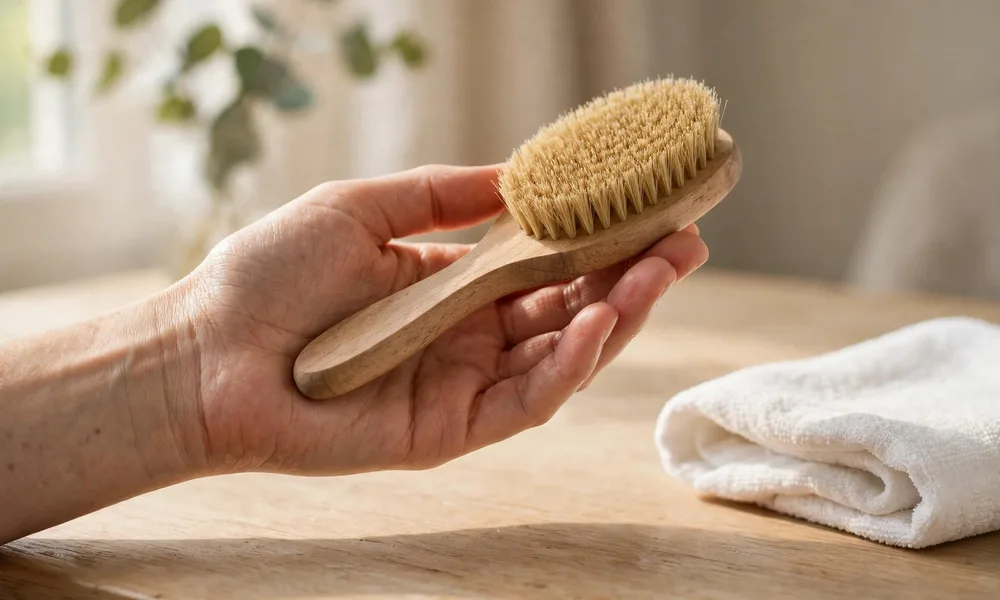
Choose a brush you can hold comfortably, with soft natural bristles and a smooth wooden handle. The bristles should bend easily under your thumb and spring back, never feel stiff. A short handle suits arms and legs, while a long handle reaches your back. Look for plant bristles, such as sisal or cactus fibre, and a handle with no rough edges.
Be wary of brushes with hard plastic bristles, sharp edges or a strong chemical smell. A good brush costs very little, and it should feel kind in the hand. Wash a new brush before its first use, let it dry fully, and replace it when the bristles bend flat or fall out.
Your First Gentle Body Ritual
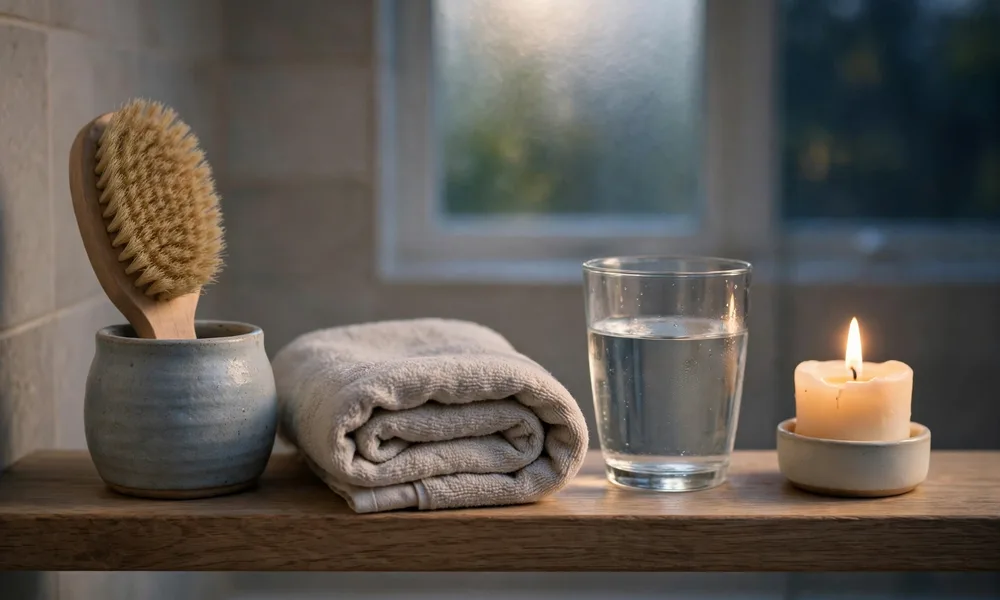
Your first ritual takes ten minutes, and it starts the evening before: lay out the brush, the towel and the moisturiser. When the morning comes, stand somewhere warm and begin at your feet. Brush up each leg in short, light strokes, then up each arm, then small circles on your belly, always towards the heart. Keep the pressure feather-light, and keep the brushing under five minutes.
Then step into warm water, never hot, and rinse briefly with plain water. Pat yourself dry with a soft towel, never rub, and press a plain moisturiser into damp skin. Drink your glass of water slowly afterwards, and begin the day. The same calm, water-first care runs through water sensitive skin gentle routine, where plain water and a gentle hand carry the whole routine.
Dry Brushing in Your Hand
Holding the brush is the simplest part of the ritual. Hold the handle loosely, like a pencil, and let the bristles rest on the skin with their own weight. Move your whole arm, not just your wrist. Check that the bristles are clean and dry before you begin, and set the brush down when the skin feels warm and faintly pink.

Water After Brushing
Water after brushing should be warm, brief and kind. Step into the shower or a warm bath, and rinse the skin for a few minutes. Use plain water, or a mild wash with no strong fragrance. Rinse the brush too, shake it dry, and hang it where air can reach it.
Dry yourself by patting, never rubbing, and moisturise while the skin is still slightly damp. A plain moisturiser with no fragrance is the kindest choice, and a patch test comes first if it is new: a small amount on the inside of your wrist, once a day for three days. Where lip care water daily habit keeps water at the centre of a small daily habit, this ritual keeps water at the centre of the body.
Water and Dry Brushing at a Glance
| Dry brush first | Warm water next | Gentle finish |
|---|---|---|
| Soft natural bristles | Lukewarm water only | Pat skin dry |
| Short light strokes | Rinse briefly | Plain moisturiser daily |
| Towards the heart | Never hot water | Patch test first |
| Three minutes only | Wash brush too | Rest skin often |
Caring for Your Brush
A dry brush lasts well when it is kept clean and dry. After each use, tap the bristles gently, and rinse the brush once a week with warm water and a drop of mild soap. Rinse it well, shake out the water, and hang it bristle-down in the air. Never leave it sitting in water, and never store it damp in a closed cupboard.
Replace the brush when the bristles bend flat, break off, or feel scratchy. A fresh brush is cheap, and a worn brush is unkind to the skin. Keep the brush for your body only, never share it, and keep it away from the face.

What This Ritual Will Not Do
Be honest about what a brush and water can and cannot do. Water and dry brushing will not heal anything: it will not cure a skin condition, clear a rash, remove toxins, or change your health. It is a gentle habit, nothing more. The calm morning is the part that helps: a few quiet minutes can steady a rushed day, and clean, moisturised skin simply feels better.
No brush or ritual will replace rest, sleep and medical advice. If your skin stays sore, red, broken or itchy week after week, the answer is a doctor, not a new brush.
Your Water and Dry Brushing Checklist
- Choose a soft natural-bristle brush with a smooth wooden handle.
- Brush dry skin lightly, in short strokes towards the heart.
- Never brush broken, sunburnt, irritated or sore skin, and never brush your face.
- Rinse with warm water only, pat dry with a soft towel, and moisturise damp skin.
- Patch-test every new moisturiser on your wrist for three days.
- Clean the brush weekly, dry it bristle-down, and replace it when bristles bend flat.
Frequently Asked Questions
What is dry brushing?
Dry brushing is brushing dry skin with a soft natural-bristle brush before washing, in light, short strokes towards the heart. The water comes after the brushing, never before.
How often should I dry brush?
Two or three times a week is enough, for three to five minutes at a time. Rest the skin on the other days, and stop at once if it feels sore, red or irritated.
Should I brush before or after water?
Brush before water, always. Brushing on dry skin sweeps the surface gently, while brushing on wet skin can drag and sting. Rinse with warm water after brushing, then moisturise damp skin.
Can I dry brush my face?
No. Facial skin is too tender for a body brush, so keep the brush on the body only. Wash your face with plain lukewarm water, and see a doctor for real facial skin problems.
What should I put on my skin after brushing?
A plain moisturiser with no fragrance, pressed gently into damp skin, is the kindest choice. Patch-test it first on the inside of your wrist for three days.
When should I skip dry brushing?
Skip it when your skin is broken, sunburnt, irritated, sore or unwell, and skip it entirely if a doctor has told you to leave your skin alone. A brush is a gentle habit, never a treatment.
The Bottom Line
Water and dry brushing is a soft brush, warm water, and a few quiet minutes. Lay out your brush tonight.
A Note for Gentle Bodies
Keep it soft, keep it brief, keep it dry first. The gentle hours belong to you.