Some skin asks for gentleness before anything else. Tender skin flushes easily, dries out quickly, and complains about harsh soaps, rough cloths and hurried mornings. It does not want a long list of products. It wants soft light, plain water, a gentle hand, and a little time to settle.
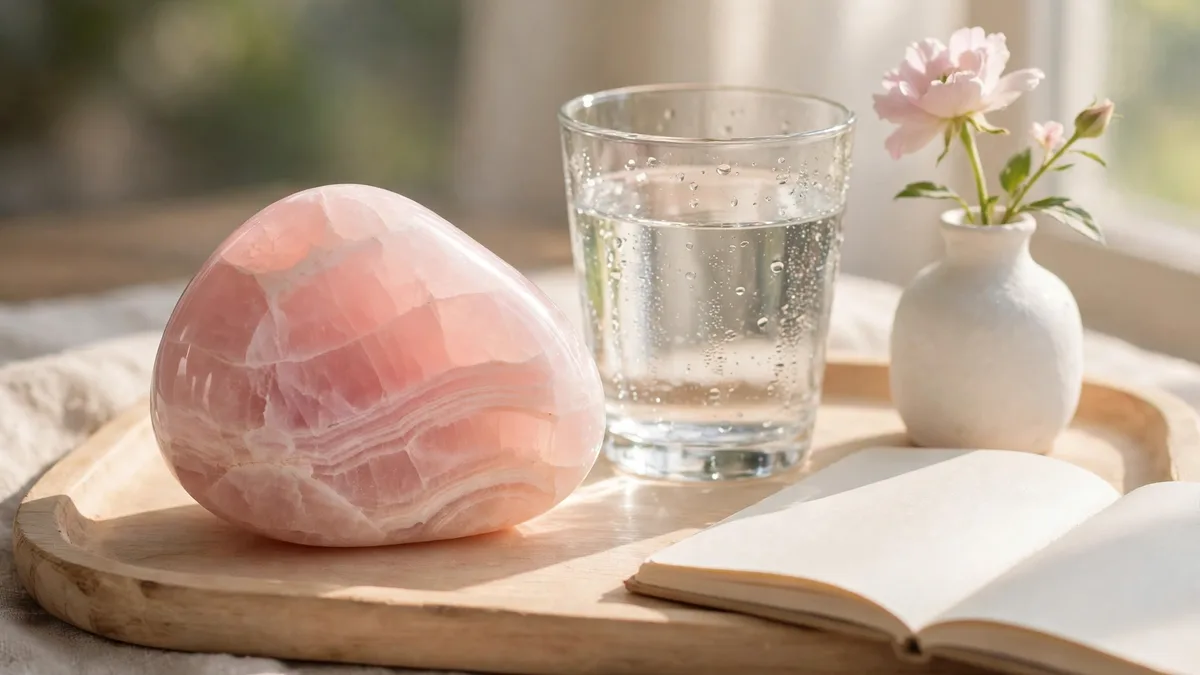
Pink mangano calcite is a stone that looks the way tender skin feels. It is a soft rose pink stone, smooth and cool in the hand, sometimes crossed with pale white bands. Its colour comes from manganese, and mangano calcite is usually a deeper, warmer rose pink than its pink calcite cousin. Set it on a vanity shelf, a small pink reminder to be gentle with yourself.
This guide explains what pink mangano calcite is, how to choose one, how to keep it safely beside water, and how to build a short tender-skin habit around it. The stone is for display and handling only, never a treatment, and it will not heal anything. Real skin problems belong with a doctor or a dermatologist.
Key Takeaways
- Pink mangano calcite is a soft rose pink variety of calcite, coloured by manganese, smooth and cool in the hand.
- Its gentle pink suits tender skin, quiet mornings and slow routines.
- Pink mangano calcite is for display and handling only; it will not heal anything.
- The stone is soft and water-sensitive, so it stays beside drinking water, never in it.
- A tender-skin habit needs very little: soft light, plain water, one stone, and a patch test first.
What Pink Mangano Calcite Is
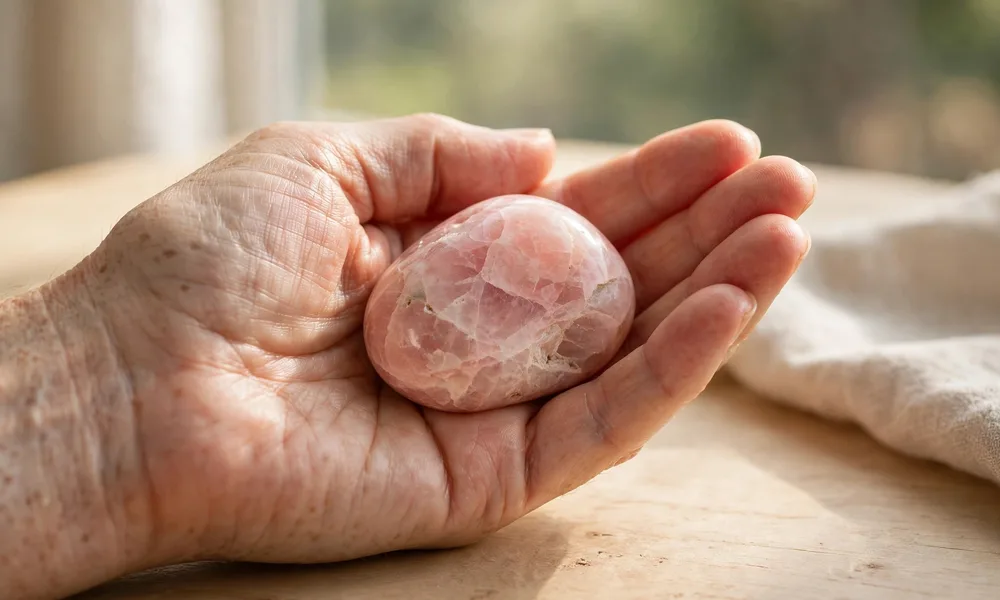
Pink mangano calcite is the soft rose pink variety of calcite, a mineral made of calcium carbonate, coloured by manganese. The best pieces are a warm rose pink, sometimes crossed with soft white bands. It is usually opaque, and it is most often sold as smooth polished tumbled pieces or small palm stones. Hold one and it feels cool and solid, with a soft waxy shine.
Its soft pink cousin is described in pink calcite soft pink for gentle mornings, where a pale milky pink calcite keeps company on slow, quiet mornings. Pink calcite is lighter and milkier, while pink mangano calcite is deeper, warmer and rosier. Both are calcium carbonate, both are soft, and both stay dry beside water, never in it.
Why Soft Pink Suits Tender Skin
Soft pink suits tender skin because it is the colour of a calm cheek and a quiet morning, and neither one ever shouts. Tender skin reacts to hurry, heat and harshness, and a soft pink stone sets the tone before any product is opened. A bright colour would hurry the hand, but soft rose pink lets the morning move at its own pace.
Pink also suits tender skin because it never pretends to be medicine. The stone is simply a beautiful object. When the shelf holds one pink stone, a glass of water and a plain moisturiser, the routine stays small.
The Safety Rule First: Beside Water Only
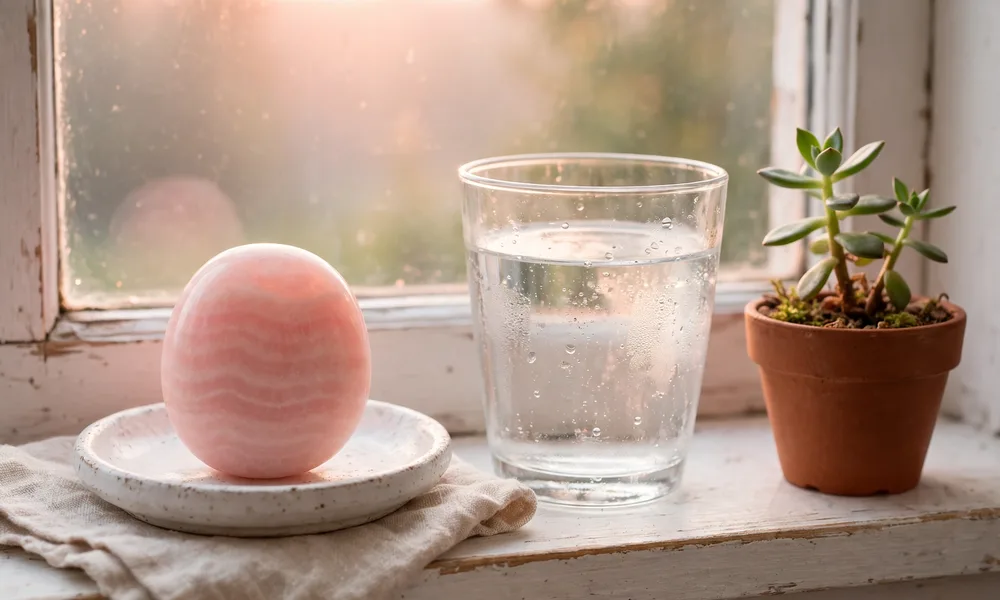
The stone stays beside water only, never inside drinking water, never soaked, and never used in elixirs of any kind. If a piece ever falls into a glass by accident, throw the water away and wash the glass and your hands.
Stones that must never touch water at all are worth naming here. Malachite must never go in water or elixirs, apatite and lepidolite must never go in drinking water, lepidolite contains lithium, pyrite must never go in drinking water, angelite must never be soaked, and amber must never go in drinking water or soaks. Hematite must never go in drinking water either. Pink mangano calcite itself is soft, and water can dull its polish, so even a sturdy-looking stone must stay dry. No stone belongs in a drink.
Choosing a Pink Mangano Calcite Stone
Choose a stone you can see clearly before you buy it. Look for a warm, even rose pink, a smooth polish with no sharp edges, and a size that fits in your palm. The pink should look like the inside of a shell, not like paint, with soft natural bands. Be wary of stones that look too bright, with a flat bubblegum pink. Real pink mangano calcite feels cool and shows small natural marks inside when held to the light. Buy from a trusted seller who can tell you plainly that the stone is natural calcite, and never from one who promises it will change your health or your skin.
A Tender Morning with Pink Mangano Calcite
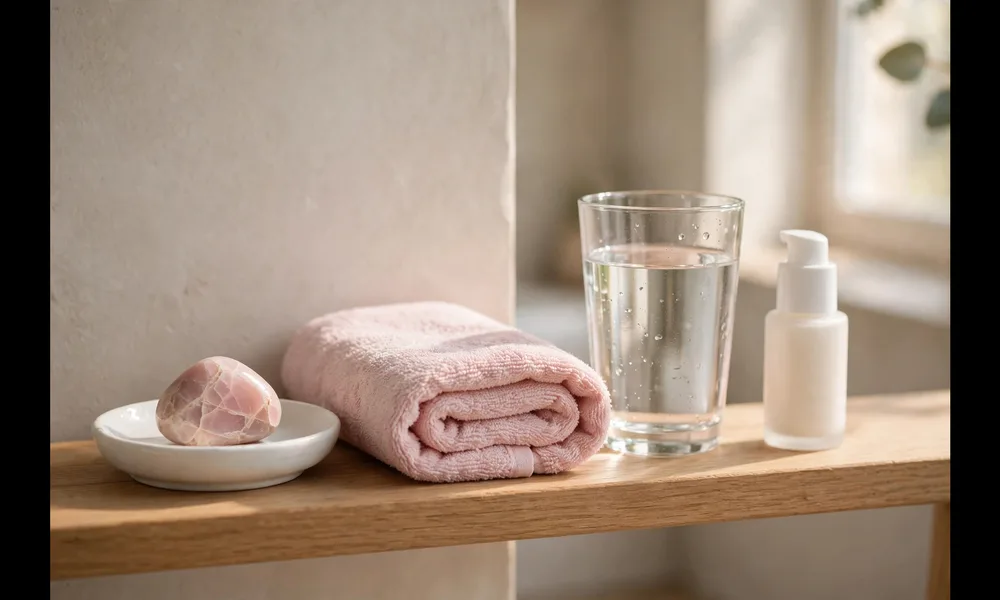
A tender morning takes only a few minutes to set up, and it starts the evening before: leave the vanity clear, the towel folded, and the stone on its dish where the morning light will find it. When the morning comes, wash your face with plain lukewarm water, pat it dry, and sit down for a moment. Hold the stone briefly if you like, then drink your water slowly and begin the day with something easy.
Water first, then a plain moisturiser, then nothing else until your skin has settled. If a new cream or wash is joining the routine, patch-test it first: a small amount on the inside of your wrist, once a day for three days, and stop at the first sign of redness or itching. Tender skin rewards patience.
Pink Mangano Calcite in Your Palm
Holding the stone is the quietest part of the routine. Pick up the pink mangano calcite, close your fingers around it, and feel its cool, smooth weight. Turn it once in the light and set it back down. Hold it beside your glass while you look out of the window, and let the pink remind you that the day is still blank.
Tender Skin and a Gentle Routine
Tender skin likes a short routine. Plain lukewarm water, a soft towel and a plain moisturiser with no fragrance will carry most days. Wash with your hands and pat the skin dry instead of rubbing it. Hot water strips the skin and leaves it tight, so keep the water lukewarm and the wash brief. Where honey calcite warm glow for autumn skin keeps a golden calcite beside autumn skin, pink mangano calcite keeps a rose pink stone beside tender skin all year round.
Keep the shelf simple too. One stone, one glass, one moisturiser, one soft towel: that is the whole set. If your skin flares, feels sore, or breaks out in a way that does not settle in a few days, see a doctor or a dermatologist. A stone cannot diagnose anything, and a gentle routine cannot replace medical care.
Pink Mangano Calcite at a Glance
| Soft rose pink | Tender skin | Stone care |
|---|---|---|
| Warm rose colour | Lukewarm water only | Wipe stone dry |
| Cool smooth touch | Pat skin gently | Dish beside glass |
| Fits in palm | Plain moisturiser daily | Never soak stone |
| Natural soft white | Patch test first | Shade from harsh sun |
Caring for a Soft Pink Stone
Pink mangano calcite is a soft stone, and its care is simple. Clean it with a dry, soft cloth, or with a cloth barely dampened with plain water, then dry it at once. Never soak it, and never use vinegar, lemon juice or harsh chemicals. Calcite can chip if dropped, so keep it away from harder stones and metal. Do not leave it in strong sunlight all day; move the dish into the shade.
What It Will Not Do
Be honest about what a stone can and cannot do. Pink mangano calcite will not heal anything: it will not cure an illness, ease a skin condition, or fix a rash. It is a beautiful stone, and a stone is all it is. The gentle routine is the part that helps: a short routine can keep tender skin from being overwhelmed. The stone keeps you company while you do that work.
No stone or ritual will replace rest, sleep and medical advice. If tender skin stays sore, red or broken week after week, the answer is a doctor or a dermatologist, not a new stone.
Your Pink Mangano Calcite Tender Skin Checklist
- Choose a palm-sized pink mangano calcite with a warm rose pink.
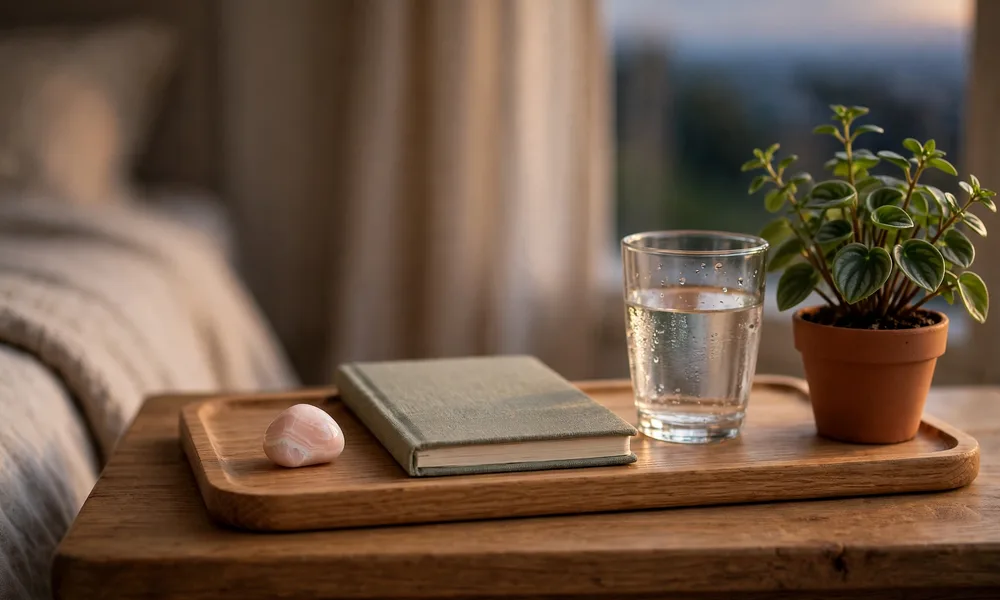
- Set a glass of fresh water beside the stone each morning, never in it.
- Wash with plain lukewarm water, pat dry softly, and use a plain moisturiser.
- Patch-test every new product on your wrist for three days before using it on your face.
- Carry the stone in its own soft pouch and keep it away from keys and hard stones.
- Clean the stone with a dry soft cloth, never soak it, and store it dry on its tray.
Frequently Asked Questions
What is pink mangano calcite?
Pink mangano calcite is the soft rose pink variety of calcite, a mineral made of calcium carbonate, coloured by manganese. It is kept as a display and handling stone, never as a treatment.
Will pink mangano calcite heal my skin?
No. It will not cure a skin condition, ease a rash, or fix tender skin. Real skin problems belong with a doctor or a dermatologist.
Can I put pink mangano calcite in my drinking water?
No. Keep the stone beside the glass, never in it. Water can dull its polish, and no stone belongs in a drink.
How is pink mangano calcite different from pink calcite?
Pink calcite is a lighter, milkier pink, while pink mangano calcite is a deeper, warmer rose pink, coloured by manganese. Both are calcium carbonate, so both stay dry beside water, never in it.
How do I patch-test a new product?
Put a small amount on the inside of your wrist once a day for three days. If the skin stays calm, try it on your face. Stop at the first sign of redness or itching.
How do I clean pink mangano calcite safely?
Wipe it with a dry, soft cloth, then dry it at once. Never soak it or use vinegar, lemon juice or harsh chemicals, and store it dry in a soft pouch. Where orange calcite bright orange for fresh starts is a deeper sunset orange for new beginnings, this stone is softer and rosier.
The Bottom Line
Pink mangano calcite is a soft rose pink stone, a glass of water beside it, and a morning that moves gently. Set your stone out tonight, and let tomorrow begin softly.
A Note for Tender Skin
Keep it pink, keep it dry, keep it gentle. The tender hours belong to you.